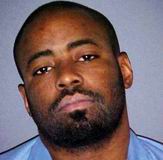
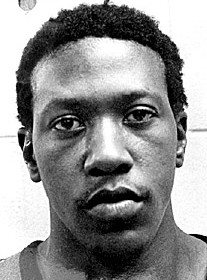
Jimmy Wingo
Murderer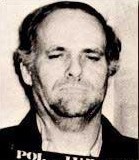 Ervil LeBaron
Murderer · USA · 1972
Ervil Morrell LeBaron (1925 to August 16, 1981) was the leader of a polygamous…
35 victims
Ervil LeBaron
Murderer · USA · 1972
Ervil Morrell LeBaron (1925 to August 16, 1981) was the leader of a polygamous…
35 victims
 Brian Kevin Rosenfeld
Murderer · USA · 1985
Brian Kevin Rosenfeld Brian Kevin Rosenfeld was sentenced to three concurrent l…
23 victims
Brian Kevin Rosenfeld
Murderer · USA · 1985
Brian Kevin Rosenfeld Brian Kevin Rosenfeld was sentenced to three concurrent l…
23 victims
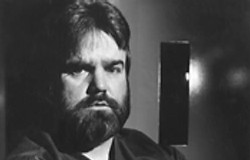 Marvin Gray
Murderer · USA · 1975
Marvin Gray was convicted killer who claimed responsibility for 23 slayings and…
23 victims
Marvin Gray
Murderer · USA · 1975
Marvin Gray was convicted killer who claimed responsibility for 23 slayings and…
23 victims
 Yahweh ben Yahweh
Murderer · USA · 1980
Yahweh ben Yahweh was born and legally named Hulon Mitchell Jr. (October 27, 19…
23 victims
Yahweh ben Yahweh
Murderer · USA · 1980
Yahweh ben Yahweh was born and legally named Hulon Mitchell Jr. (October 27, 19…
23 victims
 Russell Ellwood
Murderer · USA · 1991
Russell Ellwood was a former taxi driver. Authorities suspected him of killing…
20 victims
Russell Ellwood
Murderer · USA · 1991
Russell Ellwood was a former taxi driver. Authorities suspected him of killing…
20 victims
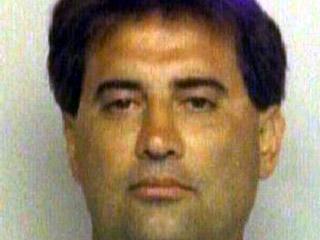 Thomas Tomich
Murderer · USA · 1983
Thomas Tomich committed suicide on November 15, 2006, by jumping off an Omaha b…
1 victim
Thomas Tomich
Murderer · USA · 1983
Thomas Tomich committed suicide on November 15, 2006, by jumping off an Omaha b…
1 victim
 Sharon Kinne
Murderer · Mexico · 1960
Sharon Kinne was known in Mexico as La Pistolera. She was an American murderer.…
3 victims
Sharon Kinne
Murderer · Mexico · 1960
Sharon Kinne was known in Mexico as La Pistolera. She was an American murderer.…
3 victims
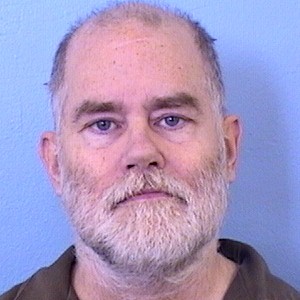 Jonathan Preston Haynes
Murderer · USA · 1987
Jonathan Preston Haynes was a neo-Nazi who killed a Chicago-area plastic surgeo…
2 victims
Jonathan Preston Haynes
Murderer · USA · 1987
Jonathan Preston Haynes was a neo-Nazi who killed a Chicago-area plastic surgeo…
2 victims
- Gender
- male
- Country
- USA
- Location
- Webster Parish, Louisiana, USA
- Date of birth
- 1952
- Age at first offence
- 30
- Characteristics
- robbery, escape, drug addict
- Victim profile
- Newton Brown, 55, and his wife, Erlene Nealy Brown, 51
- Method of murder
- Shooting
- Date(s) of murder
- December 25, 1982
- Years active
- 1982
- Date of arrest
- January 5, 1983
- Status
-
Executed
Executed by electrocution in Louisiana on June 16, 1987
Case details
Jimmy Wingo was convicted of shooting to death Newton Brown and Erline Brown while burglarizing their Dixie Inn home on Christmas Day, 1982. Jimmy L. Glass was convicted with Wingo of the murders.
Wingo escaped from the Webster Parish Jail the day before the murders were committed with Glass. Glass later claimed that Wingo forced him at gunpoint to kill the Browns.
Wingo’s account was that he was not even present when Glass killed the Browns.
People
- Jimmy Wingo (defendant)
- Jimmy L. Glass (co-defendant)
- Newton Brown (victim; 55 years old)
- Erline Brown (victim; 51 years old)
- Gwen Hill (witness and Wingo’s companion; mother of one of his children)
- Betty Whittington (Wingo’s sister)
- Frank Whittington (Betty Whittington’s husband)
- Hilton Butler (warden of the penitentiary)
- Edwin Edwards (governor)
- John M. Duhe, Jr. (judge referenced in an appeal)
- GEE, REAVLEY and HILL (Circuit Judges referenced in the federal appellate decisions)
Timeline
- Christmas Day, 1982 — Newton Brown and Erline Brown were killed; Wingo and Jimmy L. Glass were convicted in Louisiana for the murders connected to a burglary of the Dixie Inn home.
- Christmas Eve (about 8:00 p.m.) — Wingo escaped from the jail in Minden, Louisiana, where he was confined under burglary charges.
- Christmas Eve (after the escape) — Accompanied by another escapee, Jimmy Glass, Wingo walked several miles along railroad tracks to the Brown home and the next day the bodies were found in their bed.
- Daybreak on Christmas — Wingo arrived at the home of his sister, Betty Whittington, in Vivian, Louisiana, with cash, clothing, weapons, and ammunition taken from the Brown home.
- Christmas (after daybreak) — The Brown’s Lincoln automobile was later found stalled in high water on the road a quarter of a mile from the Whittington home.
- After daybreak on Christmas — Wingo, accompanied by Glass and Gwen Hill, drove a Datsun pickup into East Texas.
- January 5, 1983 — Wingo and Hill were captured in woods near Atlanta, Texas.
- California (after January 5, 1983) — Glass was apprehended in California.
- April 4, 1986 — Rehearing and rehearing en banc were denied in the federal appellate matter.
- June 12, 1987 — Glass was executed.
- June 16, 1987 — Wingo was executed.
- June 12, 1987 — The federal appellate matter recorded an application for certificate of probable cause to authorize an appeal.
The offence
Wingo and Jimmy Glass were found guilty of killing Newton Brown and Erline Brown in their house in the rural town of Dixie Inn on Christmas Eve in 1982. The killings occurred after the men escaped from the Webster Parish Jail.
The bodies of Newton Brown and Erline Brown were found in their bed, gagged and bound at the hands and feet. Both were killed by gunshots to the back of their heads. Their house had been ransacked, and entry had been made through a broken glass patio door.
At the time of the escape and subsequent flight, Wingo had cash, clothing, weapons, and ammunition taken from the Brown home. The Brown’s Lincoln automobile was later found stalled in high water on the road, a quarter of a mile from the Whittington home.
After leaving Vivian, Wingo, accompanied by Glass and Gwen Hill, drove a Datsun pickup into East Texas.
Investigation
A videotape formed part of Wingo’s appeal basis. Gwen Hill, a prosecution witness and Wingo’s companion and the mother of one of his children, said her testimony in Wingo’s trial had been influenced by a sheriff’s deputy who threatened her with a 10-year prison term.
In the federal appellate discussion, the court also described the physical circumstances after the escape: the victims were gagged and bound, and entry was made through a broken glass patio door.
Arrest and apprehension
Wingo and Gwen Hill were captured in woods near Atlanta, Texas, on January 5, 1983. Glass was apprehended in California.
Trial
Wingo and Glass were indicted on two counts of first degree murder.
Glass was tried first, convicted on both counts, and sentenced to death. Wingo was also convicted and sentenced to death for both murders.
Wingo’s counsel attacked the constitutionality of the conviction and death sentence on 10 grounds in the federal appellate discussion. The decision described Wingo’s arguments concerning the Eighth Amendment proportionality under Enmund v. Florida and related cases, instruction on specific intent, assistance of counsel, jury selection issues, and multiple sentencing and procedure issues.
The Supreme Court of Louisiana upheld the conviction and concluded that the jury had ample circumstantial evidence to conclude Wingo was with Glass in the bedroom where the murder occurred.
The jury had ample circumstantial evidence from which to reasonably conclude that defendant was with Glass in the bedroom where the murder occurred. He escaped with Glass shortly before from a nearby jail. Like Glass, he had a pressing motive to steal money (both were penniless), clothes (both had only jail outfits), transportation (both were seeking to flee the area), and weapons (both vowed not to be "taken alive"). He and Glass appeared together at his relatives' home shortly after the crime with clothes, guns, and money which were identical or very similar to items stolen during the break-in at the Browns' home. He and Glass made statements that they had "robbed" a house to secure the money and guns. He and Glass took a vehicle from his relatives without their consent and continued their flight to Texas. When defendant found that he was being hunted in connection with the murders, he fled into the woods, where he concealed various items which could be identified with the Browns' home. Upon being captured, defendant had a pair of gloves in his possession which matched the fabric print made by a glove on a ransacked dresser drawer in the Browns' home, and he made a highly incriminating statement ("I always wear gloves when I commit a crime") to an arresting officer. Finally, a fiber found on pants left by defendant at the Whittingtons' home matched the fiber of a blanket on the Browns' bed where the bodies were found. Because Glass refused to testify and defendant elected to exercise his constitutional right not to testify, there was no direct evidence (in the guilt phase) of defendant's role in these crimes. Nevertheless, a rational juror, viewing the overall evidence in the light most favorable to the prosecution, could have concluded beyond a reasonable doubt that defendant actively participated in the killing of the victims (whose deaths were obviously purposefully inflicted). Jackson v. Virginia, 443 U.S. 307, 99 S.Ct. 2781, 61 L.Ed.2d 560 (1979). Given the evidence presented, it was certainly reasonable for the jury to conclude that defendant's role was that of an equal partner in all of the crimes committed by the two during this episode, including the murders. The theory that Glass (who was significantly smaller than both defendant and Mr. Brown) broke in alone and overpowered the Browns while defendant waited outside, unaware that Glass would kill the helpless victims, is simply not a compelling hypothesis, and the jury acted reasonably in rejecting it. See State v. Captville, 448 So.2d 676 (La.1984); State v. Chism, 436 So.2d 464 (La.1983); State v. Sutton, 436 So.2d 471 (La.1983). 457 So.2d at 1164-65 (footnote omitted).
Because the state court had found the requisite culpability to satisfy Enmund, the federal appellate court stated that the finding was presumed to be correct under 28 U.S.C. Sec. 2254(d) (1982) and Sumner v. Mata, Cabana v. Bullock, and the related cited authorities, and the court concluded it was fairly supported by the record.
The federal appellate discussion further described the court’s view of participation and intent based on the evidence and Wingo’s role in the episode.
Court instruction on specific intent
Wingo contended that the jury was not adequately instructed that it had to find specific intent to kill irrespective of intent of Glass and the burglary participation. The federal appellate court discussed this as part of Wingo’s grounds and addressed how the jury had been repeatedly told it could not find Wingo guilty unless he was proved to have intended to kill, and that the final instruction at the guilt stage did not mention law of principals.
Sentencing
Wingo was sentenced to death in Louisiana for the murders of Newton Brown and Erline Brown.
The federal appellate discussion recorded that the jury found the killings were committed during the perpetration of an aggravated burglary, an aggravated escape, and an armed robbery. The jury also found that the defendant knowingly created a risk of death to more than one person.
Appeals
Federal habeas corpus appeal
A federal district court denied Wingo’s petition for habeas corpus. The federal appellate court affirmed the denial of habeas corpus.
The federal appellate decisions referenced:
- Jimmy C. Wingo, Petitioner-appellant, v. Frank Blackburn, Warden, Louisiana State Penitentiary, Respondent-appellee, United States Court of Appeals, Fifth Circuit, with a listed date of Feb. 24, 1986, and rehearing and rehearing en banc denied April 4, 1986.
- 786 F.2d 654, with a petition for rehearing and suggestion for rehearing en banc after an Opinion February 24, 1986, 5th Cir.1986.
On rehearing, the federal appellate court supplemented its prior discussion and stated the petition for rehearing was DENIED and the suggestion for rehearing en banc was DENIED.
Application for certificate of probable cause and denial of stay
In a matter dated June 12, 1987, the federal appellate court granted IFP, denied the application for certificate of probable cause, and denied the application for stay of execution.
Outcome
Wingo’s execution occurred after the United States Supreme Court cleared the way for execution, voting 7 to 2 against hearing his appeal.
Louisiana executed Jimmy Wingo by electrocution in Louisiana on June 16, 1987.
Glass had been executed for the crime on June 12, 1987, four days earlier.
Wingo’s final statement was: "I am an innocent man. You are murdering me this day. I do still love you all in Christ. God bless you all."
Hilton Butler, warden of the penitentiary, made the following statements after a brief visit: "He's still as calm as he can be," and "He says he still has hopes the Governor may do something, but he said he's ready if he doesn't. He's in real good spirits."
The New York Times also recorded an earlier observation that the fourth man to be executed in nine days was executed on that day, and it described capital punishment proponents outside the state penitentiary when Wingo was executed.
Aftermath
The federal appellate court had previously stated that, because the Supreme Court had the Grigsby issue under consideration and had consistently stayed executions in pending petitions raising that issue, issuance of its mandate and the execution and enforcement of the sentence against Jimmy Wingo were stayed for 30 days to allow for a petition for writ of certiorari, continuing until certiorari was resolved or further ordered. The district court’s judgment denying writ of habeas corpus was affirmed in the federal appellate matter.
Gov. Edwin Edwards had said he would not intervene in the cases of Louisiana’s 40 death row inmates unless evidence could be shown of a condemned prisoner’s innocence.
Spotted an error, or have more information about this case?