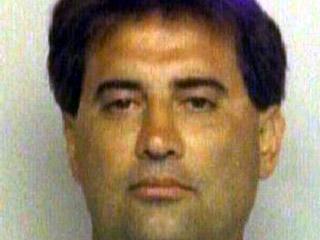
Thomas Tomich
Murderer Brian Kevin Rosenfeld
Murderer · USA · 1985
Brian Kevin Rosenfeld Brian Kevin Rosenfeld was sentenced to three concurrent l…
23 victims
Brian Kevin Rosenfeld
Murderer · USA · 1985
Brian Kevin Rosenfeld Brian Kevin Rosenfeld was sentenced to three concurrent l…
23 victims
 Marvin Gray
Murderer · USA · 1975
Marvin Gray was convicted killer who claimed responsibility for 23 slayings and…
23 victims
Marvin Gray
Murderer · USA · 1975
Marvin Gray was convicted killer who claimed responsibility for 23 slayings and…
23 victims
 Yahweh ben Yahweh
Murderer · USA · 1980
Yahweh ben Yahweh was born and legally named Hulon Mitchell Jr. (October 27, 19…
23 victims
Yahweh ben Yahweh
Murderer · USA · 1980
Yahweh ben Yahweh was born and legally named Hulon Mitchell Jr. (October 27, 19…
23 victims
 Russell Ellwood
Murderer · USA · 1991
Russell Ellwood was a former taxi driver. Authorities suspected him of killing…
20 victims
Russell Ellwood
Murderer · USA · 1991
Russell Ellwood was a former taxi driver. Authorities suspected him of killing…
20 victims
 Elmer Henley
Serial killer · USA · 1972
Elmer Wayne Henley, Jr. was born May 9, 1956. He was convicted and incarcerated…
7 victims
Elmer Henley
Serial killer · USA · 1972
Elmer Wayne Henley, Jr. was born May 9, 1956. He was convicted and incarcerated…
7 victims
 James Allen Harris
Murderer · USA · 1983
James Allen Harris · February 10, 1984 — Sentenced to death. · 03-05-92 — Defen…
1 victim
James Allen Harris
Murderer · USA · 1983
James Allen Harris · February 10, 1984 — Sentenced to death. · 03-05-92 — Defen…
1 victim
 Angela Stoldt
Murderer · USA · 2013
Angela Stoldt was a Florida woman who killed her neighbor, James Sheaffer. The…
1 victim
Angela Stoldt
Murderer · USA · 2013
Angela Stoldt was a Florida woman who killed her neighbor, James Sheaffer. The…
1 victim
 Kenneth Allen McDuff
Serial killer · USA · 1966
Kenneth Allen McDuff was executed by lethal injection in Texas on November 17,…
14 victims
Kenneth Allen McDuff
Serial killer · USA · 1966
Kenneth Allen McDuff was executed by lethal injection in Texas on November 17,…
14 victims
 Jerry White
Murderer · USA · 1981
Jerry White was the appellant, petitioner, and defendant in multiple proceeding…
1 victim
Jerry White
Murderer · USA · 1981
Jerry White was the appellant, petitioner, and defendant in multiple proceeding…
1 victim
- Gender
- male
- Country
- USA
- Location
- Pottawattamie County , Iowa, USA
- Date of birth
- 1956
- Age at first offence
- 27
- Characteristics
- parricide, domestic violence
- Victim profile
- Lois Fraisonnet (his ex-wife)
- Method of murder
- Strangulation with a metal coat hanger
- Date(s) of murder
- November 1983
- Years active
- 1983
- Date of arrest
- —
- Status
-
Died in custody
Committed suicide on November 15, 2006, by jumping off an Omaha building just one day after his wife's, Lois Tomich's remains were identified
Case record: Thomas Tomich
STATUS / Outcome
Thomas Tomich committed suicide on November 15, 2006, by jumping off an Omaha building. His wife's remains, Lois Tomich, were identified the day before.
Timeline
- May 2006 — Mushroom hunters found a 55-gallon barrel partially buried north of Council Bluffs near the Pottawattamie County Jail; bones were later determined to be those of Lois Tomich.
- May 15, 2006 — Pottawattamie County officials announced the discovery of a body in a barrel.
- November 14, 2006 — Debra Barajas was discovered dead in southwestern Iowa.
- November 15, 2006 — Thomas Tomich jumped from the Rorick Condominiums in downtown Omaha and died.
- January 20, 2007 — Authorities doubted Tomich was a serial killer.
Background
Thomas Tomich and Lois Fraisonnet were married in 1980 and began their life together. By 1981, they were divorced, and their baby girl was living with her mom. Hints in the divorce background indicated that the reason for the divorce was Thomas’ temper and physical abuse of Lois.
In 1983, Lois got some distance from Thomas and there was a new man in her life: Mark Dawson, Thomas’ brother. The relationship did not sit well with Tomich. Later in 1983, Lois mysteriously disappeared. Lois Tomich’s father filed a missing person’s report with local police, and during the investigation police talked with her friends and her ex-husband. His assertion was that she had moved to Texas, but police were not sure they believed his story.
Investigators said Tomich had gotten in a fight with his brother over Lois, and made statements that he wasn’t going to tolerate his brother living with his ex-wife and raising his kid. With no firm evidence of foul play and no body, the disappearance remained a cold case.
Thomas went on to remarry. His subsequent wife reported being a victim of abuse at his hands, and in 1997 a woman who he lived with filed an order of protection against him after she claimed he struck her in the leg and mouth, requiring stitches and a visit to the hospital.
Thomas Tomich was married at least three times. Investigators said he had a history of domestic abuse. One woman he lived with went to court to get a protection order against him for hitting and punching her.
A daughter of Thomas and Lois was 5 when her mother disappeared and told investigators about the stormy relationship between her parents, including several beatings and her mother always going to the hospital.
The offence
Lois Tomich: death, method, and identification
A body discovered in a 55-gallon barrel was identified as Lois Tomich, whose disappearance dated to November 1983. DNA analysis from an FBI lab showed that the remains were those of Lois Tomich.
Investigators and prosecutors described that Lois Tomich died of strangulation. A wire coat hanger was found around her neck. Investigators also said there was a piece of wire around the neck, with a clothes hanger attached to the wire, where the hanger served as an anchor to tighten the wire. Investigators said the wire was still embedded in her vertebrae and that without the coat hanger, they might not have known due to the loss of soft tissue over the years.
Forensic work indicated that a 55-gallon barrel was found with remains encased in concrete. Authorities described that the barrel was filled with cement and that the barrel with the cement and body inside weighed over 800 pounds. Investigators said the manner of disposal suggested the killer had access to heavy construction equipment. Thomas Tomich worked around a construction company at the time that Lois disappeared and was involved in paving, which was described as another factor pointing to him.
Confessions or admissions attributed to Tomich
Investigators said that after Lois Tomich’s body was identified, admissions Tomich allegedly made to others were an evidentiary link. A county attorney’s statement described that two different ladies involved in romantic relationships with Mr. Tomich said he confessed over the years that he put his wife Lois in the barrel, in the water. Those witnesses were described as scared and reluctant to testify.
Investigators said another wife told investigators about something Tomich said during an argument. She reported that Tomich told her that “she would end up in a barrel like Lois did.”
Relationship and motive described in connection with the murder
Investigators described that shortly before Lois Tomich’s death, Lois took up a romantic relationship with her ex-husband’s brother, Mark Dawson, leading Thomas Tomich into a rage and to a fight with his brother over the relationship. Prosecutors said they would have presented this history as motive. One statement attributed this to a relationship she was entering into with his brother driving him insane and resulting in a physical altercation with his own brother.
Uncertainty about crime scene details
Investigators surveyed the area where the body was dumped but said they had no idea where Lois Tomich was actually killed. A prosecutor described that the prosecution would have faced hurdles including “I have no crime scene.”
Investigation
Discovery of the barrel and initial identification efforts
Mushroom hunters discovered a rusty barrel partially buried in May near the Pottawattamie County Jail area north of Council Bluffs. When they knocked a hole in the barrel, they saw bones. The barrel was recovered as a rusty 55-gallon drum that had been filled with 800 lbs. of construction-grade concrete.
The barrel was sent to the Iowa Crime Lab in Ankeny. A forensic anthropologist reconstructed skeletal remains, and a forensic artist created an image of the victim from facial features.
Investigators said they could tell it was a female between the ages of 24 and 32 years old, about 5 feet 8 inches tall, with short brown hair. Investigators also said the clothes found with the body included Lee jeans manufactured in 1983. Investigators stated that by September, Bennett had an idea the victim was Lois Fraisonnet, later determined to be Lois Tomich.
Investigators said they needed DNA even with a similar photo, and they extracted a DNA sample from Lois Tomich’s daughter. The mitochondrial DNA testing used in Minnesota was described as a critical part of the identification process, because investigators said they could not get enough material for standard DNA testing to match her daughter’s sample.
Authorities also said there were environmental conditions affecting the discoverability of the barrel, with the area having gone from wet to dry over the years.
Link to Thomas Tomich and investigation steps
Investigators described Thomas Tomich as the primary suspect in Lois Tomich’s death after identifying her remains. Police checked out Thomas Tomich’s accounts and interviewed him. Investigators said his story did not match and that they caught him in several discrepancies, and they believed he was not being truthful with them.
Investigators described that they interviewed him on Wednesday afternoon after Lois’s body was identified, with Thomas asking for an attorney. A second interview was scheduled for 4 p.m. Thursday. Investigators described him as nervous and asked for an attorney even though questions did not focus on him being a suspect.
Before prosecutors could obtain a warrant, Thomas Tomich went to the Rorick Apartments in Omaha, where he worked as a janitor. Investigators said he climbed to one of the top floors and then jumped to his death.
Investigators’ doubts about wider serial killer allegations
Authorities later said they did not find enough evidence to implicate Tomich in additional unsolved killings, and that the slayings remained unsolved. A statement attributed to Douglas County chief deputy Marty Bilek described Tomich as a killer also active in the 1980s and that investigators now believed he might have killed again. However, Iowa and Nebraska investigators later said they had not found enough evidence to implicate him, and authorities doubted he was a serial killer.
Arrest / Warrant status
Investigators said their investigation was leading to a first-degree murder warrant for Thomas Tomich, and prosecutors said his investigation was leading to the warrant. They also said multiple people had told investigators Tomich had talked about putting his wife in a barrel, and those people felt scared for their own lives. Investigators described preparing to get a warrant, but Thomas Tomich killed himself before the warrant was obtained.
Trial / Court proceedings
No trial was described. Prosecutors and legal officials discussed potential prosecution and expressed confidence that they could have won, but the case ended with Tomich’s suicide.
A Pottawattamie County Attorney’s Office declared the case of Lois Tomich’s 1983 death officially closed.
Sentencing
No sentencing was described because Thomas Tomich died by suicide before trial proceedings.
Appeals
No appeals were described.
Outcome
After Thomas Tomich’s suicide, prosecutors said he was the only person of interest and that the investigation into Lois Tomich’s death was officially closed. Authorities said there were regrets about the daughter losing both parents to violence.
Aftermath
Ongoing investigation into other deaths and links considered
Authorities said investigators looked at possible connections to unsolved murder cases in the metro involving Tomich.
Debra Ann Barajas
Tomich had a connection to Debra Ann Barajas. County records showed Tomich bailed her out of jail shortly before she went missing. Tomich was also described as listed himself as “a friend” on jail documents. Barajas was found dead in Mills County, Iowa.
Investigators said Tomich had been called a person of interest in Barajas’ disappearance at one point. A Mills County Attorney said that at that point there was no reason to believe Tomich had anything to do with Smith’s death.
Brianne Smith
Family of Brianne Smith raised questions whether Tomich had ties to her murder. Smith’s body was found in June near Glenwood, Iowa. Edie Derry, who helped raise Smith, said she wondered about Smith’s last phone call; Derry said Smith called just before she disappeared in April but Derry did not recognize the incoming phone number. Derry said: “She wasn't a bad girl, she just hadn't found her way home yet.” Derry also said: “I would say that I think he's connected. It just seems a little strange that all of it came full circle this way.” Derry further said: “It wasn't that far from where they found Brianne so that in itself seems a little strange.” Derry said: “She called from a phone number that we didn't recognize so I don't know -- could be a connection, maybe not,” and said Derry and her husband were raising and planning to adopt Smith’s two young children. Derry also said: “We just tell them that Mommy's in heaven. That's the best we can tell them,” and: “It'd be nice to have some answers but I think our main focus is making sure these children are brought up happy, healthy, and have good lives,” and: “Derry said that Smith's death has been a surreal experience for their family. She said the focus has been on Smith's children.”
Investigators said they had never determined who killed her and that there was no reason to believe Tomich had anything to do with Smith’s death at that time.
Other possible links and named individuals
Investigators were also looking at Tomich as a person of interest in the deaths of two other Omaha prostitutes: Michelle Lamere and Stephanie Caldwall.
The record included a list of individuals with specific ages and descriptions:
- Amy Hajek, 23 — found on Christmas Eve in 1999 in an irrigation ditch just northeast of Fremont.
- Teresa Windham, 17 — found about two miles northwest of where Hajek’s body was found.
- Debra Barajas, 44 — last seen May 25; discovered dead on November 14, 2006 in southwestern Iowa.
- Brianne Smith, 25 — prostitute from Omaha found in June in Glenwood; described as in the same town where Barajas’ body was found.
Family statements and cooperation limits
The Tomich and Fraisonnet families told investigators that they did not wish to talk to the media. Attempts to reach the Tomich family by KETV NewsWatch 7 were unsuccessful. The Fraissinets were located near Glenwood, and a reporter was told to leave the property.
Comments about evidentiary challenges and prosecutor confidence
Prosecutor Matt Wilber said he was looking forward to the trial and that he believed there was enough. He later stated confidence that he would have won, saying: “We had some hurdles to get over, but nothing I thought we couldn't overcome.” Wilber also said: “I was looking forward to this trial. I knew it'd be a tough one, but I felt like we had enough.” Wilber stated: “So, just trying to figure out what do we do to make sure they feel safe and get the information that we need,” and described reluctance from the witnesses.
Investigators and Wilber described physical evidence:
- Wilber said: “There's a piece of wire around the neck,” and also said: “It had deteriorated over the years.”
- Wilber said: “Honestly, if it wasn't for that coat hanger, we'd have never known, because all soft tissue was gone.”
- Wilber stated: “Obviously, the manner of her death -- the fact she was fully clothed -- this was someone who knew her, had the ability to get up close.”
- Wilber said: “It had to be someone who had access to heavy construction equipment.”
- Wilber stated: “I'd consider probably one of my biggest hurdles is I have no crime scene.”
Leland Bennett described the wire: “There's a piece of wire around the neck.” He also described: “There was a clothes hanger attached to the wire; hanger used as an anchor to tighten that wire.” Bennett said the wire was “still imbedded in her vertebrae.”
The prosecution’s described circumstantial case included domestic violence history. Wilber stated: “We answered that question when we learned about the relationship she was entering into with his brother, and how that drove him insane, got in a fight, physical altercation with his own brother.”
A law professor Collin Mangrum commented on likelihood of conviction, and was quoted: “If the jury believes the witnesses, you almost certainly will get a conviction,” and: “You can talk about a case in the abstract. The prosecutors have to try it. The defense attorney have to put on the best case they can, so to judge it in the abstract is a precarious thing to do.” Mangrum also stated: “it all lies in the testimony.”
Wilber also stated: “Lois's killer is Tom Tomich. I don't think there's any doubt we have in our minds,” and: “Lois Tomich was murdered more than 20 years ago, forensic research showed.”
Names of officials and investigators mentioned
The record named Pottawattamie County chief deputy Marty Bilek, Pottawattamie County Attorney Matt Wilber, Pottawattamie County Sheriff Jeff Danker, investigator Leland Bennett, and law professor Collin Mangrum. It also mentioned Douglas County chief deputy Marty Bilek, and Pottawattamie County Attorney Matt Wilber. A quote attributed to investigator Leland Bennett was included.
It also mentioned KETV NewsWatch 7 investigator Carol Kloss and photojournalist Pete Soby, and names of media related to their access.
Victim list and missing person references included in the record
The record included references to missing persons and comparisons of physical descriptions to other missing people:
- Tracy Tribble was missing and last seen in her Council Bluffs home on May 3; the remains were described as not being Tracy Tribble.
- Amber Harris was described as not being among the remains; she was described as missing and as an Omaha 12-year-old.
- Jodi Huisentruit was described as not matching the description; she was described as an Iowa anchorwoman.
Other details
Places and locations mentioned
Places included: Omaha, Nebraska; Rorick Condominiums / Rorick Apartments in downtown Omaha; 22nd Street and St. Mary's Avenue; Council Bluffs, Iowa; Glenwood, Iowa; Mills County, Iowa; southwest Iowa; Fremont; irrigation ditch northeast of Fremont; area about two miles northwest of the location where Hajek’s body was found; and Pottawattamie County Jail area.
Phone numbers and tip lines mentioned
The record included tip line numbers: 877-414-1031 and 402-616-5065.
Employment and court-related details mentioned
Tom Tomich worked as a janitor at the Rorick Apartments and was described as having worked for a paving company at one time. Court records were described as showing several court dates in the 1970s for drug and DUI charges.
Mushroom hunters were the people who discovered the barrel.
A barrel was found partially buried and surrounded by areas covered in water and dried up areas.
Police interviews and conduct
Investigators said Tomich was interviewed by Wednesday afternoon after Lois’s body was identified, and that the interview was followed by a scheduled second interview for 4 p.m. Thursday.
Investigators said they waited until Wednesday to talk to Tomich to avoid tipping him off earlier.
Duplicated narratives merged without duplication artefacts
The record contained multiple overlapping descriptions of the investigation and outcome, including repeated references to the identification steps, physical evidence, and the suicide timing. These descriptions were consolidated to keep all distinct quoted statements and distinct facts in one place.


Spotted an error, or have more information about this case?