Stephen Edward Wood
Murderer Brian Kevin Rosenfeld
Murderer · USA · 1985
Brian Kevin Rosenfeld Brian Kevin Rosenfeld was sentenced to three concurrent l…
23 victims
Brian Kevin Rosenfeld
Murderer · USA · 1985
Brian Kevin Rosenfeld Brian Kevin Rosenfeld was sentenced to three concurrent l…
23 victims
 Russell Ellwood
Murderer · USA · 1991
Russell Ellwood was a former taxi driver. Authorities suspected him of killing…
20 victims
Russell Ellwood
Murderer · USA · 1991
Russell Ellwood was a former taxi driver. Authorities suspected him of killing…
20 victims
 Robert Martines Perez
Murderer · USA · 1994
Name: Robert Martines Perez · Other name used in proceedings: Robert Martinez P…
15 victims
Robert Martines Perez
Murderer · USA · 1994
Name: Robert Martines Perez · Other name used in proceedings: Robert Martinez P…
15 victims
 Billy Frank Vickers
Murderer · USA · 1993
Billy Frank Vickers Vickers was executed by lethal injection in Texas on Januar…
14 victims
Billy Frank Vickers
Murderer · USA · 1993
Billy Frank Vickers Vickers was executed by lethal injection in Texas on Januar…
14 victims
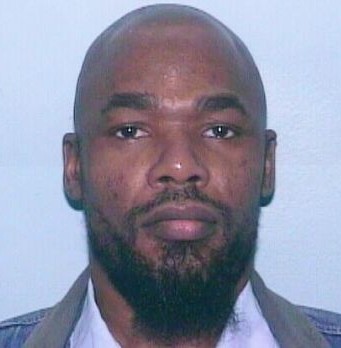 Gregory Clepper
Murderer · USA · 1996
1991 — The killings began. · April 24, 1996 — Patricia Scott was found in a tra…
1 victim
Gregory Clepper
Murderer · USA · 1996
1991 — The killings began. · April 24, 1996 — Patricia Scott was found in a tra…
1 victim
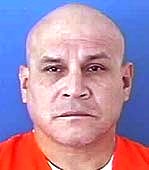 Edward Castro
Murderer · USA · 1987
Edward Castro was condemned for the choking and stabbing death of 56-year-old A…
3 victims
Edward Castro
Murderer · USA · 1987
Edward Castro was condemned for the choking and stabbing death of 56-year-old A…
3 victims
 Karen Tobie
Murderer · USA · 2004
Karen Tobie was convicted of paying a man $4,000 to kill her husband, John Cata…
1 victim
Karen Tobie
Murderer · USA · 2004
Karen Tobie was convicted of paying a man $4,000 to kill her husband, John Cata…
1 victim
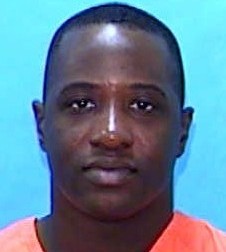 Antonio Melton
Homicide - Murderer · USA · 1990
Antonio Melton was sentenced to death on May 19, 1992. He was born on 12/29/72.…
2 victims
Antonio Melton
Homicide - Murderer · USA · 1990
Antonio Melton was sentenced to death on May 19, 1992. He was born on 12/29/72.…
2 victims
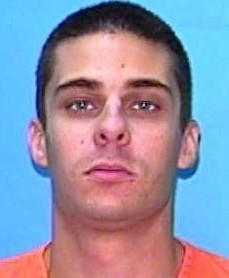 Jason Looney
Murderer · USA · 1997
Jason Looney was sentenced to death on February 18, 2000. His case was heard in…
2 victims
Jason Looney
Murderer · USA · 1997
Jason Looney was sentenced to death on February 18, 2000. His case was heard in…
2 victims
- Gender
- male
- Country
- USA
- Location
- Lincoln County, Oklahoma, USA
- Date of birth
- 1960
- Age at first offence
- 32
- Characteristics
- drunken rage, rape
- Victim profile
- Charles Van Johnson and Charles Stephens / Rev. Robert Bruce Brigden (inmate)
- Method of murder
- St abbing with knife / Stabbing with a "shank"
- Date(s) of murder
- November 28, 1992 / June 12, 1994
- Years active
- 1992–1994
- Date of arrest
- —
- Status
-
Executed
Executed by lethal injection in Oklahoma on August 5, 1998
Case Overview
Stephen Edward Wood was executed by lethal injection in Oklahoma on August 5, 1998.
He was pronounced dead at 12:21 a.m. at the Oklahoma State Penitentiary. He made no final statement. He joined the growing ranks of Oklahoma death row inmates who chose death over several years of appeals.
He was executed for the 1994 prison slaying of the Rev. Robert Bruce Brigden. Brigden was a former Presbyterian pastor from Alva who was serving time for molesting girls. Wood became the second Oklahoma inmate executed this year and the 11th since the state resumed the execution process in 1990; all executions during that period were by lethal injection.
Wood became the first inmate since James French in 1966 to be executed for killing another state inmate. French was the last person to die in Oklahoma's electric chair.
The offence
Wood was executed for the murder of Robert Bruce Brigden, committed on June 12, 1994. Brigden had been housed at the Oklahoma State Reformatory in Granite for less than a month when he was stabbed 7 times with a homemade knife.
Brigden, 59, was serving a 40-year sentence for eight counts of lewd molestation and one count of rape by instrumentation. Wood stabbed Brigden to death, inflicting multiple wounds with a "shank."
In 1992, Wood killed two transients in Lincoln County. He was later sentenced to life without parole for those killings.
Wood also killed Charles, whom the family called Rusty, and Charles Van Johnson. In the early morning hours of Nov. 28, 1992, Wood tore their hearts open by stabbing to death their oldest son, Charles (“Rusty”). The attack was described as especially savage: Wood stabbed Rusty 55 times and Johnson 62 times. Their bodies were abandoned beneath a Lincoln County bridge near Cushing, where all three men had been working on a woodcutting crew.
Investigation
Brigden had been housed in protective custody prior to the protective custody fence being removed at the reformatory.
Inmates later testified at the trial of Brigden's killer that the killer and others were going to Brigden's cell almost daily after the fence came down to harass and rob him. Those inmates reported that they had not testified that they reported the incidents to the defendants, except to the prison chaplain, Ron Roskom.
When Brigden complained to staff that he was being "bulldogged," the defendant, Lt. Wayne Morey, offered to move him to A-1-Pod for protection, but Brigden declined in writing, stating:
"I Robert Brigden DOC# 207536, does [sic] acknowledge that protection was offered to me and I declined the offer to be moved to A-1-Pod to serve that purpose."
There was evidence that Brigden expressed complaints or concerns to Lt. Morey about being robbed by the inmates who were harassing him, and that Lt. Morey had instructed him to report any such incident.
On June 12, 1994, another inmate, Stephen Edward Wood, entered Mr. Brigden's cell and attempted to rob him of his wristwatch because at OSR cell doors were unlocked during the day. When Brigden refused to hand over his watch, Wood stabbed him to death with a "shank."
The guard on duty in the "A" unit was Terry Duane New, one of the defendants in this case. His shift was 3:00 p.m. to 11:00 p.m. Officer New testified at Wood's trial that at about 6:15 p.m. he noticed Mr. Brigden's cell door standing open. New did not consider that to be normal, so he walked down and looked in on Brigden, who seemed fine. New then sat by Brigden's door for a little while, but noticed nothing unusual, and Brigden did not say anything. New testified he had a strange feeling, so he went up on the roof to observe the activity in the yard. After a while he heard a scream, followed by three more screams. As he started off the roof, he saw a knife thrown out.
The knife was connected to Wood, who was ultimately tried and convicted of the murder.
Background
Brigden had been convicted in Woods County, Oklahoma, in 1992 of eight counts of lewd molestation and one count of rape by instrumentation and was sentenced to 60 years' imprisonment.
On August 25, 1992, he arrived at the Oklahoma State Reformatory to begin serving his sentence. The next morning, he was attacked in the prison yard by other inmates apparently because of the nature of his crime, which involved children, and its attendant publicity. He requested and was placed in protective custody, an area of the prison fenced off from the general population. Prison staff supported Brigden's placement in protective custody due to the nature of his offense, rating his victim potential as high. His incarceration then proceeded without complaint or incident for the next 21 months.
In 1994, the Department of Corrections sought to make various operating and housing efficiencies to accommodate the ever-growing inmate population in the system. One such change involved closing the protective custody unit at OSR and centralizing protective custody housing at the Oklahoma State Penitentiary (OSP).
Planning in this regard was detailed in an April 1, 1994 memorandum from James L. Saffle, Regional Director of the Southeastern Region, to Larry Fields, Director of the Department of Corrections. The memorandum included these excerpts:
- We believe we can increase medium security beds by moving the protective custody beds from the Oklahoma State Reformatory to the Penitentiary. According to the daily system count, we would have approximately 27 beds for growth, if our protective custody count remained the same, and they were all housed at the Penitentiary. We decided to give the inmates at OSR the option to come off protection, prior to any movement of the protective custody unit to the Penitentiary. There is belief that many of the inmates will choose to remain at OSR. Our plan is to move the protection unit off of F-4 at the Penitentiary and place all protective custody inmates on D and E Units, which will provide 160 beds, and better protection, due to the isolation from other units, and individual exercise areas. F-4 would then be used for general housing. The movement from the F Cellhouse would assist us in better utilizing the current vacant beds that are on the protection unit. We are consistently running 25 beds vacant, which we desperately need to fill.
In conjunction with the dismantling of the protective custody fence at OSR, Warden Cowley announced the planned removal during a scheduled weekly video broadcast to all inmates. The warden told the inmates that the fences were down and that inmates previously housed in protective custody who chose to stay at OSR should be treated with respect. The protective custody unit fence at OSR was removed on May 15, 1994, and Brigden was housed in the general population.
Two weeks later, on May 31, 1992, Brigden complained to staff that he was being intimidated by other inmates. The write-up of the complaint used the term "bulldogged," without further elaboration.
Arrest
Wood was ultimately tried and convicted of the murder of Robert Bruce Brigden, following the events of June 12, 1994.
Trial
Wood was convicted of the June 12, 1994, murder of Robert Bruce Brigden, former minister of First Presbyterian Church of Alva, Okla., who had been found guilty of child molestation and was serving a 40-year term at the reformatory in Granite.
The guard on duty, Terry Duane New, testified as described during Wood's trial.
Sentencing
Wood was sentenced to life in prison without parole after pleading guilty to two murders in 1992.
Wood later received the death sentence for a third homicide committed while he was incarcerated at the Oklahoma State Reformatory in Granite in 1994. Wood was given the death penalty on July 6, 1995.
After going through the customary first round of appeals, Wood waived further appeals and asked that his execution be carried out immediately.
At his competency hearing in May, Wood told a judge he had long supported the death penalty, saying:
"Just because it's me ... my feelings haven't changed. As a matter of fact, it's strengthened them,"
His decision prompted questions from two groups that oppose the death penalty about why Oklahoma had a disproportionate number of death row inmates who chose execution over appeals.
Appeals
Wood chose to waive his remaining appeals earlier in the year, after which his execution proceeded.
Outcome
Wood was executed by lethal injection on August 5, 1998.
He made no final statement. He was executed after waiving further appeals and seeking immediate execution.
Aftermath
Wood's execution was described as the second Oklahoma execution that year and the 11th since the state resumed the execution process in 1990; all such executions were by lethal injection.
The case prompted discussion of death row conditions and appeal-waiver rates. Amnesty International and the Death Penalty Information Center believed that conditions on Oklahoma's underground death row building, called H-Unit, played a significant role in volunteerism.
Amnesty International criticized H-Unit since 1994, describing its "extreme conditions" as including "tiny, concrete, windowless rooms with no natural light or fresh air ventilation," said Kevin Acers, president of the group's Oklahoma City chapter. Acers said the large number of condemned inmates should be "a yellow flag." He also said:
"We are not asking for a country club for prisoners. We demand, however, better than a dungeon,"
Richard Dieter, executive director of the Death Penalty Information in Washington, D.C., said he thought the building played a factor, though he had not visited it.
Oklahoma Attorney General Drew Edmondson bristled and said:
"I don't know what you could do to death row to make it so inviting that people would want to stay there longer. Prison is not meant to be attractive,"
Edmondson said that inmates locked in their cells 23 hours a day could explain why some inmates waive their appeals, but he took issue with Amnesty International's claim of a wide disparity in the appeal-waiver rate. He said:
"I don't think that number is large enough to make any statistical conclusions yet,"
Edmondson said changes in state and federal law could account for some inmates deciding to die early and that increased restrictions on appeals made it more attractive for a prisoner to choose death sooner.
State corrections spokesman Jerry Massie said he couldn't explain the statistical disparity and doubted the conditions of H-Unit were much of a factor.
Father Don Brooks, who objected to the death penalty, offered another explanation. Brooks said inmates were packed tightly and may decide to waive appeals because fellow inmates were doing so. Brooks said the number of Oklahoma inmates choosing that route troubled him, "partly for their sake, but partly for what it does to the justice system." Brooks was outside the Oklahoma State Penitentiary keeping vigil Tuesday night with a small group of protesters. (Brooks represented the Catholic Diocese of Tulsa.)
Wood spent his final hours quietly. After spending part of Monday visiting his brother and sister-in-law, Wood saw a minister and his attorney Tuesday but declined TV and phone access. He became the first inmate since James French in 1966 to be executed for killing another state inmate.
Civil litigation involving Brigden’s death
Brigden's family later sued the Corrections Department over his death, claiming prison officials knew his life was in jeopardy but failed to protect him.
A federal judge tossed out the lawsuit in 1996, partially because Brigden had refused prison officials' offer to move him to protective custody. The family appealed.
Other details
Victims and related details
Wood’s victims included Charles, whom his parents called Rusty, and Charles Van Johnson, in addition to Robert Bruce Brigden.
Wood stabbed Rusty 55 times and Johnson 62 times, and their bodies were abandoned beneath a Lincoln County bridge near Cushing, where all three men had been working on a woodcutting crew.
Brigden was stabbed 7 times with a homemade knife after a protective custody arrangement had changed.
Other persons mentioned
Jane Stephens of Clinton, Okla., sought Wood’s execution. She and her husband, Denvil, were described as being concerned about Wood after their son, Charles (“Rusty”), was killed.
Denvil was diagnosed with colon cancer with lesions also found on his liver and was given six months to live after preliminary hearings in Wood’s case involving their son in 1993. He later was described as beating doctors’ predictions and being active in the church’s senior adult choir.
Brother James [Robinson] and Doug Lewis were involved in a ministry-related effort to contact Wood. Robinson and Lewis were refused permission to visit Wood at the State Penitentiary in McAlester. Letters were then exchanged, including a letter from Wood that was said to express remorse for the incident and thanked their church for being concerned about his salvation.
Wood’s sister later wrote to Lewis, and was described as sharing that she was a new Christian who had been encouraged by the Stephenses’ concern about her brother’s eternal destiny.
Father Don Brooks kept vigil outside the Oklahoma State Penitentiary.
Quotes related to ministry outreach and execution attendance
Stephen Wood and the Lord were described as knowing whether he was saved before the needle was inserted into his arm in August 1998.
Jane Stephens said:
"After I received a copy of his letter to the Oklahoma attorney general seeking to waive his appeals, I went by the church to see my pastor, Brother James [Robinson]," She said: "He wasn't in, so I shared the letter with Doug Lewis, our youth minister. " Stephens said: "I told Doug that while I believed that justice had to be served, I did care for Stephen Wood's soul and wondered if he knew the Lord as his Savior."
Doug Lewis said:
"We never expected to hear back from him, but two or three weeks later, he responded," He said: "He said the last people he ever expected to hear from were the family members and church of one of the people he had killed. He expressed remorse for the incident and thanked our church for being concerned about his salvation."
Lewis said:
"That just reminds us that our attempts to minister to others have far-reaching consequences and effects that we never think about. We really never know just how far our witness will go, if we will just try."
Lewis said:
"It’s nothing short of God changing a heart that would bring Jane and Denvil to care about Stephen Wood’s eternity," Lewis also said: "I know if I lost one of my children, I wouldn’t wish for the murderer to go to hell, but I’m not sure I would have had the initiative to make sure he or she had an adequate hearing of the gospel. " Lewis said: "All the credit has to go to God for his life-changing, heart-changing ability."
Stephens said:
"I would encourage people to forgive," and also said: "I didn’t murder someone, but I sinned in other ways. A true walk with Jesus Christ is the only thing that can change you," and said: "Also, we need to witness at all times, because you never know what kind of ripple effect your witness is going to have."
On whether she saw evidence he was saved, Stephens said:
"I don’t really know, but I think I saw evidence that he was [saved],"
Stephens said:
"I asked Doug to go with me, and I’m glad I went. I went for the right reasons. Justice was served," and said: "It’s certainly helped bring closure to me."
Stephens said:
"His declining health has prevented him from taking as active a part as he would have liked to," and said: "This whole thing hasn’t been easy, but God’s grace has always been sufficient."
Lewis said:
"Not many people know about the services that are available to them," and: "Unfortunately, through a lot of hard knocks, I have learned about some of them."
Lewis said:
"As Christians, we can take a stand and say we believe in the death penalty and not be afraid that we’re being inconsistent," and said: "Each of us makes choices that must be paid for here on earth, but we must encourage people to know they can let Christ pay their price for eternity."
Robinson said:
"What we have seen through all of this is the absolute worst that could happen in a person’s life and the absolute best that could result from God’s grace. He has used Jane in so many ways through this. " and said: "We live in a hopeless world without Christ, and you see that illustrated so well in a courtroom setting and in the circumstances of a death penalty. From the human standpoint, that’s the depth of hopelessness,"
Stephens said:
"I am not a saint and have no wish to be portrayed as such," and: "I'm just a forgiven sinner, and I’d encourage others to use whatever happens to them to help others, and to bless themselves by forgiving those who wronged them."
Execution-viewing eligibility
Under a new law, Stephens was described as the first person in Oklahoma allowed to view the execution of an inmate other than the family of the person for which he or she was sentenced to death.
Stephens said she was allowed to attend and that she asked Doug Lewis to go with her.
Spotted an error, or have more information about this case?