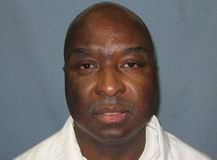
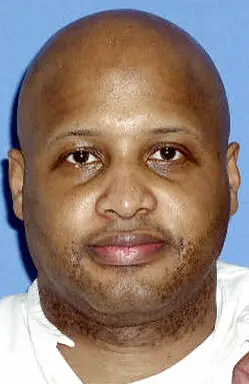
Holly Wood
Murderer Brian Kevin Rosenfeld
Murderer · USA · 1985
Brian Kevin Rosenfeld Brian Kevin Rosenfeld was sentenced to three concurrent l…
23 victims
Brian Kevin Rosenfeld
Murderer · USA · 1985
Brian Kevin Rosenfeld Brian Kevin Rosenfeld was sentenced to three concurrent l…
23 victims
 Russell Ellwood
Murderer · USA · 1991
Russell Ellwood was a former taxi driver. Authorities suspected him of killing…
20 victims
Russell Ellwood
Murderer · USA · 1991
Russell Ellwood was a former taxi driver. Authorities suspected him of killing…
20 victims
 Robert Martines Perez
Murderer · USA · 1994
Name: Robert Martines Perez · Other name used in proceedings: Robert Martinez P…
15 victims
Robert Martines Perez
Murderer · USA · 1994
Name: Robert Martines Perez · Other name used in proceedings: Robert Martinez P…
15 victims
 Billy Frank Vickers
Murderer · USA · 1993
Billy Frank Vickers Vickers was executed by lethal injection in Texas on Januar…
14 victims
Billy Frank Vickers
Murderer · USA · 1993
Billy Frank Vickers Vickers was executed by lethal injection in Texas on Januar…
14 victims
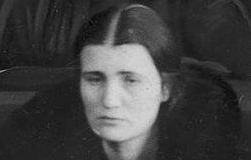 Rita Gorgonowa
Murderer · Poland · 1931
Rita Gorgonowa Rita Gorgonowa was also known by the real name Emilia Margerita…
1 victim
Rita Gorgonowa
Murderer · Poland · 1931
Rita Gorgonowa Rita Gorgonowa was also known by the real name Emilia Margerita…
1 victim
 Jordan Nelson
Homicide · New Zealand · 2012
Jordan Nelson was a 13-year-old. He was New Zealand's youngest convicted murder…
1 victim
Jordan Nelson
Homicide · New Zealand · 2012
Jordan Nelson was a 13-year-old. He was New Zealand's youngest convicted murder…
1 victim
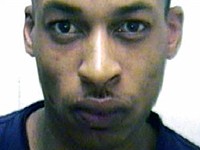 Joel Carl Smith
Murderer · United Kingdom · 2003
Joel Carl Smith (born 1973) was a drug dealer. He was also known as “Cocaine” o…
2 victims
Joel Carl Smith
Murderer · United Kingdom · 2003
Joel Carl Smith (born 1973) was a drug dealer. He was also known as “Cocaine” o…
2 victims
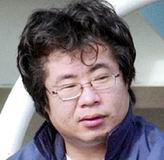 Kaoru Kobayashi
Murderer · Japan · 2004
Kaoru Kobayashi (小林 薫, Kobayashi Kaoru, November 30, 1968 – February 21, 2013)…
1 victim
Kaoru Kobayashi
Murderer · Japan · 2004
Kaoru Kobayashi (小林 薫, Kobayashi Kaoru, November 30, 1968 – February 21, 2013)…
1 victim
 Therressa Jolynn Ritchie
Murderer · USA · 1995
Therressa Jolynn Ritchie was convicted for killing her 4-year-old daughter, Sam…
1 victim
Therressa Jolynn Ritchie
Murderer · USA · 1995
Therressa Jolynn Ritchie was convicted for killing her 4-year-old daughter, Sam…
1 victim
 Linda Charbonneau
Murderer · USA · 2001
Linda Lou Charbonneau was 53 at the time of the crimes and later was 56 at sent…
2 victims
Linda Charbonneau
Murderer · USA · 2001
Linda Lou Charbonneau was 53 at the time of the crimes and later was 56 at sent…
2 victims
- Gender
- male
- Country
- USA
- Location
- Pike County, Alabama, USA
- Date of birth
- July 4, 1960
- Age at first offence
- 33
- Characteristics
- revenge
- Victim profile
- Ruby Lois Gosha, 34 (his former girlfriend)
- Method of murder
- Shooting (12-gauge shotgun)
- Date(s) of murder
- September 1, 1993
- Years active
- 1993
- Date of arrest
- Same day
- Status
-
Executed
Executed by lethal injection in Alabama on September 10, 2010
Case identification
Holly Wood (DOC# 00Z573) was sentenced to death in Alabama and was executed on September 10, 2010.
Background
Ruby Lois Gosha was Holly Wood’s former girlfriend and the mother of his child. She lived in the home of her mother with her children.
At the time Wood killed Ruby Lois Gosha, he was already on parole for a prior violent felony shooting of another former girlfriend, Barbara Siler, whom he had shot through the window of her home. Wood had another 18 arrests on his record.
The offence
On the evening of September 1, 1993, Holly Wood entered the Troy residence of Ruby Gosha and shot and killed Ruby Gosha, with whom he had formerly had a relationship and by whom he had had a child. Ruby Gosha was 34 years old.
Ruby’s mother testified that at around 5:00 p.m. on September 1, she told Wood to leave her home and not come back. Ruby’s mother stated that Ruby lived at her house in Troy and that Wood returned around 9:00 p.m. Ruby’s mother testified that she and Ruby retired to separate rooms at about 9:00 p.m., and she later heard a “pop” or what sounded like a “firecracker shot.” She went through Ruby’s bedroom into the kitchen, saw that the door to the outside was open, and then returned to Ruby’s bedroom where she found Ruby lying in bed with gunshot wounds near her eye and near her cheek. Ruby’s skull was fractured and her brain was injured. Ruby was pronounced dead after paramedics transported her to the Edge Regional Medical Center emergency room in Troy.
Ruby’s brother and Ruby’s mother’s son, Willie Gosha, testified that he was in the house and heard someone “creep through” a door, then heard a gunshot and heard someone moving quickly back through the door.
A medical examiner, Doctor Alfredo Paredes, performed an autopsy and recovered several lead shot pellets from Ruby’s head. He testified that the cause of death was a shotgun wound to the face that fractured Ruby’s skull and injured her brain. Paredes also testified to recent injuries including a recent cut and bruises on Ruby’s palm and back of her left hand, two recent trauma-induced scars on her right forearm, a recent scar on her left forearm, and a recent scar on her left upper arm.
Calvin Salter, Wood’s cousin, testified that a few days before September 1, 1993, he accompanied Wood to Ruby’s mother’s house to deliver diapers, but Ruby and Ruby’s mother told Wood to leave. Salter testified that later that same day, Wood and Salter saw Ruby at a shopping center and spoke, though Salter did not know what they discussed. Salter testified that between 7:00 p.m. and 8:00 p.m. on September 1, Wood came by his mother’s house in Luverne, and Wood drove his father’s pickup truck. Salter stated that they drove to Troy, stopped on a nearby street, and that Wood left the truck and told Salter to circle the block. Salter circled the block and parked the truck, and Wood returned. Salter testified that an automobile driven by a man named Amp passed, and Wood told Salter to follow it. They followed Amp’s car until it passed the Gosha residence, then Wood directed Salter to drive slowly toward the house and told him to stop. Salter testified that Wood took a 12-gauge shotgun from the gun rack of the truck, stuck it down his pants leg, covered it with his shirt, left the truck, and walked toward the Gosha house. Salter testified that he parked the truck at a nearby apartment complex, made a telephone call at a public pay telephone, heard a gunshot after hanging up, and returned to the truck where Wood was sitting. Salter testified that Wood then said, “Let’s go to Luverne.” Wood told Salter that he shot Ruby while she was lying in bed asleep and that he said: “I shot that bitch in the head, and [blew] her brains out and all she did was wiggle.” Salter testified that Wood also threw 12-gauge shotgun shells out the window and stated he knew he had killed Ruby and that police would be coming after him.
Salter testified that when they arrived in Luverne they went to Wood’s father’s house, buried the gun under leaves in a wooded area, and slept in a shed near Wood’s father’s house. Salter also testified that Wood said he attempted to stab Ruby in the heart before the shooting but that Ruby had thrown her arm up to protect herself and he had stabbed her in the arm instead.
Investigation and arrest
Luverne Police Officer Clifton Wells testified that late on the night of September 1, 1993, he located a vehicle parked at Wood’s father’s house that matched a description from a “be-on-the-lookout” bulletin from the Troy Police Department. Wells testified that after Wood’s father told him Wood lived in a shed next to the house, Wells arrested Wood there.
Wells transported Wood to the Luverne Police Department and placed him in a cell. Troy Police Officer Donald Brown entered the cell, informed Wood of his Miranda rights, and performed a gunshot residue test on Wood’s hands. After the test was performed, Wood was escorted from the department by Troy Police Officer Lewis Fannin.
Officer Fannin testified that he transported Wood from the Luverne Police Department to the Troy Police Department and that he engaged in no conversation during the trip, but that Wood stated: “You motherfuckers must think I am crazy. What do I look [like] going in somebody's house shooting them in the head while they are asleep?” (R. 713.)
Troy Police Officer Donald Brown testified that Calvin Salter was in the shed after Wood was arrested. Brown testified that later that night Salter led officers to a wooded area near the shed where they found a shotgun under some leaves.
Joe Saloom, a forensic scientist, examined the shotgun recovered near the shed and the shotgun shell wadding and lead shot pellets found in Ruby’s head. Saloom testified that residue in the barrel indicated the shotgun had not been cleaned since it was last fired, and that it was a 12-gauge single-shot Herrington and Richardson shotgun. Saloom testified that the wadding found in Ruby’s head was a “combination wad and shot column, or shot protector, ... located inside a shot shell to hold the shot and cushion it from the detonation,” and that it was expelled upon firing. Saloom testified that the wadding was 12-gauge type and was consistent with ammunition used in the recovered shotgun. He also testified that the pellets recovered from Ruby’s head were consistent in size and weight with “number 6 shot from a shotgun shell.”
Trial
Charges and conviction
On October 20, 1994, a jury unanimously convicted Holly Wood of capital murder during a first-degree burglary. The jury recommended a death sentence by a vote of 10-2. Following a separate sentencing hearing and pre-sentencing report, the trial judge sentenced Wood to death.
The conviction is described as capital murder because it was committed during the course of a burglary in the first degree.
Evidence of burglary unlawfully entering or remaining
In the direct appeal, Wood argued the state failed to prove the elements of first-degree burglary, including that he “unlawfully enter[ed] or remain[ed]” in Ruby’s house because no evidence showed Ruby did not invite him to speak with her again when they spoke at a shopping center a few days before the crime, and that no evidence was presented that he broke into the Gosha house.
The appellate court stated that the relevant evidence showed Ruby had told Wood to leave her alone, that Ruby and her mother told Wood to leave their property, and that Ruby’s mother told him never to return. It also stated Ruby’s mother testified that if Wood was ever on her property after she told him never to return, it was not by her invitation.
Batson-related issues in jury selection
In the direct appeal, Wood contended the prosecutor used peremptory strikes against prospective jurors in a racially discriminatory manner, in violation of Batson v. Kentucky. The appellate court recited that Wood specifically attacked strikes of black veniremembers A.B. (juror number 17), J.G. (juror number 46), C.B. (juror number 73), S.N. (juror number 95), A.R. (juror number 115), S.S. (juror number 118), S.S. (juror number 119), E.T. (juror number 133), M.T. (juror number 134), and A.U. (juror number 140).
The appellate court discussed the prosecutor’s additional reasons given for striking certain veniremembers, including:
- A.B. indicated she did not want to serve because she had a dental appointment.
- A.R. indicated he did not want to serve because he needed to be at work to earn money to meet child support obligations.
- S.S. (juror number 119) had contact with the police department under circumstances logged as “suspicious circumstances.”
- E.T. indicated she did not want to serve and feared for her safety and her family if she served, and E.T. was also an alcoholic.
- M.T. did not want to serve because he was a college student concerned about missing exams.
- A.U. was a correctional officer; the prosecutor was concerned he had become sympathetic to the prisoners he was guarding.
The appellate court found no violation of Batson in this case, reasoning that the reasons given included race-neutral reasons and that the appellant had not attacked additional reasons the prosecutor gave.
Admission of Ruby’s mother’s testimony
Wood argued error in allowing Ruby’s mother to testify that approximately two weeks before the murder, Ruby told her that Wood “slipped up behind her and cut her on the arm.” The appellate court stated any error in the admission of that testimony, if any, was harmless because after Ruby’s mother testified, Calvin Salter testified without objection that Wood told him he had attempted to stab Ruby in the heart but she threw her arm up to protect herself, and he stabbed her in the arm instead.
Admission of Wood’s statement during transport
Wood contended error regarding admission into evidence of his statement made to Troy Police Officer Lewis Fannin while being transported from Luverne to the Troy Police Department. The appellate court recited that Fannin testified Wood said: “You motherfuckers must think I am crazy. 713.) The appellate court stated that Fannin also testified no police officer supplied Wood with details of the murder at the time he made the statement. The appellate court rejected Wood’s arguments and stated any error would have been harmless in light of trial testimony from Officer Clifton Wells that he was in Wood’s presence from arrest through escort and that neither Wells nor any other officer told Wood any details.
Sentencing
The trial judge sentenced Holly Wood to death after the jury recommended death.
At sentencing, the trial court found three aggravating circumstances:
- The murder was committed while Wood was under a sentence of imprisonment.
- Wood had previously been convicted of a felony involving the use or threat of violence to the person.
- The murder was committed during the course of a burglary.
The trial court found no statutory or nonstatutory mitigating circumstances.
The appellate court later affirmed the judgment and concluded the sentence of death was proper, not imposed under the influence of passion, prejudice, or any other arbitrary factor, and not excessive or disproportionate.
Appeals and postconviction
Direct appeal
On direct appeal, the appellate court affirmed Wood’s conviction and sentence. The appellate opinion stated the prosecutor had race-neutral reasons for peremptory strikes, evidence was sufficient to support first-degree burglary, an incriminating statement was admissible, and the death sentence was proper.
Postconviction proceedings under Rule 32 and appeal
After affirmance of his conviction and death sentence on appeal, Wood filed a petition for postconviction relief under Alabama Rule 32. The circuit court dismissed some claims and denied the rest after an evidentiary hearing. The appellate court described holdings including that:
- facts that a clinical psychologist was not licensed in the state and that practicing without a license was a misdemeanor did not, by themselves, prevent the psychologist from providing expert testimony during trial;
- the trial court’s use of a bifurcated approach to determine whether Wood could present expert psychological testimony was an abuse of discretion; and on return to remand,
- counsel’s purported inexperience was not ineffective assistance per se;
- counsel’s alleged failure to investigate and present evidence to avoid the death penalty was not ineffective assistance; and
- the record supported the trial court’s adopted verbatim findings and conclusions.
The appellate court remanded for further consideration in light of Atkins v. Virginia concerning mental retardation and the related ineffective assistance issues.
The appellate court discussed a motion in limine to exclude expert testimony by Dr. Faye E. Sultan due to licensing issues in Alabama, and described the circuit court’s order requiring Dr. Sultan to establish she was licensed before testifying on psychological issues derived from administering tests in Alabama or through an interview with Wood.
The appellate court remanded with instructions for the circuit court to conduct an evidentiary hearing and make specific, written findings of fact on whether Wood was mentally retarded and whether trial attorneys were ineffective by failing to develop and present evidence that he was mentally retarded.
On return to remand, the appellate court affirmed the circuit court’s denial of relief, adopting its findings, including that Wood did not establish he was mentally retarded for Atkins purposes and did not establish ineffective assistance in the related respects.
Federal habeas corpus
Holly Wood filed a petition for writ of habeas corpus following state court decisions. The U.S. Court of Appeals for the Eleventh Circuit recounted that the district court granted relief in part and denied relief in part, and that after cross-appeals the Eleventh Circuit:
- affirmed the denial of Wood’s Atkins and Batson claims;
- reversed the grant of the writ based on ineffective assistance of counsel and remanded with instructions to deny Wood’s § 2254 petition.
The Eleventh Circuit’s decision stated that Alabama courts’ rejection of Wood’s mental retardation claim was reasonable and not contrary to Atkins, and that the prosecutor’s peremptory strikes were not discriminatory.
The court further discussed ineffective assistance claims, including counsel’s handling of evidence of intellectual functioning and mental health evidence during the penalty phase, and stated that Wood failed to satisfy the standards under Strickland as applied under AEDPA review.
A dissenting opinion stated that counsel’s penalty phase preparation and investigation were inadequate and that Wood was prejudiced.
Outcome
Holly Wood was executed by lethal injection in Alabama on September 10, 2010.
Other details
Wood was listed as 50 years old at execution. His date of birth was given as 7/4/1960.
The execution was carried out at Holman Correctional Facility in Atmore, Alabama, at 6:21 p.m. Wood had no last words. Two of his sisters witnessed the execution and screamed, cried, and prayed loudly as he was executed; Wood did not respond.
Spotted an error, or have more information about this case?