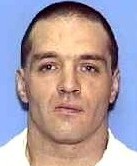
Gregory Edward Wright
Murderer Russell Ellwood
Murderer · USA · 1991
Russell Ellwood was a former taxi driver. Authorities suspected him of killing…
20 victims
Russell Ellwood
Murderer · USA · 1991
Russell Ellwood was a former taxi driver. Authorities suspected him of killing…
20 victims
 Robert Martines Perez
Murderer · USA · 1994
Name: Robert Martines Perez · Other name used in proceedings: Robert Martinez P…
15 victims
Robert Martines Perez
Murderer · USA · 1994
Name: Robert Martines Perez · Other name used in proceedings: Robert Martinez P…
15 victims
 Billy Frank Vickers
Murderer · USA · 1993
Billy Frank Vickers Vickers was executed by lethal injection in Texas on Januar…
14 victims
Billy Frank Vickers
Murderer · USA · 1993
Billy Frank Vickers Vickers was executed by lethal injection in Texas on Januar…
14 victims
 Bennie Eddie Demps
Murderer · USA · 1971
Bennie Eddie Demps was convicted of the September 7, 1976 stabbing death of Alf…
3 victims
Bennie Eddie Demps
Murderer · USA · 1971
Bennie Eddie Demps was convicted of the September 7, 1976 stabbing death of Alf…
3 victims
 Derrick Wayne Frazier
Murderer · USA · 1997
Derrick Wayne Frazier was executed in Texas by lethal injection on August 31, 2…
2 victims
Derrick Wayne Frazier
Murderer · USA · 1997
Derrick Wayne Frazier was executed in Texas by lethal injection on August 31, 2…
2 victims
 Greagree Davis
Murderer · USA · 1984
Greagree C. Davis told the roommate of his sexual interest in her. He had prior…
1 victim
Greagree Davis
Murderer · USA · 1984
Greagree C. Davis told the roommate of his sexual interest in her. He had prior…
1 victim
 Dionne Baugh
Murderer · USA · 1996
Dionne Baugh was a Jamaican native who lived in Atlanta, Georgia. After her div…
1 victim
Dionne Baugh
Murderer · USA · 1996
Dionne Baugh was a Jamaican native who lived in Atlanta, Georgia. After her div…
1 victim
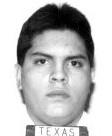 Raul Omar Villarreal
Homicide · USA · 1993
Raul Omar Villarreal was 17 years of age when he participated in the gang rape…
2 victims
Raul Omar Villarreal
Homicide · USA · 1993
Raul Omar Villarreal was 17 years of age when he participated in the gang rape…
2 victims
- Gender
- male
- Country
- USA
- Location
- Dallas County, Texas, USA
- Date of birth
- November 1, 1965
- Age at first offence
- 32
- Characteristics
- robbery, drug addict, drugs
- Victim profile
- Donna Duncan Vick (female, 52)
- Method of murder
- St abbing with knife
- Date(s) of murder
- March 21, 1997
- Years active
- 1997
- Date of arrest
- 2 days after
- Status
-
Executed
Executed by lethal injection in Texas on October 30, 2008
Parties and identities
- Gregory Edward Wright was the defendant.
- Donna Duncan Vick was the victim, described as a 52-year-old widow.
- John Wade Adams was another defendant who was also held on death row.
Timeline
- March 20, 1997 — Wright and Vick drove in her car to a house in north Oak Cliff where Wright purchased and used crack cocaine before leaving with Vick.
- March 21, 1997 — Vick was stabbed to death in her home in DeSoto, Texas, in the early hours of the day.
- March 22, 1997 — John Wade Adams placed an emergency 911 call to the Dallas Police Department stating he had witnessed a murder the night before, and then led authorities to an abandoned white Chrysler New Yorker registered to Vick.
- March 23, 1997 — Police arrested Wright and seized a bloody and gold-paint splattered pair of blue jeans at a shack where Wright sometimes stayed; police also found a bloody knife outside the shack.
- December 1, 1997 — Defense received the statement from Daniel McGauhey after trial had begun (as described in later federal proceedings).
- June 2000 — The Texas Court of Criminal Appeals affirmed Wright’s conviction and sentence.
- November 17, 2006 — The United States Court of Appeals for the Fifth Circuit denied Wright’s motion for a certificate of appealability.
- August 11, 2008 — John Wade Adams made a statement referenced in the material.
- October 30, 2008 — Wright was executed by lethal injection in Texas.
Background
Donna Duncan Vick was described as charitable and religious and known for ministering to and aiding the homeless. Wright was described as a homeless man and panhandler who held a cardboard sign offering to work for food. Vick saw Wright on a street corner and took him in. She prepared sandwiches for him and his friend at her home in DeSoto, and Wright later returned with John Adams to her residence.
Wright was described as having become homeless and as having been a trucker before becoming homeless. The material described Wright as meeting and marrying his wife, Connie Wright, while on death row, and stated that she and other supporters said he was innocent.
The material also described living conditions on death row and mentioned the Polunsky Unit. It said that Texas moved death row prisoners from Ellis Unit in Huntsville to Polunsky Unit in Livingston, Texas, and described security features of Polunsky Unit and rules affecting prisoners’ recreation, visits, library access, and meals.
The offence
Victim, location, and nature of injury
Vick was stabbed to death in her home in DeSoto, Texas, in the early hours of March 21, 1997. At the scene, police found Vick’s body in the master bedroom of her home with a pillow covering her face and lying in a pool of blood. The material stated that Vick sustained multiple stab wounds, with bruises and cuts to her face, neck, chin, hands, and throat area.
Relationship and events leading to the killing
Vick invited Wright to reside in her house in exchange for doing yard work. Wright had been staying there as a guest for about one week prior to the night of the killing. On the day before the killing, Wright and Vick drove to a house in north Oak Cliff where Wright purchased and used crack cocaine, then later met with Adams. The material stated that the three then went to a VFW lodge around midnight and stayed until 2:00 a.m.
After returning to Vick’s home, Vick cooked some food for Adams and Wright. Vick then went to bed. At some point thereafter, Wright held up a paper towel toward Adams with the words "Do you want to do it?" written on it.
Suspected use of weapons and number of knives
A medical examiner testified that Vick could have been stabbed by more than one knife. The material said authorities and trial evidence referenced a pocket knife belonging to Adams and a butcher knife from Vick’s kitchen.
Robbery and taking of property
The material stated that Wright and Adams gathered up items in Vick’s home, including her microwave, portable CD player, TV, VCR, computer equipment, and a newly purchased weed-eater, and transported them to a crack house to trade for drugs. It stated that they stole Vick’s car as well.
In a description of testimony, Llewelyn Mosley testified that Adams and Wright arrived at his house and told him they had things from a woman in DeSoto they wanted to get rid of, including a television, weed eater, rifle, color printer, and microwave. The material stated that several of these items were later identified as belonging to Donna Vick, and that Wright negotiated with the dealer; after exchanging some items, Wright and Adams exchanged “high fives.”
Investigation
911 call and police response
On March 22, 1997, John Wade Adams placed an emergency 911 call to the Dallas Police Department. He stated that he had witnessed a murder the night before. The material stated that Adams subsequently led authorities to an abandoned white Chrysler New Yorker registered to Donna Duncan Vick.
Discovery of the body and scene description
The material said the police discovered Vick’s body in the master bedroom of her home, found with a pillow covering her face and lying in a pool of blood. It described that the lack of evidence demonstrating a struggle elsewhere indicated the attack occurred on Vick’s bed, with her assailant straddling her on the bed during the murder.
Physical evidence described in the material
The material stated the police found:
- A handwritten note in a trash can reading: “Do you want to do it?”
- DNA evidence and blood evidence, including blood found on the steering wheel belonging to Wright.
- Wright’s bloody fingerprint on Vick’s pillowcase.
- A bloody and gold-paint splattered pair of blue jeans seized from a shack where Wright sometimes stayed, with the material stating the blood on the jeans was Vick’s.
- A bloody knife found outside the shack and later another knife in a vacant lot near Mosley’s home, with DNA evidence stating the blood on the knife was Vick’s blood.
- Several cans of gold spray paint found in Wright’s home, and witnesses testified that Wright had previously been seen with gold paint on his face and clothes. The material stated it was theorized Wright had inhaled spray paint to get high.
- Mail addressed to Adams at the shack.
- Police found mail and multiple items belonging to Vick in the context of the investigation.
Wright’s conduct after arrest
After Wright was arrested, the material stated he phoned a friend from jail and asked her to remove any of his clothing from the shack.
911 tapes and discovery dispute described in later proceedings
The material described disputes regarding the 911 tapes and statements made by Daniel McGauhey, including allegations that copies of the tapes were lost and that the defense did not receive the tapes.
It also stated that Daniel McGauhey placed a 911 call to the Dallas Police Department at approximately 7:30 on Saturday, March 22, 1997, stating that Adams had approached him and confessed that he murdered someone in DeSoto and could not deal with it and wanted to turn himself in. The material described that McGauhey later provided a written statement on March 25, 1997.
The material included an assertion that:
- the District Attorney’s Office lost the only copies of the 911 tapes prior to when the defense could listen,
- and that McGauhey had not been given to Greg or his attorneys.
Arrest
The material stated that Adams led police to a shack that Wright sometimes stayed in, where police arrested Wright and seized bloody and gold-paint splattered blue jeans and found a bloody knife outside the shack. It also stated that the police found a bloody knife in a vacant lot near Mosley’s home, with DNA evidence matching Vick’s blood.
Trial
Charges and theory at trial
The material described that the jury was charged on the basis of Wright being the primary actor rather than simply an accomplice. The material described that the prosecution argued that both Adams and Wright attacked Vick.
It also described that at trial the state presented testimony and evidence including a conversation attributed to Adams, and that the jury was instructed that it could convict Wright only if it found he actually attacked Vick.
Evidence and witnesses described
The material stated that:
- Wright and Adams blamed each other for the killing.
- A witness told jurors that soon after the murder, Wright and Adams traded Vick’s television, VCR, microwave, and other possessions with him in exchange for crack.
- A witness described Wright holding a paper towel saying "Do you want to do it?"
- Police officers and investigators provided testimony about evidence linking Wright to the crime, including Wright’s blood, fingerprint evidence, the blue jeans, and knives with Vick’s blood.
- Llewelyn Mosley testified regarding stolen items brought to his home and a negotiation with a dealer for crack, including “high fives.”
Admission of Detective Trippel testimony and optional completeness
The material described Wright’s appeals regarding admission of testimony by Detective Dan Trippel about a conversation with Adams, who did not testify. It stated that on redirect the prosecution elicited the remainder of the conversation and the trial court allowed it under the Rule of Optional Completeness. The material included the verbatim testimony elicited before the jury in that hearing:
[BY THE STATE:] Det. Trippel, I want to ask you about the conversation that you had with John Adams in which he stated that the knife had been used in the murder of Donna Vick.
A. Yes, sir.
Q. [W]ould you please relate to the members of the jury the complete conversation that you had with John Adams while you were in the car there in Lancaster.
A. After we contacted Lancaster Police Department and we asked DeSoto [Police Department] to check on Mrs. Vick, I had a conversation with John Adams. I wanted to know what he knew about this murder, what he had seen, and he told me that several days earlier, while he was on the street panhandling, [appellant] and Mrs. Vick, were riding in her white Chrysler New Yorker. He stated that they picked him up and took him back to her home. While at home, Mrs. Vick had fixed [appellant] and John Adams some lunch, and while [appellant] and John Adams were eating, [appellant] told John Adams that he was going to rob Mrs. Vick, and he took the knife belonging to John Adams.
John Adams said he didn't believe [appellant], but when Mrs. Vick went into the bedroom, [appellant] followed her into the bedroom. [Adams] said that while he was eating, he heard Miss [sic] Vick yelling, saying, [appellant], why are you doing this? John Adams said he got up and went into the bedroom, and when he went into the bedroom, he saw [appellant] stabbing Mrs. Vick on the bed.Of course, this is-this-he didn't know what to think of that, but after [appellant] was stabbing her, the knife broke; and that [appellant] went back into the kitchen and got a kitchen knife.[Appellant] went back into the bedroom and continued to stab Mrs. Vick, where he killed her.John Adams then said that [appellant] told him to get her property and that they took her TV, computer equipment, loaded it up in a white Chrysler New Yorker, and then they-they left the scene.
Jury verdict and sentencing
The material stated that the jury found Wright guilty of capital murder and sentenced him to death. It also stated that the Texas Court of Criminal Appeals affirmed the conviction and sentence.
Direct appeal decision described
The material included discussion of Wright v. State, 28 S.W.3d 526 (Tex. Crim. App. 2000), including that the Court of Criminal Appeals affirmed the judgment, and listed points of error and rulings including that:
- the conviction was affirmed,
- due process did not entitle additional time for experts to analyze DNA evidence (as described),
- and the court found that certain testimony was admissible.
Sentencing
The material stated that pursuant to the jury’s answers to special issues under Texas Code of Criminal Procedure article 37.071 §§ 2(b) and 2(e), the trial court sentenced Wright to death. It also stated that the Texas Court of Criminal Appeals affirmed the sentence in June 2000.
Appeals
State direct appeal
The material described that Wright’s conviction was affirmed on direct appeal to the Texas Court of Criminal Appeals in 2000, citing Wright v. State, 28 S.W.3d 526 (Tex. Crim. App. 2000).
State and federal habeas proceedings described
The material described that Wright petitioned for habeas corpus in state court and that the trial judge and the Texas Court of Criminal Appeals denied relief. It also described federal proceedings:
- A magistrate judge recommended denying relief.
- The district court judge adopted the recommendation and denied the petition.
Fifth Circuit certificate of appealability
The material described that on November 17, 2006, the United States Court of Appeals for the Fifth Circuit denied Wright’s motion for a certificate of appealability. The opinion described claims including:
- a Confrontation Clause claim,
- ineffective assistance of counsel,
- and Brady claims.
It described the Fifth Circuit’s reasoning that the Confrontation Clause claim was procedurally barred due to failure to preserve it with a specific Confrontation Clause objection, and that ineffective assistance and Brady claims did not merit a COA under its standard.
Outcome
Wright was convicted of capital murder and sentenced to death. The material stated that his execution was carried out by lethal injection in Texas on October 30, 2008.
It also included descriptions of Wright’s last statement, including:
"The truth doesn't matter," Wright said in an interview from death row a few days before his execution. He said he was stunned when his guilty verdict was announced. "I couldn't believe what was happening ... I am innocent." Wright again proclaimed his innocence in his last statement at his execution. "There's been a lot of confusion who done this," he said. "I never sold anything to anyone. My only act or involvement was not telling on him. John Adams was the one that killed Donna Vick. The evidence proves that ... I was in the bathroom when he attacked. I ran into the bedroom. By the time I came in, when I tried to help her with first aid, it was too late." Wright also expressed love to his family. "I'll be waiting on y'all," he said in closing. "I am finished talking."
The material stated that Wright was pronounced dead at 6:20 p.m. and that the victim’s son Jerry Don Blanton attended the execution and made statements afterward. It included the following verbatim statements by Jerry Don Blanton:
"He could have been the hero in this if that was a true story," Blanton answered. "I really think if there was any truth in what he said, he could have probably stopped this. And if he wanted to protect his friend, all he had to do was call 911 and get an ambulance out there."
The material also included statements attributed to Wright’s attorney Meg Penrose, including:
"I thought justice demanded we executed the right person," Meg Penrose, one of Wright's lawyers, said. "I'd rather wait thirty years and make sure we have the proper individual executed than wait twelve and hedge our bets. I don't like the rush to review that we're at. A person who is innocent is rushed to the gurney and is executed."
Other details
People and relationships mentioned
- Connie Wright was identified as Wright’s wife, and the material stated they married while Wright was on death row.
- Llewelyn Mosley testified and was described as a habitual felon in the material.
- Daniel McGauhey was described as a video store clerk who made a 911 call.
- Jerry Causey was described as a witness who testified at Adams’ trial and whose alleged exculpatory information was not provided in Wright’s trial (as described in Wright’s later filings).
- Charles Nealy was mentioned in connection with a claim of Adams’s confession while incarcerated; an affidavit was referenced.
- Kent Taylor was mentioned as Mosley’s attorney in the material.
- Joe D. Morris was mentioned in connection with a polygraph examiner and a quote asserting that after polygraph charts and analysis he believed Wright was truthful on relevant test questions.
- Peter Bellamy was mentioned as a supporters coordinator and as signing a letter on behalf of supporters and Gregory Wright.
- A local paper interview involving Wright’s daughter Line and the visit to Polunsky Unit was mentioned (with date October 16, 2003).
Quotes and handwritten notes included in the material
- The handwritten note in the trash can read: “Do you want to do it?”
- A handwritten note included in the description of trial evidence and witness observations repeated the same phrase.
- The material included statements by John Wade Adams, including the quoted statement attributed to him:
"I want the record clear that Greg Wright is innocent of the crime he’s here on death row for. If you kill him your (sic) killing a innocent man. Greg Wright was used as a scape goat. I’m doing this because I’m tired of seeing innocent people being killed for murders they’ve not done the statement I made is a lie the one that I made at the first of our arrest. Greg Wright is innocent! I was there and know better. Did you place the murder of Donna D. Vick on the hands of Gregory E. Wright? Yes to make it look like he did it. I set him up."
Allegations and disputed issues described in later proceedings (as facts about the case narrative)
The material described Wright’s and others’ assertions, including allegations that:
- the State lost or did not disclose 911 tapes,
- the State allegedly withheld evidence including a witness Causey and a witness McGauhey,
- the State allegedly misrepresented timing and availability of evidence,
- Adams recanted and later renounced a statement at a hearing,
- and certain fingerprint testimony was allegedly unreliable. The material also described that Wright claimed DNA testing and other evidence supported innocence, and that Wright submitted to a polygraph examination.
Drug-related details included in the material
The material repeatedly described crack cocaine use and trading for drugs, and described gold spray paint inhalation “to get high.” It also included statements and characterizations that Wright had been a former homeless man with drinking and drug use described in the narrative.
Spotted an error, or have more information about this case?