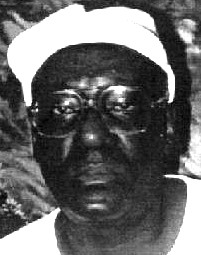
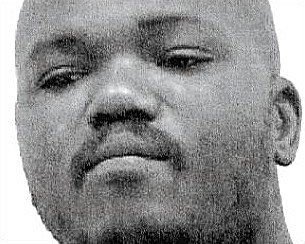
Freddie Lee Wright
Murderer Ervil LeBaron
Murderer · USA · 1972
Ervil Morrell LeBaron (1925 to August 16, 1981) was the leader of a polygamous…
35 victims
Ervil LeBaron
Murderer · USA · 1972
Ervil Morrell LeBaron (1925 to August 16, 1981) was the leader of a polygamous…
35 victims
 Brian Kevin Rosenfeld
Murderer · USA · 1985
Brian Kevin Rosenfeld Brian Kevin Rosenfeld was sentenced to three concurrent l…
23 victims
Brian Kevin Rosenfeld
Murderer · USA · 1985
Brian Kevin Rosenfeld Brian Kevin Rosenfeld was sentenced to three concurrent l…
23 victims
 Marvin Gray
Murderer · USA · 1975
Marvin Gray was convicted killer who claimed responsibility for 23 slayings and…
23 victims
Marvin Gray
Murderer · USA · 1975
Marvin Gray was convicted killer who claimed responsibility for 23 slayings and…
23 victims
 Yahweh ben Yahweh
Murderer · USA · 1980
Yahweh ben Yahweh was born and legally named Hulon Mitchell Jr. (October 27, 19…
23 victims
Yahweh ben Yahweh
Murderer · USA · 1980
Yahweh ben Yahweh was born and legally named Hulon Mitchell Jr. (October 27, 19…
23 victims
 Robert Poyson
Murderer · USA · 1996
Robert Poyson lived in a remote area of Mohave County with Leta Kagen (30), Let…
3 victims
Robert Poyson
Murderer · USA · 1996
Robert Poyson lived in a remote area of Mohave County with Leta Kagen (30), Let…
3 victims
 Stephen Hugueley
Murderer · USA · 1986
Name: Stephen Lynn Hugueley Stephen Lynn Hugueley was sentenced to death on Sep…
3 victims
Stephen Hugueley
Murderer · USA · 1986
Name: Stephen Lynn Hugueley Stephen Lynn Hugueley was sentenced to death on Sep…
3 victims
 Tyler Hadley
Homicide · USA · 2011
Tyler Hadley was convicted of killing his parents, Mary Jo Hadley and Blake Had…
2 victims
Tyler Hadley
Homicide · USA · 2011
Tyler Hadley was convicted of killing his parents, Mary Jo Hadley and Blake Had…
2 victims
 Andre Cole
Murderer · USA · 1998
Andre Cole and his wife, Terri Cole (Terri), divorced in 1995 after eleven year…
1 victim
Andre Cole
Murderer · USA · 1998
Andre Cole and his wife, Terri Cole (Terri), divorced in 1995 after eleven year…
1 victim
 David Herold
Assassin · USA · 1865
David Edgar Herold (16 June 1842 – 7 July 1865) conspired with John Wilkes Boot…
1 victim
David Herold
Assassin · USA · 1865
David Edgar Herold (16 June 1842 – 7 July 1865) conspired with John Wilkes Boot…
1 victim
 Thomas Silverstein
Murderer · USA · 1983
Thomas Silverstein (1952–) was a convicted American murderer. He was described…
3 victims
Thomas Silverstein
Murderer · USA · 1983
Thomas Silverstein (1952–) was a convicted American murderer. He was described…
3 victims
- Gender
- male
- Country
- USA
- Location
- Mobile County, Alabama, USA
- Date of birth
- April 29, 1951
- Age at first offence
- 26
- Characteristics
- armed robbery, rape
- Victim profile
- Warren Green, 40, and his wife, Lois, 37 ( Western Auto Store owners )
- Method of murder
- Shooting
- Date(s) of murder
- December 1, 1977
- Years active
- 1977
- Date of arrest
- —
- Status
-
Executed
Executed by electrocution in Alabama on March 3, 2000
Case record: Freddie Lee Wright
Background
Freddie Lee Wright was convicted of armed robbery and of the murders of Warren Green and Lois Green at a Western Auto store in Mount Vernon, Alabama.
Warren and Lois Green were killed during a robbery at their store. They were forced into a back room at gunpoint, bound back to back with extension cords, and shot in the head at point blank range. Warren was pronounced dead at the scene and Lois died about two hours later at a local hospital. The Greens left behind one daughter who was sixteen years old at the time of their murders.
A ccording to case background material, the robbery occurred on Warren Green’s 40th birthday on December 1, 1977. The killings were described as taking place at the Western Auto Store in Mount Vernon, Alabama, about 30 miles north of Mobile.
The offence
On December 1, 1977, a Western Auto store in Mount Vernon, Alabama was robbed. Warren and Lois Green were tied up and shot with a .38 caliber handgun.
Testimony described the victims being taken into a “little room” and then being tied up with an extension cord. The defendant made trips from the store to a car and took items including money from the cash register, a television, a stereo component system, and several watches. The defendant also had Mr. Green’s watch.
One of the items stolen was Warren’s new Seiko watch his wife and daughter had given him the night before. It was recovered at a pawn shop in Mobile.
Two individuals were reported to have been shot in the head once each, and Mr. Green’s watch was identified as missing.
Investigation
A customer named Mary Johnson left the Western Auto store as a man later identified as Theodore Otis Roberts entered. Mary Johnson observed a light blue car in the parking lot with one person in the front passenger seat and three people in the back seat.
After the robbery was reported on the news, Mary Johnson called police with information about what she had seen. She later identified Theodore Otis Roberts from a police photo spread and then again at a lineup. Mary Johnson also identified a light blue Buick Riviera with an angel hood ornament as the car associated with Roberts.
The Mobile County Police obtained a search warrant for a .38 caliber handgun traced to Roberts. Mobile County Detective Albert Stroh executed a search affidavit in which Detective Stroh swore under oath that he had spoken with Roberts’s girlfriend and that the girlfriend had told him Roberts’s handgun was the weapon used in the double murders. A search warrant was issued and a .38 caliber handgun was recovered, and a state toxicologist identified the handgun as positively being the murder weapon.
Later investigation included a statement by Roger McQueen while in Mississippi. In the summer of 1978, the police received information that an inmate at Parchman State Penitentiary in Mississippi named Roger McQueen had knowledge of the murders. Police interviewed McQueen in Mississippi, and after the interviews, police arrested Freddie Lee Wright, along with Percy Craig and Reginald Tinsley.
Freddie Lee Wright’s gun was described in trial testimony as a .38 caliber Smith and Wesson revolver.
The case included a pawn-shop recovery of a Seiko watch, which was described as having been pawned by Joe Nathan Beckham at Buster’s Eagle Pawn Shop in Mobile on January 16, 1978.
Ballistics testimony included findings that Mr. and Mrs. Green were each shot once in the head with a .38 caliber bullet. The bullet recovered from Mr. Green’s head could have been fired from a pistol recovered directly behind the defendant’s apartment. The bullet that killed Mrs. Green was described as too mutilated to compare.
Arrest
Freddie Lee Wright was arrested at the Stone Oaks Apartment on July 28, 1978. Wright was living with Hazel Craig. Deputies searched the apartment and found Wright in a bedroom. A .38 caliber revolver was recovered on the ground next to an air conditioning unit at the rear of the apartment. The ground was described as damp but the gun was described as “perfectly dry” and as having a fine coating of lint material.
Trial
First trial (mixed-race jury; mistrial)
Wright’s first trial ended in a mistrial. A mixed-race jury voted 11 to 1 for acquittal, resulting in a mistrial. The jury vote was described as 11 to 1 for acquittal and was also described as 11 out of 12 jurors voting to acquit, according to narrative material included with the case facts.
The foundation of the state’s case at the first capital murder trial included testimony from accomplices Roger McQueen and Percy Craig. The state also introduced ballistic testimony from Mr. Small regarding a handgun traced to Wright being “consistent with” the murder weapon.
A new trial was scheduled after the mistrial.
Second trial (all-white jury; conviction and sentence)
About a month later, a second trial occurred before an all-white jury. Wright, described as black, was convicted by the all-white jury of capital murder and was sentenced to death.
The second trial included testimony from Doris Lacey Lambert, Wright’s former girlfriend and the mother of his child. Doris Lambert testified at the second trial that Wright told her after the murders that he “killed two people with a gun” in a Western Auto store. The testimony was described as confession testimony made on the day after the murders.
Co-defendants’ testimony and recantations
At the second trial, Wright’s admitted accomplices included Roger McQueen, Percy Craig, and Reginald Tinsley. Narrative material described that McQueen and Craig testified Wright was the shooter and fired the fatal shots. It was also stated that later McQueen recanted his testimony years later.
Narrative material also stated that Roger McQueen later recanted his testimony and said he had lied when he identified Wright as the killer. A quotation attributed to McQueen at a 1996 federal hearing described McQueen apologizing to Wright from the witness stand: “I'm sorry, dude.”
Evidence described at trial
At trial, Doris Lacey Lambert testified that Wright told her that he had been with “Craig, Roger, and ‘Gill Man,’” to Mount Vernon and that he killed two people with a gun in a Western Auto store.
Roger McQueen testified that Craig told him to “make sure the people were taken care of” because “the people would have identified the car.” McQueen testified that Wright was the last to leave the store and that when Wright returned to the car the others asked what took place and he said he had taken care of both people. McQueen testified that Wright provided “2 empty cartridge[s] from the gun.”
Percy Craig testified that he had been convicted for “possession,” forgery, and burglary. He admitted his participation in the offense as the driver and testified that he intended to plead guilty to murder. Craig testified that after leaving the store the defendant gave McQueen “a couple of empty cartridges ... to throw out of the window.” Craig also testified that he saw Wright with a Seiko watch that was later identified as Mr. Green’s watch and that Wright gave the watch to Joe Nathan Beckham who pawned it.
The state presented expert testimony that included bullet comparison testimony, including that the bullet recovered from Mr. Green’s head could have been fired from a pistol recovered behind the defendant’s apartment. The bullet that killed Mrs.
Sentencing
After a separate sentencing hearing, the trial court imposed the death sentence.
Appeals
Clemency
Gov. Don Siegelman denied Wright’s clemency petition. A prepared statement quoted Siegelman: “It is clear to me that the death penalty is appropriate in this case.”
A new appeals effort included filing new appeals with the Alabama Supreme Court and the U.S. Supreme Court asking for stays of execution.
State courts
The Alabama Supreme Court voted 7-2 to deny Wright’s appeal. One of the dissenting justices was Justice Douglas Johnstone of Mobile, and a dissenting quotation was included: “Whether Wright is electrocuted or injected seems insignificant compared to the likelihood that we are sending an innocent man to his death.”
Earlier reviews included that Wright’s case was said to have had at least 14 post-trial reviews, including one judge reviewing the conviction and refusing to stop the execution.
U.S. Supreme Court
The U.S. Supreme Court rejected Wright’s appeal on a 5-4 vote, sealing his fate.
Federal habeas corpus and legal issues raised
Wright appealed the denial of his petition for a writ of habeas corpus to the Eleventh Circuit. The appellate decision affirmed the district court’s denial of habeas relief.
Wright’s federal habeas appeal included issues concerning Brady v. Maryland and allegations that items of evidence had been withheld, including:
- testimony of Mary Johnson placing Theodore Otis Roberts at the Western Auto store shortly before the murders,
- an affidavit by Detective Stroh about statements from Roberts’s girlfriend regarding the murder weapon,
- evidence relating to Doris Lambert’s mental health and drug use,
- evidence that the state and Roger McQueen entered a secret agreement that provided lenient treatment for McQueen if he testified against Wright.
The appellate decision also addressed procedural default issues, and it addressed ineffective assistance of counsel claims and a Batson v. Kentucky claim alleging racially discriminatory use of peremptory strikes.
The Eleventh Circuit opinion concluded that there was no Brady violation on the Johnson testimony and also concluded Wright could not overcome procedural default on other Brady-related items. It also concluded that Wright did not demonstrate prejudice for ineffective assistance claims that were properly before the court, and it affirmed the denial of habeas relief. The decision ended with “AFFIRMED.”
Other details
Names and identifying details from letters and summaries
A set of statements attributed to Freddie Lee Wright included details described as follows:
- Freddie Lee Wright was described as African-American, with an identifier “#Z-389.”
- It was stated that he was incarcerated on Alabama death row since July 5, 1979.
- It was stated that he was 47 years old, born April 29, 1951, and weighed 229.
- It stated a hometown of Mobile, Alabama.
- It included narrative about his “last two rounds of appeals,” and it stated that the last appeal for rehearing in the 11th Circuit was denied, and that he had until July 20 to file a final appeal to the U.S. Supreme Court.
- It stated that he was accused of committing two murders during a robbery and was said to be “the trigger man of a four-man robbery team.”
- It described that the first trial was held before a mixed jury and ended in a mistrial, and that after the two alternate jurors were excused, the vote was 11-1 for acquittal, resulting in a mistrial.
- It described that the second trial used an all-white jury and that the State put on one additional witness and suppressed her mental health records.
- It described being convicted and sentenced to die in Alabama’s electric chair.
Quotations included in the material
Doris Lambert’s testimony at the second trial included a quoted confession fragment in case narrative: she said Wright told her “he had went out with some of his friends ... to Mount Vernon and that he killed two people with a gun.” A separate direct quote included the phrasing of the planned punishment and holding out by the dissenter juror described in narrative material: “someone must be severely punished for such a senseless crime,” and that Wright was “the only one left that could receive the level of punishment deserved.”
A quotation attributed to McQueen at a 1996 federal hearing stated: “I'm sorry, dude.”
A quotation from Gov. Don Siegelman stated: “It is clear to me that the death penalty is appropriate in this case.”
A quotation from dissent in an Alabama Supreme Court vote stated: “Whether Wright is electrocuted or injected seems insignificant compared to the likelihood that we are sending an innocent man to his death.”
Victims and witnesses
Wright’s victims were Warren Green and Lois Green. Other referenced individuals included:
- Kim Green, daughter of the slain couple,
- Wendy Sancher Wright, Wright’s wife,
- Ryan Russell, a private investigator,
- Kathy Simison, a friend of the Greens from Mount Vernon,
- John Hamm, a spokesperson for the prison system (named in narrative),
- Kim Green and Kim Green’s uncles (two uncles) were mentioned in opposition to lethal injection discussions and planned to witness the execution with two uncles.
Mary Johnson was described as a patron who identified a man entering the store as Theodore Otis Roberts.
Doris Lacey Lambert testified at Wright’s second trial.
Roger McQueen, Percy Craig, and Reginald Tinsley were described as co-defendants/accomplices who implicated Wright.
Execution details and timing
Wright was executed in Alabama on March 3, 2000 by electrocution. He was described as being pronounced dead at 12:11 a.m., and it was stated that he made no statement before his death.
Spotted an error, or have more information about this case?