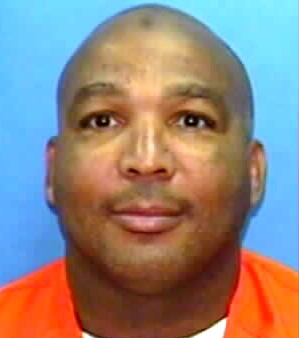
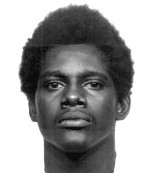
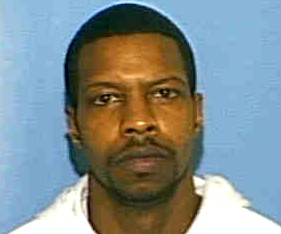
Bennie Eddie Demps
Murderer Ervil LeBaron
Murderer · USA · 1972
Ervil Morrell LeBaron (1925 to August 16, 1981) was the leader of a polygamous…
35 victims
Ervil LeBaron
Murderer · USA · 1972
Ervil Morrell LeBaron (1925 to August 16, 1981) was the leader of a polygamous…
35 victims
 Marvin Gray
Murderer · USA · 1975
Marvin Gray was convicted killer who claimed responsibility for 23 slayings and…
23 victims
Marvin Gray
Murderer · USA · 1975
Marvin Gray was convicted killer who claimed responsibility for 23 slayings and…
23 victims
 Yahweh ben Yahweh
Murderer · USA · 1980
Yahweh ben Yahweh was born and legally named Hulon Mitchell Jr. (October 27, 19…
23 victims
Yahweh ben Yahweh
Murderer · USA · 1980
Yahweh ben Yahweh was born and legally named Hulon Mitchell Jr. (October 27, 19…
23 victims
 Charles Manson
Murderer · USA · 1969
Charles Milles Manson (born November 12, 1934) was an American criminal and mus…
9 victims
Charles Manson
Murderer · USA · 1969
Charles Milles Manson (born November 12, 1934) was an American criminal and mus…
9 victims
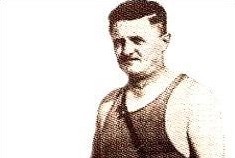 Joe Ball
Serial killer · USA · 1936
Joe Ball (January 6, 1896 – September 24, 1938) was an American serial killer.…
14 victims
Joe Ball
Serial killer · USA · 1936
Joe Ball (January 6, 1896 – September 24, 1938) was an American serial killer.…
14 victims
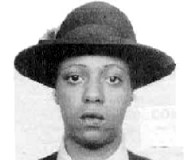 Corrine Sykes
Murderer · USA · 1944
Corrine Sykes was 20 years old when she worked as a housemaid for Mrs. Wodlinge…
1 victim
Corrine Sykes
Murderer · USA · 1944
Corrine Sykes was 20 years old when she worked as a housemaid for Mrs. Wodlinge…
1 victim
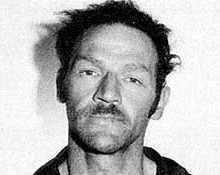 Richard Marquette
Murderer · USA · 1961
Richard Marquette, also known as Dick Marquette, was a convicted murderer from…
3 victims
Richard Marquette
Murderer · USA · 1961
Richard Marquette, also known as Dick Marquette, was a convicted murderer from…
3 victims
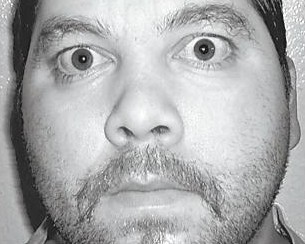 Daniel Lee Zirkle
Murderer · USA · 1999
Daniel Lee Zirkle had an ongoing relationship with Barbara Schifflett, who was…
2 victims
Daniel Lee Zirkle
Murderer · USA · 1999
Daniel Lee Zirkle had an ongoing relationship with Barbara Schifflett, who was…
2 victims
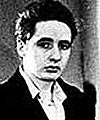 Joseph Christopher
Serial killer · USA · 1980
Joseph Christopher was a 25-year-old Army private when he was arrested at Fort…
12 victims
Joseph Christopher
Serial killer · USA · 1980
Joseph Christopher was a 25-year-old Army private when he was arrested at Fort…
12 victims
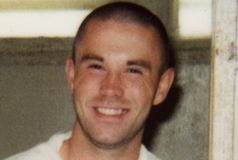 Mark Anthony Duke
Mass murderer · USA · 1997
Mark Anthony Duke was 16 years old when he committed a capital offense. He resi…
4 victims
Mark Anthony Duke
Mass murderer · USA · 1997
Mark Anthony Duke was 16 years old when he committed a capital offense. He resi…
4 victims
- Gender
- male
- Country
- USA
- Location
- Lake County, Florida, USA
- Date of birth
- J une 17, 1950
- Age at first offence
- 21
- Characteristics
- —
- Victim profile
- R.N. Brinkworth and Celia Puhlick / Alfred Sturgis (fellow inmate)
- Method of murder
- Shooting / St abbing with knife
- Date(s) of murder
- 1971 - 1976
- Years active
- 1971–1976
- Date of arrest
- —
- Status
-
Executed
Executed by lethal injection in Florida on June 7, 2000
Case details
Bennie Eddie Demps was convicted of the September 7, 1976 stabbing death of Alfred Sturgis at Florida State Prison. Sturgis was found in his cell bleeding from multiple stab wounds. Demps was serving a life sentence at Florida State Prison for prior first-degree murders and an attempted murder. Demps, along with fellow inmates James Jackson and Harry Mungin, were implicated in the attack on Sturgis through testimony and statements made as Sturgis was being taken to the hospital.
Timeline
- September 7, 1976 — Alfred Sturgis was stabbed in his cell at Florida State Prison.
- 1971 — Demps was convicted for murders in a Lake County orange grove; his sentence was later reduced from death to life.
- 1972 — The U.S. Supreme Court decided Furman v. Georgia, and Demps’ death sentence was commuted to life.
- June 5, 2000 — The Florida Supreme Court denied an execution-related appeal 7-0.
- June 7, 2000 — Demps was executed by lethal injection in Florida.
Background
Alfred Sturgis was serving a life term for murder and was described as an alleged “snitch.” Demps was a fellow inmate at Florida State Prison.
Demps was part of an inmate group that named themselves “Perjury Incorporated,” a prison gang that rooted out inmate informants. At the time of the Sturgis killing, Demps was serving a double life sentence for murdering two people in a Lake County orange grove in 1971. Demps was originally sentenced to death for the double homicide, and the death sentences were commuted to life after Furman v. Georgia.
The offence
On September 6, 1976, personnel at Florida State Prison discovered inmate Alfred Sturgis in a cell bleeding from stab wounds. Sturgis was rushed first to the hospital at Union Correctional Institute and then to the state prison at Lake Butler. Due to inadequate facilities at both institutions, Sturgis was taken to Shands Teaching Hospital in Gainesville, where he died soon after arrival.
In the dying declaration, Sturgis named his assailants. One account described that while en route to the hospital, Sturgis told correctional officer A. V. Rhoden that appellant, Jackson, and Mungin had committed the knifing. Rhoden later reduced the statement to writing and included it in a report filed with R. K. Griffis, a Department of Corrections investigator. After defense requests to produce the written document, the state informed the court that Mr. Griffis had misplaced Rhoden’s statement.
At trial, Mr. Rhoden explained to the jury what Sturgis had told him in the ambulance. In one cited exchange, Rhoden stated:
“You have to get Mungin and Demps, they held me and Jackson stabbed me.”
“Which Jackson?”
“Toothless Jackson.”
Fellow inmate Larry Hathaway testified that while walking past Harry Mungin’s cell on the afternoon of the murder, Mungin told him to go downstairs and stay there because Mungin was “fixing to get rid of a snitch.” Hathaway followed the instruction but returned shortly afterward to notice a struggle in the cell where Sturgis was later found. Hathaway testified that Mungin was standing in the door of the cell, and inside Hathaway could see appellant holding Sturgis down on the bed while Jackson struck him with downward thrusts. Hathaway quickly left the scene.
Investigation
Defense counsel learned that while en route to the hospital, Sturgis told correctional officer A. V. Rhoden reduced the statement to writing and included it in a report filed with R. K.
In a pretrial hearing, the court refused to dismiss the indictment based on the state’s failure to produce Rhoden’s report.
Arrest
No separate arrest event was stated in the provided material.
Trial
A grand jury indicted inmates Bennie Demps, James Jackson and Harry Mungin for the murder of Alfred Sturgis.
At trial, Rhoden’s testimony included the ambulance dying declaration exchange quoted above. Hathaway testified as described above and corroborated Sturgis’ dying declaration, according to the materials discussing the case.
During the trial, the defense sought to impeach Hathaway’s testimony by showing Hathaway was a homosexual, on the premise that Hathaway implicated the codefendants in exchange for a transfer to the prison where his lover, Robert Ziegler, resided. The trial court held Hathaway’s homosexuality inflammatory and irrelevant and limited questioning to whether Ziegler and Hathaway were “real good friends,” while allowing questions about the possibility of a transfer.
At the sentencing phase, the jury recommended life imprisonment for Mungin and death for Jackson and appellant. The trial judge sentenced Mungin and Jackson to life imprisonment, but sentenced appellant to death.
Sentencing
Demps was convicted of first-degree murder for his role in the crime and was sentenced to death based inter alia on the fact that he had committed two prior first-degree murders.
The materials stated that Demps’ death sentences for his earlier murders had been reduced to life pursuant to Furman v. Georgia. For the Sturgis murder, the death penalty was again pursued.
Appeals
Demps appealed his conviction and sentence.
Florida Supreme Court and postconviction history
Demps v. State, 395 So. 2d 501 (Fla. 1981) (Direct Appeal) affirmed the conviction and sentence. The materials also described procedural history including multiple postconviction filings.
Demps later pursued additional postconviction relief, including a fourth motion for postconviction relief pursuant to Florida Rule of Criminal Procedure 3.850, and also sought mandamus relief.
In the 3.850 proceedings, Demps claimed he discovered a memorandum dated September 7, 1976, written by Chief Prison Inspector and Investigator Cecil Sewell and addressed to Louie Wainwright, then Secretary of the Department of Corrections. The memorandum was described as newly discovered and included the statement that before Sturgis died, he named James Jackson as his assailant, in contrast to Rhoden’s account naming Demps among the attackers.
The trial court accepted, without finding, that the memorandum was newly discovered. The trial court found the memorandum had little impeachment value as to A. V. Rhoden because it was not clear from what source Sewell derived his assertion that Sturgis named Jackson as his “assailant,” and it was also not clear why “assailant” was used. The trial court found the possibility of an acquittal on retrial minimal and denied an evidentiary hearing.
The Florida Supreme Court corrected opinion per curiam dated June 5, 2000 affirmed the denial of the rule 3.850 motion and denied the petition for writ of mandamus.
Federal habeas corpus
Federal appeals described claims alleging, among other things, that the state failed to reveal a deal with its key witness and that the trial court unconstitutionally limited cross-examination. The materials also discussed the state interference claim regarding defense witness Michael Squires, and the denial of habeas relief was affirmed.
Outcome
Demps was executed by lethal injection in Florida on June 7, 2000.
Other details
Inmate group and prison gang
Demps, James Jackson, and Harry Mungin were said to be part of a group of inmates that named themselves “Perjury Incorporated,” a prison gang that rooted out inmate informants.
Prior convictions and earlier case narrative included in the materials
The materials described that Demps and Jackie Hardie were convicted in 1971 of murdering two people in a Lake County orange grove. Demps and Hardie reportedly stole a safe and took it to the grove to try to open it. A local real estate agent showing land to a Connecticut couple stumbled upon Demps and Hardie, and all three victims were ordered into the trunk of a car. When they tried to get out, Demps and Hardie opened fire, killing Celia and Nicholas Puhlick and wounding the third victim R.N. Brinkworth, who survived and identified Demps and Hardie. Hardie died in prison on January 26, 1999.
Execution-day accounts included in the materials
Demps’ final statement included claims about injuries during preparation for the lethal injection and assertions of innocence. One quoted account included:
“Mr. Schaefer, they butchered me back there.”
“I was in a lot of pain.”
“They cut me in the groin, they cut me in the leg... This is not an execution, it is murder.”
Demps’ execution time was reported as a lethal dose at 6:40 p.m. with pronouncement dead at 6:53 p.m. The materials also stated Demps’ eyes closed shortly after the chemicals were injected and he appeared to stop breathing at 6:42 p.m.
Family and public statements included in the materials
Tracy Demps was referenced as Demps’ wife, and she was quoted describing extensive research and statements about innocence. A letter from Pope John Paul II to Governor Jeb Bush was referenced in connection with clemency requests.
Jury instructions and constitutional litigation discussed
The materials discussed Hitchcock v. Dugger and Lockett v. Ohio in federal review, addressing jury consideration of mitigating circumstances. The materials also included references to Caldwell v. Mississippi and procedural default analysis in successive habeas claims.
Memorandum text excerpt included in the materials
The memorandum attributed to Cecil L. Sewell and addressed to Louie Wainwright included:
“Inspector Griffis notified this office of the death of Inmate Alfred Sturgis, B/M, #033044, sentenced to life from Brevard County for escape and murder, 2nd degree. Received in our system 172. Inmate Sturgis' DOB was 153. Subject was housed on "W" wing at FSP, and was stabbed in the chest with a home-made knife approximately 10" long. Inmate Sturgis was sent to UCI outpatient clinic and then to Shands Teaching Hospital, Gainesville. Dr. J. Isaacs, Shands, pronounced him dead at approximately 7:30 p.m., September 6, 1976. The stabbing occurred at approximately 4:30 p.m., September 6, 1976, and before Sturgis died, he named James Jackson, B/M, #029667, as his assailant.”
Legal names and procedural designations included in the materials
Multiple court decisions and docket references were included in the materials, including federal circuit case listings for Demps’ appeals and Florida Supreme Court case designation SC00-1118.
Spotted an error, or have more information about this case?