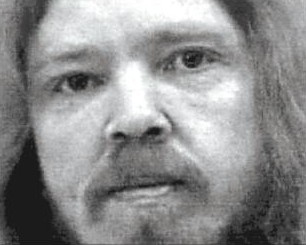
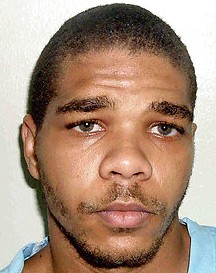
Robert Dale Yeatts
Murderer Brian Kevin Rosenfeld
Murderer · USA · 1985
Brian Kevin Rosenfeld Brian Kevin Rosenfeld was sentenced to three concurrent l…
23 victims
Brian Kevin Rosenfeld
Murderer · USA · 1985
Brian Kevin Rosenfeld Brian Kevin Rosenfeld was sentenced to three concurrent l…
23 victims
 Yahweh ben Yahweh
Murderer · USA · 1980
Yahweh ben Yahweh was born and legally named Hulon Mitchell Jr. (October 27, 19…
23 victims
Yahweh ben Yahweh
Murderer · USA · 1980
Yahweh ben Yahweh was born and legally named Hulon Mitchell Jr. (October 27, 19…
23 victims
 Russell Ellwood
Murderer · USA · 1991
Russell Ellwood was a former taxi driver. Authorities suspected him of killing…
20 victims
Russell Ellwood
Murderer · USA · 1991
Russell Ellwood was a former taxi driver. Authorities suspected him of killing…
20 victims
 Robert Martines Perez
Murderer · USA · 1994
Name: Robert Martines Perez · Other name used in proceedings: Robert Martinez P…
15 victims
Robert Martines Perez
Murderer · USA · 1994
Name: Robert Martines Perez · Other name used in proceedings: Robert Martinez P…
15 victims
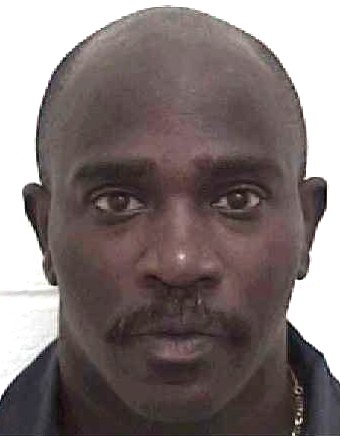 Keith Leroy Tharpe
Murderer · USA · 1990
Keith Leroy Tharpe, 39, was sentenced to death in January 1991 in Jones County…
1 victim
Keith Leroy Tharpe
Murderer · USA · 1990
Keith Leroy Tharpe, 39, was sentenced to death in January 1991 in Jones County…
1 victim
 Walter Seifert
Mass murderer · Germany · 1964
Committed suicide by poisoning himself with cyanide the same day; died next day…
10 victims
Walter Seifert
Mass murderer · Germany · 1964
Committed suicide by poisoning himself with cyanide the same day; died next day…
10 victims
 Leone Bouvier
Murderer · France · 1953
Leone Bouvier murdered her lover because he was going away from her. At the tri…
1 victim
Leone Bouvier
Murderer · France · 1953
Leone Bouvier murdered her lover because he was going away from her. At the tri…
1 victim
 Charles Butler
Murderer · USA · 1999
February (year not stated) — Charles M. Butler Jr. was asked to meet Billy Jack…
1 victim
Charles Butler
Murderer · USA · 1999
February (year not stated) — Charles M. Butler Jr. was asked to meet Billy Jack…
1 victim
 Jay Thompson
Murderer · USA · 1981
Richard Dillon was identified by a Deputy Sheriff as near the property at the t…
2 victims
Jay Thompson
Murderer · USA · 1981
Richard Dillon was identified by a Deputy Sheriff as near the property at the t…
2 victims
- Gender
- male
- Country
- USA
- Location
- Pittsylvania County, Virginia, USA
- Date of birth
- 1961
- Age at first offence
- 28
- Characteristics
- robbery
- Victim profile
- Ruby Meeks Dodson (female, 70)
- Method of murder
- St abbing with knife
- Date(s) of murder
- September 23, 1989
- Years active
- 1989
- Date of arrest
- —
- Status
-
Executed
Executed by lethal injection in Virginia on April 29, 1999
Case information
Name: Robert Dale Yeatts Other people named: Charles Michael Vernon; Ruby Meeks Dodson; Ronald J. Angelone; Jim Gilmore; David Garraghty; Eric Payne; Gerald T. Zerkin; Gerald T. Zerkin; Bob West (Rev. Bob West) Court: United States Court of Appeals for the Fourth Circuit Docket number: No. 98-19 Lower-court matter: Petition for habeas corpus relief under 28 U.S.C.A. § 2254 Respondent: Ronald J. Angelone, Director, Virginia Department of Corrections Outcome of appeal: The court denied a request for a certificate of probable cause to appeal and dismissed
Timeline
- Sept. 23, 1989 — Ruby Meeks Dodson was stabbed to death; Yeatts and Charles Michael Vernon killed Dodson during a robbery.
- Decided: January 12, 1999 — The United States Court of Appeals for the Fourth Circuit decided No. 98-19.
- April 29, 1999 — Robert Dale Yeatts was executed by lethal injection in Virginia.
- April 30, 1999 — Reporting described Yeatts’s execution following denial of clemency; it stated Yeatts was pronounced dead at 9:03 p.m.
Background
In December 1990, Ronald Dale Yeatts was sentenced to death for the capital murder of Ruby Meeks Dodson, 70. Yeatts was 28 years old at the time of the crime.
Yeatts filed this petition for habeas corpus relief from his Virginia conviction for capital murder and his resulting death sentence. The district court denied the relief sought.
The case concerned a challenge by Yeatts to (1) the state trial court’s refusal to permit him to inform the jury about parole eligibility and (2) the effectiveness of trial counsel in conducting voir dire.
The offence
On the afternoon of September 23, 1989, after ingesting alcohol, marijuana, and cocaine base, Yeatts and his friend Charles Michael Vernon decided to rob Ruby Meeks Dodson, a 70-year-old woman. The appellate opinion stated that Vernon previously had performed plumbing work for Dodson.
Yeatts and Vernon gained entry to Dodson’s home on the pretense of having experienced problems with his automobile. After gaining entry, Yeatts stabbed Dodson and slit her throat while Vernon searched her bedroom for money. After finding none in the bedroom, Vernon stole Dodson’s pocketbook and fled with Yeatts.
The appellate opinion stated that Dodson’s body was discovered on the floor of her kitchen later that evening.
In the clemency/press narrative contained in the provided material, Yeatts and Vernon drank beer and smoked marijuana and crack cocaine together that afternoon. Yeatts asked Vernon if he knew anyone who had some money; Vernon knew Dodson and knew she kept money in her home. Vernon drove the two of them to her house. As they neared her home, Yeatts asked if Vernon had a knife and Vernon handed him a pocket knife with a 3-inch blade. When they arrived, the two men opened the car’s hood and began looking at the motor. They told Dodson they were having trouble with their car. Yeatts asked for a glass of water, asked for a second glass, and entered the house after Dodson. Vernon went straight to Dodson’s bedroom, where he looked for money. Yeatts joined Vernon in the bedroom, grabbed Dodson’s purse before the two fled, and Yeatts was noticed to still have the knife and blood on his hand. Yeatts told Vernon he killed Dodson because she had seen his face. They opened the pocketbook and divided the money, with Vernon’s share coming to $700.
Investigation and arrest
The appellate opinion stated that the investigation led law enforcement officials to Vernon, who implicated himself and Yeatts in the crime. Vernon agreed to testify against Yeatts in exchange for a 20-year sentence.
The appellate opinion also stated that Yeatts confessed to the crime, and physical evidence connected him to the killing.
In the clemency/press narrative included in the provided material, it stated that after his arrest, Yeatts gave police several statements implicating himself, and he also admitted to his sister-in-law that he had killed Dodson.
Trial
Voir dire and jury selection
The appellate opinion described the state trial court’s voir dire procedures. The court conducted voir dire by separating prospective jurors into groups of four to six individuals. For each group, the court conducted a general voir dire, then the individual prospective jurors were questioned by the court and counsel. The court asked questions to “death qualify” prospective jurors.
The appellate opinion stated the trial court advised prospective jurors that capital murder was punishable by death or life imprisonment. The trial court asked three questions: whether each prospective juror possessed any opinion, conscientious, religious, psychological, moral, or other beliefs preventing conviction of someone for a crime punishable by death; whether any such beliefs would prevent the juror from imposing the death penalty if death was appropriate based on facts and circumstances; and whether the juror could consider voting to impose a sentence of life imprisonment if Yeatts were convicted of capital murder. The appellate opinion noted the words used by the court varied among prospective jurors but the court proceeded through essentially the same colloquy.
After questioning by the prosecution, defense counsel questioned prospective jurors individually. The appellate opinion stated that counsel asked death-qualifying questions in similar language, including whether the prospective juror believed the death sentence was the only appropriate punishment for capital murder and whether the prospective juror could consider all evidence and still impose a life sentence.
Parole-eligibility instruction
Yeatts requested that the state court instruct the jurors that, when assessing his future dangerousness and selecting punishment, they could consider that Yeatts would not be eligible for parole for 30 years if the jury imposed a life sentence. The state court refused Yeatts’s request.
During deliberations, the jury queried the court about how many years Yeatts would be required to serve before parole eligibility if given a life sentence. The court instructed that the jury should not consider the question of parole. The appellate opinion stated Yeatts preserved his prior objection to the failure to instruct the jury about parole eligibility and agreed that the proposed answer was a correct statement of Virginia law.
Convictions and jury finding
The appellate opinion stated that Yeatts’s jury returned a sentence of death based upon a finding of future dangerousness. The material also states that Yeatts was found guilty of capital murder and robbery.
The clemency/press narrative stated that a jury convicted Yeatts of capital murder and robbery and sentenced him to death for the murder and gave 20 years for the robbery.
Prior convictions and sentencing argument
During the sentencing proceeding after Yeatts’s convictions for capital murder and robbery, the prosecution elicited information concerning each of Yeatts’s prior convictions, including the date, the sentence imposed, and his parole or probation status at the time of each prior offense. The appellate opinion stated that this testimony demonstrated that for nearly ten years—from March 3, 1980, when Yeatts was first convicted of burglary, until four days before Dodson’s murder—Yeatts was incarcerated, on parole, or on probation.
In closing argument, the prosecution stressed Yeatts’s criminal record, emphasizing that Yeatts had been given numerous opportunities to amend his behavior yet had demonstrated a pattern of consistent criminal activity.
Accomplice sentencing
The clemency/press narrative stated that Vernon received two life sentences for murder and robbery. The appellate opinion stated that Vernon agreed to testify against Yeatts in exchange for a 20-year sentence.
In the clemency/press narrative, it also stated that because Vernon was sentenced before the Virginia legislature abolished parole for violent offenders, Vernon would be eligible for parole in 2002.
Sentencing
Yeatts was sentenced to death in December 1990 for capital murder. He also received 20 years for the robbery.
The appellate opinion stated that the jury returned a sentence of death based upon a finding of future dangerousness.
Appeals
Direct appeal
The appellate opinion stated that Yeatts’s convictions and sentences were affirmed on direct appeal and that the Supreme Court denied certiorari. It named the direct-appeal decision: Yeatts v. Commonwealth, 410 S.E.2d 254 (Va. 1991) and stated that certiorari was denied in 503 U.S. 946 (1992).
State habeas
The appellate opinion stated that after filing a petition for habeas corpus relief in state court in October 1992, the Supreme Court of Virginia granted Yeatts’s petition for appeal on two issues and denied relief. It named the decision: Yeatts v. Murray, 455 S.E.2d 18, 20, 22 (Va. 1995). The appellate opinion stated that the state habeas court dismissed Yeatts’s petition without conducting an evidentiary hearing.
Federal habeas and issues raised in the Fourth Circuit
Yeatts filed a § 2254 petition. The appellate opinion stated that Yeatts claimed, among other things, that the state trial court erred in refusing to permit him to inform the jury of his parole eligibility during the sentencing phase and that his trial counsel was ineffective for failing to adequately death-qualify prospective jurors during voir dire.
Due process claim about parole eligibility
The appellate opinion stated that Yeatts contended the state trial court deprived him of due process by refusing to permit him to inform the jury that, taking into account the 20-year sentence he received for the robbery, he would not be eligible for parole for 30 years if given a life sentence for Dodson’s murder.
The appellate opinion stated that the court concluded this due-process claim was procedurally defaulted.
Ineffective assistance claim about voir dire
The appellate opinion stated that Yeatts argued he was denied his Sixth Amendment right to effective assistance of counsel by his trial counsel’s failure to conduct a sufficient voir dire to determine whether prospective jurors would consider mitigating circumstances in determining his sentence.
The appellate opinion stated that the court found Yeatts’s ineffective assistance claim failed. It described the legal standards from Strickland v. Washington and standards regarding impartial jurors and voir dire in capital cases, including references to Morgan v. Illinois and Wainwright v. Witt. It also discussed Mackall v. Angelone.
The appellate opinion stated that Yeatts’s claim failed because the prospective jurors were asked questions during voir dire “virtually identical to those deemed constitutionally adequate” in Mackall v. Angelone. The appellate opinion concluded that Yeatts could not demonstrate counsel acted unreasonably in failing to ask prospective jurors questions other than those held sufficient in Mackall and could not demonstrate prejudice.
Outcome (Fourth Circuit)
The appellate opinion stated that Yeatts had not made a substantial showing of the denial of a constitutional right. It denied Yeatts’s request for a certificate of probable cause to appeal and dismissed. It also included a concurring opinion by Hamilton, Circuit Judge.
Hamilton, Circuit Judge (concurring)
Hamilton, Circuit Judge, concurred in part and in the judgment, stating that he concurred in the opinion of the court except Part II concluding procedural default. He stated that he believed there was no procedural default because the Commonwealth waived this affirmative defense by failing to plead it in the district court. He concurred in the judgment because he believed the claim was barred by the non-retroactivity principle announced in Teague v. Lane.
Clemency and execution
Governor’s clemency decision
The provided material included a statement by Governor Jim Gilmore regarding the execution of Ronald Dale Yeatts on April 29, 1999. It stated:
"Ronald Dale Yeatts brutally murdered 70-year-old Ruby Meeks Dodson in her home. A jury convicted Yeatts of capital murder and robbery and sentenced him to death. After reviewing all of the evidence, the judge imposed the death sentence. The convictions and death sentence were upheld on multiple appeals. "Upon a thorough review of the Petition for Clemency, the numerous court decisions regarding this case, and the circumstances of this matter, I decline to intervene."
Execution details and final statement
The provided material stated that Yeatts was put to death by lethal injection in Virginia on April 29, 1999, after Gilmore rejected a clemency petition that claimed the jury was not adequately informed of its options to sentence Yeatts to life in prison after finding him guilty of murder.
It stated that Yeatts made no statement before he was injected with a dose of chemicals at the Greensville Correctional Center in Jarratt.
It stated that the warden, David Garraghty, said Yeatts was pronounced dead at 9:03 p.m. It also stated that Yeatts made no final statement.
Other details
- The material referenced “1998 WL 874877” and listed a non-exhaustive set of circuit references in the appellate opinion about procedural default discretion.
- The appellate opinion included an explanation that Yeatts named Ronald J. Angelone, Director of the Virginia Department of Corrections, as Respondent in his petition, and for ease of reference the opinion referred to Respondent as “the Commonwealth.”
- The appellate opinion stated that because Yeatts’s petition for a writ of habeas corpus was filed on June 30, 1995, prior to April 24, 1996 effective date of the Antiterrorism and Effective Death Penalty Act of 1996, amendments to 28 U.S.C.A. § 2254 effected by § 104 of the AEDPA do not govern resolution of the appeal; it also stated the state habeas proceeding was filed in October 1992 and finally decided by the Supreme Court of Virginia March 3, 1995.
- The material stated that Yeatts visited with his parents, sister, ex-wife and son earlier on Thursday before his execution.
- The material stated that Yeatts was from Blairs in rural Pittsylvania County.
- The clemency/press narrative stated that a neighbor found Dodson dead on her kitchen floor.
- The clemency/press narrative stated that Yeatts’s minister, Rev. Bob West, said:
"The hardest thing for him (Yeatts) was to see a good friend go last night."
- The clemency/press narrative stated that Yeatts had maintained his innocence but his attorney, Gerald T. Zerkin of Richmond, admitted in the clemency plea to Gilmore that Yeatts was the killer. It also stated that Zerkin argued the jury should have been told Yeatts would not be eligible for parole for 30 years if they gave him a life sentence.
- The material stated that the Supreme Court voted 7-2 against stopping the execution, with Justices John Paul Stevens and Ruth Bader Ginsburg voting in the minority.
- The material stated that Yeatts’s execution marked the first time since 1945 that Virginia executed two inmates on consecutive days and that it was the eighth condemned inmate put to death in Virginia that year and the 67th overall since Virginia resumed capital punishment in 1982.
- It also stated that on Wednesday night, Eric Payne was put to death for killing two women during a spree of hammer beatings in the Richmond area in 1997.
Spotted an error, or have more information about this case?