John C. Young
Murderer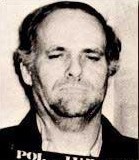 Ervil LeBaron
Murderer · USA · 1972
Ervil Morrell LeBaron (1925 to August 16, 1981) was the leader of a polygamous…
35 victims
Ervil LeBaron
Murderer · USA · 1972
Ervil Morrell LeBaron (1925 to August 16, 1981) was the leader of a polygamous…
35 victims
 Marvin Gray
Murderer · USA · 1975
Marvin Gray was convicted killer who claimed responsibility for 23 slayings and…
23 victims
Marvin Gray
Murderer · USA · 1975
Marvin Gray was convicted killer who claimed responsibility for 23 slayings and…
23 victims
 Yahweh ben Yahweh
Murderer · USA · 1980
Yahweh ben Yahweh was born and legally named Hulon Mitchell Jr. (October 27, 19…
23 victims
Yahweh ben Yahweh
Murderer · USA · 1980
Yahweh ben Yahweh was born and legally named Hulon Mitchell Jr. (October 27, 19…
23 victims
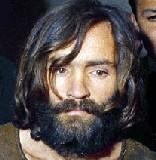 Charles Manson
Murderer · USA · 1969
Charles Milles Manson (born November 12, 1934) was an American criminal and mus…
9 victims
Charles Manson
Murderer · USA · 1969
Charles Milles Manson (born November 12, 1934) was an American criminal and mus…
9 victims
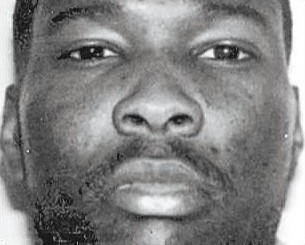 Mark Arlo Sheppard
Murderer · USA · 1993
November 28, 1993 — Mark Arlo Sheppard and his companion Andre Graham shot and…
2 victims
Mark Arlo Sheppard
Murderer · USA · 1993
November 28, 1993 — Mark Arlo Sheppard and his companion Andre Graham shot and…
2 victims
 Tyrone Earl Walton
Murderer · USA · 1987
Tyrone Earl Walton was convicted in 1988 of two counts of aggravated murder, on…
1 victim
Tyrone Earl Walton
Murderer · USA · 1987
Tyrone Earl Walton was convicted in 1988 of two counts of aggravated murder, on…
1 victim
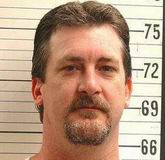 Steven Ray Thacker
Murderer · USA · 1999
Steven Ray Thacker was a white male born on 11/21/70. He was listed as alias Da…
3 victims
Steven Ray Thacker
Murderer · USA · 1999
Steven Ray Thacker was a white male born on 11/21/70. He was listed as alias Da…
3 victims
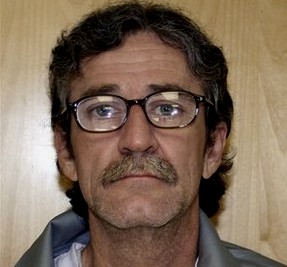 Dennis Skillicorn
Murderer · USA / Mexico · 1979
Dennis Skillicorn was sentenced to death for his role in the murder of Richard…
6 victims
Dennis Skillicorn
Murderer · USA / Mexico · 1979
Dennis Skillicorn was sentenced to death for his role in the murder of Richard…
6 victims
- Gender
- male
- Country
- USA
- Location
- Bibb County, Georgia, USA
- Date of birth
- 1956
- Age at first offence
- 18
- Characteristics
- drug addict
- Victim profile
- Coleman Brice, Gladys Brice, and Katie Davis (elderly people)
- Method of murder
- Beating
- Date(s) of murder
- December 7, 1974
- Years active
- 1974
- Date of arrest
- 2 days after
- Status
-
Executed
Executed by electrocution in Georgia on March 20, 1985
Case overview
John C. Young was tried by a jury in the Superior Court of Bibb County and was convicted of three counts of murder. He was sentenced to death on each count. He was executed in Georgia by electrocution in 1985.
Timeline
- December 7, 1974 — Six elderly persons were attacked, severely beaten, kicked, and stomped in their homes in the City of Macon, Bibb County, Georgia; all lived in the same neighborhood.
- December 9, 1974 — John Young was arrested.
- December 19, 1974 — John Young was indicted.
- December 23, 1974 — Counsel was appointed.
- June 30, 1975 — A jury returned a verdict against John Young’s special plea of insanity.
- July 25, 1975 — The trial court denied motions concerning the grand jury array.
- October 21, 1975 — A second jury returned a verdict against the plea of insanity.
- January 5, 1976 — The trial was begun.
- February 2, 1976 — Charles Marchman Jr was arrested, shortly after Young’s trial.
- March 20, 1985 — John Young was executed by electrocution in Georgia.
- March 18, 1985 — An evidentiary hearing was held on the issue of abuse of the writ in a successive federal habeas corpus proceeding.
- March 19, 1985 — The Eleventh Circuit issued an order denying a certificate of probable cause and a stay of execution.
- March 21, 1985 — Coverage described that John Young was executed in Georgia’s electric chair early that day.
The offence
On the night of December 7, 1974, six elderly persons were attacked, severely beaten, kicked, and stomped in their homes in the City of Macon, Bibb County, Georgia. All lived in the same neighborhood. Three of those people pieced together a description of their assailant. The other three victims died as a result of attacks upon them.
John Young was connected to the crimes by watches and jewelry taken during the commission of the crimes, a fingerprint, and statements to his friends that he did it. When asked if he was the one who had jumped on those people, he replied: "Yeah, man and I'm going to get me some more." When asked if they were white or black, he responded: "White." When asked: "Why, John?" he replied: "I don't know. The only thing that I am sorry is that they caught me before I got through."
The three people who died as a result of attacks upon them were Coleman Brice, Gladys Brice, and Katie Davis.
Investigation and evidentiary links
The evidence presented showed that John Young was connected to the crimes by:
- watches and jewelry taken during the commission of the crimes,
- a fingerprint, and
- statements to his friends that he did it.
Arrest and pre-trial
John Young was arrested on December 9, 1974 and was indicted on December 19, 1974. Counsel was appointed on December 23, 1974.
John Young filed a special plea of insanity before trial.
A challenge to the array of the grand jury filed after indictment was properly considered by the trial court where the allegations therein to the effect that the defendant had no knowledge, either actual or constructive, of the alleged illegal composition of the grand jury prior to the time the indictment was returned.
The trial court denied motions regarding the grand jury array.
Trial
Charges and jury findings
John Young was convicted of three counts of murder in the Superior Court of Bibb County.
As to each murder conviction, the jury found as aggravating circumstances:
- the offense of murder was committed while the offender was engaged in the commission of burglary or arson in the first degree; and
- the offense of murder was outrageously or wantonly vile, horrible or inhuman in that it involved torture, depravity of mind, or an aggravated battery to the victim.
He was before the Supreme Court of Georgia on appeal and for mandatory review of the death sentence imposed.
Pre-trial publicity and venue
A pre-trial motion for change of venue was refused based on unfavorable pre-trial publicity. On voir dire, ten of the twelve jurors stated they had not read or heard any pre-trial publicity or were not influenced by it. One juror required the state to prove the defendant's guilt beyond a reasonable doubt. The questioning included:
- "[H]ave you any prejudice or bias resting on your mind either for or against this defendant?"
- "Is your mind perfectly impartial between the State and the accused?" Only one prospective juror answered the first question in the affirmative and was excused for cause. There was no negative response to the second question.
Most of the media coverage was during December 1974. The trial was not begun until January 5, 1976.
Flight charge
The trial court charged the jury on flight based on evidence that shortly before leaving the neighborhood where the crimes were committed, John Young was confronted with the fact that the crimes had been discovered. His friends, after connecting his bloody clothes with disturbances down the street, asked if he had done it and he conceded he had.
Within a matter of hours, he left the city, went to the neighboring town of Milledgeville, and upon arrival there, told a relative that he had robbed someone, that the police would probably be there that night, and that because of this, he planned to arise early and go to Atlanta.
The jury was instructed to determine whether any sort of flight had occurred, whether an inference of guilt should be drawn, and that if the flight was for some reason other than a sense of guilt, then no harmful inference should be drawn.
Intoxication instruction request
John Young requested a charge on intoxication after the jury had retired. The request stated: "I further charge you that while voluntary intoxication is not a defense to a crime, that you, the jury, should consider the evidence as to whether the defendant was intoxicated at the time the alleged crimes occurred in determining if the defendant had the necessary intent to commit the crimes alleged." The trial court did not give the requested charge.
Jury poll and unanimity
During a jury poll after the jury had recommended the death penalty on all three counts, a juror was asked: "Q. Are these your verdicts? A. Yes. Q. Were they freely and voluntarily entered? A. They were voluntarily, but with reservations. Q. Are they still your verdicts? A. They are still my verdicts." The trial court did not command the jury to return to the jury room and render a unanimous verdict.
Sentencing evidence and psychiatrist testimony
During the sentencing phase of the trial, John Young presented the testimony of the psychiatrist who had performed the psychiatric examination. A federal habeas court later summarized that a psychiatrist who had examined John Young testified he thought John Young could be rehabilitated; however, he was not allowed to tell the jury what type of rehabilitative program he would recommend.
Mitigating evidence about John Young’s mother
In federal habeas proceedings, John Young alleged ineffective assistance of counsel at the sentencing phase because counsel failed to present evidence that John Young, at a very tender age, witnessed the shooting death of his mother.
In clemency submissions described in the proceedings, information was offered that a child psychologist described the traumatic response likely in a child who witnessed his mother’s killing at the age of three.
John Young’s mother was shot dead by her lover while John, aged three, and his brother lay in bed with her. John was then placed in the care of an alcoholic relative who turned him out on the streets at an early age where he became involved in petty crime, child prostitution and drug abuse.
Sentencing
John Young was sentenced to death on each of three murder counts.
Appeals and post-conviction
Supreme Court of Georgia: mandatory review
On February 15, 1977, the Supreme Court of Georgia addressed enumerations of error and affirmed the convictions and death sentence. The Supreme Court considered and rejected arguments including:
- challenges to the grand jury array based on alleged illegal composition,
- denial of change of venue based on unfavorable pre-trial publicity,
- constitutionality of the Georgia death penalty statute,
- the flight instruction,
- refusal to give an intoxication charge,
- and whether unanimity required the jury to be re-polled after “reservations” were expressed by a juror.
Federal habeas corpus (first appearance in federal court)
In 1984, the Eleventh Circuit affirmed the denial of habeas corpus relief. It described three grounds asserted by John Young:
- he was indicted by an unconstitutionally composed grand jury;
- he received ineffective assistance of counsel and was wrongfully denied an evidentiary hearing on that ineffective assistance issue; and
- mitigation evidence was improperly excluded during sentencing.
The court affirmed, stating it would not apply Taylor v. Louisiana retroactively in light of Daniel v. Louisiana, and it addressed the ineffective assistance claims based on the state record. It also addressed the mitigation exclusion argument and affirmed.
Federal habeas corpus (second petition and dismissal)
John Young filed a successive federal habeas petition in 1985. The district court held that the claims had been raised and rejected in prior proceedings, and that the “ends of justice” did not require relitigation.
The district court dismissed the successive habeas petition under Rule 9(b), Rules Governing Section 2254 Cases, and the order was dated March 18, 1985, signed by Wilbur D. Owens, Jr.
The Eleventh Circuit denied a certificate of probable cause and denied a stay of execution on March 19, 1985. The court concluded that one claim constituted an “abuse of the writ” within the meaning of Rule 9(b), and it denied relief on the other claims on the merits or on grounds of previously rejected issues.
In the successive petition, John Young also asserted:
- that the state prosecutor’s argument in the sentencing phase was inflammatory and denied rights guaranteed by the eighth and fourteenth amendments;
- that he was denied effective assistance of counsel at sentencing because his lawyer failed to present evidence that he witnessed the shooting death of his mother;
- and that his guilt/innocence jury was unconstitutionally composed because it consisted entirely of “death qualified” persons.
The district court concluded that the “ends of justice” did not require relitigation, dismissed the successive petition, and referenced that it had previously ruled on these issues.
Executions and outcome
John Young was executed in Georgia by electrocution. He was pronounced dead at 12:26 A.M. after a 2,080-volt jolt of electricity.
He spoke in a barely audible voice at the time of execution, stating: "Being born black in America was against me."
A description of the execution included that he was put to death at Georgia’s Diagnostic and Classification Center and that “Execution No. 41” applied to his execution. The coverage also stated that appellate lawyers presented a sworn statement from his court-appointed trial lawyer that he had spent hardly any time preparing for the case because he was using drugs heavily and going through a crisis after deciding to stop hiding his homosexuality.
Other details
John Young’s age and homosexuality-related assertions in the proceedings
The proceedings described that John Young was 18 years old at the time of the crimes and that he was 28 years old at trial.
The proceedings described assertions that his trial lawyer was using drugs heavily and was going through a crisis after deciding to stop hiding his homosexuality.
Trial counsel and affidavit statements
Charles Marchman Jr was identified as state-appointed attorney at trial and as the trial attorney who submitted an affidavit dated 16 March 1985. The affidavit included:
- "spent hardly any time preparing for the John Young case"
- "never at any time obtained any social history from [John Young] to determine anything of his background nor did I interview any family members or other friends of Mr Young"
The affidavit also stated that counsel was emotionally and physically exhausted because:
- his marriage had broken down,
- he was having a homosexual love affair,
- his father's illness had obliged him to take over the family business in addition to running his own legal practice,
- he was taking drugs (marijuana and amphetamines) prior to and during Young’s trial.
The proceedings described Dr Miguel Bosch as a psychologist who examined John Young and led Marchman to believe that he would testify that John Young was severely unstable and anti-social and had a drug history, but that he could be rehabilitated; Bosch testified that John Young could not be rehabilitated under any circumstances.
The jury foreman told Marchman: "if that evidence had not been presented to them the jury - in all likelihood - would have returned a sentence of life imprisonment"
Marchman also admitted: "I did not know how to handle that particular fact, so I basically did nothing and took no further action and let the evidence simply drop at that time"
Marchman’s arrest and later affidavit claims
Charles Marchman Jr was arrested on 2 February 1976, shortly after John Young’s trial, and was convicted of possession of marijuana with intent to distribute it. He was sentenced to 30 days in prison and five years' probation and was also debarred from legal practice.
On his release, Marchman moved to Atlanta and avoided all contact with attorneys and colleagues in Macon. He came forward to discuss his handling of John Young’s case and to offer his affidavit four days before John Young’s scheduled execution, claiming he was unaware that the execution was about to take place.
Clemency appeal and rejection
John Young appealed to the Georgia Board of Pardons and Paroles for clemency. The clemency submission offered information about Young’s character and background that had not been made known to the jury, including:
- a statement from a child psychologist describing the traumatic response likely in a child who witnessed his mother’s brutal killing at age three.
The clemency submission’s points included:
- the jury knew very little about John Young when it decided and instead of hearing from long-term friends and acquaintances, the jury heard only from a state psychiatrist who had met him only briefly and had incomplete and erroneous information upon which to base testimony;
- although the jury knew John Young’s mother had died when he was a small child, they were unaware of the circumstances;
- the jury never knew his trial attorney had a serious drug dependency, which along with other traumatic problems prevented adequate representation.
The Georgia Board of Pardons and Paroles rejected the clemency appeal.
Jury selection and “death qualified” claims
In federal habeas proceedings, John Young asserted that his jury at the guilt/innocence phase was unconstitutionally composed because it consisted entirely of individuals who had been “death qualified.” References included that in Grigsby v. Mabry (8th Cir. 1985), death-qualified individuals were described as more “conviction prone,” and that a death-qualified jury could not represent a fair cross-section. The district court also referenced that it was bound by later Supreme Court reaffirmation of Witherspoon death qualification rules.
“Eberhart” argument references
In successive federal habeas proceedings, John Young alleged that the prosecutor used inflammatory language in the closing argument during sentencing, described as an “Eberhart” argument. The proceedings noted that:
- the Georgia Supreme Court condemned quoting from Eberhart v. State (1873) in death penalty litigation practice, and in Hawes v. State (1977) it condemned the practice of quoting that case’s language to the jury;
- the Eleventh Circuit ruled that use of the Eberhart language deprives a defendant of a constitutionally fair sentencing proceeding.
Federal appellate and district court procedural statements
The Eleventh Circuit in March 19, 1985 described that it denied a certificate of probable cause and a stay of execution and concluded that:
- the district court properly applied Rule 9(b) in rejecting claims,
- an exception applied only to the prosecutor’s death-penalty closing-argument claim, which the court concluded as a matter of law constituted an “abuse of the writ.”
The district court’s March 18, 1985 order stated that the successive habeas petition was dismissed under Rule 9(b) and 28 U.S.C.A. Sec. 2254 and 28 U.S.C.A. Sec. 2244. It was signed by Wilbur D. Owens, Jr.
People mentioned
- John C. Young — appellant; convicted of three counts of murder; sentenced to death; executed in Georgia by electrocution.
- Coleman Brice — elderly victim who died as a result of an attack.
- Gladys Brice — elderly victim who died as a result of an attack.
- Katie Davis — elderly victim who died as a result of an attack.
- Charles Marchman Jr — state-appointed attorney at trial; later arrested and convicted of possession of marijuana with intent to distribute it.
- Dr Miguel Bosch — psychologist who examined John Young and testified that he could not be rehabilitated.
- James, Shipp & Wilcox — named as for appellant.
- Tommy Day Wilcox — named as for appellant.
- Walter D. Zant — warden, Georgia Diagnostic and Classification Center (respondent in a federal case described).
- Ralph Kemp — warden, Georgia Diagnostic and Classification Center (respondent in a federal case described).
- Owens, District Judge — Wilbur D. Owens, Jr., signed the district court order dismissing the successive petition.
- George Board of Pardons and Paroles — rejected clemency appeal (named as Georgia Board of Pardons and Paroles in the text).
Spotted an error, or have more information about this case?