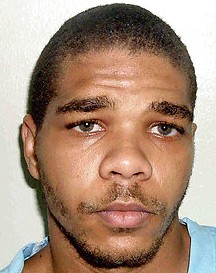
Robert Yarbrough
Murderer Russell Ellwood
Murderer · USA · 1991
Russell Ellwood was a former taxi driver. Authorities suspected him of killing…
20 victims
Russell Ellwood
Murderer · USA · 1991
Russell Ellwood was a former taxi driver. Authorities suspected him of killing…
20 victims
 Robert Martines Perez
Murderer · USA · 1994
Name: Robert Martines Perez · Other name used in proceedings: Robert Martinez P…
15 victims
Robert Martines Perez
Murderer · USA · 1994
Name: Robert Martines Perez · Other name used in proceedings: Robert Martinez P…
15 victims
 Billy Frank Vickers
Murderer · USA · 1993
Billy Frank Vickers Vickers was executed by lethal injection in Texas on Januar…
14 victims
Billy Frank Vickers
Murderer · USA · 1993
Billy Frank Vickers Vickers was executed by lethal injection in Texas on Januar…
14 victims
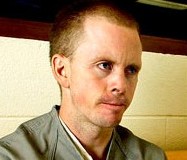 Sean Paul Hanify
Murderer ( claims to be a serial killer) · USA · 1989
Sean Paul Hanify described himself as a serial killer. He was convicted of firs…
8 victims
Sean Paul Hanify
Murderer ( claims to be a serial killer) · USA · 1989
Sean Paul Hanify described himself as a serial killer. He was convicted of firs…
8 victims
 Jon Scott Dunkle
Serial killer · USA · 1981
Jon Scott Dunkle was a close friend of the Davies family, who lived in Belmont.…
3 victims
Jon Scott Dunkle
Serial killer · USA · 1981
Jon Scott Dunkle was a close friend of the Davies family, who lived in Belmont.…
3 victims
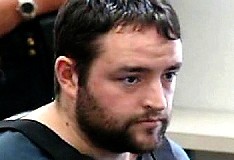 Peter James Wilson
Murderer · USA · 2010
Peter James Wilson was 29 years old. He was from Abbotsford, B.C., and had both…
1 victim
Peter James Wilson
Murderer · USA · 2010
Peter James Wilson was 29 years old. He was from Abbotsford, B.C., and had both…
1 victim
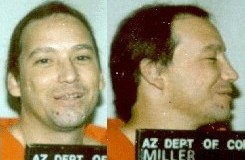 Donald Jay Miller
Murderer · USA · 1992
June 12, 1992 — Jennifer Geuder went out with her married boyfriend, Jose Luna,…
1 victim
Donald Jay Miller
Murderer · USA · 1992
June 12, 1992 — Jennifer Geuder went out with her married boyfriend, Jose Luna,…
1 victim
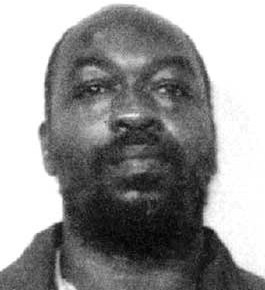 Durlin Eddmonds
Murderer · USA · 1977
Name: Durlyn Eddmonds Legal status: Executed by lethal injection in Illinois on…
1 victim
Durlin Eddmonds
Murderer · USA · 1977
Name: Durlyn Eddmonds Legal status: Executed by lethal injection in Illinois on…
1 victim
 Charles Butler
Murderer · USA · 1999
February (year not stated) — Charles M. Butler Jr. was asked to meet Billy Jack…
1 victim
Charles Butler
Murderer · USA · 1999
February (year not stated) — Charles M. Butler Jr. was asked to meet Billy Jack…
1 victim
- Gender
- male
- Country
- USA
- Location
- Mecklenburg County, Virginia, USA
- Date of birth
- J une 1, 1978
- Age at first offence
- 19
- Characteristics
- robbery
- Victim profile
- Cyril Hugh Hamby, 77 (store owner)
- Method of murder
- St abbing with knife
- Date(s) of murder
- May 8, 1997
- Years active
- 1997
- Date of arrest
- —
- Status
-
Executed
Executed by lethal injection in Virginia on June 25, 2008
Case details
Robert Yarbrough was a Black male convicted of capital murder and robbery in Mecklenburg County, Virginia. He was sentenced to death and later executed by lethal injection in Virginia on June 25, 2008.
Victim
Cyril Hugh Hamby, age 77, operated Hamby’s Store in Mecklenburg County and was killed during a robbery.
Other involved people
- Dominic Rainey, age 17, was Yarbrough’s accomplice and testified against Yarbrough as the principal witness.
- Conrad Dortch purchased marijuana from Yarbrough and Rainey and sold Yarbrough a marijuana cigarette for $10.
- Betsy Russell, a former employee of Hamby, discovered Hamby’s body.
- Betsy Russell was informed by a neighbor that “there was something wrong at the store.”
Timeline
- May 7, 1997 — Yarbrough told Dominic Rainey of his plan to rob Cyril Hugh Hamby, the 77-year-old owner of Hamby’s Store on U.S. Route 1 in Mecklenburg County.
- May 8, 1997 — Yarbrough and Rainey were seen walking along U.S. Route 1 toward Hamby’s Store between 9:30 and 10:30 p.m.; Yarbrough was armed with a shotgun; they waited at a picnic table across the road and entered the store after there were no customers. Later that evening into the night, they returned to Rainey’s grandfather’s house and then went to the home of Conrad Dortch to buy marijuana.
- approximately 12:45 a.m. — Dortch sold Yarbrough a marijuana cigarette for $10.
- May 9, 1997 — Hamby’s body was discovered at approximately 8:20 a.m. by Betsy Russell.
- May 10, 1997 — Dortch contacted the Virginia State Police and told them of his encounter with Yarbrough and Rainey.
- May 14, 1997 — Police executed a search warrant at Yarbrough’s home and recovered bloodstained clothing and a three-bladed “Uncle Henry” pocketknife; police also recovered Yarbrough’s tennis shoes from a trash barrel behind Rainey’s grandfather’s house.
- Jan. 20, 1999 — A 10-woman, two-man jury in Mecklenburg County convicted Robert Yarbrough of capital murder and robbery in the slaying of Cyril Hugh Hamby, 77, after deliberating for less than three hours.
- Sept. 17, 1999 — The Supreme Court of Virginia overturned the sentence and remanded the case for a new sentencing hearing.
- Dec. 8, 2000 — A different jury sentenced Yarbrough to death again.
- Sept. 14, 2001 — The Virginia Supreme Court affirmed the death sentence.
- May 13, 2002 — The U.S. Supreme Court refused to review the case.
- June 25, 2008 — Yarbrough was executed by lethal injection in Virginia.
The offence
On the evening of May 8, 1997, Robert Yarbrough and Dominic Rainey entered Hamby’s Store and tied up the owner.
Yarbrough was armed with a shotgun. After Rainey locked the front door at Yarbrough’s direction, Yarbrough pointed the shotgun at Hamby and ordered him to come out from behind the store’s counter. Yarbrough and Rainey took Hamby to the living quarters at the rear of the store where they found an electrical extension cord and string. Yarbrough forced Hamby back into the public area of the store, forced him to lie on the floor in an aisle, and tied Hamby’s hands behind his back with the extension cord and string. Yarbrough turned off the outside lights at the store’s electrical circuit box.
Yarbrough demanded that Hamby reveal where guns were hidden in the store. When Hamby denied having guns, Yarbrough kicked Hamby in the head and upper left arm. Yarbrough forced the store’s cash register open by dropping it on the floor and took money from the register.
Yarbrough returned to Hamby, again pointing the shotgun at him and again demanding to be told where guns were hidden. After Hamby denied having guns, Yarbrough put down the shotgun, took out a knife from his pocket, and began to cut Hamby’s neck with a “sawing motion” as Hamby pleaded for Yarbrough to stop. Yarbrough cut Hamby’s neck at least ten times, rifled through Hamby’s clothing, and took Hamby’s wallet.
Before leaving the store, Yarbrough and Rainey took beer, wine, and cigarettes. They left by the back door. Yarbrough gave Rainey one hundred dollars in small bills and kept a larger sum for himself.
A subsequent autopsy revealed that Hamby bled to death as a result of deep, penetrating wounds to his neck. According to a state medical examiner, Hamby’s wounds were “entirely consistent” with an attempted beheading, and because no major arteries were cut, it would have taken at least several minutes for Hamby to have bled to death. Hamby also had blunt force injuries to his head and upper left arm consistent with his having been kicked with moderate force.
Investigation
Several days after the robbery and slaying, police discovered Yarbrough’s blood-stained clothing and arrested him for the Hamby murder.
The next events described in the record included:
- Police recovered a wine bottle and label from Dortch’s yard; the wine bottle was of a brand sold at Hamby’s store.
- Police recovered bloodstained clothing and a three-bladed “Uncle Henry” pocketknife at Yarbrough’s home.
- Police recovered Yarbrough’s tennis shoes from a trash barrel behind Rainey’s grandfather’s house.
DNA testing established:
- A positive match with Hamby’s blood from the bloodstains found on Yarbrough’s shoes and clothing.
- A mixture of Hamby’s and Yarbrough’s DNA on the blade of the knife from blood traces found on the “Uncle Henry” knife.
Forensic analysis supported that the bloodstains on Yarbrough’s clothing were consistent with a spray of blood resulting from trauma. An expert testified that the bloodstains on the lower front of Yarbrough’s shirt were made “in close proximity to the trauma that released the blood.”
Several shoeprints found in the store were identified as having been made by Yarbrough’s shoes, including those near the circuit box, behind the counter, and in the bloodstains near Hamby’s head. Police also recovered Rainey’s boots and identified prints found near Hamby’s feet and in the living quarters as having been made by these boots.
Arrest
Police arrested Yarbrough for the Hamby murder after discovering his blood-stained clothing.
Trial
Conviction
On Jan. 20, 1999, a 10-woman, two-man jury in Mecklenburg County convicted Robert Yarbrough of capital murder and robbery in the slaying of Cyril Hugh Hamby, 77, after deliberating for less than three hours.
Jury recommendation during penalty phase
During the penalty phase, the jury recommended that Yarbrough be executed after deliberating for less than one hour.
Prosecutors removed three African-Americans from the jury pool through peremptory strikes.
Sentencing
Yarbrough was sentenced to death.
The Supreme Court of Virginia later overturned the sentence on Sept. 17, 1999 and remanded the case for a new sentencing hearing.
A different jury sentenced Yarbrough to death again on Dec. 8, 2000. Judge Charles L. McCormick III had sentenced Yarbrough to die after affirming the jury’s recommendation in the second penalty phase.
The Virginia Supreme Court affirmed the death sentence on Sept. 14, 2001. The U.S. Supreme Court refused to review the case on May 13, 2002.
“Life means life” instruction issue
Yarbrough contended that the trial court erred by failing to instruct the jury that he would be ineligible for parole if given a sentence of life imprisonment and by failing to respond to the jury’s question with an instruction that “life imprisonment means life without possibility of parole.”
The trial court refused such an instruction prior to charging the jury and also refused to respond to the jury’s inquiry.
The Supreme Court of Virginia held that the trial court erred in failing to grant the instruction requested by Yarbrough, and it vacated the death sentence and remanded the case for a new penalty-determination phase.
The Supreme Court of Virginia also emphasized that:
- the trial court shall instruct the jury that the words “imprisonment for life” mean “imprisonment for life without possibility of parole” when a defendant has been convicted of capital murder in the penalty-determination phase, and the defendant has proffered a proper instruction prior to submitting the issue of penalty to the jury or asks for such an instruction following an inquiry from the jury during deliberations;
- “we emphasize that the defendant must request the instruction” and that the trial court was not required to give the instruction sua sponte.
The Supreme Court of Virginia further held that the death sentence would be vacated and did not conduct the sentence review under Code § 17.1-313(C).
Quoted statements about law and instruction
The Supreme Court of Virginia’s ruling included the following quoted language:
“imprisonment for life” mean “imprisonment for life without possibility of parole.”
Appeals
Direct appeal and remand
The Supreme Court of Virginia overturned the death sentence on Sept. 17, 1999 and remanded for a new sentencing hearing.
Second penalty hearing and appeal
After a new sentencing hearing, the second jury sentenced Yarbrough to death on Dec. 8, 2000. 14, 2001**, and on May 13, 2002 the U.S.
State appellate review described by case citations
The record included:
- Yarbrough v. Commonwealth, 258 Va. 347, 519 S.E.2d 602 (Va. 1999) (Direct Appeal - Reversed).
- Yarbrough v. Johnson, 262 Va. 388, 551 S.E.2d 306 (Va. 2001) (Direct Appeal - Affirmed).
- Yarbrough v. Warden of Sussex I State Prison, 269 Va. 184, 609 S.E.2d 30 (Va. 2005) (State Habeas).
- Yarbrough v. Johnson, 520 F.3d 329 (4th Cir. 2008) (Habeas).
Outcome
Yarbrough’s robbery conviction and sentence of life imprisonment were affirmed.
The death sentence was vacated and the case was remanded for a new penalty-determination phase at one stage of direct appeal. After resentencing, the death sentence was imposed again and was affirmed through further review.
Aftermath
On June 25, 2008, Robert Yarbrough was executed by lethal injection in Virginia.
He was pronounced dead at 9:28 p.m. at the Greensville Correctional Center in Jarratt. During the execution, the intravenous lines were inserted into his arms and the execution took longer than normal.
When asked if he had any last words, Yarbrough said:
"Tell my kids I love them. Let's get it over with. Make people happy," according to a prison spokesman.
A Virginia Department of Corrections spokesman, Larry Traylor, was quoted as saying the execution was briefly delayed because it took more time than usual to get one of the intravenous lines into Yarbrough’s arm.
Other details
Conviction details and inmate number
- Sex: Male
- Race: Black
- Entered the Row: Jan. 20, 1999
- District: Mecklenburg
- Conviction: Capital murder and robbery
- Virginia DOC Inmate Number: 264973
Prosecutorial and defense claims described in the record
Yarbrough’s lawyers contended that:
- a black juror was improperly stricken from the second jury that sentenced Yarbrough to death;
- trial counsel failed to request the help of a DNA expert or do an adequate job researching Yarbrough’s troubled childhood.
A clemency petition was filed with Gov. Timothy M. Kaine and an appeal for a stay of execution with the U.S. Supreme Court. The justices denied the appeal; Kaine declined to intervene, saying he found no compelling reason to set aside the sentence.
Attorney general statement and quoted remarks
Virginia Attorney General Bob McDonnell issued a statement about the execution, including the following quoted portion:
“Robert Stacy Yarbrough was executed tonight for the 1997 murder of 77-year old Cyril Hugh Hamby. On the evening of May 8, 1997 Yarbrough and an accomplice robbed Mr. Hamby’s convenience store on U.S. Route 1 in Mecklenburg County. Yarbrough then brutally murdered Mr. Hamby. It was a gruesome crime that took the life of an innocent man. Cyril Hamby was known for his warmth and generosity. His murder left his family devastated. “The jury verdict of guilt and sentence of death in this case have been reviewed and upheld by the trial court, U.S. District Court, U.S. Court of Appeals, Virginia Supreme Court and the Supreme Court of the United States. Governor Kaine has declined to intervene. Tonight justice has been served. Our thoughts and prayers remain with Mr. Hamby’s children, grandchildren, great-grandchildren and all his friends and family.””
Larry Traylor was quoted saying:
“Tell my kids I love them, and let's get it over with,”
and another final-statement quote attributed to Traylor included:
"Tell my kids I love them and let's get it over with. Make people happy, help celebrate the murder,"

Spotted an error, or have more information about this case?