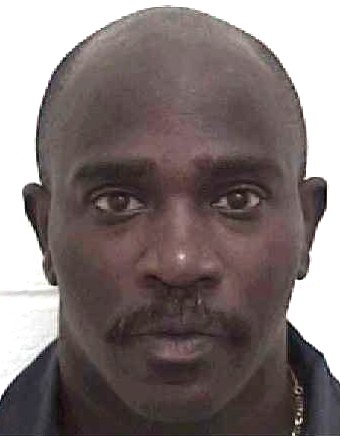
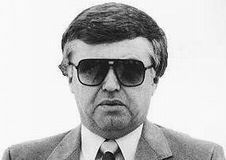
Keith Leroy Tharpe
Murderer Brian Kevin Rosenfeld
Murderer · USA · 1985
Brian Kevin Rosenfeld Brian Kevin Rosenfeld was sentenced to three concurrent l…
23 victims
Brian Kevin Rosenfeld
Murderer · USA · 1985
Brian Kevin Rosenfeld Brian Kevin Rosenfeld was sentenced to three concurrent l…
23 victims
 Yahweh ben Yahweh
Murderer · USA · 1980
Yahweh ben Yahweh was born and legally named Hulon Mitchell Jr. (October 27, 19…
23 victims
Yahweh ben Yahweh
Murderer · USA · 1980
Yahweh ben Yahweh was born and legally named Hulon Mitchell Jr. (October 27, 19…
23 victims
 Russell Ellwood
Murderer · USA · 1991
Russell Ellwood was a former taxi driver. Authorities suspected him of killing…
20 victims
Russell Ellwood
Murderer · USA · 1991
Russell Ellwood was a former taxi driver. Authorities suspected him of killing…
20 victims
 Robert Martines Perez
Murderer · USA · 1994
Name: Robert Martines Perez · Other name used in proceedings: Robert Martinez P…
15 victims
Robert Martines Perez
Murderer · USA · 1994
Name: Robert Martines Perez · Other name used in proceedings: Robert Martinez P…
15 victims
 Eugene Aram
Murderer · United Kingdom · 1744
Eugene Aram (1704 - August 6, 1759) was an English philologist who also became…
1 victim
Eugene Aram
Murderer · United Kingdom · 1744
Eugene Aram (1704 - August 6, 1759) was an English philologist who also became…
1 victim
 Thomas Howard Wendt
Murderer · USA · 2002
Defendant: Thomas Howard Wendt Victims: Vicki Sue Keller-Wendt, 44; Brandie Lea…
3 victims
Thomas Howard Wendt
Murderer · USA · 2002
Defendant: Thomas Howard Wendt Victims: Vicki Sue Keller-Wendt, 44; Brandie Lea…
3 victims
 Bertram Greenberg
Murderer · USA · 1971
Bertram Greenberg · Officer James L. Keeton · Officer Don A. Beckstead · A 13-y…
4 victims
Bertram Greenberg
Murderer · USA · 1971
Bertram Greenberg · Officer James L. Keeton · Officer Don A. Beckstead · A 13-y…
4 victims
 Michael James Hayward
Murderer · USA · 1994
Michael James Hayward was sentenced to death in 1996. Hayward was involved in c…
1 victim
Michael James Hayward
Murderer · USA · 1994
Michael James Hayward was sentenced to death in 1996. Hayward was involved in c…
1 victim
 Omar Thornton
Mass murderer · USA · 2010
Omar S. Thornton was 34 years old at the time of the Hartford Distributors shoo…
8 victims
Omar Thornton
Mass murderer · USA · 2010
Omar S. Thornton was 34 years old at the time of the Hartford Distributors shoo…
8 victims
- Gender
- male
- Country
- USA
- Location
- Jones County, Georgia, USA
- Date of birth
- 1958
- Age at first offence
- 32
- Characteristics
- rape, kidnapping, domestic violence, drug addict
- Victim profile
- Jacqueline Freeman, 29 (his sister-in-law)
- Method of murder
- Shooting
- Date(s) of murder
- September 25, 1990
- Years active
- 1990
- Date of arrest
- Same day
- Status
-
Sentenced to death
Sentenced to death on January 18, 1991
Case overview
Keith Leroy Tharpe, 39, was sentenced to death in January 1991 in Jones County for the shotgun slaying of his 29-year-old sister-in-law, Jacqueline Freeman.
Timeline
- August 28, 1990 — Tharpe’s wife left him and moved in with her mother.
- September 24, 1990 — Tharpe called his wife and argued with her, threatening to show her “what dirty was.”
- September 25, 1990 — Tharpe used his vehicle to force his wife’s car off the road and then shot Jacqueline Freeman. He later raped his wife after attempting to rent a motel room and parking by the side of the road.
- September 25, 1990 — Tharpe was arrested the same day.
- January 2 to January 10, 1991 — Tharpe was tried.
- January 18, 1991 — Tharpe was sentenced to death.
- January 19, 1991 — Tharpe filed a motion for new trial.
- August 15, 1991 — The motion for new trial was denied.
- September 10, 1991 — The case was docketed in the Supreme Court of Georgia.
- January 22, 1992 — The case was argued orally.
- March 17, 1992 — The decision was issued.
- April 1, 1992 — Reconsideration was denied.
- February 1993 — The Supreme Court ordered the trial court to reconsider Tharpe’s sentence; the reconsideration was pending since February 1993.
Background
Tharpe repeatedly threatened and harassed his estranged wife and her family. Following various threats of violence made by the defendant to and about his wife and her family, a peace warrant was taken out against him, and the defendant was ordered not to have any contact with his wife or her family.
Tharpe’s only prior arrests were for driving violations.
The offence
On the morning of September 25, 1990, Tharpe’s wife and her sister-in-law, Jacqueline Freeman, met Tharpe as they drove to work. Tharpe used his vehicle to block theirs and force them to stop. He got out of his vehicle, armed with a shotgun and apparently under the influence of drugs, and ordered them out of their vehicle. He told the sister-in-law he was going to “f--- you up,” then took her to the rear of his vehicle and shot her.
The account states that Tharpe rolled Jacqueline Freeman into a ditch, reloaded, and shot her again, killing her.
Tharpe then drove away with his wife. He unsuccessfully tried to rent a motel room. After failing to rent the room, he parked by the side of the road and raped his wife. Afterwards, he drove to Macon, where his wife was to obtain money from her credit union; she called the police instead.
The wife could not remember if the sister-in-law had been shot twice or three times. However, the autopsy established that the victim had been shot three times—once in the arm, once in the chest and once in the head.
Investigation
The record later states that the murder victim’s husband was the first person to arrive at the scene of the crime and to discover her body. It was not error to allow him to identify photographs of the crime scene. Photos taken sometime later by police photographers depicted the scene as he had discovered it.
Arrest
Tharpe was arrested on September 25, 1990, the same day as the offence.
Trial
Tharpe was convicted by a jury in Jones County of malice murder and two counts of kidnapping with bodily injury. The trial was before Judge Thompson in Jones Superior Court.
The jury’s sentencing determination proceeded from the finding of the presence of statutory aggravating circumstances under OCGA 17-10-30.
During the trial, a hearing was conducted outside the presence of the jury concerning possible communications between a jailer and some of the jurors.
- Tharpe testified first, soon drawing a hearsay objection. The court implicitly overruled the objection, stating that although the hearsay might have no probative value, it was a “foundation for what may come later on.”
- Later, Tharpe testified that the jailer had questioned him about the crime.
- When Tharpe’s attorney asked whether he had been advised of his right to remain silent, the state objected that “this was a motion for mistrial based on misconduct with the jury,” not any Miranda issue.
- The court did not rule because Tharpe’s attorney withdrew the question, stating he would “just abandon this line for right now.”
- Tharpe later argued that the trial court twice cut off defense questioning, unconstitutionally chilling his right to testify. The court found there was no error, stating “The court at no time cut off defense questioning.”
Tharpe also presented testimony of two inmates who stated that they heard the jailer say it was his job to “pick up some of the jurors that support the death penalty.” The state called the jailer, who denied having any contact with any of the jurors, denied “pick them up” or “haul them around,” and denied telling any of the inmates that he had. The trial court found that no contact had occurred and denied Tharpe’s motion for mistrial.
During voir dire, Tharpe moved, outside the presence of any jurors, to strike a prospective juror for cause. The court questioned the wisdom of the defendant’s motion, based on something in the juror’s family background which, in the court’s opinion probably would make her “a good juror for the defense.” The court declined to disclose what he knew about the juror’s background. Tharpe later contended the court should have recused itself to “avoid all impropriety and appearance of impropriety.”
Tharpe’s wife’s estrangement and prior threats were admitted to show Tharpe’s bent of mind toward his family. The trial court sustained Tharpe’s objection to the unsolicited opinion of one witness that Tharpe was “crazy” and instructed the jury to disregard the answer. The trial court denied Tharpe’s motion for mistrial on that point.
The record also addresses qualification of prospective jurors relative to the death penalty and the Unified Appeal Procedure, including that Tharpe was not entitled to review the prosecution’s jury records.
There were also rulings and challenges involving:
- denial of a motion for change of venue,
- alleged racially discriminatory peremptory challenges under Batson v. Kentucky,
- denial of other constitutional attacks,
- jury instructions on reasonable doubt and on unanimity of the penalty phase verdict.
Sentencing
The jury sentenced Tharpe to death for the murder after finding three statutory aggravating circumstances under OCGA 17-10-30.
The jury found the following statutory aggravating circumstances:
- The offense of murder was committed while the offender was engaged in the commission of another capital felony, to wit: kidnapping with bodily injury of Jaquelin Freeman.
- The offense of murder was committed while the offender was engaged in the commission of another capital felony, to wit: kidnapping with bodily injury of Migrisus Tharpe.
- The offense of murder was outrageously or wantonly vile, horrible, or inhuman in that it involved an aggravated battery to the victim (OCGA 17-10-30 (b) (2) and (b) (7)).
The decision states that evidence supported the kidnapping-with-bodily-injury findings as to both Jacqueline Freeman and Tharpe’s wife. It further states that kidnapping with bodily injury is a capital felony that may be considered by the jury as a (b)(2) statutory aggravating circumstance supporting a death sentence for the offense of murder, even where the death penalty may not be imposed for kidnapping with bodily injury unless the victim is killed.
At the sentencing phase, Tharpe objected to evidence of a felony conviction for driving a motor vehicle after having been declared a habitual traffic violator, see OCGA 40-5-58 (c), arguing that the conviction might “suggest to the jury this man is a lifetime career criminal” rather than merely a habitual traffic violator. The state noted that the terms of the accusation specified “exactly” what it was. The court included a definition of the offense, and the state agreed it could.
The decision states the jury was entitled to conclude from the evidence that Tharpe “maliciously” caused the bodily harm and that his first two shots were not accidental.
The decision states that the death sentence was not imposed as the result of passion, prejudice or other arbitrary factor, and that Tharpe’s death sentence was neither excessive nor disproportionate to penalties imposed in similar cases.
Appeals
Tharpe appealed the jury’s convictions and death sentence.
The decision references Tharpe v. The State, S91P1642, and cites:
- “Unified Appeal Procedure” issues,
- denial of constitutional attacks,
- procedural rulings, including issues about jury records and jury communications,
- challenges to venue,
- Batson-related arguments,
- evidentiary and jury-instruction claims,
- venue for kidnapping with bodily injury,
- and arguments about statutory aggravating circumstances not being unconstitutionally vague or overbroad.
It further states that Tharpe’s death sentence was affirmed.
Reconsideration was denied on April 1, 1992, after the decision on March 17, 1992. The record also states that the Supreme Court ordered the trial court to reconsider Tharpe’s sentence, and that reconsideration has been pending since February 1993 (THARPE v. THE STATE; S91P1642; 262 Ga. 110; 416 SE2d 78 (1992)).
Outcome
The Supreme Court affirmed the conviction and upheld the death sentence.
Other details
People and roles named
- Jacqueline Freeman — 29-year-old sister-in-law and murder victim.
- Tharpe’s wife — estranged wife; victim of kidnapping and rape.
- Judge Thompson — trial judge.
- WELTNER, Presiding Justice — presiding justice.
- Benjamin Benham, Justice — a concurring justice (listed as “BENHAM, Justice, concurring”).
- Joseph H. Briley, District Attorney — for appellee.
- Michael J. Bowers, Attorney General — for appellee.
- Susan V. Boleyn, Senior Assistant Attorney General — for appellee.
- Robert D. McCullers, Staff Attorney — for appellee.
- Charles D. Newberry — for appellant.
- Shane M. Geeter — for appellant.
Key quoted statements
When Tharpe called his wife and argued, he said:
- “play dirty,” he would show her “what dirty was.”
When Tharpe confronted the sister-in-law and took her to the rear of his vehicle, he said:
- “f--- you up,”
During the evidentiary discussion about hearsay, the court said:
“foundation for what may come later on.”
When the state objected during questioning related to silence rights, the state said:
- “this was a motion for mistrial based on misconduct with the jury,”
When Tharpe’s attorney withdrew a question, the attorney said he would:
- “just abandon this line for right now.”
In inmate testimony about the jailer, it was said the jailer’s job included:
- “pick up some of the jurors that support the death penalty.”
In the question of juror contact, the jailer denied “pick them up” or “haul them around.”
During the discussion of the juror background, the court characterized the juror as:
- “a good juror for the defense.”
Tharpe’s later recusal argument used the phrase:
- “avoid all impropriety and appearance of impropriety.”
At sentencing, Tharpe argued the conviction might:
- “suggest to the jury this man is a lifetime career criminal”
The trial court proceeding acknowledged the accusation specified:
- “exactly” what it was.
The decision cited that the defendant “maliciously” caused the bodily harm and that his first two shots were not accidental.
Notes included in the record
- The crime occurred on September 25, 1990; Tharpe was arrested the same day; he was tried on January 2 through January 10, 1991; he filed a motion for new trial on January 19, 1991; the motion was denied on August 15, 1991; the case was docketed on September 10, 1991; after extensions of time were granted, the case was argued orally on January 22, 1991.
- The wife could not remember if the sister-in-law had been shot twice or three times, but the autopsy established three shots—once in the arm, once in the chest, and once in the head.
Concurring view
BENHAM, Justice, concurring, stated an opinion that a rule from Florida should be adopted: that a member of the deceased victim’s family may not testify for the purpose of identifying the victim where nonrelated, credible witnesses were available to make such identification. The concurring justice argued that the purpose was “to assure the defendant as dispassionate a trial as possible and to prevent interjection of matters not germane to the issue of guilt.” The concurring justice also stated that the emotionally-charged atmosphere when a family member views a photograph of a dead loved one can interfere with a jury’s verdict and may serve as a basis for reversible error. The concurring justice said the proposed rule would remove the main source of emotional distraction from homicide cases tried in Georgia, but it was not applicable to the case because the testimony of the victim’s husband, who discovered the victim’s body, was necessary to establish that the scene as depicted in the photos taken sometime later by police photographers was that which he had discovered.
Spotted an error, or have more information about this case?