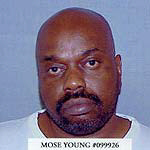
Mose Young
Murderer Brian Kevin Rosenfeld
Murderer · USA · 1985
Brian Kevin Rosenfeld Brian Kevin Rosenfeld was sentenced to three concurrent l…
23 victims
Brian Kevin Rosenfeld
Murderer · USA · 1985
Brian Kevin Rosenfeld Brian Kevin Rosenfeld was sentenced to three concurrent l…
23 victims
 Marvin Gray
Murderer · USA · 1975
Marvin Gray was convicted killer who claimed responsibility for 23 slayings and…
23 victims
Marvin Gray
Murderer · USA · 1975
Marvin Gray was convicted killer who claimed responsibility for 23 slayings and…
23 victims
 Yahweh ben Yahweh
Murderer · USA · 1980
Yahweh ben Yahweh was born and legally named Hulon Mitchell Jr. (October 27, 19…
23 victims
Yahweh ben Yahweh
Murderer · USA · 1980
Yahweh ben Yahweh was born and legally named Hulon Mitchell Jr. (October 27, 19…
23 victims
 Russell Ellwood
Murderer · USA · 1991
Russell Ellwood was a former taxi driver. Authorities suspected him of killing…
20 victims
Russell Ellwood
Murderer · USA · 1991
Russell Ellwood was a former taxi driver. Authorities suspected him of killing…
20 victims
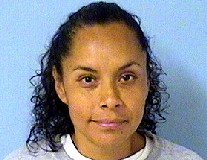 Marcelina Mendoza
Murderer · USA · 1992
Marcelina Mendoza was 20 years old at the time of the Aug. 19 death of her 3-ye…
1 victim
Marcelina Mendoza
Murderer · USA · 1992
Marcelina Mendoza was 20 years old at the time of the Aug. 19 death of her 3-ye…
1 victim
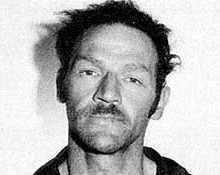 Richard Marquette
Murderer · USA · 1961
Richard Marquette, also known as Dick Marquette, was a convicted murderer from…
3 victims
Richard Marquette
Murderer · USA · 1961
Richard Marquette, also known as Dick Marquette, was a convicted murderer from…
3 victims
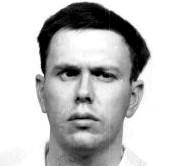 Lesley Lee Gosch
Murderer · USA · 1985
Lesley Lee Gosch was convicted of killing the wife of a San Antonio bank presid…
1 victim
Lesley Lee Gosch
Murderer · USA · 1985
Lesley Lee Gosch was convicted of killing the wife of a San Antonio bank presid…
1 victim
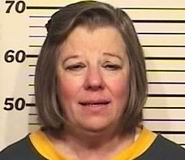 Janice Dodson
Murderer · USA · 1995
Janice Dodson was sentenced to life in prison without parole on March 20, 2000.…
1 victim
Janice Dodson
Murderer · USA · 1995
Janice Dodson was sentenced to life in prison without parole on March 20, 2000.…
1 victim
 John Earl Baughman
Murderer · Antigua and Barbuda · 1995
John Earl Baughman was tried and convicted in Antigua and Barbuda for the murde…
1 victim
John Earl Baughman
Murderer · Antigua and Barbuda · 1995
John Earl Baughman was tried and convicted in Antigua and Barbuda for the murde…
1 victim
- Gender
- male
- Country
- USA
- Location
- St. Louis, Missouri, USA
- Date of birth
- December 25, 1955
- Age at first offence
- 28
- Characteristics
- robbery
- Victim profile
- Sol Marks, 80; Kent Bicknese, 22, and James Schneider, 33
- Method of murder
- Shooting (rifle)
- Date(s) of murder
- February 8, 1983
- Years active
- 1983
- Date of arrest
- Next day
- Status
-
Executed
Executed by lethal injection in Missouri on April 25, 2001
Case overview
Mose Young was convicted and sentenced to death for the shooting and killing of three men in a St. Louis pawn shop. He was later executed by lethal injection in Missouri on April 25, 2001.
Name and identity
Mose Young was born in St. Louis, Missouri on December 25, 1955.
The offence
On February 8, 1983, Mose Young entered a pawn shop in St. Louis to pawn a gold plated stickpin. He attempted to pawn the pin and wanted $1800 (and later sought several thousand dollars) so he could buy his girlfriend a used Cadillac.
Lee Rascover, the shop owner, told Young the pin was worthless and threatened to call the police and have him arrested for stealing by deceit. A heated exchange ensued with both men pushing each other. Lee Rascover then pulled a gun from a holster on his hip and ordered Young to leave. Lee Rascover telephoned his other pawn shop partner and warned him of Young’s attempt to pawn the stickpin and the altercation that took place.
Young later returned to the second shop carrying a rifle. At the time there were four persons at the shop: employee Romaell Bennett, Sol Marks, Lee Rascover’s grandfather James Schneider, a partner of Lee Rascover’s, and Kent Bicknese. As Young entered, he pointed the rifle at Romaell Bennett and fired a shot that killed Kent Bicknese who was standing in front of Romaell Bennett.
Young then turned toward James Schneider, fired a shot, and killed him. Romaell Bennett and Sol Marks retreated to the back of the store. Sol Marks tripped and Romaell Bennett left him and went to the basement where he hid in the vault. While in the basement, Romaell Bennett tripped an alarm. Romaell Bennett testified that he heard Young ask Sol Marks where Romaell Bennett was. Romaell Bennett also reported hearing two more gun shots and heard Young yell down the steps, "Where are you?"
Romaell Bennett remained in the vault until he heard police radios. The bodies of Kent Bicknese and James Schneider were found in the lobby area of the store. The body of Sol Marks was found in a hallway leading to the rear of the building.
The top of the jewelry counter had been smashed and almost all of the jewelry was gone. There was $576.00 in cash missing from the cash registers as well as the victims’ wallets.
The case materials described a contested issue about authorship of the shootings: Mose Young testified during his trial in 1984 and insisted that a man nicknamed "Mickey" had fired the shots. He also claimed from day one that "Mickey", and not he, walked into Lee’s Pawn Shop on Feb. 8, 1983 and opened fire, randomly killing three people.
Investigation
The narrative included evidence and witness testimony from the pawn shop staff and partners. Romaell Bennett testified about hearing gunshots and Young’s statements while Bennett hid in the basement vault. The bodies were found in specified areas of the pawn shop and hallway.
Arrest and prior convictions
On August 27, 1975, Mose Young was arrested in St. Louis City for Possession of Heroin. He pleaded guilty on February 27, 1976 and was sentenced to one year in the city jail.
On June 25, 1981, Mose Young was arrested in St. Louis City for Assault First Degree. He pleaded guilty on April 19, 1982 and was sentenced to six months in the city jail.
On February 9, 1983, Young was arrested for three counts of Capital Murder and Robbery First Degree in St. Louis City.
Trial
Mose Young’s legal chronology included charging, trial verdict, and sentencing in St. Louis City.
Prosecutorial conduct and defense objection issues In a later federal appellate decision, the court described that counsel’s trial notes indicated the prosecutor used all nine peremptory strikes against black veniremen, and counsel did not object. The federal appellate decision held Young did not show a reasonable probability that results would have been different and affirmed.
During cross-examination at Young’s trial, Young volunteered that he had also been shot in the back and explained his limp was the result of an old football injury. After an objection and sidebar, the prosecutor followed up with: Q: "Mr. Young , how many people have you shot?" A: "Have I shot?" Q: "Yeah, how many."
Defense counsel objected and requested a mistrial, arguing that the prosecutor attempted to introduce evidence of other crimes. The judge sustained the objection, denied the request for a mistrial, and Young never answered the question.
In the penalty phase, the federal appellate decision described statements made by the prosecutor:
- "it's disgusting and it's as cold as anything I've ever seen."
- "if the death penalty is an appropriate punishment, you tell me a situation where it's more appropriate than here."
- "why should he hesitate to take a life of somebody he doesn't like in the penitentiary ... [w]hat would it be for then, folks, a[n] extra fifty cents."
The federal appellate decision described that the first remark was clearly improper, but that the error was harmless beyond a reasonable doubt.
A state Supreme Court citation appeared in the federal appellate materials: State v. Young, 701 S.W.2d 429, 435 (Mo.1985) (en banc).
Jury verdict and sentencing On May 19, 1984, a jury found Young guilty of all three counts of Capital Murder. On July 6, 1984, the court denied a motion for a new trial and sentenced Young to death on each count of Capital Murder.
The jury recommended the death penalty on each count.
Appeals and post-conviction litigation
Missouri Supreme Court and further state proceedings
On December 17, 1985, the convictions and sentences were affirmed by the Missouri Supreme Court.
On January 15, 1986, a motion for a rehearing was denied.
On July 10, a Notice of Appeal was filed in the Missouri Supreme Court.
U.S. Supreme Court and federal proceedings
On May 5, 1984, certiorari was denied by the United States Supreme Court.
A petition for habeas corpus was filed:
- On October 30, 1990, in the United States District Court for the Eastern District of Missouri.
- On April 3, 1995, Young filed an amended petition for habeas corpus.
- On May 4, 1995, a response to the amended petition was filed.
A petition for Mandamus was filed:
- On May 9, 1997, seeking to compel a ruling on the petition for habeas corpus.
On June 24, 1997, the U.S. District Court denied the petition for habeas corpus.
On October 2, 1997, Young filed a Notice of Appeal.
On December 4, 1997, the U.S. District Court affirmed the conviction and sentence.
On January 29, 1999, rehearing by the panel and rehearing en banc were denied.
On June 28, 1999, a certiorari petition was filed, and on October 4, 1999, the United States Supreme Court denied the petition for certiorari.
The materials described requests of an execution date being made to the Missouri State Supreme Court.
Federal decision dated July 11, 2000
A decision by the United States Court of Appeals for the Eighth Circuit (No. 00-2705) dated July 11, 2000 addressed Young’s action under 42 U.S.C. § 1983. The court stated that the sentence of death was scheduled to be carried out at 12:01 a.m. tomorrow, Wednesday, July 12, 2000.
The appeal involved allegations that Circuit Attorney for the City of St. Louis Dee Joyce Hayes threatened to fire a lawyer under her supervision, Jane Geiler, if Geiler provided information to the Governor of Missouri in connection with a clemency petition Young wished to file.
The Eighth Circuit:
- Reversed the District Court’s judgment that dismissed the complaint for failure to state a claim.
- Remanded for further proceedings consistent with the opinion.
- Granted the motion for stay of execution.
- Enjoined and restrained Alfred D. Luebbers from carrying out the sentence of death in Young’s case until further order of the Court, the District Court, or the Supreme Court.
The materials included the procedural posture described as “on motion for summary judgment,” and stated that Young’s pro se motion for stay of execution was denied as moot.
Clemency and clemency-related allegations
The materials included an application for executive clemency addressed to the Honorable Bob Holden, Governor of Missouri. The application sought:
- An order staying the execution presently scheduled for April 25, 2001.
- Appointment of a Board of Inquiry, pursuant to Mo. Rev. Stat. § 552.070.
- An order commuting the sentence of the Circuit Court of the City of St. Louis from death to life without parole.
The clemency application included allegations that:
- The prosecutor used every one of Young’s peremptory challenges to exclude African-Americans from the jury.
- Young’s trial lawyer was an alcoholic and was disbarred, and that in the next case he tried his other client’s sentence was overturned.
The application also sought investigation into violations of the Batson rule, excluding black jurors without cause, and referenced testimony of Ms. Jane Geiler of the Circuit Court Attorney's office of St. Louis.
Execution scheduling and stay
An execution date was requested of the Missouri State Supreme Court after certiorari was denied.
On June 9, 2000, the Missouri State Supreme Court set July 12, 2000 as the date of execution for Mose Young.
On July 12, the U.S. Supreme Court granted a stay of execution.
On March 27, 2001, the Missouri Supreme Court set April 25, 2001 as the date of execution for Mose Young.
Execution
Mose Young was executed by lethal injection early on April 25, 2001, at Potosi Correctional Center. He was pronounced dead at 12:14 a.m.
Other details
Victims
The victims named in the materials were:
- Kent Bicknese, 22
- James Schneider, 33
- Sol Marks, 80
Execution witnesses and statements included in the materials
The materials included quoted statements said to have been made by Mose Young shortly before or during the execution process, including:
- "It's getting kind of shaky, but I understand what I'm facing."
- "It's a beautiful morning."
- "I didn't shed no tears. I didn't cry because I know it's never over with."
- "That was God's will to have this one day, and it's going to be God's will to have whatever more days are remaining in my life."
- "I believe in God -- I'm holding up strong," and "I ain't bitter."
- "I am all right. I will be with you. I am going to touch you."
- "Amen, Amen!"
- "I understand and I appreciate all that you and the rest of my supporters have done for me. No matter what, there will be a blessing, there will be a resurrection, for this thing is much bigger than Mose."
- "Can you believe that he was consoling us and thanking us? We have never represented anyone like Mose before...ever!"
- "You don't begin to know how much it means to have my 'special angels' here."
- "I love you, keep it real."
- "I love you too my brother, be at peace."
- "I am relieved. The wait is almost over. I will finally get to see my mother and father tonight. It has been an awful long time since I have seen them."
The materials also included quoted statements from Attorney General Jay Nixon:
- "Mose Young is a brutal triple murderer who committed three heinous crimes and is an example of why juries in Missouri need to have the option of the death penalty," and from Dee Joyce-Hayes:
- "I never threatened to fire her, and some of the things Mr. Margulies alleges she and I discussed were in fact never discussed by us,"
- "It was never my intention to interfere with Mose Young's due process of law."
Representation and trial counsel details mentioned in the materials
The materials referenced trial lawyer Jack Walsh and stated he was disbarred in 1988 for handling of another death penalty trial. The materials also discussed assertions about ineffective assistance and preparation issues.
Clemency chronology-related people named
The materials named:
- Bob Holden (Governor of Missouri)
- Joseph Margulies
- Sean D. O’Brien
- John William Simon
- Jay Nixon (Attorney General)
- Dee Joyce-Hayes (Circuit Attorney for the City of St. Louis)
- Jane Geiler (assistant prosecutor in St. Louis, later described as Commissioner for the Twenty-Second Judicial Circuit)
- Jean Hamilton (U.S. District Judge)
- Mel Carnahan (Governor referenced in the July 12, 2000 discussion)
Places mentioned
The materials mentioned St. Louis and St. Louis City, Edwardsville, Creve Coeur, West County, Potosi Correctional Center, and Vashon High School. The pawn shop address “5934 Natural Bridge Avenue” was also included.
Timeline
- February 8, 1983 — Mose Young entered a St. Louis pawn shop to pawn a gold plated stickpin; he later returned carrying a rifle and shot and killed three men inside the pawn shop.
- February 9, 1983 — Mose Young was arrested for three counts of Capital Murder and Robbery First Degree in St. Louis City.
- May 19, 1984 — A jury found Young guilty of all three counts of Capital Murder.
- July 6, 1984 — The court denied a motion for a new trial and sentenced Young to death on each count of Capital Murder.
- December 17, 1985 — The Missouri Supreme Court affirmed the convictions and sentences.
- January 15, 1986 — A motion for a rehearing was denied.
- October 30, 1990 — A petition for habeas corpus was filed in the United States District Court for the Eastern District of Missouri.
- April 3, 1995 — Young filed an amended petition for habeas corpus.
- May 4, 1995 — A response to the amended petition was filed.
- May 9, 1997 — A petition for Mandamus was filed seeking to compel a ruling on the petition for habeas corpus.
- June 24, 1997 — The U.S.
- December 4, 1997 — The U.S.
- January 29, 1999 — Rehearing by the panel and rehearing en banc were denied.
- October 4, 1999 — The United States Supreme Court denied the petition for certiorari.
- June 9, 2000 — The Missouri State Supreme Court set July 12, 2000 as the date of execution for Mose Young.
- July 12, 2000 — The U.S.
- July 11, 2000 — The Eighth Circuit granted a stay of execution and remanded the 42 U.S.C. § 1983 case.
- March 27, 2001 — The Missouri Supreme Court set April 25, 2001 as the date of execution for Mose Young.
- April 25, 2001 — Mose Young was executed by lethal injection; he was pronounced dead at 12:14 a.m.

Spotted an error, or have more information about this case?