
Kevin Dean Young
Murderer Brian Kevin Rosenfeld
Murderer · USA · 1985
Brian Kevin Rosenfeld Brian Kevin Rosenfeld was sentenced to three concurrent l…
23 victims
Brian Kevin Rosenfeld
Murderer · USA · 1985
Brian Kevin Rosenfeld Brian Kevin Rosenfeld was sentenced to three concurrent l…
23 victims
 Yahweh ben Yahweh
Murderer · USA · 1980
Yahweh ben Yahweh was born and legally named Hulon Mitchell Jr. (October 27, 19…
23 victims
Yahweh ben Yahweh
Murderer · USA · 1980
Yahweh ben Yahweh was born and legally named Hulon Mitchell Jr. (October 27, 19…
23 victims
 Russell Ellwood
Murderer · USA · 1991
Russell Ellwood was a former taxi driver. Authorities suspected him of killing…
20 victims
Russell Ellwood
Murderer · USA · 1991
Russell Ellwood was a former taxi driver. Authorities suspected him of killing…
20 victims
 Robert Martines Perez
Murderer · USA · 1994
Name: Robert Martines Perez · Other name used in proceedings: Robert Martinez P…
15 victims
Robert Martines Perez
Murderer · USA · 1994
Name: Robert Martines Perez · Other name used in proceedings: Robert Martinez P…
15 victims
 Christina Marcum
Murderer · USA · 2011
Christina Marcum was sentenced to 30 years in prison for her role in the murder…
1 victim
Christina Marcum
Murderer · USA · 2011
Christina Marcum was sentenced to 30 years in prison for her role in the murder…
1 victim
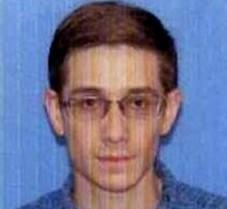 Matthew Murray
Spree killer · USA · 2007
Matthew J. Murray was an American gunman who on December 9, 2007 killed four pe…
4 victims
Matthew Murray
Spree killer · USA · 2007
Matthew J. Murray was an American gunman who on December 9, 2007 killed four pe…
4 victims
 Eric Adam Schneider
Murderer · USA · 1985
Eric Adam Schneider was executed by lethal injection in Missouri on January 29,…
2 victims
Eric Adam Schneider
Murderer · USA · 1985
Eric Adam Schneider was executed by lethal injection in Missouri on January 29,…
2 victims
 Thomas Arnold Kemp
Murderer · USA · 1992
Thomas Arnold Kemp was sentenced to death for felony first-degree murder, armed…
1 victim
Thomas Arnold Kemp
Murderer · USA · 1992
Thomas Arnold Kemp was sentenced to death for felony first-degree murder, armed…
1 victim
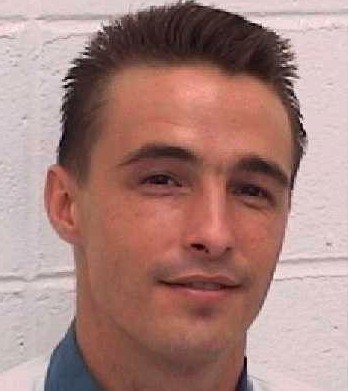 J. W. Ledford
Murderer · USA · 1992
J. W. Ledford Jr. was convicted of the malice murder of Dr. Harry Buchanan John…
1 victim
J. W. Ledford
Murderer · USA · 1992
J. W. Ledford Jr. was convicted of the malice murder of Dr. Harry Buchanan John…
1 victim
 Pierre Bodein
Murderer · 2004
Pierre Bodein was nicknamed “Pierrot le fou,” or “Crazy Pierre.” He was 59 at t…
3 victims
Pierre Bodein
Murderer · 2004
Pierre Bodein was nicknamed “Pierrot le fou,” or “Crazy Pierre.” He was 59 at t…
3 victims
- Gender
- male
- Country
- USA
- Location
- Anderson County, South Carolina, USA
- Date of birth
- 1968
- Age at first offence
- 20
- Characteristics
- robbery, drugs
- Victim profile
- Dennis Ray Hepler, 35 (principal of an elementary school)
- Method of murder
- Shooting (.25 caliber pistol)
- Date(s) of murder
- August 31, 1988
- Years active
- 1988
- Date of arrest
- September 1988
- Status
-
Executed
Executed by lethal injection on November 3, 2000 in South Carolina
Case overview
Kevin Dean Young was sentenced to death twice for the robbery and shooting death of Dennis Ray Hepler, and he was executed by lethal injection in South Carolina on November 3, 2000.
Timeline
- August 31, 1988 — Kevin Dean Young and two cohorts, William Bell and John Glenn, accosted Dennis Hepler on the grounds of the West Franklin Street Elementary School in Anderson, South Carolina; Hepler was fatally shot in the back with a .25 caliber pistol, and Young and the others fled with Hepler's wallet containing less than seventy dollars.
- May 18, 1989 — Young was convicted by a jury of murder.
- May 22, 1996 — Young filed an Application for PostConviction Relief in the Court of Common Pleas of Anderson County, South Carolina (the “PCR Court”).
- January 16, 1997 — The PCR Court conducted an evidentiary hearing.
- April 9, 1997 — The PCR Court conducted an evidentiary hearing.
- July 31, 1997 — The PCR Court entered a lengthy “Order of Dismissal” denying the Application with prejudice.
- May 15, 1998 — The Supreme Court of South Carolina denied certiorari.
- July 29, 1998 — Young filed an application for a federal writ of habeas corpus in the district court.
- October 28, 1998 — A magistrate judge filed a Report and Recommendation concluding that Young’s application should be denied.
- March 2, 1999 — The district court denied Young’s application for habeas relief by order.
- Ten days later (date not specified) — The court issued an expanded order explaining the reasons for its decision.
- April 30, 1999 — The district court amended its earlier explanatory order to correct certain misstatements of fact; the judgment remained unchanged.
- February 29, 2000 — The appeal was decided: the United States Court of Appeals for the Fourth Circuit affirmed the district court’s denial of Young’s application for a writ of habeas corpus.
- November 3, 2000 — Young was executed by lethal injection in South Carolina.
The offence
On the night of August 31, 1988, Kevin Dean Young and two cohorts—William Bell and John Glenn—accosted Dennis Hepler on the grounds of the West Franklin Street Elementary School in Anderson, South Carolina, where Hepler was the school's principal and was working late.
During the encounter, Hepler was fatally shot in the back with a .25 caliber pistol. Young and the others fled with Hepler's wallet. The wallet contained less than seventy dollars, and the robbery took $67. Hepler was shot twice, including a shot into his head and another into his back, and Hepler was fatally shot after being robbed and after giving up his wallet containing $67.
The money was used later to buy cocaine.
Investigation and apprehension
After the arrest for Hepler's murder, Young gave an oral statement to police admitting: "I shot him. I'm the one who shot him. I pulled the trigger. William Bell shot him, too." And he also said: "I don't know, man. I just shot him. Bell shot him, too."
Trial
Charges and verdicts
Young was convicted by a jury of murder on May 18, 1989. The same jury found that Young had murdered Hepler in the commission of an armed robbery and recommended that Young be sentenced to death.
The trial court sentenced Young in accordance with the jury’s recommendation, but the sentence was vacated on appeal due to evidentiary errors infecting the sentencing phase. The murder conviction was affirmed, and the case was remanded for resentencing: State v. Young, 409 S.E.2d 352 (S.C. 1991).
Resentencing
In June 1993, the question of Young’s sentence was presented to a second jury. Young was again sentenced to death based on the jury’s finding that he had murdered Hepler in the course of an armed robbery.
The Supreme Court of South Carolina affirmed the sentence: State v. Young, 459 S.E.2d 84 (S.C. 1995) (“Young II”). The Supreme Court of the United States denied review: Young v. South Carolina, 516 U.S. 1051 (1996).
Witness testimony and defense account
At trial, Young described the confrontation as a chance meeting that degenerated into a confrontation after Bell grabbed a necklace. As Hepler started toward Bell, Young raised a pistol and pointed it toward the principal. Bell demanded Hepler’s money; Hepler produced his wallet and tossed it near Bell’s feet. Young testified that during the retrieval moment: "Okay. So, he tossed the wallet towards Bell. Bell turned, he had to walk to get the wallet. So, as Bell, he turned to get the wallet, so I turned all my attention towards Bell, which I still had the gun aimed, you know. I was paying attention to Bell. Before I knew it, the guy had swung. So, I kind of stumbled back on the steps and I fell backwards, and the gun just went off . . . . So, my friend Bell came and got the gun out of my hand. I said, "John, let's get out of here, man." So, we started to run. John [Glenn] then asked me, he said, "Kevin, where's Bell at?" So we both stopped and turned around. We saw Bell aim the gun and fire the gun also. Q: Where was the man at that point? A: He was laying down. Q: All right. Could you see what part of him Bell fired at? A: He shot towards his head. J.A. 798-99."
When asked about where Bell fired, Young testified Bell shot “towards his head.”
After Young’s testimony, the prosecutor cross-examined him, and Mann then summoned John Glenn to the witness stand. Glenn invoked the Fifth Amendment privilege against self-incrimination and offered little useful testimony.
Sentencing and post-trial proceedings
Trial counsel and strategy
Young was represented at trial by James Robert Mann, a former prosecutor of considerable experience retained by Young’s family.
Mann soon discovered that prospects for acquittal seemed bleak. Mann learned that after arrest Young had admitted: "I shot him. I'm the one who shot him. I pulled the trigger. William Bell shot him, too." and he also said: "I don't know, man. I just shot him. Bell shot him, too."
Mann examined the autopsy report, which revealed that Hepler had been shot twice: once in the back and once behind the right ear. The bullet that exited to the right of Hepler’s nose resulted in soft-tissue damage, while the back wound proved lethal by piercing Hepler’s aorta and causing him to bleed to death. Mann interviewed Young multiple times. On each occasion, Young related that Mann fired the first, fatal shot into Hepler’s back, and that Bell seized the pistol and shot Hepler in the head.
Mann decided that the best course was to focus on avoiding the imposition of the death penalty rather than seeking acquittal. At the PCR hearing, Mann testified: "Q: What was your assessment of the strength of the state's case against your client? A: Well, I thought it was overwhelming. As I indicated earlier, my -- I construed my job would be to save his life. J.A. 1219."
Mann decided to pursue a strategy of being straightforward with the jury during the guilt phase to enhance credibility and persuade the jury at sentencing that Young’s conduct, though reprehensible, was not so egregious as to merit death. A key component was to demonstrate that Young was not evil and that he was remorseful. Mann believed Young should testify, and Young concurred.
Opening statement quotations and alleged misstatements
Mann told the jury in his opening: "Mr. Foreman, ladies and gentlemen, this case is going to be different. You're going to find that the defense is just as interested in getting at the truth as the State is . . . . You're going to find in this case that this is a . . . situational development that resulted in the unfortunate death of Dennis Hepler. No planning. No malice aforethought . . . . The co-defendant [sic] fired what is somewhat admittedly an intentional shot, intended to kill. But it will be our contention that the shot fired by this defendant, admittedly the fatal shot, was very questionable in its intent for various reasons which you'll hear. J.A. 666-67 (emphasis added)."
Later, Mann addressed intent: "Now, when I use the language to you of a situational killing, we're talking about a situation where there was no malice aforethought . . . . The law requires him to plead not guilty. He's guilty. He acknowledges his guilt. Technically he's guilty. Morally he's guilty. Because in a situation like that, you're presumed to intend the consequences of your act. The hand of one tends to be hand of all . . . . The use of a deadly weapon causes an implication of malice just by the fact that it's a weapon. You don't have to say I'm mean and I've got malice in my heart . . . . [I]t's implied that you have malice if a gun was used. So, that element is supplied. J.A. 670 (emphasis added)."
Mann continued: "But when we look at murder . . . we think of planning, malicious intent. The fellow that goes in and robs a 24-hour store, he attempts to do what he's doing. It's not forced on him by circumstances. It's not contributed to by other people. It's not contributed to by three boys drinking and wandering around engaged in minor degrees of devilness. We don't dispute the basic circumstances which the State found. We congratulate the law enforcement officers for doing a good job in that connection. It's just our position that this is not the type of case where we need to take another life in order for justice to be done. J.A. 670-71."
Mann later argued in closing that Young was technically guilty of murder but that he never planned to kill Hepler, and he implored the jury to consider that the crime Young committed was: "not the type of murder that society is going to determine should forfeit one's life."
Post-conviction and habeas corpus
On May 22, 1996, Young filed an Application for PostConviction Relief in the Court of Common Pleas of Anderson County, South Carolina (“PCR Court”). Young later amended the application. The PCR Court held evidentiary hearings on January 16 and April 9, 1997. On July 31, 1997, the PCR Court entered a lengthy “Order of Dismissal” denying the application with prejudice. The Supreme Court of South Carolina denied certiorari on May 15, 1998.
With state relief foreclosed, Young filed a federal habeas corpus application in the district court on July 29, 1998. The Director of the South Carolina Department of Corrections and the state's Attorney General moved for summary judgment, submitting exhibits. The motion was referred to a magistrate judge for initial consideration. On October 28, 1998, the magistrate judge concluded that Young’s application should be denied. Young timely filed objections requiring de novo review of disputed findings and conclusions.
By order dated March 2, 1999, and with a final amended explanatory order dated April 30, 1999, the district court denied Young’s application for habeas relief. The judgment in favor of the respondents remained unchanged after the amendment.
Young appealed to the United States Court of Appeals for the Fourth Circuit. The appeal considered denial of Young’s claims that:
- his lawyer rendered ineffective assistance during the guilt phase, and
- his death sentence was arbitrarily and capriciously imposed because the resentencing court declined to instruct the jury about the alternative of life imprisonment ensuring he would serve a minimum of thirty years.
The Fourth Circuit affirmed the district court’s denial of Young’s application for habeas corpus. It held Young was not in custody in violation of the Constitution or laws of the United States, and affirmed the judgment below on February 29, 2000.
Quotes at execution
Before the execution occurred, Young’s attorney read a brief statement in which Young asked: "If I said I was sorry, few if any would believe me, so I am not going dwell on that issue. I asked God, Allah to forgive me, not man."
Also, Daniel Westbrook read a brief statement in which Young asked God, Allah to forgive him.
Outcome and execution
Young was executed by lethal injection in South Carolina on November 3, 2000. The United States Court of Appeals for the Fourth Circuit had affirmed the denial of his habeas corpus application on February 29, 2000.
Other people involved
- Dennis Ray Hepler (victim) — 35-year-old principal of West Franklin Elementary School; Hepler was fatally shot after the robbery.
- William Bell — co-defendant; received a death sentence in connection with Hepler’s death and had an appeal pending.
- John Glenn — convicted of armed robbery and accessory and sentenced to 25 years in prison; later had parole considerations and was denied parole in “last month” (as stated in the narrative).
- Arthur Ray Jones — drove the three men away from the shooting scene; pleaded guilty to an accessory charge and was sentenced to 10 years, with all but 7 1/2 months suspended.
- James Robert Mann — Young’s trial counsel.
- Charlie Condon — Attorney General mentioned in connection with announcing the execution date.
- Gov. Jim Hodges — governor who refused clemency.
- Daniel Westbrook — one of Young’s lawyers who read a brief statement before the execution occurred.
- Marilyn Alexander — Hepler’s sister who learned by phone that her brother had been shot to death outside his Anderson school; she did not want to see the execution.
- Doug Kessel — Hepler’s brother-in-law; he was among the witnesses to the execution and said the execution left Hepler’s girls without parents.
- Matthew J. Perry Jr. — Senior District Judge referenced in the appeal caption.
- King, Williams, Michael — Circuit Judges referenced in the Fourth Circuit opinion.
Aftermath
Hepler’s school was closed and turned into a community center, and City officials wrote about Hepler’s death and how the community came together to create the center in their successful application for designation as an All-American City. A park was named in Hepler’s honor in 1992. Hepler was remembered by his former church softball teammates, who wore his name and number on their sleeves and began each season by remembering him in prayer.
Marilyn Alexander reported nightmares and fears about something bad happening to other family members. Mrs. Hepler died in 1993 from breast cancer.
Legal citations and authorities mentioned in the appeals decision
The appeals decision included references to:
- Strickland v. Washington, 466 U.S. 668 (1984)
- Simmons v. South Carolina, 512 U.S. 154 (1994)
- United States v. Cronic, 466 U.S. 648 (1984)
- Young II, 459 S.E.2d 84 (S.C. 1995)
- State v. Young, 409 S.E.2d 352 (S.C. 1991)
- State v. Davis, 411 S.E.2d 220 (1991)
- State v. Elmore, 308 S.E.2d 781 (S.C. 1983)
- State v. Hicks, 185 S.E.2d 746 (S.C. 1971)
- State v. Chavis, 290 S.E.2d 412 (S.C. 1982)
- California v. Ramos, 463 U.S. 992 (1983)
- Green v. French, 143 F.3d 865 (4th Cir. 1998) with certiorari reference
- Roach v. Angelone, 176 F.3d 210 (4th Cir. 1999)
- Payne v. Tennessee, 501 U.S. 808 (1991)
- Antiterrorism and Effective Death Penalty Act of 1996 (AEDPA)
- 28 U.S.C. § 2254(d) and related habeas standards
- 28 U.S.C. § 2254(a)
- 28 U.S.C. § 636(b)(1)
Execution method details
Shortly after 6 p.m., executioners sent three drugs into Young’s arms: Pentothal, which rendered Young unconscious; procuronium bromide, causing Young to stop breathing; and finally potassium chloride, stopping his heart.
Spotted an error, or have more information about this case?