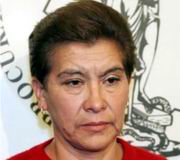
Juana Barraza
Serial killer Silvia Meraz
Serial killer · Mexico · 2009
Silvia Meraz Moreno (born 1968) was a Mexican serial killer who was active from…
3 victims
Silvia Meraz
Serial killer · Mexico · 2009
Silvia Meraz Moreno (born 1968) was a Mexican serial killer who was active from…
3 victims
 Felicitas Sanchez Aguillon
Serial killer · Mexico · 1930
Felícitas Sánchez Aguillón or Sánchez Neyra (1890 - June 16, 1941) was a Mexica…
50 victims
Felicitas Sanchez Aguillon
Serial killer · Mexico · 1930
Felícitas Sánchez Aguillón or Sánchez Neyra (1890 - June 16, 1941) was a Mexica…
50 victims
 Sara María Aldrete
Serial killer · Mexico · 1987
Sara María Aldrete (born September 6, 1964 in Matamoros, Tamaulipas, Mexico) wa…
15 victims
Sara María Aldrete
Serial killer · Mexico · 1987
Sara María Aldrete (born September 6, 1964 in Matamoros, Tamaulipas, Mexico) wa…
15 victims
 Cesar Armando Librado Legorreta
Serial killer · Mexico · 2011
Cesar Armando Librado Legorreta was a Mexican serial offender who worked as a c…
6 victims
Cesar Armando Librado Legorreta
Serial killer · Mexico · 2011
Cesar Armando Librado Legorreta was a Mexican serial offender who worked as a c…
6 victims
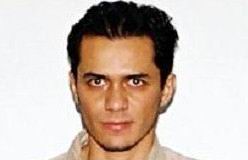 Raul Osiel Marroquin
Serial killer · Mexico · 2005
Raúl Osiel Marroquín Reyes was born around 1981 in Tampico, Tamaulipas. At the…
4 victims
Raul Osiel Marroquin
Serial killer · Mexico · 2005
Raúl Osiel Marroquín Reyes was born around 1981 in Tampico, Tamaulipas. At the…
4 victims
 Jose Luis Calva Zepeda
Serial killer · Mexico · 2004
Jose Luis Calva Zepeda was an aspiring horror writer in Mexico City who was acc…
3 victims
Jose Luis Calva Zepeda
Serial killer · Mexico · 2004
Jose Luis Calva Zepeda was an aspiring horror writer in Mexico City who was acc…
3 victims
 Donetta Hill
Murderer · USA · 1990
Donetta Hill, also referred to as Doneta Hill, was born in 1966. She was a Sout…
2 victims
Donetta Hill
Murderer · USA · 1990
Donetta Hill, also referred to as Doneta Hill, was born in 1966. She was a Sout…
2 victims
 Samuel Manzie
Homicide · USA · 1997
Samuel Manzie was a 15-year-old charged as an adult in New Jersey for the killi…
1 victim
Samuel Manzie
Homicide · USA · 1997
Samuel Manzie was a 15-year-old charged as an adult in New Jersey for the killi…
1 victim
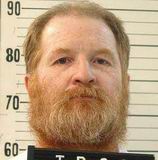 Harold Wayne Nichols
Murderer · USA · 1988
Defendant: Harold Wayne Nichols Victim: Karen Pulley (age 21) Place: Chattanoog…
1 victim
Harold Wayne Nichols
Murderer · USA · 1988
Defendant: Harold Wayne Nichols Victim: Karen Pulley (age 21) Place: Chattanoog…
1 victim
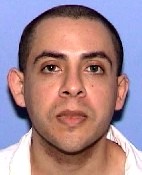 Rodolfo Alvarez Medrano
Mass murderer · 2002
Rodolfo Alvarez Medrano (a/k/a "Kreeper") provided assault weapons used by fell…
10 victims
Rodolfo Alvarez Medrano
Mass murderer · 2002
Rodolfo Alvarez Medrano (a/k/a "Kreeper") provided assault weapons used by fell…
10 victims
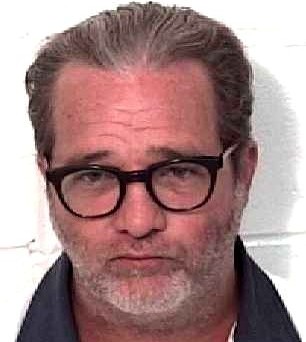 Kim Anthony McMichen
Murderer · USA · 1990
Kim Anthony McMichen was sentenced to death on August 6, 1993. He was convicted…
2 victims
Kim Anthony McMichen
Murderer · USA · 1990
Kim Anthony McMichen was sentenced to death on August 6, 1993. He was convicted…
2 victims
 Brittany Norwood
Murderer · USA · 2011
Brittany Norwood was a co-worker of Jayna Murray at a Lululemon Athletica store…
1 victim
Brittany Norwood
Murderer · USA · 2011
Brittany Norwood was a co-worker of Jayna Murray at a Lululemon Athletica store…
1 victim
- Gender
- female
- Country
- Mexico
- Location
- Mexico City, Mexico
- Date of birth
- December 27, 1958
- Age at first offence
- 44
- Characteristics
- robbery
- Victim profile
- Women aged between 64 to 79 years
- Method of murder
- Strangulation
- Date(s) of murder
- 2002 - 2006
- Years active
- 2002–2006
- Date of arrest
- January 24, 2006
- Status
-
Imprisoned
Sentenced to 759 years in prison on March 31, 2008
Case details
Juana Barraza (born 1958) was a Mexican professional wrestler and serial killer dubbed La Mataviejitas (“The Old Lady Killer”). She was sentenced to 759 years in prison on March 31, 2008.
Background
Juana Barraza was born in Hidalgo, a rural area north of Mexico City. Her mother was an alcoholic. Barraza’s mother reportedly exchanged her for three beers to a man who repeatedly raped her in his care, and by whom she became pregnant with a boy. Barraza had four children in total. Her eldest son died from injuries sustained in a mugging.
Prior to her arrest, Barraza was a professional wrestler under the ring name La Dama del Silencio (“The Silent Lady”). She had an obsession with lucha libre, a form of Mexican masked professional wrestling.
The offence
All of Barraza’s victims were women aged 60 or over, most of whom lived alone. Police reported that there was evidence of abuse in a number of cases.
Barraza bludgeoned or strangled her victims and afterward would rob them.
Authorities and the press gave various estimates of the total number of victims. Estimated totals ranged from 24 to 49 deaths. The first murder attributed to Mataviejitas was dated variously to the late 1990s and to a specific killing on 17 November 2003.
A specific case involved Ana María de los Reyes Alfaro, 82, who was strangled with a stethoscope.
Investigation
Investigators initially profiled the killer as having “a brilliant mind, [being] quite clever and careful,” and probably striking after a period spent gaining the trust of an intended victim.
Officers suspected she posed as a government official offering the chance to sign up to welfare programs. The search for Barraza was complicated by conflicting evidence. At one point, the police hypothesized that two killers might be involved.
The investigation faced distraction from an odd coincidence: at least three of Barraza’s victims owned a print of an 18th century painting by the French artist Jean-Baptiste Greuze, Boy in Red Waistcoat.
The authorities were criticised by the media for dismissing evidence that a serial killer was at work in Mexico City as merely “media sensationalism” as late as the summer of 2005. Soon after an investigation began, the police incurred further criticism by launching what one journalist described as a “ham-fisted” and unproductive swoop on Mexico City’s transvestite prostitutes.
By November 2005, the Mexican authorities reported witness statements indicating the killer wore women’s clothing to gain access to victims’ apartments. In one case, a large woman in a red blouse was seen leaving the home of a murdered woman.
Two months later, police began checking the fingerprints of bodies in the city’s morgues in the apparent belief that Mataviejitas might have committed suicide.
A breakthrough occurred on 25 January 2006, when a suspect was arrested fleeing from the home of the serial killer’s latest victim, Ana María de los Reyes Alfaro, who lived in the Venustiano Carranza borough of Mexico City. Alfaro, 82, had been strangled with a stethoscope.
To the surprise of many Mexicans, who had supposed the killer to be male, the suspect detained was Juana Barraza, 48. She was described as a female wrestler known professionally as The Silent Lady. Witnesses at previous murder scenes had described a masculine-looking woman, and police had previously looked for a transvestite, although they later admitted that the former wrestler resembled composite images of the suspect. Barraza closely resembled a model of the killer’s features, described as close-cropped hair dyed blonde and a facial mole. She was carrying a stethoscope, pension forms, and a card identifying her as a social worker when she was detained.
Mexico City prosecutors said fingerprint evidence linked Barraza to at least 10 murders of the as many as 40 murders attributed to the killer.
Barraza was said to have confessed to murdering Alfaro and three other women, while denying involvement in all other killings. She told reporters she had visited Alfaro’s home in search of laundry work.
Arrest
On 25 January 2006, Barraza was arrested while fleeing from the home of the serial killer’s latest victim, Ana María de los Reyes Alfaro, in the Venustiano Carranza borough of Mexico City. Police said the lodger identified Barraza after seeing her leave just before stumbling on his landlady’s corpse.
Police said they found in her possession a stethoscope, social benefits papers, and a social worker’s identification card. Officers said the card was used to gain entry to victims’ homes by pretending to be a government employee able to sign victims up to welfare programmes.
Trial and verdict
Barraza was tried in the spring of 2008. The prosecution alleged she had been responsible for as many as 40 deaths.
She admitted one murder, that of Alfaro, and told police her motive was lingering resentment regarding her own mother’s treatment of her.
On March 31, 2008, she was found guilty on 16 charges of murder and aggravated burglary, including 11 separate counts of murder.
During her first appearance in February, Barraza said: “May God forgive you and not forget me,” she said, adding that she would appeal against all but one of the convictions.
She also told the court: “I only killed one little old lady. Not the others,” Barraza told the court on her first appearance in February. “It isn't right to pin the others on me.”
When asked to reveal her motive, she said: “I got angry.”
A quote attributed to Emilio Alvarez stated: “The presumption of innocence is not clearly established here,” says Emilio Alvarez, human-rights ombudsman for Mexico City. “The media has become the great judge.”
Sentencing
Barraza was sentenced to 759 years in prison on March 31, 2008.
The case notes that sentences imposed in Mexican courts are generally served concurrently, while the maximum sentence under Mexican law is 60 years. She would most likely serve the full sentence in prison.
Appeals
Barraza said she would appeal against all but one of the convictions.
Outcome
On March 31, 2008, Barraza was found guilty on 16 charges of murder and aggravated burglary, including 11 separate counts of murder, and was sentenced to 759 years in prison.
Aftermath
A television series adaptation of the story was produced for Televisa in 2010 as part of Mujeres Asesinas 3. The episode was called “Maggie, Pensionada,” starring the Mexican actress Leticia Perdigón as Maggie, and featuring Irma Lozano, Ana Luisa Peluffo, and Lourdes Canale as victims.
Barraza was also highlighted in the documentary “Instinto Asesino” which aired on Discovery en Español in 2010. The episode was entitled “La Mataviejitas.”
Juana Barraza was highlighted on La Historia Detras Del Mito, with the episode entitled La Mataviejitas.
Spotted an error, or have more information about this case?