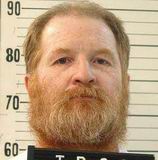
Harold Wayne Nichols
Murderer Brian Kevin Rosenfeld
Murderer · USA · 1985
Brian Kevin Rosenfeld Brian Kevin Rosenfeld was sentenced to three concurrent l…
23 victims
Brian Kevin Rosenfeld
Murderer · USA · 1985
Brian Kevin Rosenfeld Brian Kevin Rosenfeld was sentenced to three concurrent l…
23 victims
 Yahweh ben Yahweh
Murderer · USA · 1980
Yahweh ben Yahweh was born and legally named Hulon Mitchell Jr. (October 27, 19…
23 victims
Yahweh ben Yahweh
Murderer · USA · 1980
Yahweh ben Yahweh was born and legally named Hulon Mitchell Jr. (October 27, 19…
23 victims
 Russell Ellwood
Murderer · USA · 1991
Russell Ellwood was a former taxi driver. Authorities suspected him of killing…
20 victims
Russell Ellwood
Murderer · USA · 1991
Russell Ellwood was a former taxi driver. Authorities suspected him of killing…
20 victims
 Robert Martines Perez
Murderer · USA · 1994
Name: Robert Martines Perez · Other name used in proceedings: Robert Martinez P…
15 victims
Robert Martines Perez
Murderer · USA · 1994
Name: Robert Martines Perez · Other name used in proceedings: Robert Martinez P…
15 victims
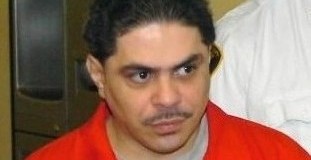 Anthony Santos
Homicide · USA · 2006
Anthony J. Santos was convicted of stabbing another man to death inside a Bethl…
1 victim
Anthony Santos
Homicide · USA · 2006
Anthony J. Santos was convicted of stabbing another man to death inside a Bethl…
1 victim
 Max Landon Payne
Murderer · USA · 1992
Max Landon Payne was convicted of capital murder arising from the robbery, kidn…
1 victim
Max Landon Payne
Murderer · USA · 1992
Max Landon Payne was convicted of capital murder arising from the robbery, kidn…
1 victim
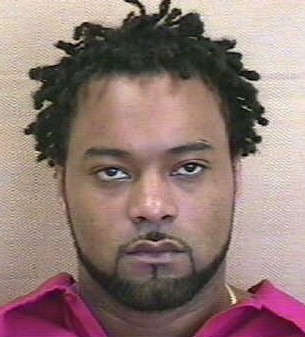 Desmond Keith Carter
Murderer · USA · 1992
Desmond Keith Carter was tried capitally for first-degree murder and robbery wi…
1 victim
Desmond Keith Carter
Murderer · USA · 1992
Desmond Keith Carter was tried capitally for first-degree murder and robbery wi…
1 victim
 Wellington Menezes de Oliveira
Mass murderer · Brazil · 2011
Wellington Menezes de Oliveira (July 13, 1987 - April 7, 2011) carried out a sh…
12 victims
Wellington Menezes de Oliveira
Mass murderer · Brazil · 2011
Wellington Menezes de Oliveira (July 13, 1987 - April 7, 2011) carried out a sh…
12 victims
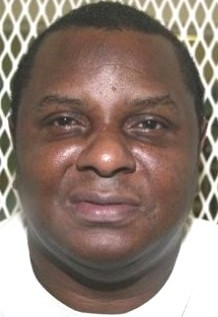 Michael Lynn Riley
Murderer · USA · 1986
Michael Lynn Riley was convicted of capital murder and sentenced to death for t…
1 victim
Michael Lynn Riley
Murderer · USA · 1986
Michael Lynn Riley was convicted of capital murder and sentenced to death for t…
1 victim
 Robert Joe Wagner
Serial killer · Australia · 1992
Robert Joe Wagner (born 28 November 1971 in Parramatta, New South Wales) was an…
10 victims
Robert Joe Wagner
Serial killer · Australia · 1992
Robert Joe Wagner (born 28 November 1971 in Parramatta, New South Wales) was an…
10 victims
- Gender
- male
- Country
- USA
- Location
- Hamilton County, Tennessee, USA
- Date of birth
- December 31, 1960
- Age at first offence
- 28
- Characteristics
- serial rapist, rape, domestic violence
- Victim profile
- Karen Pulley, 21
- Method of murder
- Hitting on the head with a board
- Date(s) of murder
- September 30, 1988
- Years active
- 1988
- Date of arrest
- January 5, 1989
- Status
-
Sentenced to death
Sentenced to death on May 12, 1990
Case information
Defendant: Harold Wayne Nichols Victim: Karen Pulley (age 21) Place: Chattanooga, Tennessee (Brainerd area; East Ridge area) Other victims: T.R., S.T., P.R., and P.G. (referred to by initials in the proceedings)
Timeline
- 1986 — Harold Wayne Nichols married Joanne Nichols.
- 1984 — Nichols joined the army and received an honorable discharge.
- 1988 — Nichols committed the rape and murder of 21-year-old Karen Pulley in Chattanooga, Tennessee.
- September 30, 1988 — Nichols broke into a home in the Brainerd area of Chattanooga and found Karen Pulley alone in an upstairs bedroom.
- December 27, 1988 — Nichols committed an offense against T.R. involving aggravated rape and first degree burglary.
- December 20, 1988 — Nichols committed offenses against P.G. involving aggravated rape, first degree burglary, and petit larceny.
- January 3, 1989 — Nichols committed offenses against S.T. and P.R., each involving aggravated rape and first degree burglary; Nichols also committed offenses against two victims on that date.
- January 5, 1989 — Police officers arrested Nichols after receiving information that he committed several rapes in the East Ridge area near Chattanooga that were unrelated to the Pulley rape and murder.
- January 6, 1989 — Officers questioned Nichols; he confessed to several rapes that occurred in December 1988 and early January 1989.
- May 12, 1990 — Nichols was sentenced to death.
- December 1996 — Nichols filed post-conviction petitions challenging convictions in non-capital cases.
- April 1995 — Nichols filed a petition for post-conviction relief seeking to set aside the felony murder conviction and death sentence.
- 1994 — The Tennessee Supreme Court affirmed Nichols’s convictions and the sentence of death on direct appeal.
- May 2, 2002 — Tennessee Supreme Court session.
- October 7, 2002 — Tennessee Supreme Court filed the opinion; the Court affirmed the Court of Criminal Appeals’ judgment.
The offence
Karen Pulley
On September 30, 1988, Nichols broke into a home in the Brainerd area of Chattanooga and found Karen Pulley alone in an upstairs bedroom. Nichols forcibly removed Pulley’s clothing, raped her, and struck her in the head with a board he had found in the home. After the rape, Nichols struck the victim in the head with the board at least four more times as she struggled. Pulley was found alive by one of her roommates and died the following day. The cause of death was blunt trauma to the victim’s head resulting in skull fractures and massive brain injuries.
Nichols later confessed to the rape and murder of Karen Pulley and gave a videotaped statement describing:
- the layout of the victim’s home and bedroom,
- his entry point into the home,
- the facts of the rape and murder, and
- his disposal of the murder weapon.
Nichols also asserted to others that the murder was an accident, as described by Joanne Nichols’s testimony to the sentencing proceeding.
Offenses against T.R., S.T., P.R., and P.G.
Nichols was later charged with and convicted in offenses involving four different victims.
The proceedings described the following offenses:
- Aggravated rape and first degree burglary against T.R. on December 27, 1988
- Aggravated rape and first degree burglary against S.T. on January 3, 1989
- Two counts of aggravated rape and first degree burglary against P.R. on January 3, 1989
- Aggravated rape, first degree burglary, and petit larceny against P.G. on December 20, 1988
The record stated that Nichols pledged guilty to offenses involving T.R. and S.T. but went to jury trials for the offenses involving P.G. and P.R. and was convicted. After these convictions, Nichols pleaded guilty to charges of felony murder, aggravated rape, and first degree burglary for the offenses against Karen Pulley.
In the sentencing phase of his capital trial, the prosecution sought death based upon two aggravating circumstances:
- that Nichols had prior convictions for felonies involving violence, and
- that the killing of Pulley occurred during the commission of a felony.
Investigation and interrogation
Police officers arrested Nichols on January 5, 1989, after receiving information that he committed several rapes in the East Ridge area near Chattanooga that were unrelated to the Pulley rape and murder. When questioned by officers of the East Ridge Police Department on January 6, 1989, Nichols confessed to several rapes that occurred in December of 1988 and early January of 1989.
Detective Richard Heck of the Chattanooga Police Department later questioned Nichols about the rape and murder of Karen Pulley, and Nichols gave a videotaped statement discussing the layout of the victim’s home and his entry point, the facts of the rape and murder, and his disposal of the murder weapon.
Arrest
Nichols was arrested after information was received concerning rapes in the East Ridge area near Chattanooga unrelated to the Pulley case. During post-conviction review, Nichols argued that counsel were ineffective for failing to seek suppression of statements on the basis that he was arrested without a warrant and without probable cause on January 5, 1989. The trial court found that at least some photo identifications occurred after the arrest, but also found that this did not establish that none occurred before the arrest.
The record included an offense report dated January 6, 1989, prepared by the East Ridge Police Department stating:
- officers received an anonymous tip on January 5, 1989,
- this led to a computer check and discovery of Nichols’s prior arrest for a sex offense, and
- a victim identified Nichols as the perpetrator from his mug shot, described as “the fourth victim in a row” to identify Nichols.
Captain Holland testified at the trial of P.R. that the victim identified Nichols prior to the arrest on January 5, 1989.
Nichols also argued that counsel were ineffective for failing to suppress on the basis that he was not taken before a judicial officer within 72 hours of his arrest. The trial court rejected the basis for this claim, stating that there was evidence of an arraignment and that Nichols referenced in the motion to suppress transcript that he was arraigned the day after he was arrested, with assistant district attorney notes referring to an arraignment before a special judge. The record reflected that Nichols was read his Miranda rights and confessed within 24 hours of his arrest.
Trial
Guilty pleas and jury convictions
Nichols pleaded guilty to the offenses involving T.R. and S.T., but elected to go to jury trials for the offenses involving P.G. and P.R. and was convicted. After those convictions, Nichols pleaded guilty to felony murder, aggravated rape, and first degree burglary for the offenses against Karen Pulley.
Sentencing for felony murder / capital proceeding
At a sentencing hearing for the felony murder conviction, the jury found that the evidence of two aggravating circumstances outweighed the evidence of mitigating circumstances beyond a reasonable doubt.
The trial court later imposed:
- a 60-year sentence for aggravated rape, and
- a 15-year sentence for first degree burglary, to be served consecutively.
The record stated that the Tennessee Supreme Court affirmed Nichols’s death sentence on direct appeal.
Mitigation evidence presented at sentencing
At sentencing, the defense introduced evidence of Nichols’s character and background, including testimony by:
- Reverend Robert Butler, who testified that he had known Nichols since childhood and that Nichols had the “best quality” of character as a child.
- Winston Gonia, a minister who had known Nichols since age ten, who testified that Nichols was a good person.
- Reverend Charles Hawkins, who testified he had visited Nichols at an orphanage on many occasions and that Nichols had been a “very fine young man,” and that he could not associate the crimes with the person he once knew.
- Larry Kilgore, co-employee at Godfather’s Pizza, who testified that Nichols was a dependable employee and a friend; that Nichols had received promotions leading to assistant manager and worked night shifts; and that Kilgore was shocked at Nichols’s arrest, stating the person who committed the crimes was not the person he knew.
Joanne Nichols testified that:
- she married Nichols in 1986,
- he was a “perfect gentleman” who was nice, caring, and never mean to her,
- she lived for a time with Nichols’s father described as harsh and unloving,
- Nichols worked late hours and sometimes did not come home all night,
- she did not think Nichols raped and killed Pulley because Nichols never showed indication he would act in that manner,
- she admitted that she told an investigating officer that Nichols said the murder was an accident,
- and she testified she did not want her husband to die.
Nichols testified that:
- his mother died of cancer when he was ten and he was placed in an orphanage by his father,
- he did not know why he had been placed and did not recall any abuse while he was there,
- in 1976, he was returned to his father rather than adopted due to a difficult relationship,
- he joined the army and received an honorable discharge in 1984,
- he married Joanne Nichols in 1986 and believed they had a good marriage,
- he had a prior conviction for assault with intent to commit rape,
- he had a daughter through a prior relationship and paid child support up until his arrest,
- he enjoyed his job and received promotions from cook to assistant manager,
- when he committed acts of violence he experienced a “strange energized feeling” he could not resist or stop,
- he conceded he never sought help or told anyone about his criminal activity,
- he did not know Karen Pulley and intended only to burglarize her home and not to kill her,
- he knew Pulley was hurt during his attack but did nothing to help her, instead disposing of the murder weapon and his clothing,
- and although remorseful, he admitted he would have continued his violent behavior had he not been arrested.
Dr. Eric Engum, a clinical psychologist, testified that he met with Nichols five or six times and that Nichols had “high average” intelligence and was fairly articulate. Engum diagnosed Nichols with “intermittent explosive disorder,” described as marked by an irresistible drive to commit a violent, destructive act until the act is committed. Engum testified the condition may relate to organic factors or developmental factors such as a hostile environment, abuse, absence of love, and abandonment. Engum testified that in Nichols’s case there was presence of a harsh hostile father and abandonment associated with the orphanage after the mother’s death. Engum testified Nichols was not a psychopath and was not always violent or evil; he said Nichols’s confessions reflected his “good side taking responsibility for what [his] bad side did.” Engum concluded Nichols would function well in an institutionalized setting but would repeat destructive behavior if released.
Death penalty determination
The jury imposed a sentence of death after finding the evidence of the two aggravating circumstances outweighed mitigating circumstances beyond a reasonable doubt.
Post-conviction proceedings
Nichols filed post-conviction petitions seeking relief from:
- the felony murder conviction,
- the sentence of death,
- and numerous convictions for aggravated rape, first degree burglary, and larceny, based on ineffective assistance of counsel and other grounds.
The trial court:
- denied relief regarding the felony murder conviction and the sentence of death,
- but granted partial relief by ordering new sentencing hearings for the remaining convictions.
The Court of Criminal Appeals concluded:
- the trial court erred by allowing Nichols to assert his right against self-incrimination during post-conviction proceedings,
- but upheld the trial court’s judgment in all other respects.
The Tennessee Supreme Court affirmed the Court of Criminal Appeals’ judgment.
Appeals
Tennessee Supreme Court decision (filed October 7, 2002)
The Tennessee Supreme Court addressed ten conclusions:
- Nichols was not denied effective assistance of counsel based on failure to investigate and challenge confessions as false.
- Nichols was not denied effective assistance of counsel based on failure to challenge legality of his arrest.
- Nichols was not denied effective assistance of counsel at the sentencing phase based on failure to present additional mitigating evidence.
- Nichols was not denied effective assistance of counsel at the sentencing phase based on failure to object to misconduct by the prosecution.
- Nichols was not denied effective assistance of counsel at the sentencing phase based on failure to request mitigating instructions.
- Nichols was not denied effective assistance of counsel at the sentencing phase based on failure to raise issues regarding constitutionality of capital punishment.
- Nichols was not denied effective assistance of counsel at the sentencing phase based on failure to object to discovery of notes prepared by a defense psychologist on self-incrimination grounds.
- The Court of Criminal Appeals did not err in refusing to remand for additional DNA testing.
- The Court of Criminal Appeals erred by addressing a right against self-incrimination in the post-conviction proceeding, but the error had no effect on the outcome.
- The trial court’s findings were not clearly erroneous and cumulative error did not require reversal of the convictions.
The Court affirmed the Court of Criminal Appeals’ judgment.
Justices and counsel in the Tennessee Supreme Court proceedings
- E. Riley Anderson, J. delivered the opinion of the court.
- Frank F. Drowota, III, C.J., Janice M. Holder, and William M. Barker, JJ. joined the opinion.
- Adolpho A. Birch, Jr., J. filed a concurring and dissenting opinion.
For the appellant (Nichols):
- Ardena J. Garth, District Public Defender, and Mary Ann Green, Assistant Public Defender, Chattanooga, Tennessee
- Donald E. Dawson, Post-Conviction Defender, and Catherine Y. Brockenborough, Assistant Post-Conviction Defender, Nashville, Tennessee
For the appellee (State of Tennessee):
- Paul G. Summers, Attorney General and Reporter; Michael E. Moore, Solicitor General; Gordon W. Smith, Associate Solicitor General; Gill Robert Geldreich, Assistant Attorney General
- William H. Cox, III, District Attorney General
- C. Leland Davis, C. Caldwell Huckabay, and Glenn R. Pruden, Assistant District Attorneys General
Amicus curiae:
- David M. Eldridge and Jeanne L. Wiggins, Knoxville, Tennessee, for The National Association of Criminal Defense Lawyers and The Tennessee Association of Criminal Defense Lawyers.
Legal issues and rulings (as addressed in the opinion)
Ineffective assistance of counsel — failure to investigate and challenge confessions as false
Nichols argued counsel were ineffective because they failed to investigate evidence of innocence and failed to challenge confessions as false.
The opinion addressed serology evidence, the alleged murder weapon, hair evidence, alibi defense investigation, other evidence and suspects, and an expert deposition by Dr. Richard Ofshe regarding false confessions.
Serology evidence — Karen Pulley and T.R.
Nichols relied on a report prepared in 1989 by the Tennessee Bureau of Investigation, arguing spermatozoa found in a vaginal swab did not contain A, B or H antigens and that this excluded him as the perpetrator due to him being a blood type O secretor who produces H antigens. Mike VanSant testified at the post-conviction hearing and stated massive bleeding and blood transfusions may affect serological tests on blood samples but not on saliva or vaginal samples. VanSant testified semen from a vaginal swab is distinguishable from blood even when the swab is bloody and agreed blood flow can have a “cleansing action” over time.
VanSant was asked:
Q. [B]ut just because there’s a lot of blood, that doesn’t hide the fact that there’s semen there, that whatever antigens you would get from the semen?
A: Not necessarily.
The Court of Criminal Appeals concluded evidence on this point was inconclusive due to the equivocal nature of whether massive bleeding affected discovery of antigens and lack of expert testimony indicating Nichols was excluded as perpetrator.
Nichols also asserted serology evidence excluded him for aggravated rape involving T.R., arguing saliva and vaginal swabs revealed presence of type B antigen while Nichols and the victim were type O secretors who secreted only type H antigens. VanSant testified that a saliva sample taken from T.R. revealed a B antigen and a vaginal sample revealed B and H antigens in three of four tests and only H antigen in one of the four tests. VanSant said he did not test for semen and results were therefore inconclusive. VanSant testified a sample of spermatozoa on the victim’s bedspread contained only type H antigens and that type H antigen could only have been produced by the victim, Nichols, or any other type O secretor. VanSant testified type B antigen must have been produced by someone other than Nichols, but its presence did not exclude Nichols or anyone else as perpetrator. VanSant testified he was unaware the victim had sexual relations three days before the offense and he said:
[T]here were seven areas of stain on the bedspread . . . . Had I known that she had voluntary sexual intercourse previously I would have tested maybe two or three different areas to try to find something different than the H [antigen] because, you know, I can’t say, that could just be hers.
VanSant said antigens may be found up to nine days later according to literature.
The Court of Criminal Appeals concluded again that the evidence was inconclusive.
Murder weapon — discovery and forensic linkage
Nichols argued counsel were ineffective for failing to investigate circumstances surrounding officers’ discovery of the alleged murder weapon. His confession described giving a detailed route in fleeing and disposal of the murder weapon by throwing out the window of his car. Detective Heck testified Nichols accompanied officers to the scene and that a board was found that Nichols stated “looked like the one he threw out the window of his car.”
Steve Miller testified he did not find a two-by-four board in his search of the area where it was later found. Susan Saunders Massey testified she was taken to the area by police and saw a two-by-four leaning against a tree and she did not recognize the board but believed there had been a two-by-four under a washer being repaired in their home. Dr. Neal Haskeall, a forensic entomologist, testified no blood or fiber evidence linked Nichols to the murder on the board and no plant material despite the alleged discard in September 1988 and not recovered until January 1989.
Hair evidence
Nichols argued counsel failed to investigate hair samples collected from the Karen Pulley crime scene. Post-conviction testimony indicated two slides containing several samples from the victim’s pubic area each revealed one hair inconsistent with Pulley or Nichols. Nichols argued the evidence could have established reasonable doubt because the evidence showed the victim had never had sexual intercourse before the rape. The Court of Criminal Appeals noted the report relied upon by Nichols was not dated until after the post-conviction hearings concluded, leaving the State no opportunity to contest and no expert testified as to the result. The report stated:
hairs are ubiquitous in the environment, degrade very slowly, and are easily inadvertently picked up, transferred, or shed, a loose hair is of relatively little significance without some independent knowledge that it is related to the incident being investigated.
The evidence showed Pulley lived with two other women from whom hair samples were not evaluated as reference samples as part of forensic evaluation relied upon by Nichols.
Alibi defense investigation
Nichols contended counsel were ineffective for failing to investigate evidence of alibi defenses for all offenses. He cited evidence he was at work during an offense committed against T.M. which was not at issue in the post-conviction proceeding and argued it should have prompted investigation for other offenses to which he gave false confessions. The record showed Nichols confessed and later pled guilty to the offense against T.M. and T.M. identified him as the person who attacked her. The opinion stated Nichols did not present any alibi evidence during the post-conviction hearing for offenses at issue.
Other evidence and suspects — revolver and Fred Coats
Nichols argued counsel failed to investigate that a pistol recovered from the trunk of his car did not match the description of a “blue steel revolver” used in the offense against S.T. The record stated Nichols confessed and pled guilty to the offense against S.T. The prosecutor said S.T. identified Nichols from a photograph and Nichols consented to search of his car revealing a .38 revolver belonging to S.T. Dwight Short testified a property sheet prepared by police officers indicated the pistol was an “Auto SST,” interpreted as stainless steel automatic. Short also testified the serial number recorded for the pistol was traced to a “three inch .38 Ross revolver with a blue finish.”
Nichols also argued counsel failed to investigate a suspect named Fred Coats, based on evidence a police dog tracked a scent from P.R.’s residence to a car owned by Coats’s mother and that P.R. identified Coats. The record described that P.R. testified she saw a photograph of Coats with features resembling the perpetrator. After seeing Coats in a lineup, she told officers he was not the rapist, and she testified she identified Nichols as the one who raped her and made an in-court identification at trial. The petitioner asserted defense failed to pursue other possible suspects as well.
Dr. Richard Ofshe deposition on false confessions
Nichols presented the deposition of Dr. Richard Ofshe, who discussed “coercive” interrogation techniques leading to false confessions through threats or promises and “persuading” interrogation techniques leading to false confessions through convincing an innocent suspect. Ofshe testified about factors for analyzing veracity including whether the confession was recorded in its entirety, whether it contains details uniquely known to defendant, whether confession was tainted by officers telling suspect facts of offense, and whether confession was corroborated by other evidence.
Ofshe testified that after reviewing Nichols’s confessions, he found no indications in the record about how statements came about or reliability. He said trial counsel should have investigated whether officers told Nichols he would receive “treatment” in exchange for statements, whether officers “rehearsed” Nichols’s statements before recording, and whether Nichols requested an attorney. Ofshe testified that there were no indications trial counsel investigated circumstances of confessions despite lack of physical evidence and that any attorney who fails to investigate cannot competently advise about whether to plead guilty or go to trial. Ofshe acknowledged his field was in earliest stages at the time of the offenses, confessions, and convictions and he did not testify about Nichols’s personal traits.
Ofshe’s framework was used by Nichols to claim coaching and contamination, including assertions that East Ridge investigators used leading questions and that interrogation was contaminated by showing incident reports. Nichols also argued that his confession to Pulley offenses was coached by Detective Richard Heck and contained details inconsistent with actual investigation facts.
Ineffective assistance of counsel — unlawful arrest and suppression
Nichols argued counsel were ineffective for failing to seek suppression of statements based on arrest without warrant and without probable cause. The trial court found Nichols failed to establish lack of pre-arrest identifications and failed to show prejudice. The opinion described that no victims were called to testify as to when they made identifications in post-conviction.
Nichols also argued counsel failed to suppress statements due to timing before judicial officer within 72 hours. The trial court rejected and the Supreme Court agreed the evidence did not preponderate against findings and counsel were not ineffective. The Supreme Court held Nichols failed to establish denial of effective assistance on this ground.
Ineffective assistance of counsel — mitigating evidence
Nichols argued counsel were ineffective during sentencing phase for failure to present additional mitigation evidence for the rape and murder of Karen Pulley. The trial court found many witnesses cumulative and only expounded on issues raised at sentencing, and concluded counsel were not derelict and no prejudice was shown. The Supreme Court agreed with the Court of Criminal Appeals.
The opinion described deposition testimony from Nichols’s sister, Deborah Nichols Sullivan, which included:
- Nichols being quiet with mild demeanor,
- holding her mother’s hand while ill,
- fear of intense spankings leaving welts and stripes (she was “sure” Nichols received similar),
- and a statement that “that would be me and not [the petitioner]” regarding whether she would confirm that she was sexually abused.
Counsel had described Deborah Nichols as unwilling to testify, stating she would not talk about any abuse in the family and had nothing to say to help her brother. Counsel stated her husband said she would not testify and Nichols decided not to call her.
Additional witnesses described Nichols’s background, his family environment, and the children’s home. The opinion included:
- Diana Allred testified about Nichols’s father spanking and undressing in front of her and asked about bed inclusion; she said Nichols later seemed frightened and shy.
- Royce Sampley testified the home was threatening and angry/cursing.
- Dennis Sampley described whippings and not being permitted to tell anyone.
- Juanita Herron testified Nichols became “disturbed” and “sad” after mother’s death and that family arranged placement due to sexual abuse reported by Nichols’s sister.
- Louella Wagner testified Nichols’s father strict.
- Margaret Crox and Linda Crox Johnson testified Nichols’s father did not seem concerned.
- Jim Gumm testified Nichols was “one of the nicest guys around” in school.
- Nancy Atchley testified Nichols was sweet, kind, and well-mannered, quieter than other boys.
- Jacqueline Boruff testified Nichols was “sweet” and his father was an “ass” cold and uncaring.
- Claude Nichols testified his father said the children were placed via a church decision into a group home.
- Winston Gonia testified board member of Tomlinson Children’s Home; the group home was disciplined and he never saw abuse.
- Jackie Bailey testified she counseled Deborah Nichols; she had no information about petitioner.
- Linda Melton testified Nichols and his sister close; the 15-year-old Nichols never caused problems and was a “sweetheart”; church-related activities; paddling not used as discipline.
- Arlyne McGriff, deposition, testified she was a house parent just before it closed; Nichols talked about his mother; did not cause problems; father visited while she was house parent.
Nichols presented testimony from expert witnesses:
- Dr. Kenneth Nickerson evaluated Nichols in April and May 1989; testified Nichols had not shown prior signs of “intense or explosive emotions,” found competent to stand trial, and not legally insane; he testified Nichols denied murdering victims; he relied on notes by Dr. Frausto Natal.
- Dr. David Solovay reviewed Dr. Eric Engum’s materials and testified Engum did a “fine job,” but criticized Engum for failing to identify himself as a member of the defense team and for failing to present petitioner’s background as mitigating factor. Solovay did not agree with Engum’s intermittent explosive disorder and instead diagnosed borderline personality disorder. He testified Nichols learned to “disassociate” from threatening situations and admitted Nichols acknowledged guilt and showed remorse.
- Dr. Frank Einstein testified about mitigation work and described significant events including Nichols’s inability to remember events before age ten, presence of cousins in the home, death of mother and grandmother, physical and emotional abuse, and placement in orphanage. Einstein testified trial counsel should have presented additional information to humanize Nichols and illustrate his father’s conduct, physical and sexual abuse in the home, and family isolation, and stated trial counsel identified themes but did not present evidence to establish a link between background and crimes. Einstein admitted some mitigation themes can have negative effect and that second-guessing is difficult.
The Supreme Court described trial court findings that additional witnesses would have been cumulative, and that aggravator of prior violent felonies was “very substantial.”
Ineffective assistance — prosecutorial misconduct at sentencing
Nichols argued counsel were ineffective for failing to object to prosecutorial misconduct during sentencing phase when prosecutor elicited facts of the rape offenses used to prove the prior violent felony aggravating circumstance. The Supreme Court held counsel were not deficient and there was no reasonable probability of a different outcome.
The record described prosecutorial questions asked in cross-examination of Nichols:
- whether Nichols committed a rape on December 21, 1988 by using a knife,
- whether Nichols committed a rape on December 27, 1988 by using an electrical cord,
- whether Nichols committed a rape against two victims on January 3, 1989 including use of a knife.
Nichols admitted he committed all offenses. The Supreme Court referenced State v. Bigbee and stated Bigbee was decided after Nichols’s sentencing, so counsel could not be deficient for failing to object. The Supreme Court also described that the facts were briefly cited and admitted without lengthy discussion and that the prosecution did not improperly enhance aggravating circumstance in unduly emphasizing or repeatedly returning to underlying facts.
Ineffective assistance — jury instructions
Nichols argued counsel were ineffective for failing to request jury instructions:
- on definition of mitigation and weight of mitigating evidence,
- on mitigating circumstances under Tennessee Code Annotated § 39-13-204(j)(7) and (8),
- and several non-statutory mitigating circumstances.
The Supreme Court rejected these arguments, stating:
- a jury instruction on definition of mitigation or weight was not required,
- the record did not support instruction on § 39-13-204(j)(7) youthfulness because Nichols was 28-year-old and had an honorable military discharge,
- the trial court charged the jury on § 39-13-204(j)(8),
- and the trial court was not required to charge jury on specific non-statutory mitigating circumstances at the time of the offense.
Nichols also argued counsel were deficient for failing to object to the instruction that “the verdict must be unanimous.” The Supreme Court stated it had rejected such arguments.
Ineffective assistance — constitutionality challenges to death penalty
Nichols argued trial counsel were ineffective for failing to challenge constitutionality of death penalty, citing a dissent in Callins v. Collins and arguing it could not be administered fairly. The Supreme Court held it had repeatedly upheld constitutionality in Tennessee. Nichols also argued a challenge on right to life without compelling state interest; the Supreme Court stated it rejected similar claims.
Ineffective assistance — disclosure of psychologist’s notes
Nichols argued trial counsel were ineffective for failing to argue that trial court order requiring disclosure of Dr. Eric Engum’s notes violated right against self-incrimination. The Supreme Court held no prejudice and did not find a reasonable probability of different outcome.
The record described that the trial court’s order stemmed from defense failure to prepare a final report of Dr. Engum’s findings until the second day of trial. On direct appeal, the Supreme Court had held the notes were discoverable under Tenn. R. App. P. 16(b)(1)(B) because a psychologist relying on extensive memoranda had discoverable available reports.
The Supreme Court stated disclosure was not a violation of self-incrimination under principles applied when a defendant initiates a psychiatric examination and introduces evidence from it, referencing State v. Martin and State v. Reid in the context of capital sentencing.
Refusal to remand for additional DNA testing
Nichols argued the Court of Criminal Appeals erred by refusing to remand for additional DNA testing. The post-conviction trial court had authorized DNA testing of evidence taken from the rape kit performed on Karen Pulley, but after finding:
- “No results which would establish any prejudice to the petitioner . . . were submitted to the court at the final hearing,” the trial court denied additional DNA testing.
Nichols filed a motion requesting consideration of post-judgment facts for remand after Court of Criminal Appeals’ decision. The Court of Criminal Appeals denied the motion for two reasons: it did not require actual innocence for prejudice, and it found the motion did not comply with Tenn. R. App. P. 14 because it was not based on post-judgment facts. The Supreme Court stated the Court of Criminal Appeals properly denied relief and that such relief could be sought through appropriate procedure under Tenn. Code Ann. § 40-30-401.
Right against self-incrimination in post-conviction
The Supreme Court held the Court of Criminal Appeals erred by addressing whether the right against self-incrimination applied in post-conviction proceedings under the facts of the case. It stated that:
- Nichols was permitted to assert his right against self-incrimination by the trial court and refused to answer questions,
- the State did not appeal the trial court’s ruling in this respect,
- and Supreme Court review would amount to an advisory opinion if addressed.
The Supreme Court stated it drew no inference from the failure to testify and that it did not affect conclusions.
Outcome
The Court stated it:
- affirmed in all respects as to ineffective assistance issues presented,
- affirmed refusal to remand for additional DNA testing,
- held error regarding addressing self-incrimination had no effect on the outcome,
- and held trial court findings were not clearly erroneous and cumulative error did not require reversal.
Aftermath
The Supreme Court taxed costs to the State of Tennessee because it appearing the petitioner was indigent.
Concurring and dissenting opinion (Adolpho A. Birch, Jr.)
Adolpho A. Birch, Jr. fully concurred in the conclusion that Nichols’s convictions should be affirmed. Birch wrote that, to the extent the ineffective assistance allegations could be interpreted to include failure to object to method of proportionality review, he continued to adhere to views expressed in prior dissents including State v. Chalmers and State v. Godsey. Birch’s view stated that comparative proportionality review protocol was inadequate to shield defendants from arbitrary and disproportionate imposition of the death penalty and referenced Tenn. Code Ann. § 39-13-206(c) (1997). Birch stated that while he concurred in affirmance of convictions, he could not concur in imposition of death penalty in this case.
Spotted an error, or have more information about this case?