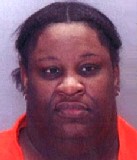
Donetta Hill
Murderer Bobbie Sue Terrell
Murderer · USA · 1984
Bobbie Sue Dudley Terrell was a Pinellas County nurse and worked as the night s…
12 victims
Bobbie Sue Terrell
Murderer · USA · 1984
Bobbie Sue Dudley Terrell was a Pinellas County nurse and worked as the night s…
12 victims
 Megan Huntsman
Murderer · USA · 1996
Megan Huntsman was 40 at sentencing. She was a mother of three children who wer…
6 victims
Megan Huntsman
Murderer · USA · 1996
Megan Huntsman was 40 at sentencing. She was a mother of three children who wer…
6 victims
 Angela Johnson
Murderer · USA · 1993
Angela Jane Johnson was convicted in federal court of aiding and abetting the m…
5 victims
Angela Johnson
Murderer · USA · 1993
Angela Jane Johnson was convicted in federal court of aiding and abetting the m…
5 victims
 Catherine May Wood
Murderer · USA · 1987
Catherine May Wood was an American caregiver who worked at the Alpine Manor Nur…
5 victims
Catherine May Wood
Murderer · USA · 1987
Catherine May Wood was an American caregiver who worked at the Alpine Manor Nur…
5 victims
 Michele Kalina
Murderer · USA · 1996
Michele Kalina pleaded guilty to murder for one of five infants she initially w…
5 victims
Michele Kalina
Murderer · USA · 1996
Michele Kalina pleaded guilty to murder for one of five infants she initially w…
5 victims
 Amy Bishop
Murderer · USA · 1986
Amy Bishop — biology professor and perpetrator · James Anderson — Bishop’s husb…
4 victims
Amy Bishop
Murderer · USA · 1986
Amy Bishop — biology professor and perpetrator · James Anderson — Bishop’s husb…
4 victims
 Jay Thompson
Murderer · USA · 1981
Richard Dillon was identified by a Deputy Sheriff as near the property at the t…
2 victims
Jay Thompson
Murderer · USA · 1981
Richard Dillon was identified by a Deputy Sheriff as near the property at the t…
2 victims
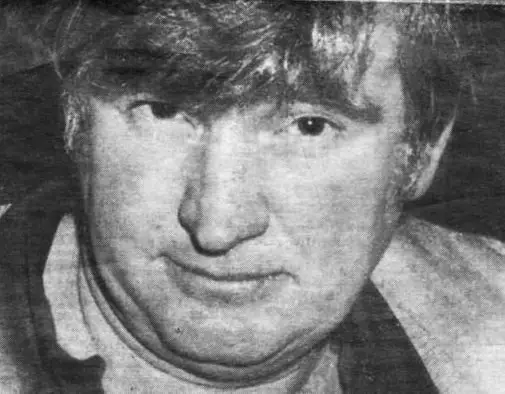 Raymond Edmunds
Murderer · Australia · 1966
Raymond Edmunds Raymond Edmunds was serving a life sentence for the 1966 murder…
2 victims
Raymond Edmunds
Murderer · Australia · 1966
Raymond Edmunds Raymond Edmunds was serving a life sentence for the 1966 murder…
2 victims
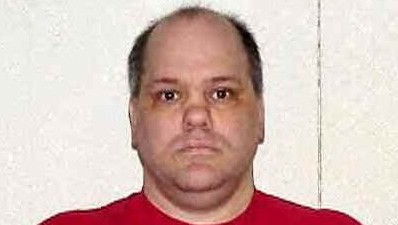 Brian Keith Moore
Murderer · USA · 1979
Brian Keith Moore was sentenced to death on November 29, 1984 in Jefferson Coun…
1 victim
Brian Keith Moore
Murderer · USA · 1979
Brian Keith Moore was sentenced to death on November 29, 1984 in Jefferson Coun…
1 victim
 Randall Woodfield
Serial killer · USA · 1979
Randall Woodfield was an American serial killer dubbed The I-5 Killer or The I-…
18 victims
Randall Woodfield
Serial killer · USA · 1979
Randall Woodfield was an American serial killer dubbed The I-5 Killer or The I-…
18 victims
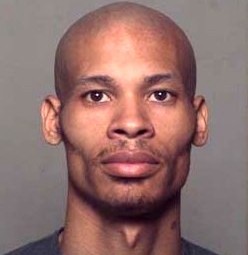 Paul Durousseau
Serial killer · USA · 1997
Paul Durousseau was an American serial killer born on August 11, 1970, in Beaum…
7 victims
Paul Durousseau
Serial killer · USA · 1997
Paul Durousseau was an American serial killer born on August 11, 1970, in Beaum…
7 victims
 Jordan Brown
Homicide · USA · 2009
Jordan Brown (Jordan Anthony Brown, born August 12, 1997) was found responsible…
1 victim
Jordan Brown
Homicide · USA · 2009
Jordan Brown (Jordan Anthony Brown, born August 12, 1997) was found responsible…
1 victim
- Gender
- female
- Country
- USA
- Location
- Philadelphia , Pennsylvania, USA
- Date of birth
- September 23, 1966
- Age at first offence
- 24
- Characteristics
- drug addict, crack addict
- Victim profile
- Nghia Guy Lu, 72 / Nairobe Dupont, 21
- Method of murder
- Beating with a clawhammer
- Date(s) of murder
- June 28, 1990 / March 4, 1991
- Years active
- 1990–1991
- Date of arrest
- —
- Status
-
Sentenced to death
Sentenced to death on April 9, 1992
Case overview
Donetta Hill, also referred to as Doneta Hill, was born in 1966. She was a South Philadelphia prostitute who was convicted of killing two customers and was sentenced to death.
Timeline
- April 9, 1992 — A jury convicted Donetta Hill of two counts of first-degree murder, and she received death sentences for each of the two first-degree murder convictions.
- June 28, 1990 — Nghia Quy Lu was killed in Philadelphia.
- March 4, 1991 — Nairobi Dupont was killed in Philadelphia.
- March 11, 1993 — Judgment of sentence was entered on March 11, 1993 in the Court of Common Pleas of Philadelphia County, Criminal Division.
- September 29, 1995 — The Supreme Court of Pennsylvania decided an appeal and affirmed the judgment of sentence.
The victims and offences
Hill was convicted of the murders of an Asian male and a black male in Philadelphia.
Murder of Nghia Quy Lu
On June 28, 1990, seventy-two-year-old Nghia Quy Lu propositioned Donetta Hill to have sex with him for money. The two went to the basement of Lu's home at 1931 South 8th Street in Philadelphia and had sex. After engaging in sex, Hill grabbed a hammer and struck Lu in the back of the head several times; Lu collapsed and died from his injuries. Hill then ransacked the house and took several items, including a Longines watch, two gold rings with Chinese inscriptions, and a pair of gold-rimmed eye glasses.
Later that day, Lu's son and daughter-in-law returned home and found Lu's body lying in a pool of blood on the basement floor with his pants pulled down to his knees. There was a large burn wound on Lu's chest, and a blood-stained hammer was found lying near the body.
Hill brought the items stolen from Lu to the home of her friend Melinda Williford. Hill asked Williford to sell the watch and gold rings at a neighborhood jewelry store. Williford sold one of the gold rings to the jeweler for twenty-five dollars and split the proceeds with Hill. In the punishment-phase related reporting, Hill was described as striking Lu repeatedly over the head with the claw end of a hammer.
Hill made statements to police. In one statement, Hill said the two had intercourse twice that day and that she killed him because he offered only $5 for sex instead of the $20 they had agreed on. Hill said she pulled his pants down to see if he had any money and that when he reached for a toolbox, thinking he was going to hit her, Hill struck first. Hill also said she received $25 from selling one of the rings.
In testimony during her own defense, Hill said detectives fabricated the statement and that she signed it under duress.
In addition, the punishment-phase reporting stated that Hill took two gold rings, a watch, and glasses from Lu's house.
Murder of Nairobi Dupont
Approximately nine months later, twenty-one-year-old Nairobi Dupont offered money to Hill to have sex with him in his father's house. Dupont, who was “mentally slow,” stood four feet, eleven inches tall and weighed eighty-five pounds. The Dupont home was located at 504 Emily Street in Philadelphia, less than four blocks from the site of the Lu murder.
Hill entered the home and had sex with Nairobi Dupont. Afterwards, she grabbed a hammer and struck Dupont repeatedly in the back of the head. After Dupont lay dead or dying on the floor, Hill ransacked the house and took several items, including two video cassette recorders, a number of video cassettes, and a television remote control. Hill then fled the scene.
On March 9, 1991, Dupont's father returned from a two-week vacation and found his house in a state of disarray. He eventually discovered the body of his son on the kitchen floor. Police arrived shortly thereafter and recovered a blood-stained hammer near the victim's body. They also recovered from the crime scene a red pocketbook which contained an identification card belonging to Donetta Hill.
Hill took the two videocassette recorders stolen from the Dupont residence to the home of an acquaintance, Dwayne Culler. Culler gave her twenty dollars and four vials of crack cocaine in exchange for the equipment. Hill returned to Culler's home sometime thereafter with a bag of video cassettes stolen from the Dupont home for which she received two additional vials of crack cocaine.
In the punishment-phase reporting, it was stated that Hill was angry when Dupont tried to pay her two caps of crack instead of $25 for allowing him to perform oral sex on her, according to the statement. That reporting also stated that she took two VCRs from the house and sold them for 10 caps, according to the statement.
Trial
Conviction and penalty
On April 6, 1992, Appellant, Donetta Hill, was convicted by a jury of two counts of murder of the first degree, robbery, and two counts of possession of an instrument of crime. At the conclusion of the penalty phase, the jury returned a sentence of death for each of the two first-degree murder convictions.
In the reporting connected to sentencing, it was stated that Hill became only the second woman in Pennsylvania to be sentenced to die since the death penalty was reinstated in the state in 1978, and that she was sentenced to death on April 9, 1992.
Evidence described during the appeal decision
The Supreme Court of Pennsylvania described the sufficiency of the evidence as supporting the first-degree murder convictions, recounting the events involving Lu and Dupont, the ransacking and theft of items, the discovery of the bodies, the recovery of a blood-stained hammer, and the presence of identification connected to Hill at the Dupont scene.
Investigation and admissions
After Hill learned that police wanted to question her, she went to the office of her probation officer. Accompanied by her probation officer and another member of his office, Hill went to the homicide division of the Philadelphia police department. Once there, Hill was taken to an interview room and fully advised of her Miranda rights.
Hill ultimately confessed to the murder of Nairobi Dupont and signed a written statement to that effect. Shortly thereafter, Hill was again advised of her Miranda rights and questioned about the murder of Nghia Quy Lu. Hill told detectives she was present when Lu was murdered, but that her friend, Bruce Baldwin, had committed the killing.
At the conclusion of the interview, the detectives faxed Hill's statement to the district attorney's office where the decision was made to hold Hill and charge her with the murder of Nairobi Dupont. Four days later, while in custody, Hill returned to the homicide division to speak with detectives regarding the murder. After once again being informed of her Miranda rights, Hill admitted that she had killed Lu and later signed a written statement attesting to that fact.
Legal issues raised on appeal
Hill raised claims including prosecutorial misconduct and ineffective assistance of counsel, and challenged jury instructions and prosecutorial summations during the penalty phase.
Prosecutorial misconduct claims
Hill claimed the prosecutor committed misconduct and prejudiced her in multiple instances, including cross-examination and rebuttal concerning: that she was on welfare; her cocaine use during pregnancy; her prior sentences of imprisonment; her probation violation; that “wanted cards” had been issued for her; and her use of profanity during questioning by police.
The Supreme Court of Pennsylvania discussed each asserted instance and concluded that none of the allegations of prosecutorial misconduct, individually or cumulatively, warranted relief.
The decision also addressed Hill’s argument that the prosecutor exploited her admission of illegal drug use and that questioning regarding cocaine use while pregnant lacked probative value and was elicited solely to attack her character. The decision stated that the information was relevant in light of Hill’s assertion that she was coerced by police to confess, including Hill’s claim that police threatened to take her children away if she refused.
Verbatim exchange included in the appeal decision
Q [by the prosecutor]: You'll do anything [for your kids]?
A [by Donetta Hill]: Anything for my kids. If you was a woman like I am, I suggest you would do the same.
Q: And these are children that you love and care about very much; is that right?
A: Yes.
Q: You would do anything for them; is that right?
Q: Is that why in February of 1991 you left them alone with your mother and ran off onto the streets?
A: No, I didn't.
Q: So, if your mother called your probation officer and told him that she had not seen you in February or March or April of 1991 and they had no idea where you were and who was going to take care of the kids, that would be a lie?
A: That's a lie. (N.T. 3/31/92, 123-24).
Ineffective assistance of counsel claims
Hill also relied on instances above as grounds for relief based on claims of ineffective assistance of counsel. The Supreme Court of Pennsylvania stated that Hill’s defense strategy was based on denying participation in the crime and that her ineffectiveness claims were premised on counsel’s elicitation of evidence concerning her lifestyle and prior bad conduct, as well as counsel’s failure to exclude other such evidence.
The decision addressed testimony by Melinda Williford and counsel’s use of information that Williford and Hill smoked crack together in order to discredit Williford and her version of the jewelry transaction. The decision described Williford’s testimony that Hill had given her a pair of gold-framed glasses, a watch, and two gold rings to sell to a local jeweler, and that Williford sold one ring for twenty-five dollars and gave Hill ten dollars, threw the second ring away because it was worthless, and sold the watch for fifteen dollars.
The decision discussed Hill’s complaint that counsel was ineffective for not attempting to have prior robbery convictions excluded during the guilt phase and concluded that the claim lacked merit because prior convictions could be introduced to impeach credibility if the conviction involved dishonesty or false statement and the date of the conviction or last day of confinement was within ten years.
The decision also rejected Hill’s complaint concerning testimony that she traded stolen property for money and drugs, concluding it was admissible because she was charged with and convicted of robbery for items stolen from the Dupont home and alternatively as evidence connecting the murders and specific articles stolen from each murder scene.
The decision concluded Hill had not met her burden of proving prejudice and therefore had failed to overcome the presumption of counsel effectiveness.
Jury instructions during the penalty phase
Hill argued the jury received insufficient guidance about how to weigh mitigating circumstances and that it was never told that if it found mitigating circumstances it could impose a life sentence. The Supreme Court of Pennsylvania concluded the record did not support Hill’s argument and found that the trial court instructed the jury appropriately regarding mitigation and weighing aggravating and mitigating circumstances under the Sentencing Code.
The decision stated that the trial court instructed that the defendant had to prove any mitigating circumstance by a preponderance of the evidence; that the mitigating circumstance in this case concerned evidence about the character and record of the defendant and the circumstances of her offense; that any individual juror could find the mitigating circumstance; and that aggravating circumstances should be weighed qualitatively, not quantitatively, against mitigating circumstances.
The decision also stated that the court read the entire verdict slip to the jury prior to sending it to deliberate and admonished the jury twice to read it again before deliberating.
The decision rejected Hill’s claim that the court should have instructed the jury it could dispense mercy and impose a life sentence, referencing Commonwealth v. Young and concluding such an instruction would inject arbitrariness and capriciousness into capital sentencing. The decision stated Hill was allowed to present and argue relevant and admissible evidence in an attempt to convince the jury that the death sentence should not be imposed.
Prosecutor’s summation during the penalty phase
Hill asserted the prosecutor’s summation was inflammatory and prejudicial, including claims that the prosecutor suggested that the victims’ families deserved sympathy rather than Hill, that the jury could consider whether one victim understood English, and that the jury should not be swayed by sympathy due to Hill’s age or sex or because she cried during sentencing.
The Supreme Court of Pennsylvania evaluated the summation in its totality and concluded it was not inflammatory or prejudicial, stating that the verdict must flow from evidence rather than emotion.
The decision also rejected Hill’s complaint that the prosecutor’s comments about Hill’s tears were improper, citing Hill’s lack of remorse in the guilt phase and steadfast maintenance that she had been falsely accused and framed.
Sentencing
Hill received death sentences for each of her two convictions of first-degree murder. During sentencing proceedings, it was reported that a judge deferred sentencing on two counts each of robbery and possession of an instrument of crime.
The Supreme Court of Pennsylvania described three aggravating circumstances found by the jury and stated they were supported by evidence in the record:
- that Hill committed a killing while in the perpetration of a felony (42 Pa.C.S. § 9711(d)(6));
- that she had a significant history of felony convictions involving the use or threat of violence to the person (42 Pa.C.S. § 9711(d)(9));
- that she had been convicted of another murder, committed either before or at the time of the offense at issue (42 Pa.C.S. § 9711(d)(11)).
The Supreme Court of Pennsylvania also stated that information compiled by the Administrative Office of Pennsylvania Courts indicated the sentence imposed in this case was not disproportionate to the sentence imposed in similar cases.
Appeals
On September 29, 1995, the Supreme Court of Pennsylvania decided COMMONWEALTH OF PENNSYLVANIA, APPELLEE v. DONETTA HILL, APPELLANT, an appeal from the Judgment of Sentence entered on March 11, 1993, by the Court of Common Pleas of Philadelphia County, Criminal Division, at Nos. 41-45, and 1839-1841, May Term, 1991.
The court listed the panel including Nix, C.J., Flaherty, Zappala, Cappy, Castille and Montemuro, JJ, and stated that Mr. Justice Montemuro was sitting by designation.
The court affirmed the judgment of sentence.
Outcome and current status
Hill remained sentenced to death, with a death warrant scheduled and legal appeals described as pending at the time of related reporting. She was imprisoned at the Muncy State Correctional Institution.
Spotted an error, or have more information about this case?