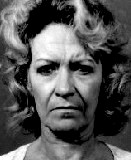
Betty Lou Beets
Murderer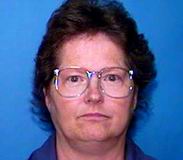 Bobbie Sue Terrell
Murderer · USA · 1984
Bobbie Sue Dudley Terrell was a Pinellas County nurse and worked as the night s…
12 victims
Bobbie Sue Terrell
Murderer · USA · 1984
Bobbie Sue Dudley Terrell was a Pinellas County nurse and worked as the night s…
12 victims
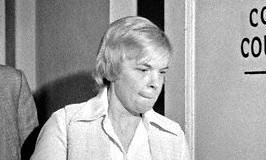 Marybeth Tinning
Murderer · USA · 1972
Marybeth Tinning (née Roe, born on September 11, 1942) was an American prisoner…
9 victims
Marybeth Tinning
Murderer · USA · 1972
Marybeth Tinning (née Roe, born on September 11, 1942) was an American prisoner…
9 victims
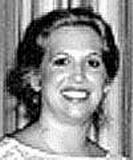 Debbie Fornuto
Murderer · USA · 1972
Deborah Fornuto was the mother of six children whose deaths were initially rule…
7 victims
Debbie Fornuto
Murderer · USA · 1972
Deborah Fornuto was the mother of six children whose deaths were initially rule…
7 victims
 Catherine May Wood
Murderer · USA · 1987
Catherine May Wood was an American caregiver who worked at the Alpine Manor Nur…
5 victims
Catherine May Wood
Murderer · USA · 1987
Catherine May Wood was an American caregiver who worked at the Alpine Manor Nur…
5 victims
 Amy Bishop
Murderer · USA · 1986
Amy Bishop — biology professor and perpetrator · James Anderson — Bishop’s husb…
4 victims
Amy Bishop
Murderer · USA · 1986
Amy Bishop — biology professor and perpetrator · James Anderson — Bishop’s husb…
4 victims
 Alexey Pichugin
Murderer · Russia · 1998
Alexei Vladimirovich Pichugin (Aleksey Pichugin) was born in the town of Orekho…
5 victims
Alexey Pichugin
Murderer · Russia · 1998
Alexei Vladimirovich Pichugin (Aleksey Pichugin) was born in the town of Orekho…
5 victims
 Hans Van Zon
Serial killer · Netherlands · 1964
Hans van Zon was born in Utrecht, Holland, in April 1942. He was described as a…
5 victims
Hans Van Zon
Serial killer · Netherlands · 1964
Hans van Zon was born in Utrecht, Holland, in April 1942. He was described as a…
5 victims
 Michael J. Griffin
Murderer · USA · 1995
Michael J. Griffin was sentenced to death for the first-degree murders of Tom M…
2 victims
Michael J. Griffin
Murderer · USA · 1995
Michael J. Griffin was sentenced to death for the first-degree murders of Tom M…
2 victims
 Matthew Hoffman
Murderer · USA · 2010
Matthew Hoffman was an unemployed tree trimmer and had an obsession with trees…
3 victims
Matthew Hoffman
Murderer · USA · 2010
Matthew Hoffman was an unemployed tree trimmer and had an obsession with trees…
3 victims
 Rex Allan Krebs
Murderer · USA · 1998
Rex Allan Krebs was a 33-year-old registered sex offender. He had served ten ye…
2 victims
Rex Allan Krebs
Murderer · USA · 1998
Rex Allan Krebs was a 33-year-old registered sex offender. He had served ten ye…
2 victims
 Marvin Lee Wilson
Murderer · USA · 1992
Marvin Lee Wilson was convicted of murdering Jerry Williams during the course o…
1 victim
Marvin Lee Wilson
Murderer · USA · 1992
Marvin Lee Wilson was convicted of murdering Jerry Williams during the course o…
1 victim
- Gender
- female
- Country
- USA
- Location
- Dallas County, Texas, USA
- Date of birth
- March 12, 1937
- Age at first offence
- 44
- Characteristics
- to collect insurance money
- Victim profile
- Doyle Wayne Barker (her fourth husband) / Jimmy Don Beets (her fifth husband)
- Method of murder
- Shooting ( .38 caliber pistol)
- Date(s) of murder
- 1981 / 1983
- Years active
- 1981–1983
- Date of arrest
- June 8, 1985
- Status
-
Executed
Executed by lethal injection in Texas on February 24, 2000
Case record: Betty Lou Beets
Background
Betty Lou Beets was convicted of the capital offense of the murder of her husband, Jimmy Don Beets. Jimmy Don Beets was a retired Dallas fireman. Beets reported him missing from their home near Cedar Creek Lake in Henderson County, Texas. Investigators later found that Jimmy Don Beets’s remains had been concealed at the residence.
Beets was also linked to the death of another former husband, Doyle Wayne Barker. Barker’s remains were found buried under a storage shed in the back yard. At trial, Barker’s death was treated as extraneous-offense testimony after a hearing on Beets’s motion to exclude such testimony.
Beets was identified as a “Black Widow” in relation to the scheme prosecutors described.
The offence
On August 6, 1983, Betty Lou Beets reported her husband, retired Dallas fireman Jimmy Don Beets, missing from their home near Cedar Creek Lake in Henderson County, Texas.
The jury found Beets guilty of the capital offense of the murder of Jimmy Don Beets for remuneration and the promise of remuneration, with the remuneration described as money from retirement benefits from Jimmy Don Beets’s employment with the City of Dallas, life insurance policies on Jimmy Don Beets where Beets was the named beneficiary, and the estate of Jimmy Don Beets.
The indictment alleged that Beets caused Jimmy Don Beets’s death “by shooting him with a firearm.”
At the punishment stage, the trial court assessed Beets’s punishment at death.
The remains of Jimmy Don Beets were later found buried under an ornamental “wishing well” in the front yard of the couple’s house. Two bullets were found in Jimmy Don Beets’s remains.
Investigation
Almost two years passed before the Henderson County Sheriff’s Department received information from a credible confidential informant indicating that Jimmy Don Beets’s death may have resulted from foul play. The investigation resumed in the spring of 1985.
Rick Rose, an investigator for the sheriff’s department, obtained an arrest warrant for Beets as part of the resumed investigation. Rose secured an evidentiary search warrant for the Beets residence and its premises while Beets was in custody.
A search warrant at the residence uncovered the body concealed at the home. The investigation also recovered the remains of Doyle Wayne Barker buried under a storage shed in the back yard.
Two bullets were found in Jimmy Don Beets’s remains, and three bullets were found in Barker’s remains. All five bullets were identified as .38 caliber projectiles; the same caliber as a pistol seized from the Beets residence during an unrelated incident.
Arrest
Beets was apprehended by officers of the Mansfield Police Department on June 8, 1985, and booked into the Henderson County jail.
Trial
Beets was tried in the 173rd District Court of Henderson County before a jury upon a plea of not guilty.
Evidence and witness testimony
Beets’s son, Robert Branson (also referred to as Robert “Robbie” Franklin Branson, II), testified that:
- Beets informed him on the night of August 6, 1983 that she intended to kill Jimmy Don Beets and instructed him to leave the residence while she did so.
- He returned approximately two hours later and found Jimmy Don Beets dead from two gunshot wounds.
- He helped Beets conceal the body in an ornamental “wishing well” in the front yard.
- The next day, Beets placed some of Jimmy Don Beets’s heart medication in his boat while he removed the propeller.
- After that, Beets and he abandoned the boat in Cedar Creek Lake.
The trial judge instructed the jury that Branson was, as a matter of law, an accomplice witness to the killing.
Branson testified that during cross-examination, Beets’s attorney accused him of being the actual killer of Beets, which Branson denied. Branson admitted that his participation in burying Beets’s body in the “wishing well” preyed on his conscience. He testified he remained silent for almost two years because he wanted “to protect his mother,” and that after his mother was arrested he began cooperating with authorities to “protect his back[side].”
Beets’s daughter, Shirley Stegner (also referred to as Shirley Stenger), testified that:
- On the night of August 6, she received a telephone call from Beets requesting that she come to the residence.
- During a telephone conversation at her mother’s request, Stegner asked whether Beets had done “what we had talked about before,” and Beets responded: “Yes.”
- Stegner went to the residence and was told that “everything was taken care of and that I could go back home.”
- Several weeks later, she was informed by Beets that “her and my brother Robbie had buried Jimmy Don Beets in the wishing well.”
In the presence of the jury, Stegner also testified about events involving Doyle Wayne Barker. She testified that in October 1981, when her mother and Barker were married and living together, she and her mother were “sitting around a campfire,” and her mother told her she was going to kill Doyle Wayne Barker because “she couldn’t put up with anymore of him beating her and that she didn’t want him around anymore.” Stegner further testified that her mother told her: “the trailer [house] was in his name and she was just a co-signer on it and that if they were to get a divorce, that he would end up with the trailer [house].”
Stegner testified that approximately 3 or 4 days later, at Stegner’s residence, her mother told her that “it was all over with and she had done what she intended to do ... She told [Shirley] that she waited until [Barker] went to sleep and then she got the gun and covered it with a pillow and pulled the trigger and when she pulled the trigger, the pillow [interfered] with the firing pin, so she hesitated for a minute, afraid that Wayne was going to wake up, and she cocked the gun again and fired and shot him in the head.”
Stegner testified that she assisted her mother in disposing of Barker’s body: “We drug him from the trailer outside to the back and put him in the hole that had already been dug [in order to build a barbeque pit].”
Stegner testified that the next day, she and her mother bought cinder blocks and built a patio over the hole, and that a large storage shed replaced the patio.
In cross-examination, Stegner testified that she had also been charged with the murder of Barker and her $1,000,000 bail bond had been reduced to $5,000, and she had not been promised anything by the prosecution in exchange for her testimony against her mother.
Marina evidence about the missing husband
Lil Smith, owner of the Redwood Beach Marina on Cedar Creek Lake, testified that around 10:00 o’clock p.m. on August 6, 1983, customers noticed an empty boat drifting on the lake near the marina. Two of her customers retrieved the empty boat and brought it to shore.
Smith testified that inside the boat were:
- a fishing license with the name “Jimmy Don Beets” on it,
- a medicine bottle containing nitroglycerine tablets,
- a life jacket, and that several tablets from the bottle were found in the bottom of the boat.
Smith testified that the Coast Guard and Parks and Wildlife were notified and personnel came to the marina. She also testified that she telephoned the listed number and finally spoke to Beets, and that Beets told her the reason she did not immediately answer the telephone was because she was outside in the yard and did not hear it ring. Beets went to the marina and identified the boat and the fishing license as belonging to her husband and that it was his separate property.
Jimmy Don Beets’s body was not found at that time.
Searches and statements at the time of the report missing
Johnny Marr, a deputy sheriff for Henderson County, testified that at approximately 8:30 a.m. on August 7, he and Hugh G. De Woody, Fire Chief of the Payne Spring Fire Department, went to Beets’s residence to see if Jimmy Don Beets had returned home since he was reported missing. Marr testified that Beets told him her husband “had went fishing the night before [on the lake and 'had been having trouble with his boat'], and hadn't returned Saturday morning.”
Marr testified that speed boat races were taking place on the lake that day and that, because of the numerous boats in the lake, it was likely the body would be found by someone.
When Beets testified, she denied that Marr and De Woody came to her residence that morning.
Mike Warren, of the Parks and Wildlife Department, testified about extensive search efforts by multiple fire departments, including members of the City of Dallas Fire Department, Henderson County Sheriff’s Department, Coast Guard personnel, and many other persons. Warren testified that the search lasted for three weeks and that Beets’s body was never recovered during that search.
A chaplain with the City of Dallas Fire Department, Denny Burris, testified that he visited with Beets several times after Jimmy Don Beets was reported missing. Burris testified that Beets inquired whether she was covered by any insurance policies on Jimmy Don Beets’s life and whether she would be entitled to pension benefits Jimmy Don Beets had accumulated.
Burris testified he learned Beets’s life was insured with total insurance of approximately $110,000 and that Beets would be entitled to approximately $1,200 each month from Jimmy Don Beets’s pension benefits. Burris testified he advised Beets that, according to the City Attorney of Dallas, because the body had not been recovered there would be a seven-year waiting period before insurance proceeds could occur.
Probate and “letters testamentary” proceedings
Various evidence was introduced concerning probate proceedings. Evidence established that approximately two years later, Beets applied for and received letters testamentary and applied to have Jimmy Don Beets legally declared dead.
On March 5, 1985, approximately three months before skeletal remains of Jimmy Don Beets’s body were found and identified, Beets was legally declared dead by the presiding judge of the County Court of Henderson County. Beets was made administratrix of Jimmy Don Beets’s estate.
The record reflects that the proceedings appeared proper under the provisions of Section 72 of the Probate Code, including that distribution would not be made until after expiration of three years from the date letters testamentary were granted.
On April 4, 1985, the attorney for Jimmy Don Beets’s only natural child, James Donald Beets, filed a motion for new trial in that cause.
Sentencing
After the jury found Beets guilty of the capital offense on October 11, 1985, a separate punishment hearing took place on October 14, 1985. At that punishment hearing, the trial court sentenced Beets to death.
Appeals
Beets’s conviction and sentence were automatically appealed to the Texas Court of Criminal Appeals.
First opinion
In its original opinion, the Court of Criminal Appeals reversed Beets’s conviction for capital murder. The appellate court found that murder committed for the purpose of obtaining insurance and pension benefits did not constitute murder for remuneration as defined by the Texas Penal Code.
Rehearing and affirmance
After the State requested rehearing, the Court of Criminal Appeals affirmed Beets’s conviction and sentence on Sept. 21, 1988.
The United States Supreme Court denied Beets’s petition for writ of certiorari on June 26, 1989.
Federal habeas proceedings and further appeals
On Oct. 16, 1989, Beets filed a motion for a stay of execution to prepare and file a state habeas corpus application. On Nov. 1, she filed a state habeas petition, and the trial court stayed her execution to permit adequate time to consider the claims raised.
On June 27, 1990, the Court of Criminal Appeals denied habeas relief. On Sept. 20, 1990, the trial court scheduled Beets’s execution for Dec. 6, 1990. On Sept. 25, 1990, Beets filed a second petition for writ of certiorari in the Supreme Court. The Supreme Court denied certiorari on Nov. 26, 1990.
On Dec. 3, 1990, less than three days before the scheduled execution, Beets filed a federal petition for writ of habeas corpus and an application for stay of execution in federal district court. The federal district court granted a stay on Dec. 4, 1990.
On Jan. 22 and 23, 1991, and April 1, 1991, the court conducted evidentiary hearings. On May 9, 1991, the court entered final judgment granting relief on one of Beets’s claims and denying all others.
The United States Court of Appeals for the Fifth Circuit affirmed the denial of all claims except one and reversed the district court’s judgment on the one claim granted relief. On March 18, 1993, the case was remanded to the federal district court.
On remand, Beets’s remaining claim was addressed by the district court, and on Sept. 2, 1998, habeas corpus relief was denied.
The Fifth Circuit affirmed the district court’s denial of relief on June 28, 1999. Beets’s motions for panel rehearing and rehearing by the en banc court were denied on Aug. 18, 1999.
The Supreme Court denied Beets’s petition for certiorari review on Jan. 18, 2000.
Outcome
Beets was executed by lethal injection in Texas on February 24, 2000.
A Texas Attorney General Media advisory stated that Betty Lou Beets scheduled to be executed after 6 p.m. on Thursday, February 24.
A CNN report described that Beets was put to death by lethal injection at 6:18 p.m. CST at a state prison in Huntsville, Texas. It reported that she declined a final meal and did not make a final statement before the execution.
An AP report described that Beets was executed by injection after Gov. George W. Bush rejected her claim that she killed her fifth husband in self-defense and deserved a reprieve. It stated that Beets gave no final statement as she lay strapped to the death chamber gurney. It also stated that she declined to request a final meal.
A statement attributed to Gov. George W. Bush said: “After careful review of the evidence of the case, I concur with the jury that Betty Lou Beets is guilty of this murder. I’m confident that the courts, both state and federal, have thoroughly reviewed all the issues raised by the defendant.”
A letter from an alleged juror was quoted in an ABCNews.com passage as: “She knew that her actions would cause Jimmy’ s death. She did it for the insurance money. She continues to be a threat to society,” wrote juror Connie Harrington.
Other details
Beets was described as a cashier and waitress.
The record reflected that Beets admitted previous convictions for public lewdness that occurred in Charlie’s Angels Bar in Dallas, where she was employed. Beets also admitted on cross-examination that she had been convicted of another misdemeanor offense that resulted when she shot another former husband, Bill Lane, in the side of the stomach.
A determination was made that there was no evidence of drug or alcohol use connected with the instant offense.
ProDeathPenalty.com materials described that Beets had been convicted of the August 1983 shooting death of her fifth husband at the couple’s home near Gun Barrel City in East Texas in what authorities said was a scheme to collect over $100,000 in insurance benefits and a $1200 per month pension. It stated that his body was found buried under a wishing well in their front yard.
The narrative in ProDeathPenalty.com described that Beets was charged—but never tried—for the 1981 murder of her previous husband, Doyle Wayne Barker, whose body was found buried behind a tool shed on the same day Jimmy Don Beets’s body was found.
The CNN material described that Beets’s attorneys exhausted their last legal recourse about an hour before execution after Gov. George W. Bush declined to stop it, and that the U.S. Supreme Court declined to intervene shortly before the execution.
A CNN passage quoted Beets’s attorney Joe Margulies as saying: “She's very scared,” Beets' attorney Joe Margulies had told CNN earlier in the day. “She doesn't want to be strapped down to that gurney all alone.”
CNN reported that Texas Board of Pardons and Paroles, dominated by Bush appointees, rejected Beets’s pleas for a 180-day reprieve and commutation of her sentence.
CNN quoted Beets’s daughter, Faye Lane, as saying: “All my mama's life, she's been abused. I've seen it with my own eyes. And I know that if the jury heard the truth about my mama, she only could have done something like this if she'd been very scared or threatened. "I'm not saying that my mother should go free, but to be allowed to live out her remaining years in prison."
CNN reported that Asma Jahangir and Radhika Coomaraswamy of the U.N. Commission on Human rights urged Bush to consider “abuse and extreme violence” suffered by Beets were not considered by investigating authorities or courts. It reported a quote from the letter urging Bush to consider the specific circumstances of the crime and “in particular the violent abuse which Betty Lou Beets suffered at the hands of her spouses and the effect of this abuse on her state of mind and her actions.”
A Bush quote attributed in CNN said: “The question I'm going to ask is, 'Is she guilty of the crime?'”
An AP passage quoted Rev. Jesse Jackson as writing: “A decision to stay the execution of Ms. Beets would demonstrate your compassionate conservatism and that you are willing to do what is right even in the face of potential criticism from your constituents,”
AP quoted Steven Hawkins as imploring for a reprieve: “so evidence of her being battered ... may be fully evaluated.”
An AP passage stated that Beets insisted she was innocent and that she told interviewers: “I wouldn't willingly do that,” Betty Lou Beets said in a death row interview. “I don't remember what happened then ... it's just a blank to me.”
The record also included detailed descriptions from Beets v. State, 767 S.W.2d 711 (Tex. Crim. App. 1987), including that the indictment alleged remuneration through retirement benefits, insurance policies with Beets named beneficiary, and the estate. The appellate discussion also referenced the special issues submitted to the jury, including: “Was the conduct of the Defendant, Betty Lou Beets, that caused the death of the deceased, Jimmy Don Beets, committed deliberately and with the reasonable expectation that the death of the deceased or another would result?” and “Is there a probability that the Defendant, Betty Lou Beets, would commit criminal acts of violence that would constitute a continuing threat to society?”
The appellate discussion stated that neither Beets nor the State presented any testimony or evidence at the punishment stage, and that the trial judge assessed punishment at death.
The detailed account also included trial evidence and witnesses:
- Evidence about sale of Jimmy Don Beets’s boat to Martha and Michael J. Miller on July 24, 1984.
- Evidence about a house that “mysteriously burned” and an unsuccessful attempt to recover on a fire insurance policy for fire loss.
- Evidence about Beets cancelling an insurance policy of $10,000 on May 19, 1983. Jackie Collins testified about an application with an address not being Beets’s address and that Beets was the named beneficiary.
- Evidence about a life insurance policy with the City of Dallas in the amount of $86,000 with Beets as named beneficiary.
- Evidence about a J.C. Penney application and signature comparisons, including that “J.D. Beets” was signed by Beets’s signature.
- Evidence about a Dallas Police and Fire Pension Fund settlement, including that it was voted to approve but cancelled after members learned Beets had been arrested for murdering Jimmy Don Beets, and that she would have received “$15,852.59 plus a monthly benefit of $790.42 for the rest of her life or until she remarried” had the settlement been finalized.
- Evidence about a life insurance policy issued by Republic National Life Group Insurance Company in the amount of $23,428, including an accidental death provision of $20,000.
- Evidence and testimony from Dr. Charles S. Petty, including that Beets’s cause of death was “the gunshot wound defect in the skull and locating of not one but two bullets, one in the region of the skull and the other in the region of the bones of the trunk. In my opinion, death was due to one, if not two, gunshot wounds ... One in the head and one in the trunk somewhere.”
- Testimony that two bullets were recovered from Beets’s skeletal remains and three bullets were recovered from Barker’s skeletal remains.
- Testimony that bullets could have been fired from the same weapon but the expert could not positively testify.
- Testimony by Allen Jones, a firearms examiner, about examining recovered bullets and an opinion they were fired from a .38 calibre type weapon, and that he was unable to positively testify that bullets came from the Collector’s item pistol.
- Testimony from Dr. Randall L. Callison that he made comparison of skeletal remains with x-rays and opined that the remains presented were the remains of Jimmy Don Beets.
- Details about an evidentiary pistol described as a Collector’s item pistol seized in an incident not involving Beets and not directly related to the cause at issue.
Beets’s home and the burial locations were described as the front yard (wishing well) and the back yard (under a storage shed).
Spotted an error, or have more information about this case?