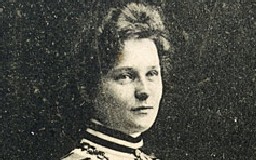
Grete Beier
Murderer Sabine Hilschenz
Murderer · Germany · 1988
Sabine Hilschenz was a German woman convicted of infanticide involving eight of…
9 victims
Sabine Hilschenz
Murderer · Germany · 1988
Sabine Hilschenz was a German woman convicted of infanticide involving eight of…
9 victims
 Anna Zwanziger
Murderer · Germany · 1808
Anna Margaretha Zwanziger was executed by a sword in Nuremberg on September 17,…
3 victims
Anna Zwanziger
Murderer · Germany · 1808
Anna Margaretha Zwanziger was executed by a sword in Nuremberg on September 17,…
3 victims
 Sabine Radmacher
Murderer · Germany · 2010
Sabine Radmacher Sabine Radmacher was fatally shot by special police units the…
3 victims
Sabine Radmacher
Murderer · Germany · 2010
Sabine Radmacher Sabine Radmacher was fatally shot by special police units the…
3 victims
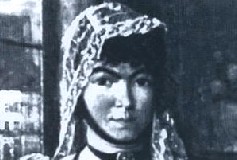 Sophie Charlotte Elisabeth Ursinus
Murderer · Germany · 1798
Sophie Charlotte Elisabeth Ursinus Sophie Charlotte Elisabeth Ursinus was sente…
3 victims
Sophie Charlotte Elisabeth Ursinus
Murderer · Germany · 1798
Sophie Charlotte Elisabeth Ursinus Sophie Charlotte Elisabeth Ursinus was sente…
3 victims
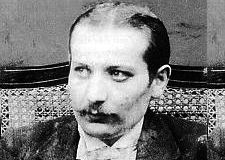 Mathias Kneibl
Murderer · Germany · 1900
Mathias Kneißl was known as Robber Kneißl (in German Räuber Kneißl , in Austro-…
2 victims
Mathias Kneibl
Murderer · Germany · 1900
Mathias Kneißl was known as Robber Kneißl (in German Räuber Kneißl , in Austro-…
2 victims
 Trupti Patel
Justice miscarriage · United Kingdom · 1997
Trupti Patel was a qualified pharmacist from Berkshire, England. She was born i…
0 victims
Trupti Patel
Justice miscarriage · United Kingdom · 1997
Trupti Patel was a qualified pharmacist from Berkshire, England. She was born i…
0 victims
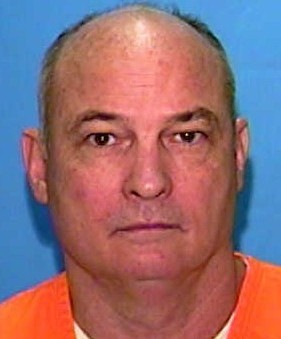 Harold Gene Lucas
Murderer · USA · 1976
Harold Gene Lucas was sentenced to death in Florida. Harold Lucas knew the vict…
1 victim
Harold Gene Lucas
Murderer · USA · 1976
Harold Gene Lucas was sentenced to death in Florida. Harold Lucas knew the vict…
1 victim
 Charles Singleton
Murderer · USA · 1979
Defendant: Charles Singleton Race: BLACK Sex: MALE Birth date: 10/24/79 ADC num…
1 victim
Charles Singleton
Murderer · USA · 1979
Defendant: Charles Singleton Race: BLACK Sex: MALE Birth date: 10/24/79 ADC num…
1 victim
 Bertrand Cantat
Homicide · Lit h uania · 2003
Bertrand Lucien Bruno Cantat (born 5 March 1964) was a French singer and songwr…
1 victim
Bertrand Cantat
Homicide · Lit h uania · 2003
Bertrand Lucien Bruno Cantat (born 5 March 1964) was a French singer and songwr…
1 victim
 Carlette Parker
Murderer · USA · 1998
Carlette Elizabeth Parker was indicted in connection with the death of Alice Co…
1 victim
Carlette Parker
Murderer · USA · 1998
Carlette Elizabeth Parker was indicted in connection with the death of Alice Co…
1 victim
- Gender
- female
- Country
- Germany
- Location
- Brand, Saxony, Germany
- Date of birth
- September 15, 1885
- Age at first offence
- 22
- Characteristics
- attempted rape
- Victim profile
- Kurt Pressler (her fiancée)
- Method of murder
- Shooting
- Date(s) of murder
- May 13, 1907
- Years active
- 1907
- Date of arrest
- June 26, 1907
- Status
-
Executed
Executed by guillotine on July 23, 1908
Overview
Marie Margarethe (Grete) Beier was executed by guillotine on July 23, 1908. She was the 22-year-old daughter of the mayor of Freiburg in Saxony and was convicted in connection with the murder of her fiancée, a civil engineer named Proffler. She poisoned Proffler for financial gain and later made the killing look like a suicide by forging documents and arranging the scene.
Background
Grete Beier was the 22-year-old daughter of the mayor of Freiburg in Saxony. She was described as “pretty flaxen haired” and as accomplished in music and art, and as having moved in “cultured and educated circles.”
Grete Beier was in love with another man, Hans Merker. Her father did not approve of her love and forced her into an engagement with Kurt Proffler, described as having better prospects than Merker. Grete continued correspondence and maintained a relationship with Merker while engaged.
The case drew international attention due to her age, sex, personality, and the elaborate nature of the crime, and it was described as one of the most remarkable cases on record.
The offence
Killing of fiancée
Grete Beier poisoned her fiancée, a civil engineer named Proffler (also referred to as Pressler in parts of the material), for financial gain. She admitted that she visited her fiancée’s house and gave him potassium cyanide in a drink she mixed for him. To ensure his death, she shot him “in the mouth with his own revolver.”
She then attempted to make the scene look like a suicide. She left a forged will in her favour on his desk, and she placed the gun carefully at his side. She also left a final forged note to herself, stating that he feared to lose her love because of a relationship he had had with a woman in Italy who was now accusing him of desertion and threatening to tell Grete everything.
She spent more than an hour in the room with the corpse and took cash described as something near $500. Her plan included using a will leaving property and fortune to herself, and the forged signature was part of her actions.
Forgeries and documents
Grete Beier forged multiple documents intended to support a suicide narrative. The forged will was said to have been locked in an inner compartment of the desk. The forged note to herself included the explanation about the woman in Italy. Forgery and other documents were also mentioned as part of the material suggesting suicide.
The forgeries initially deceived the police and coroner and were sufficient to support a verdict returned at the time.
Investigation
After doubts arose about the authenticity of the will, suspicion fell on Grete Beier. Detectives watched her after investigating her relations and involvement. About a month later, a letter she had written to another man was found after that man was arrested for an unrelated crime; the letter provided hints about what she had done. This led to her becoming a suspect.
She was arrested and made a detailed confession to the murder. She hoped that confessing would result in a lesser sentence, but because the crime was a premeditated poisoning she was sentenced to death.
Merker was also arrested and was to be charged with inciting her to murder.
Trial
At the trial, Grete Beier admitted to visiting her fiancée’s house on May 13, 1908, giving him potassium cyanide, and then shooting him in the mouth with his own revolver. She also admitted placing the gun and leaving forged documents designed to look like a suicide.
The material further states that, although charged with murder, forgery, and embezzlement, she was described as a nonchalant prisoner. It also states that she acted in collusion with her mother and another lover, a Dresden merchant named Meiker.
Sentencing
Grete Beier was sentenced to death. She had hoped for clemency after confessing, but none was granted.
The execution was carried out after a decision that the king did not make use of the power of pardon, with the judgment confirmed by the District Court of Freiberg.
Appeals
The material states that the judgment was confirmed and that the king did not feel compelled to make use of the power of pardon.
Outcome
Grete Beier was executed by guillotine on July 23, 1908.
Execution details
The execution took place on the morning of July 23, 1908 in the yard of the regional court building. The material describes the crowd as approximately 190 people in one account and about 200 gentlemen in another account, including officers, law officers, members of the jury, teachers of a local high school, physicians, and other figures.
The guillotine was erected in a corner of the yard. At around 6:25 a.m., the public prosecutor Dr. Mannl, the judges who had heard her case including their chairman Dr. Rudert, and 12 official witnesses came into the yard. The public prosecutor and the judges wore official robes.
At precisely 6:30 a.m., a bell was rung as the signal to bring out the prisoner. She was led through the gardens by her lawyer and the prison chaplain, her hands folded and her eyes on the ground, walking slowly but upright and unaided. She was very pale but seemed calm and showed no emotion. She wore a black dress cut down at the neck; another account states the dress left her neck exposed.
She was led onto the platform and strapped to the board. The board was tilted into the horizontal position and slid forward so she could see directly into the bucket in which her head would land. She began to lose her composure and cried out: “Father, into your hands I lay my soul – Father.”
The upper part of the neck ring was closed and at that moment the blade fell. The executioner took off his hat and announced to the public prosecutor in the traditional German fashion that the judgment of death had been executed, and the public prosecutor requested the witnesses to depart quietly.
The whole execution from the time she left the prison until the execution took three minutes in one account.
A second execution account includes the public prosecutor’s spoken words immediately before transfer to the executioner:
“Maria Margarete Beier from Erbisdorf has been condemned to death by the District Court of Freiberg. The judgment has been confirmed. His majesty the king did not feel compelled to make use of the power of pardon. Therefore the judgment is to be carried out. Mr. Landesscharfrichter Brandt, I transfer the delinquent to you.”
That account also identifies additional participants: Mr. Oberstaatsanwalt Bernhard, the mayor of Blueher, Mr. Rechtsanwalt Dr. Knoll from Dresden as her defender, and Mr. Pastor Schmidt as the prison parson.
Aftermath
Her body was taken away in a hearse decorated with flowers and buried next to her late father. One account says the hearse would bring the body of Grete Beier to Dresden, and the body would be buried beside the grave of the father. Another note says an English-language newspapers incorrectly described the execution as having been performed with an axe rather than a guillotine.
Quotes and contemporary descriptions
The material includes a description from a newspaper:
“The face of an angel and the heart of a fiend,” they say of Grete Beyer, pretty flaxen haired daughter of the mayor of Brande, soon to be put on trial for the murder of her lover.
It also includes a trial-scene style quotation attributed to Grete Beier during the killing narrative:
“I have a great surprise for you,” she said, ‘‘but you must shut your eyes and -open your month.”
It includes the shooting narrative described as:
“...you must shut your eyes and -open your month.”
The execution account includes her plea:
“Father, into your hands I lay my soul --- Father!”
A later label in the material reads:
“She Was An Angel – But Not One of the Heavenly Kind.”
Other details
Family relationships and other alleged crimes mentioned
The material states that Grete Beier’s mother was seriously involved in her daughter’s embezzlement and forgery accusations and that the mother was implicated in collusion in relation to forgery accusations.
The material also alleges a broader set of events involving illegitimate children and their deaths: it says Grete entered “improper relations” with a young Dresden commercial traveler named Merker, and that “three children were born to them and she murdered each immediately after birth, it is claimed.” Another account says that “two dead children were born.”
The material further states that Grete, her mother, and Meiker were arrested on charges of forgery of a will in connection with the death of Herr Kraener, superintendent of the local poorhouse, described as a wealthy relative of the Beyers.
People named
- Marie Margarethe (Grete) Beier — defendant/executed person
- Proffler — fiancée/civil engineer killed
- Kurt Proffler — named in connection with forced engagement by her father
- Hans Merker / Merker — described as the man Grete was in love with; also arrested in the material for incitement
- Hans Merker — mentioned as the Dresden commercial traveler in the newspaper description
- Pressler — named as the engineer fiancée in one account
- Meiker / Meiker — Dresden merchant named as a lover in one account
- Dr. Mannl — public prosecutor at the execution
- Dr. Rudert — chairman of the judges
- Mr. Oberstaatsanwalt Bernhard — mentioned in connection with those coming out of the public prosecutor’s office
- Mr. Landesscharfrichter Brandt — named as the executioner receiving transfer of the prisoner in the public prosecutor’s spoken words
- Dr. Knoll — Mr. Rechtsanwalt Dr. Knoll from Dresden, identified as her defender
- Mr. Pastor Schmidt — identified as the prison parson
- Mr. Arnold? — not named (none present)
- “the mayor of Blueher” (name not given) — identified as arriving with the group
Dates included in the material
- May 13, 1908 — Grete Beier admitted she visited her fiancée’s house, administered potassium cyanide, and later shot him in the mouth with his revolver
- July 1, 1908 — publication date of one contemporaneous report stating she had been sentenced to death
- July 8, 1908 — publication date of another contemporaneous report stating “Sentenced To Death.”
- July 23, 1908 — sentencing execution date stated for the guillotine execution, including execution morning timing around 6:30 a.m.
- March 24 (Berlin) and March 23 (Fort Wayne News label) — dates used in the described newspaper narratives

Spotted an error, or have more information about this case?