Ann Beddingfield
Murderer Elizabeth Brownrigg
Murderer · United Kingdom · 1767
Elizabeth Brownrigg was an eighteenth century murderer. Her victim, Mary Cliffo…
1 victim
Elizabeth Brownrigg
Murderer · United Kingdom · 1767
Elizabeth Brownrigg was an eighteenth century murderer. Her victim, Mary Cliffo…
1 victim
 Mary Edmondson
Murderer · United Kingdom · 1759
Mary Edmondson Mary Edmondson was the daughter of a farmer who lived near Leeds…
1 victim
Mary Edmondson
Murderer · United Kingdom · 1759
Mary Edmondson Mary Edmondson was the daughter of a farmer who lived near Leeds…
1 victim
 Margaret Waters
Murderer · United Kingdom · 1866
Margaret Waters was an English murderess who was hanged by executioner William…
19 victims
Margaret Waters
Murderer · United Kingdom · 1866
Margaret Waters was an English murderess who was hanged by executioner William…
19 victims
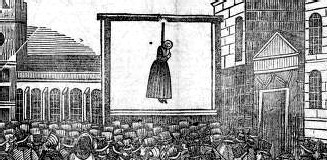 Catherine Wilson
Murderer · United Kingdom · 1854
Catherine Wilson was a British nurse who poisoned victims after befriending the…
7 victims
Catherine Wilson
Murderer · United Kingdom · 1854
Catherine Wilson was a British nurse who poisoned victims after befriending the…
7 victims
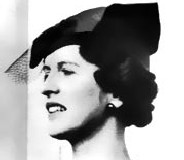 Florence Ransom
Murderer · United Kingdom · 1940
Florence Ransom was a middle-aged woman who was described as physically beautif…
3 victims
Florence Ransom
Murderer · United Kingdom · 1940
Florence Ransom was a middle-aged woman who was described as physically beautif…
3 victims
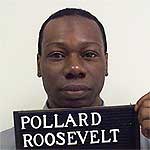 Roosevelt Pollard
Murderer · USA · 1985
Roosevelt Pollard · Maurice Alexander · Michael Hammon · Robert Sands · Howard…
1 victim
Roosevelt Pollard
Murderer · USA · 1985
Roosevelt Pollard · Maurice Alexander · Michael Hammon · Robert Sands · Howard…
1 victim
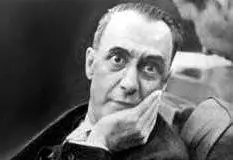 Pierre Jaccoud
Homicide ? · Switzerland · 1958
Pierre Jaccoud (born in 1905) was a Swiss lawyer and politician. He served as “…
1 victim
Pierre Jaccoud
Homicide ? · Switzerland · 1958
Pierre Jaccoud (born in 1905) was a Swiss lawyer and politician. He served as “…
1 victim
 Najwa Petersen
Murderer · South Africa · 2006
Najwa Petersen was the wife of South African singer, composer and theatre direc…
1 victim
Najwa Petersen
Murderer · South Africa · 2006
Najwa Petersen was the wife of South African singer, composer and theatre direc…
1 victim
 Maury Troy Travis
Serial killer · USA · 2001
Maury Troy Travis (born October 25, 1965; died June 10, 2002) was an American s…
17 victims
Maury Troy Travis
Serial killer · USA · 2001
Maury Troy Travis (born October 25, 1965; died June 10, 2002) was an American s…
17 victims
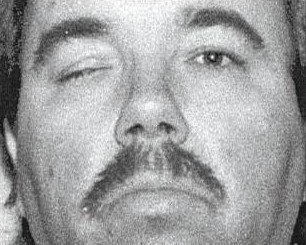 Dennis Wayne Eaton
Mass murderer · USA · 1989
Dennis Wayne Eaton was executed by lethal injection in Virginia on June 18, 199…
4 victims
Dennis Wayne Eaton
Mass murderer · USA · 1989
Dennis Wayne Eaton was executed by lethal injection in Virginia on June 18, 199…
4 victims
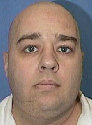 Ivan Ray Murphy
Murderer · USA · 1989
January 9, 1989 — Ivan Ray Murphy and Douglas Stoff went to Lula Mae Denning’s…
1 victim
Ivan Ray Murphy
Murderer · USA · 1989
January 9, 1989 — Ivan Ray Murphy and Douglas Stoff went to Lula Mae Denning’s…
1 victim
- Gender
- female
- Country
- United Kingdom
- Location
- Sternfield, Suffolk, England, United Kingdom
- Date of birth
- 1742
- Age at first offence
- 20
- Characteristics
- parricide
- Victim profile
- John Beddingfield, 27 (her husband)
- Method of murder
- Strangulation
- Date(s) of murder
- July 27, 1762
- Years active
- 1762
- Date of arrest
- 2 days after
- Status
-
Executed
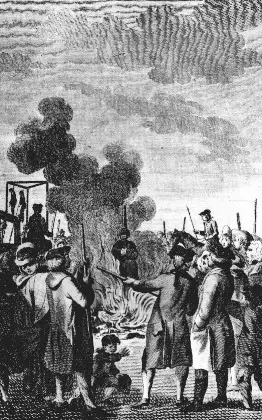
Executed by strangulation by the hangman at Rushmore, near Ipswich, on April 8, 1763; after she ceased to show signs of life, bundles of faggots were piled round her and lit, reducing her body to ashes.
Case overview
Ann Beddingfield was convicted of petty treason for the murder of her husband, John Beddingfield. Richard Ringe was convicted as her accomplice. Both were sentenced to death and were executed after being drawn by sledge to Rushmore near Ipswich.
Timeline
- Tuesday, July the 3rd 1759 — Ann married 24-year-old John Beddingfield, a farmer, at Sternfield in Suffolk.
- 1761 — John took on a new farm hand, 19-year-old Richard Ringe.
- 27 July 1762 — Ann persuaded Richard to join her in killing John; John was strangled in his bed during the night.
- Two days later (after the maid reported the case and a warrant was issued) — Ann was apprehended; she had attempted to escape while Richard was arrested at the Bedingfield house without making effort to evade capture.
- 21 March 1763 — The Ipswich Lent Assizes opened, and the pair came to trial.
- Wednesday (the day before execution) — Ann reportedly made a confession in Ipswich prison.
- Friday, 8 April 1763 — Both prisoners were executed; Richard was hanged and Ann was strangled and then burnt at the stake.
Background
Margaret Beddingfield, who went by the name of Ann, was a Suffolk farmer’s daughter and was born in 1742. She married 24-year-old John Beddingfield, also a farmer, on Tuesday, July the 3rd 1759. Her wealthy parents gave them a good farm near the village of Sternfield in Suffolk, some 18 miles from Ipswich. Ann and John initially seemed to have a happy marriage and Ann bore John two children.
Things deteriorated further in 1761 when John took on a new farm hand, 19-year-old Richard Ringe. Within three months, Richard and Ann were having a passionate and indiscreet affair. They began to devise a plot to kill John, which came to fruition on the 27th of July 1762. Ann persuaded Richard to join the murder by the offer of marriage and half the estate.
John Beddingfield was the son of respectable parents at Sternfield in Suffolk. He married when he was about twenty-four years of age, and the young couple were placed in a good farm carefully attended by John, who bore the character of a man of industry and integrity. John and Ann had two children. Richard Ringe was a youth of nineteen and was engaged in the service of John.
The offence
Initial plan to poison
The first plan to dispose of John was by poisoning him. Richard tried to persuade one of the maids to put poison in John’s drink, which she refused. Richard also purchased poison and told one of the servant-maids that he would be her constant friend if she would mix it with some rum-and-milk that John drank in the morning; the girl declined and reported the proposal only after the commission of the murder.
A further poisoning attempt involved a vomit and water that was too hot: it was recommended to John to take a vomit, and the water the servant brought him to drink proved too hot. Richard was directed to bring some cold water to mix with it, and he put arsenic into the water. John observed a white sediment in the basin and would not drink it, though no suspicion of the liquor being poisoned occurred.
Strangulation at night
Plan B was to strangle John in his bed while he slept. John had taken Richard to help move some cows he was selling, and afterwards they went for a drink together. When John returned home, he found Ann in bed with one of the maids; her purpose was described as to act as a bed warmer. John asked Ann to come to the marital bed, which she refused. John went to bed alone with his wife and the servant in the next door bedroom.
That night, Richard entered John’s bedroom and strangled him with a cord after a brief struggle during which they both fell from the bed. Mrs Beddingfield was asleep in the next room and was awakened by the noise, and in her fright awakened the servant. Richard entered and said: "I have done for him". Ann answered: "Then I am easy".
The girl cried out: "Master!" supposing in the dark that John was present; Ann commanded her to be silent.
Richard asked Ann if anyone else was aware of what had taken place besides her and the maid. The maid asked, "How came you here, Richard?" Richard replied: “I was forced to it”. Richard went to his own room while Ann swore the maid to secrecy. Ann then directed the girl to call Richard, and when he returned, Ann told him to go into John’s bedroom because she feared John was ill. Richard feigned an inspection and came back to tell Ann and the maid that John was dead.
A second maid had been woken by the commotion and also went to look at John. She found John lying face down and noted that his shirt-collar was torn off, and that his neck was bruised and swollen.
Court-alleged disclosures before the murder
Ann was alleged in court to have made a statement to her maid-servant while she was dressing: "Help me to put on my ear-rings; but I shall not wear them much longer, for I shall have new black ones. It will not be long before somebody in the house dies, and I believe it will be your master."
Investigation and inquest
An inquest was held the next day but none of the servants were called to give evidence. A verdict of accidental death was returned. The inquest determination was that John had strangled himself with his bedclothes during a nightmare.
The surgeon examined John’s body and told the jury that he had noticed the marks of strangulation on the body. When asked why he had reported a natural death to the coroner, he replied: "did not think much about it." In another account, the surgeon said he 'did not think much about it.' The surgeons’s statements included the observation of ligature marks on the neck, blueness of the lips and ears, and petchiae on the face.
After the inquest, the relationship between Ann and Richard deteriorated over the following weeks. Ann swore the maid to secrecy immediately after the killing.
Maid’s report and arrests
After receiving her quarter’s wages, the maid waited and then reported the murder. The maid involved her parents, who then involved the constable. Ann tried to bribe the maid’s mother, but she would not accept the offers.
Ann was arrested two days later after attempting to escape while Richard was arrested at the Bedingfield house without making any effort to evade capture.
Trial
The pair came to trial at the Ipswich Lent Assizes, which opened on the 21st of March 1763. The original indictments are not preserved. The court heard evidence from the servants and from the surgeon who had examined John’s body. Richard confessed his guilt after hearing the servants’ evidence, while Ann maintained her innocence during the trial.
The jury found both guilty of Petty Treason. The mandatory sentences for this crime were that Ann be drawn to the place of execution and there burnt at the stake, and that Richard be drawn to the place of execution and hanged by the neck until dead, after which his body be anatomised. The execution of both was set for Friday, 8 April 1763.
Sentencing and execution
Execution arrangements and procedure
On the Friday morning, each prisoner was tied to a sledge in Ipswich prison and then drawn by a horse to Rushmore, a village just to the north of Ipswich, where the gallows stood and a stake had been set up for Ann.
Richard addressed the huge crowd who had come to watch, warning them: to avoid the snares of wicked women and to consider chastity as a virtue.
Ann was tied to the stake with an iron chain and a rope halter around her neck, with the free rope passing through a hole bored in the stake. When she was turned off from the gallows, the hangman strangled her. When Ann ceased to show signs of life, bundles of faggots were piled round her and lit, and the fire reduced her body to ashes.
Richard was dissected after death in accordance with the Murder Act of 1752.
Dates and participants
Richard and Ann were executed at Rushmore on 8 April 1763.
Quotes
Richard said at the scene: "I have done for him". Ann replied at the scene: "Then I am easy". The maid cried out: "Master!" Richard asked about awareness and replied when questioned: “I was forced to it”. The court-alleged statement by Ann to her maid-servant was: "Help me to put on my ear-rings; but I shall not wear them much longer, for I shall have new black ones. The surgeon replied when asked why he reported a natural death to the coroner: "did not think much about it." In another account, he said: 'did not think much about it.' During execution, Richard advised the crowd to avoid the snares of wicked women and to consider chastity as a virtue.
People
- Ann (Margaret) Beddingfield — Suffolk farmer’s daughter, went by Ann; convicted of petty treason for murdering her husband; executed at Rushmore on 8 April 1763. Ann was 21 years old at the time of her death.
- John Beddingfield — Ann’s husband; Suffolk farmer; 28 years old at the time of his death; strangled in his bed; two children.
- Richard Ringe — farm hand and Ann’s lover; 20 years old at the time of Ann’s death; convicted as Ann’s accomplice; hanged after being drawn to Rushmore; dissected after death.
- servants / maids — one maid acted as a bed warmer in John’s household; another maid was present in Ann’s room; servants provided evidence at trial; at the inquest none of the servants were called to give evidence.
- surgeon — examined John’s body and reported marks of strangulation; stated he "did not think much about it" when questioned about why he reported a natural death to the coroner.
- maid’s parents / constable — involved the constable after the maid reported the murder.
- hangman — strangled Ann at the execution.
Other details
At the time of their deaths, Ann was 21 years old, John was 28 and Richard 20. The mandatory sentence required Ann to be burnt at the stake, and Richard to be anatomised after death. Ann was reportedly the last woman to be burnt for the murder of her husband in some accounts, but that claim was contradicted by another execution described as Mary Bailey executed on the 8th of March 1784 at Winchester.
Spotted an error, or have more information about this case?