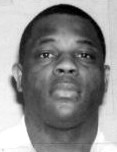
Marvin Lee Wilson
Murderer Brian Kevin Rosenfeld
Murderer · USA · 1985
Brian Kevin Rosenfeld Brian Kevin Rosenfeld was sentenced to three concurrent l…
23 victims
Brian Kevin Rosenfeld
Murderer · USA · 1985
Brian Kevin Rosenfeld Brian Kevin Rosenfeld was sentenced to three concurrent l…
23 victims
 Russell Ellwood
Murderer · USA · 1991
Russell Ellwood was a former taxi driver. Authorities suspected him of killing…
20 victims
Russell Ellwood
Murderer · USA · 1991
Russell Ellwood was a former taxi driver. Authorities suspected him of killing…
20 victims
 Robert Martines Perez
Murderer · USA · 1994
Name: Robert Martines Perez · Other name used in proceedings: Robert Martinez P…
15 victims
Robert Martines Perez
Murderer · USA · 1994
Name: Robert Martines Perez · Other name used in proceedings: Robert Martinez P…
15 victims
 Billy Frank Vickers
Murderer · USA · 1993
Billy Frank Vickers Vickers was executed by lethal injection in Texas on Januar…
14 victims
Billy Frank Vickers
Murderer · USA · 1993
Billy Frank Vickers Vickers was executed by lethal injection in Texas on Januar…
14 victims
 Kevin Cobb
Homicide · 1996
Kevin Cobb, a male nurse, was convicted of manslaughter for the death of nursin…
1 victim
Kevin Cobb
Homicide · 1996
Kevin Cobb, a male nurse, was convicted of manslaughter for the death of nursin…
1 victim
 Naomi Gaines
Murderer · USA · 2003
Naomi Gaines was a 24-year-old mother from St. Paul, Minnesota. On July 4, 2003…
1 victim
Naomi Gaines
Murderer · USA · 2003
Naomi Gaines was a 24-year-old mother from St. Paul, Minnesota. On July 4, 2003…
1 victim
 David Mark Hill
Murderer · USA · 1996
Name: David Mark Hill · Pronounced dead: 6:17 p.m. in the state’s death chamber…
3 victims
David Mark Hill
Murderer · USA · 1996
Name: David Mark Hill · Pronounced dead: 6:17 p.m. in the state’s death chamber…
3 victims
 Chen Chin-hsing
Murderer · Taiwan · 1997
Chen Chin-hsing was executed by firing squad on October 6, 1999. Pai Hsiao-yen…
4 victims
Chen Chin-hsing
Murderer · Taiwan · 1997
Chen Chin-hsing was executed by firing squad on October 6, 1999. Pai Hsiao-yen…
4 victims
- Gender
- male
- Country
- USA
- Location
- Jefferson County, Texas, USA
- Date of birth
- January 5, 1958
- Age at first offence
- 34
- Characteristics
- kidnapping, retaliation
- Victim profile
- Jerry Robert Williams, 21 (police drug informant)
- Method of murder
- Shooting
- Date(s) of murder
- November 10, 1992
- Years active
- 1992
- Date of arrest
- —
- Status
-
Sentenced to death
Sentenced to death on May 9, 1994.
Case details
Marvin Lee Wilson was convicted of murdering Jerry Williams during the course of a kidnapping. After a second capital trial and appeal, Wilson was sentenced to death by lethal injection. A Jefferson County jury had recommended capital punishment.
Wilson was scheduled for execution after 6 p.m. on August 7, 2012, pursuant to a court order by the 252nd District Court in Jefferson County.
Timeline
- December 18, 1992 — A Jefferson County grand jury indicted Wilson for murdering Jerry Williams.
- April 28, 1994 — A Jefferson County jury found Wilson guilty of murdering Jerry Williams.
- May 9, 1994 — The court sentenced Wilson to death by lethal injection.
- December 11, 1996 — The Texas Court of Criminal Appeals reversed Wilson’s conviction and remanded for a new trial.
- February 28, 1998 — A Jefferson County jury again found Wilson guilty of murdering Jerry Williams.
- December 8, 1999 — The Texas Court of Criminal Appeals affirmed Wilson’s conviction and sentence.
- December 27, 1999 — Wilson sought to challenge his conviction and sentence by seeking an application for a state writ of habeas corpus with the state trial court.
- October 11, 2000 — The Texas Court of Criminal Appeals adopted the trial court’s findings and conclusions and denied habeas relief.
- October 11, 2001 — Wilson filed a federal petition for a writ of habeas corpus with the District Court for the Eastern District of Texas.
- July 11, 2002 — The district court issued an order dismissing Wilson’s petition for a writ of habeas corpus.
- September 6, 2002 — The district court denied Wilson’s request for a Certificate of Appealability (COA).
- July 17, 2003 — The U.S. Court of Appeals for the Fifth Circuit affirmed the district court’s denial of relief and COA.
- June 19, 2003 — Wilson filed a second or successive state writ of habeas corpus raising a claim of mental retardation under Atkins v. Virginia.
- November 10, 2003 — The Fifth Circuit Court denied Wilson’s motion for authorization to file a second federal writ without prejudice.
- August 31, 2004 — The state trial court recommended that relief be denied on Wilson’s second state writ.
- November 10, 2004 — The Texas Court of Criminal Appeals adopted the district court’s findings and conclusions and denied habeas relief.
- December 14, 2004 — The Fifth Circuit Court returned Wilson’s motion for reinstatement in light of its prior ruling.
- December 15, 2004 — The district court dismissed Wilson’s successive writ for lack of authorization.
- December 22, 2004 — Wilson renamed and resubmitted his motion for reinstatement to the Fifth Circuit Court.
- December 13, 2005 — The Fifth Circuit Court held that Wilson’s successive petition was untimely.
- January 9, 2006 — Wilson petitioned the Fifth Circuit Court for rehearing en banc.
- March 10, 2006 — The Fifth Circuit Court withdrew its original opinion and substituted a new one.
- July 30, 2006 — Wilson timely filed an amended successive federal writ in the district court.
- March 31, 2009 — The district court denied Wilson’s successive motion for habeas relief on the merits.
- July 7, 2009 — The district court granted Wilson’s application for a COA.
- January 4, 2011 — The district court denied post-judgment relief.
- November 16, 2011 — The Fifth Circuit Court affirmed the findings of the district court denying Wilson habeas relief.
- February 23, 2012 — The Fifth Circuit Court ordered that Wilson’s petition for en banc rehearing was mooted, and denied it as a petition for panel rehearing.
- April 19, 2012 — The Fifth Circuit Court issued the mandate and denied Wilson’s motion for leave in light of the revised opinion.
- April 30, 2012 — The U.S. Supreme Court granted Wilson’s motion to extend time for the filing of his certiorari petition.
- July 19, 2012 — Wilson timely filed his certiorari petition in the U.S. Supreme Court.
- August 7, 2012 — Wilson was scheduled for execution after 6 p.m.; the U.S. Supreme Court denied his final appeal less than two hours before he was escorted to the death chamber.
The offence
Murder during a kidnapping
A Jefferson County jury convicted Marvin Lee Wilson of murdering Jerry Williams during the course of a kidnapping. The murder was described by the U.S. Court of Appeals for the Fifth Circuit, citing the Texas Court of Criminal Appeal’s description of the facts.
Background
Officer Robert Roberts and other police officers entered Wilson’s apartment pursuant to a search warrant on November 4, 1992. Jerry Williams was the confidential informant whose information enabled Roberts to obtain the warrant. Williams entered and left the apartment minutes before the police went in. Wilson, Vincent Webb, and a juvenile female were present in the apartment. Over 24 grams of cocaine were found, and Wilson and Webb were arrested for possession of a controlled substance. Wilson was released on bond, but Webb remained in jail.
Sometime after that incident, Wilson told Terry Lewis that someone had “snitched” on Wilson. Wilson said the “snitch” was never going to have the chance to “have someone else busted,” and that Wilson “was going to get him.”
At the time of the killing, Wilson was free on bail after his arrest on a cocaine charge. Wilson was also described as having been on parole after serving four years of a 20-year armed robbery sentence, his second such offense. Wilson had been previously convicted of two aggravated robberies in 1981, receiving a sentence of 8 years and being released on mandatory supervision less than 3 years later. In one aggravated robbery, he pointed a shotgun at the clerk of a convenience store. Wilson was convicted of robbery in 1987, sentenced to 20 years in prison, and was paroled just over 3 years later on January 31, 1991.
Investigation
Police entered Wilson’s apartment on November 4, 1992, pursuant to a search warrant. Wilson and Webb were arrested after over 24 grams of cocaine were found.
After the incident involving the informant, Wilson’s statements to Terry Lewis reflected a motive related to the informant having “snitched.”
Arrest and custody
Wilson was arrested the next day as he reported to his parole officer following the killing.
Trial
Direct appeal and retrial after reversal
On April 28, 1994, a Jefferson County jury found Wilson guilty of murdering Jerry Williams. After the jury recommended capital punishment, the court sentenced Wilson to death by lethal injection.
On December 11, 1996, the Texas Court of Criminal Appeals reversed Wilson’s conviction and remanded for a new trial.
On February 28, 1998, Wilson was again found guilty of murdering Jerry Williams by a Jefferson County jury.
On December 8, 1999, the Texas Court of Criminal Appeals affirmed Wilson’s conviction and sentence. On March 7, 2000, Wilson’s conviction and sentence became final when the time for filing a petition for writ of certiorari to the United States Supreme Court expired.
Evidence presented at the second trial
The U.S. Court of Appeals for the Fifth Circuit and the Texas Court of Criminal Appeals described key evidence.
On November 9, 1992, observers saw an incident take place in the parking lot in front of Mike’s Grocery. Vanessa Zeno and Denise Ware were together in the parking lot. Caroline Robinson and her daughter Coretta Robinson were inside the store. Julius Lavergne was outside the store, but came in at some point to relay information to Caroline. The doors to Mike’s Grocery were made of clear glass, and Coretta stood by the door and watched. Zeno, Ware, Coretta, and Lavergne watched the events unfold while Caroline called the police. Witnesses testified consistently, although some witnesses noticed details not noticed by others.
In the parking lot, Wilson stood over Jerry Williams and beat him. Wilson asked Williams: “What do you want to be a snitch for? Do you know what we do to a snitch? Do you want to die right here?” In response, Williams begged for his life.
Andrew Lewis, Terry’s husband, was pumping gasoline in his car at the time. Williams ran away from Wilson and across the street to a field. Wilson pursued Williams and caught him. Andrew drove the car to the field. While Williams struggled against them, Wilson and Andrew forced Williams into the car.
At some point during the incident—either in front of Mike’s Grocery, across the street, or at both places—Andrew participated in hitting Williams. Wilson asked Andrew: “Where’s the gun?” Wilson told Andrew to get the gun and said that he (Wilson) wanted to kill Williams. They drove toward a Mobil refinery.
Zeno and Ware drove back to their apartments close by, and when they arrived they heard what sounded like gunshots from the direction of the Mobil plant.
Wilson later told his wife, in the presence of Terry Lewis and her husband, “Baby, you remember the n*****r?I told you I was going to get? I did it. I don't know if he dead or what, but I left him there to die.” When Terry looked back at her husband, Wilson stated, “Don't be mad at Andrew because Andrew did not do it. I did it.”
On November 10, 1992, a bus driver noticed Williams’ dead body on the side of a road. The autopsy report concluded that Williams died from close range gunshot wounds to the head and neck.
Having known Wilson for 16 years, Zeno identified Wilson. Lavergne and Coretta recognized Williams but did not know Wilson or Andrew. Lavergne subsequently identified Andrew in a photo line-up. At that time, Lavergne told law enforcement that the man he identified in the photo was the “helper,” rather than the primary actor. Lavergne described the other man as having a “gerry curl,” and said this person made the threats and conducted most of the beating of Williams.
Under defense cross-examination at trial, Lavergne testified that the man in the photo (Andrew Lewis) was the man with the gerry curl and thus the primary actor. Upon redirect examination, Lavergne testified that his earlier testimony was in error and that the man in the photo was not the one with the gerry curl. This contradiction led to questioning about an incident involving Lavergne, defense counsel, and Wilson. Defense counsel and Wilson interviewed Lavergne together while Lavergne was in jail for an unrelated offense. No district attorney representatives were present. Wilson asked Lavergne for his father’s name and asked if Lavergne had a new baby, which made Lavergne feel scared and intimidated and made him wonder how Wilson could have known about Lavergne’s new baby.
Jury argument dispute resulting in reversal of first conviction
In the direct appeal reversal in Wilson v. State, prosecutor closing arguments at the guilt/innocence stage were challenged.
The prosecutor argued: “Ladies and gentlemen, it is not my job to wish the kind of case that I put on for you. I bring you the evidence that has been produced that indicates this man's guilt. What I wish in this case is immaterial. May be material to this man (indicating appellant). The only thing that I wish is that justice is done in this case. I have taken a very sacred oath, in my opinion, to see that justice is done in every case I prosecute. It is your duty—and in the last paragraph of this charge you can see—to see that justice is done in this case. [Defense Counsel] has no such oath, and what he wishes is that you turn a guilty man free. That's what he wishes, and he can wish that because he doesn't have the obligation to see that justice is done in this case.”
The defense objected that it was “striking at the defendant over the shoulders of his trial counsel.” The trial judge overruled. The defense asked the court to instruct the jury that the defense counsel had a sacred oath to see that justice was done, and the trial judge responded that counsel took an oath but it did not have the wording the prosecutor was talking about.
The prosecutor continued: “His oath is to represent the interest of his client to his utmost within the bounds of the law. He's done that. But, see, it's not important to seek truth and justice under his oath. It is under mine.”
The defense objected that the prosecutor mischaracterized the defense counsel’s oath.
The prosecutor also stated about the defense counsel: “Is it [defense counsel's] duty to come into this courtroom and call me Hitler? He did that. That's incredible. He basically said—he basically called the State of Texas Hitler. You remember the word. Wow.”
The appellate court described the governing standard and found reversible error based on the prosecutor’s remarks.
The dissent also quoted the same disputed arguments.
Extraneous offence and other trial issues described in the appeal record
In the later affirmance, the Texas Court of Criminal Appeals discussed issues including:
- Admission of an extraneous offence involving Wilson’s November 4 arrest for possession of cocaine, and the timing and content of a limiting instruction.
- Challenges related to expert testimony from Steve Thrower, an investigator with the Jefferson County Criminal District Attorney’s office.
- State disclosure of exculpatory evidence and related motions for mistrial or continuance.
- Prosecutorial closing argument issues described as striking over the shoulders of counsel or being outside the record.
Sentencing
After the jury recommended capital punishment, the trial court sentenced Wilson to death by lethal injection at both the initial conviction and the retrial after remand.
The appellate proceedings included analysis of punishment issues, including future dangerousness.
Appeals
Direct appeal
- First direct appeal: The Texas Court of Criminal Appeals reversed Wilson’s conviction and remanded for a new trial on December 11, 1996.
- Second direct appeal: The Texas Court of Criminal Appeals affirmed Wilson’s conviction and death sentence on December 8, 1999.
Wilson filed federal habeas proceedings and state habeas proceedings, including an Atkins v. Virginia mental retardation claim.
Habeas proceedings
Wilson sought state habeas relief beginning December 27, 1999. The Texas Court of Criminal Appeals adopted findings and denied relief on October 11, 2000.
Wilson filed a federal petition on October 11, 2001, and the district court dismissed it on July 11, 2002. The district court denied a COA on September 6, 2002, and the Fifth Circuit affirmed on July 17, 2003.
Wilson later filed a second or successive state writ in June 19, 2003 raising an Atkins claim. The Fifth Circuit denied authorization for a second federal writ on November 10, 2003 without prejudice. The state trial court took judicial notice in July 2004 and conducted a second evidentiary hearing on the Atkins claim. The state trial court recommended denial on August 31, 2004, and the Texas Court of Criminal Appeals adopted findings and denied habeas relief on November 10, 2004.
Wilson’s successive petition timing and other procedural rulings were addressed in multiple federal proceedings, including:
- District court dismissal for lack of authorization on December 15, 2004
- Fifth Circuit ruling that the successive petition was untimely on December 13, 2005
- Rehearing en banc petition on January 9, 2006
- Fifth Circuit opinion withdrawal and substitution on March 10, 2006
- Amended successive federal writ filing on July 30, 2006
- Denial of successive motion on the merits on March 31, 2009
- Grant of COA on July 7, 2009
- Denial of post-judgment relief on January 4, 2011
- Fifth Circuit affirmance on November 16, 2011
- En banc rehearing petition mooted on February 23, 2012
- Mandate and denial of a motion for leave on April 19, 2012
- Supreme Court extension of time on April 30, 2012
- Supreme Court timely certiorari petition filing on July 19, 2012
The U.S. Supreme Court denied Wilson’s request for a stay of execution less than two hours before lethal injection began.
Outcome
Wilson was sentenced to death by lethal injection on May 9, 1994. His conviction and sentence were reversed and remanded, followed by a retrial in which he was again convicted and sentenced to death. His conviction and sentence were affirmed, and his conviction and sentence became final after the certiorari deadline passed.
Wilson’s final appeal was denied less than two hours before he was escorted to the death chamber. on August 7, 2012.
Other details
Identified participants and roles described in the fact recitation
- Jerry Williams was the confidential informant and the victim.
- Officer Robert Roberts obtained the search warrant based on Williams’ information.
- Vincent Webb was present in Wilson’s apartment on November 4, 1992 and was sometimes known as “Gun.”
- Terry Lewis was referenced in connection with Wilson’s threats and later statements.
- Andrew Lewis was Terry’s husband and participated in forcing Williams into the car, and in Wilson’s later statements about retrieving a gun.
- Vanessa Zeno and Denise Ware were together in the parking lot and observed the incident.
- Caroline Robinson and her daughter Coretta Robinson were inside Mike’s Grocery.
- Julius Lavergne was outside the store but came in to relay information to Caroline, and later testified about identification changes.
- A bus driver noticed Williams’ dead body on November 10, 1992.
Execution-day statements and final remarks (verbatim)
Wilson’s final statements included: “Y’all do understand that I came here a sinner and leaving a saint,” “Take me home Jesus, take me home Lord,” and “Take me home Jesus, take me home Lord.”
A version described “Take me home Jesus. Take me home, Lord.” as a final statement.
Trial counsel and attorney quotes included in the record
Lead defense attorney Lee Kovarsky made statements attributed to him about intellectual disability and execution.
Kovarsky stated: “It is outrageous that the state of Texas continues to utilize unscientific guidelines to determine which citizens with intellectual disability are exempt from execution. (The guidelines) are not scientific tools, they are the decayed remainder of an uninformed stereotype that has been widely discredited by the nation's leading groups on intellectual disability …”
Kovarsky also stated: “We are gravely disappointed and profoundly saddened that the United States Supreme Court has refused to intervene,”
and: “Wilson created schemes using a decoy to screen his thefts, hustled for jobs in the community, and orchestrated the execution of the snitch, demonstrating inventiveness, drive and leadership.”
Texas assistant attorney general Edward Marshall made a statement: “Considering Wilson’s drug-dealing, street-gambler, criminal lifestyle since an early age, he was obviously competent at managing money, and not having a 9-to-5 job is no critical failure,” and
The Texas Court of Criminal Appeals’ discussion referenced John Steinbeck’s character Lennie Small, and Thomas Steinbeck commented on that usage. Thomas Steinbeck stated: “Prior to reading about Mr. Wilson's case, I had no idea that the great state of Texas would use a fictional character that my father created to make a point about human loyalty and dedication …. as a benchmark to identify whether defendants with intellectual disability should live or die,” and “I am certain that if my father, John Steinbeck, were here, he would be deeply angry and ashamed to see his work used in this way,”
Mentioned IQ and mental retardation/Atkins litigation
Wilson’s lawyers argued Wilson was mentally retarded based on an IQ score of 61 and relied on Atkins v. Virginia. The U.S. Supreme Court denied a stay of execution less than two hours before the lethal injection began.

Spotted an error, or have more information about this case?