Catherine Bevan
Murderer Diane Spencer
Murderer · USA
Diane Louise Spencer was sentenced to life in prison in Michigan on March 13, 1…
1990 victims
Diane Spencer
Murderer · USA
Diane Louise Spencer was sentenced to life in prison in Michigan on March 13, 1…
1990 victims
 Miranda Barbour
Murderer · USA · 2013
Miranda Barbour, 19, defendant. · Elytte Barbour, 22, defendant and husband of…
100 victims
Miranda Barbour
Murderer · USA · 2013
Miranda Barbour, 19, defendant. · Elytte Barbour, 22, defendant and husband of…
100 victims
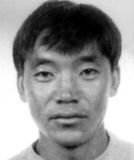 Guo Zhongmin
Mass murderer · China · 2003
Guo Zhongmin was a Chinese mass murderer. He killed 13 people in Yangxiaoxiang,…
13 victims
Guo Zhongmin
Mass murderer · China · 2003
Guo Zhongmin was a Chinese mass murderer. He killed 13 people in Yangxiaoxiang,…
13 victims
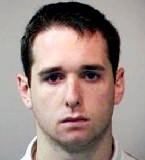 Raymond Clark
Murderer · USA · 2009
Annie Marie Le (July 3, 1985 – September 8, 2009) was a 24-year-old American do…
1 victim
Raymond Clark
Murderer · USA · 2009
Annie Marie Le (July 3, 1985 – September 8, 2009) was a 24-year-old American do…
1 victim
 Barbara Ann Peterson
Murderer · USA · 1991
Barbara Ann Peterson was an American woman who was convicted of the murder of h…
1 victim
Barbara Ann Peterson
Murderer · USA · 1991
Barbara Ann Peterson was an American woman who was convicted of the murder of h…
1 victim
 Henry Francis Hays
Murderer · USA · 1981
Henry Francis Hays Henry Francis Hays was a member of the Ku Klux Klan in Alaba…
1 victim
Henry Francis Hays
Murderer · USA · 1981
Henry Francis Hays Henry Francis Hays was a member of the Ku Klux Klan in Alaba…
1 victim
 Oscar Pistorius
Homicide · South Africa · 2013
Oscar Leonard Carl Pistorius was a South African sprint runner. He was born on…
1 victim
Oscar Pistorius
Homicide · South Africa · 2013
Oscar Leonard Carl Pistorius was a South African sprint runner. He was born on…
1 victim
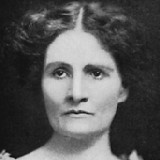 Linda Hazzard
Homicide · USA · 1911
Linda Burfield Hazzard was an alternative medicine practitioner who promoted fa…
1 victim
Linda Hazzard
Homicide · USA · 1911
Linda Burfield Hazzard was an alternative medicine practitioner who promoted fa…
1 victim
- Gender
- female
- Country
- USA
- Location
- New Castle County, Delaware, USA
- Date of birth
- 1680
- Characteristics
- parricide, torture, arson
- Victim profile
- Henry Bevan, 60 (her husband)
- Method of murder
- Strangulation with a handkerchief
- Date(s) of murder
- April 3, 1731
- Years active
- 1731
- Date of arrest
- 2 days after
- Status
-
Executed
Executed on June 10, 1731.
Background
Catherine Bevan (1680 - June 10, 1731) was a murderer who conspired with her lover, Peter Murphy, to murder her husband Henry Bevan.
Rumour was rife in the area, and there were suspicions in the community about Henry’s death and Catherine’s “intamacy with a young servant of the household, one Peter Murphy.”
Henry himself had frequently complained to his neighbors that “his Wife and Servant beat and abused him,” and many felt that the old man may have had, “not fair usage.”
A county Magistrate decided to attend the funeral, and he was shocked to find that “the Coffan had been nailed up befoore any of the Company came.”
The offence
Catherine Bevan conspired with Peter Murphy to murder her husband Henry Bevan. The murderous pair planned Henry’s death after they attempted poison first but were unsuccessful.
Peter Murphy confessed that Catherine sent him to Newcastle to buy rat poison: “That his Mistress sent him to Newcastle to buy some Rat's Bane, or, if he could not get that, some Roman Vitriol.”
Peter Murphy reported that he could not find any Rat’s Bane, so he settled for Roman vitriol, which they “gave her Husband to drink dissolved in a Glass of Wine.”
Peter Murphy also claimed that Henry immediately vomited the drink up and that fearing it “it would not have the desired effect,” “the pair decided on a more certain path.”
Peter Murphy further confessed that Catherine had him “Beat his Master well, especially about the Breast, till he should grow so weak that she might be able to deal with him, and leave the rest to her.”
He then stated that Henry could no longer stand, and that the pair moved Henry to the couch where “his Wife twisted a handkerchief around his Neck in order to strangle him.”
Peter testified that he returned to the Bevan household before the neighbor’s arrival and found Henry Bevan dead, and that Catherine Bevan told him: “I have had two hard Struggles with the old Man since you went away, and he like to have been too strong for me both Times, but I have quieted him at last.”
Catherine Bevan denied involvement and denied acting “any Part in the Murder” to the last.
Investigation
A county Magistrate ordered the coffin to be pried open. The Magistrate discovered “the corpse of Henry Bevan to be terribly bruised and other signs of violence apparent.”
A Coroner’s Inquest was called, and after they viewed “those Bruises &c. that were visible in several Parts of his Body,” the opinion was expressed that Henry Bevan “had met his demise through violent means.”
Catherine Bevan and Peter Murphy were “immediately committed upon Suspicion.”
At first, Catherine Bevan and Peter Murphy protested their innocence and denied their guilt.
Arrest
Once they were separated, Peter Murphy “could not withstand the pressure of interrogation and confessed.”
Trial
Peter Murphy could not withstand interrogation pressure and confessed. His confession included the rat’s bane or Roman vitriol attempt and the plan to beat Henry and then strangle him.
Peter Murphy repeated this tale at trial. The Court believed Peter Murphy’s testimony, and both Peter and Catherine were found guilty of the murder of Henry Bevan.
The Court passed sentence that the man was to be hanged and the woman strangled and burned at the stake. The burning was stated as “the penalty for a wife's murder murder of her sovereign lord.”
The punishment for a female petit treason was described as being predicated on the notion that it would spare a female’s modesty as her corpse would be spared the ritual humiliation that often accompanied the punishment of the male.
After sentence was passed, Peter Murphy changed his tune before the scheduled execution. Before the scheduled execution, Murphy declared Catherine innocent of the crimes he ascribed to her. He claimed: “wronged her much, that she did not tie the handkerchief round her Husband's Neck, and that the chhief of his Evidence at Court was false; but that he was the Promoter of all that happen'd, and confessed to all that was done.”
Catherine continued to deny: “to the last that she acted any Part in the Murder.”
The Court had “no take with last minute confessions,” and the executions were carried out as scheduled on June 10, 1731.
Sentencing
The Court sentenced the man to be hanged and the woman to be strangled and burned at the stake on June 10, 1731.
Catherine was sentenced to strangled and burned at the stake.
Outcome
Catherine Bevan and Peter Murphy were executed on June 10, 1731.
Catherine Bevan was taken to the market square with her hands bound behind her, tied to a stake by means of a rope around her neck, and kindling was heaped around her.
As the execution proceeded, “the executioner attempted to reach forward and pull the rope with the intention of ending her life quickly by strangling her but, ironically, considering the method by which she had murdered her husband, the rope, singed by the mounting flames, had burnt away and Catherine collapsed, to be slowly incinerated in the roaring inferno.”
It was reported that “Neither of them said much at the Place of Execution: The Man seem's penitent, but the Woman appear'd hardened.”
A further description of the burning stated that, when the fire was lit, “it broke out, in a stream which pointed directly on the Rope that went Round her Neck, and burnt it off instantly, so that she fell into the Flames, and was seen to struggle.”
Catherine Bevan was strangled and burnt at the stake, and her rope burnt through so that she was burnt alive.
The account also characterized Catherine Bevan as “the only American woman to meet such a fate.”
Appeals
No appeals were described.
Aftermath
The execution circumstances were described as follows: after the flames were lit, the rope around Catherine’s neck burnt off instantly, and she fell into the flames and was seen to struggle.
Other details
Catherine Bevan was also described as a murderer who conspired with her lover, Peter Murphy, to murder her husband Henry.
References were included in the case record: Look For the Woman by Jay Robert Nash. M. Evans and Company, Inc. 1981. ISBN 0-87131-336-7, and Wikipedia.org content described as “BEVAN, Catherine (USA).”
The account also contained unrelated comparative material about Hannah Dagoe, who was sentenced to death for robbery in 1763 and attacked the hangman at Tyburn; she then threw herself over the side of the cart so that her neck was broken and she died instantly.
The account included named site branding text “Laura Wilkerson - Salon.com” at the end of the scrape fragment, which did not provide additional case facts.

Spotted an error, or have more information about this case?