
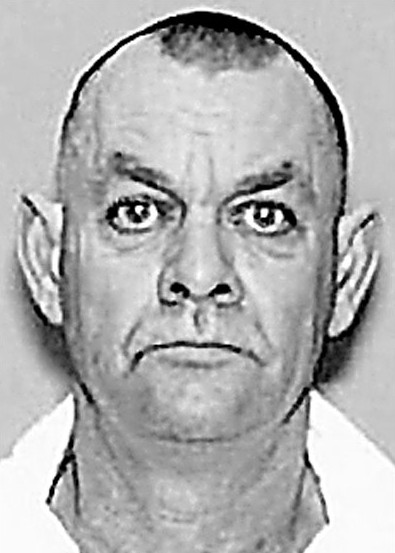
Henry Francis Hays
Murderer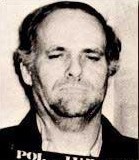 Ervil LeBaron
Murderer · USA · 1972
Ervil Morrell LeBaron (1925 to August 16, 1981) was the leader of a polygamous…
35 victims
Ervil LeBaron
Murderer · USA · 1972
Ervil Morrell LeBaron (1925 to August 16, 1981) was the leader of a polygamous…
35 victims
 Brian Kevin Rosenfeld
Murderer · USA · 1985
Brian Kevin Rosenfeld Brian Kevin Rosenfeld was sentenced to three concurrent l…
23 victims
Brian Kevin Rosenfeld
Murderer · USA · 1985
Brian Kevin Rosenfeld Brian Kevin Rosenfeld was sentenced to three concurrent l…
23 victims
 Marvin Gray
Murderer · USA · 1975
Marvin Gray was convicted killer who claimed responsibility for 23 slayings and…
23 victims
Marvin Gray
Murderer · USA · 1975
Marvin Gray was convicted killer who claimed responsibility for 23 slayings and…
23 victims
 Yahweh ben Yahweh
Murderer · USA · 1980
Yahweh ben Yahweh was born and legally named Hulon Mitchell Jr. (October 27, 19…
23 victims
Yahweh ben Yahweh
Murderer · USA · 1980
Yahweh ben Yahweh was born and legally named Hulon Mitchell Jr. (October 27, 19…
23 victims
 Russell Ellwood
Murderer · USA · 1991
Russell Ellwood was a former taxi driver. Authorities suspected him of killing…
20 victims
Russell Ellwood
Murderer · USA · 1991
Russell Ellwood was a former taxi driver. Authorities suspected him of killing…
20 victims
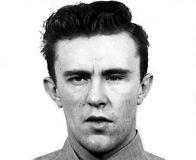 Richard Eugene Hickock
Mass murderer · USA · 1959
Richard Eugene Hickock was executed by hanging in Lansing on April 14, 1965. He…
4 victims
Richard Eugene Hickock
Mass murderer · USA · 1959
Richard Eugene Hickock was executed by hanging in Lansing on April 14, 1965. He…
4 victims
 Susan Polk
Murderer · USA · 2002
Susan Polk (born Susan Mae Bolling in 1957) was an American woman convicted of…
1 victim
Susan Polk
Murderer · USA · 2002
Susan Polk (born Susan Mae Bolling in 1957) was an American woman convicted of…
1 victim
 James Carl Lee Davis
Murderer · USA · 1984
March 3, 1984 — James Carl Lee Davis entered the home of his neighbor, Pauline…
3 victims
James Carl Lee Davis
Murderer · USA · 1984
March 3, 1984 — James Carl Lee Davis entered the home of his neighbor, Pauline…
3 victims
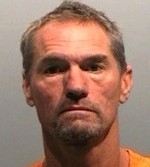 Duane Roger Morrison
Murderer · USA · 2006
Duane Roger Morrison (c. 1952—September 27, 2006) was the lone gunman who storm…
1 victim
Duane Roger Morrison
Murderer · USA · 2006
Duane Roger Morrison (c. 1952—September 27, 2006) was the lone gunman who storm…
1 victim
 Sara María Aldrete
Serial killer · Mexico · 1987
Sara María Aldrete (born September 6, 1964 in Matamoros, Tamaulipas, Mexico) wa…
15 victims
Sara María Aldrete
Serial killer · Mexico · 1987
Sara María Aldrete (born September 6, 1964 in Matamoros, Tamaulipas, Mexico) wa…
15 victims
- Gender
- male
- Country
- USA
- Location
- Mobile County, Alabama, USA
- Date of birth
- 1955
- Age at first offence
- 26
- Characteristics
- kidnapping
- Victim profile
- Michael Donald (19-year old African-American)
- Method of murder
- Lynching-style
- Date(s) of murder
- March 20, 1981
- Years active
- 1981
- Date of arrest
- —
- Status
-
Executed
Executed by electrocution in Alabama on June 6, 1997
Case identification
Henry Francis Hays
Background
Henry Francis Hays was a member of the Ku Klux Klan in Alabama.
The offence
Henry Francis Hays was convicted and sentenced to death for a 1981 lynching-style murder of 19-year-old African-American Michael Donald.
The killing was ordered by Klan leaders to “show Klan strength in Alabama.” Michael Donald was abducted at random from a Mobile street by two men, then beaten, cut and strangled. His body was strung up in a tree.
Investigation
A brief investigation took place. Local police claimed that Donald had been murdered as a result of a disagreement over a drugs deal, and federal attorneys and public pressure led the FBI to examine the case. Hays and fellow KKK member James Knowles were arrested, tried and convicted.
Arrest
Henry Francis Hays was arrested in connection with the murder of Michael Donald alongside James Knowles.
Trial
In the murder trial, James “Tiger” Knowles testified that he and Hays picked Donald at random on the night of March 20, 1981. Knowles described the beating and hanging, and said the men were cruising poor neighborhoods of Mobile when they grabbed Donald off the street, forced him into the car, beat him with tree branches, cut his throat and strung his body in a tree by the curb. Knowles acknowledged that they grabbed Donald off the street and carried out the beating and hanging.
Henry Francis Hays maintained his innocence and said Knowles had framed him.
Hays was tried six months after Knowles.
Hays’s father, Bennie Jack Hays, was charged in the slaying but died before his trial.
During the civil wrongful-death proceedings, Hays’s father Bennie Jack Hays, described as a local Klan officer and a defendant, said witnesses who accused him of having prior knowledge of plans to kill a black person were liars. The other defendants conducted their own defense and denied involvement in a conspiracy to murder Michael Donald.
The Klan presented no witnesses.
James Knowles testified against Mr. Hays at the murder trial.
Quote (civil case closing argument)
Mr. Mays, the Klan’s attorney, said in his closing argument that the murder was a “gross and horrible atrocity,” but he said the jury should not hold the organization responsible.
Sentencing
James “Tiger” Knowles was sentenced to life in prison for his testimony and for the killing of Michael Donald.
Henry Francis Hays, age 32, was sentenced to death in the case.
Appeals
A jury deadlocked in the trial of a black man charged with killing a white policeman in Birmingham, and the Klansmen then selected Michael Donald at random and lynched him to intimidate and threaten other blacks.
Outcome
Henry Francis Hays was executed by electrocution in Alabama on June 6, 1997, at 12:18 am.
Hays was 42 years old at the time of his electrocution.
Governor Fob James refused to commute his sentence.
Before his execution, Henry Francis Hays had tears in his eyes and expressed “words of love for his victim’s family” before he was executed. In the electric chair, a frightened, tearful Hays gave a thumbs up sign to witnesses. He then turned to his brother, Ray, and Donald’s brother, Stanley, and mouthed, “I love you.”
Donald later called Hays a “nut”, and said the execution brought no satisfaction, adding that “what I just witnessed was a sad sight to see a young man let his life go like that.”
Aftermath
Donald’s mother, Beulah Mae Donald, brought a civil suit with assistance from the Southern Poverty Law Center.
A wrongful-death civil case resulted in an all-white jury finding the Klan responsible for the lynching of Michael Donald and ordering it to pay $7 million.
This resulted in the Klan having to hand over all its assets, including its national headquarters in Tuscaloosa, Alabama. The verdict against the United Klans of America and six past and present Klansmen was awarded in 1987.
Beulah Mae Donald sold the Tuscaloosa building for about $52,000 and bought a house. She later died.
A Federal District Judge Alex Howard said he would hold a hearing within 90 days to determine the Klan’s assets and what action was needed to turn them over to the Donald family and N.A.A.C.P. in Alabama.
Morris Dees, an attorney for the Donald family and founder of the Southern Poverty Law Center, said the verdict was expected to give the family title to the United Klans’ 7,000-square-foot national headquarters in Tuscaloosa.
Michael Figures, a State Senator and an attorney for the Donald family, called the verdict a “landmark ruling that will make sure Donald’s death was the last Klan lynching.”
Robert Shelton, a Klan Imperial Wizard, left the courtroom immediately after the verdict, refusing to comment.
Bill Stanton, director of Klanwatch, an anti-Klan group associated with the Southern Poverty Law Center in Montgomery, said his organization was “extremely pleased” for the Donald family. He said: “We believe the death of their relative will not be in vain as a result of this case,” “We believe the death of their relative will not be in vain as a result of this case,” and: “Victims of Klan violence now have a precedent to seek damages from the corporate Klan behind the perpetrators of these kinds of violent acts.”
Before the jury began deliberating, James Knowles pleaded with the jury to decide in favor of the victim’s family. He said: “Return a judgment against me and everything else,” Then, turning to the mother of the victim, Mr. Knowles, in tears, apologized before the courtroom filled with about 100 spectators. He said: “God knows, if I could trade places with him, I would.”
Quote (comparisons to civil rights history)
Earlier today, Mr. Dees compared Mr. Donald to martyrs of the civil rights movement, such as the Rev. Dr. Martin Luther King Jr. He said: “They sacrificed a human being to get some publicity for the Klan,” “He’ll go down in civil rights history in the fight for black rights. I hope your verdict goes down in history right beside him.”
Quote (prosecutors)
Prosecutors said the slaying was ordered by Klan leaders “to show Klan strength in Alabama.”
Quote (assistant attorney general)
Assistant Attorney General Joe Marston 3d said there was no bias involved in the record, just simple math: “Most murders are black-on-black,” “You’d have to do some very deep and difficult research on how many white-on-black crimes you have, and how many fall into capital murder categories.”
Civil case details (named parties/defendants)
The civil suit included the family of the victim, Michael Donald, 19 years old, and the Alabama branch of the National Association for the Advancement of Colored People. It involved United Klans of America and six past and present Klansmen.
In the trial of the Donald family’s suit, the defendants included: Henry Francis Hays; Frank Cox, the son-in-law of Bennie Jack Hays; William O’Connor; and Thaddeus Betancourt; and Teddy Kysar, whose charge was dismissed at the end of testimony Wednesday at the plaintiff’s request. Mr. Kysar was a former Klan member who cooperated with the authorities in the investigation that led to Hays’s conviction.
Other details
Donald was abducted at random from a Mobile street by two men.
On the same evening, other Klan members burned a cross on the Mobile County courthouse lawn.
The group described in connection with the case was forced to turn over its headquarters to Beulah Mae Donald, and two additional Klansmen were convicted of criminal charges.
Henry Francis Hays had tears in his eyes and expressed “words of love” for his victim’s family before he was executed.
Spotted an error, or have more information about this case?