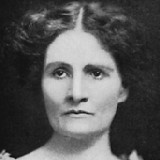
Linda Hazzard
Homicide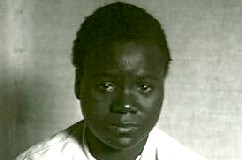 Virginia Christian
Homicide · USA · 1912
Virginia Christian was the first woman to die in the electric chair in Virginia…
1 victim
Virginia Christian
Homicide · USA · 1912
Virginia Christian was the first woman to die in the electric chair in Virginia…
1 victim
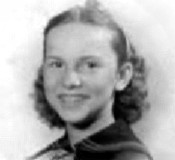 Constance Fisher
Homicide · USA · 1954
Constance Fisher · 3 August 1954 — Constance Fisher drowned her three children…
6 victims
Constance Fisher
Homicide · USA · 1954
Constance Fisher · 3 August 1954 — Constance Fisher drowned her three children…
6 victims
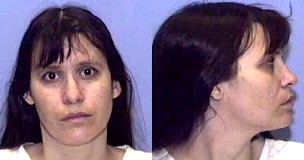 Andrea Yates
Homicide · USA · 2001
Andrea Pia Yates (born Andrea Pia Kennedy on July 2, 1964) was a former Houston…
5 victims
Andrea Yates
Homicide · USA · 2001
Andrea Pia Yates (born Andrea Pia Kennedy on July 2, 1964) was a former Houston…
5 victims
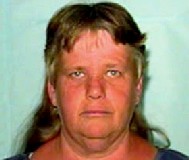 Christine Falling
Homicide · USA · 1980
Christine Falling (1980-1982) was a 17-year-old babysitter from Perry, Florida.…
5 victims
Christine Falling
Homicide · USA · 1980
Christine Falling (1980-1982) was a 17-year-old babysitter from Perry, Florida.…
5 victims
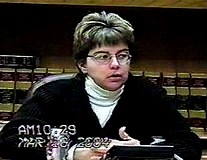 Coleen Thompson
Homicide · USA · 2002
Coleen Thompson was a former intensive care nurse at Shady Grove Adventist Hosp…
5 victims
Coleen Thompson
Homicide · USA · 2002
Coleen Thompson was a former intensive care nurse at Shady Grove Adventist Hosp…
5 victims
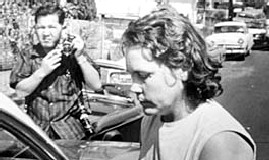 Maggie Young
Homicide · USA · 1965
Maggie Young was a despondent, mentally ill mother who had been treated for a m…
5 victims
Maggie Young
Homicide · USA · 1965
Maggie Young was a despondent, mentally ill mother who had been treated for a m…
5 victims
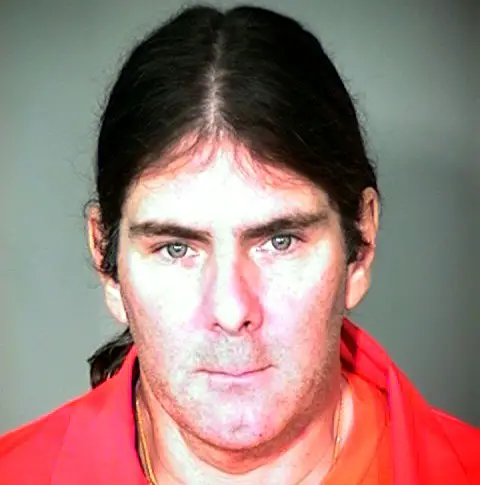 Frank Jarvis Atwood
Murderer · USA · 1984
Frank Jarvis Atwood was a 28-year-old pedophile, a drifter from California who…
1 victim
Frank Jarvis Atwood
Murderer · USA · 1984
Frank Jarvis Atwood was a 28-year-old pedophile, a drifter from California who…
1 victim
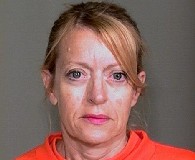 Valerie Pape
Murderer · USA · 2000
Valerie Pape was convicted after pleading guilty in 2002 to second-degree murde…
1 victim
Valerie Pape
Murderer · USA · 2000
Valerie Pape was convicted after pleading guilty in 2002 to second-degree murde…
1 victim
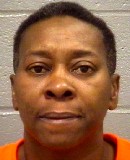 Yvette Taylor
Murderer · USA · 2012
Yvette Taylor was a Martinez, Georgia woman. She was the roommate of Theodore C…
1 victim
Yvette Taylor
Murderer · USA · 2012
Yvette Taylor was a Martinez, Georgia woman. She was the roommate of Theodore C…
1 victim
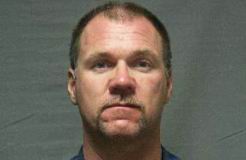 Jeffrey Wayne Gorton
Murderer · USA · 1986
Jeffrey Wayne Gorton Jeffrey Wayne Gorton was sentenced to 40-80 years in priso…
2 victims
Jeffrey Wayne Gorton
Murderer · USA · 1986
Jeffrey Wayne Gorton Jeffrey Wayne Gorton was sentenced to 40-80 years in priso…
2 victims
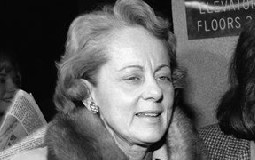 Jean Harris
Murderer · USA · 1980
Jean S. Harris was born Jean Struven in 1923 in Cleveland, USA. Her mother, Mil…
1 victim
Jean Harris
Murderer · USA · 1980
Jean S. Harris was born Jean Struven in 1923 in Cleveland, USA. Her mother, Mil…
1 victim
- Gender
- female
- Country
- USA
- Location
- Olalla, Kitsap County, Washington, USA
- Date of birth
- 1867
- Age at first offence
- 44
- Characteristics
- abuse, torture, cannibal
- Victim profile
- Claire Williamson, 33
- Method of murder
- Starvation
- Date(s) of murder
- May 19, 1911
- Years active
- 1911
- Date of arrest
- August 1911
- Status
-
Died in custody
Sentenced to 2 to 20 years in prison on February 4, 1912; released on parole on December 26, 1915; died of self-starvation in 1938
Case details
Linda Burfield Hazzard was an alternative medicine practitioner who promoted fasting as a medical treatment.
Hazzard had some training as an osteopathic nurse but insisted she be addressed as "Dr Hazzard." Despite a lack of a medical degree, she was licensed to practice medicine in Washington. A loophole in a licensing law grandfathered in some practitioners of alternative medicine who did not have medical degrees, including Hazzard.
She published Fasting For The Cure Of Disease in 1908, promoting fasting as a cure for virtually every ailment, including cancer. She also wrote about her approach in other works.
Background
Hazzard was born in Carver County, Minnesota, in 1867. She married at 18 and had two children. In 1898, she left her husband and children to pursue her career in Minneapolis.
She appears to have killed her first patient in 1902 around the time her divorce became final. After a coroner determined that death was caused by starvation, the coroner tried to get her prosecuted, but she was not held accountable because she was not licensed to practice medicine.
When investigators asked what had happened to a victim’s valuable rings, Hazzard was evasive.
Hazzard later married Samuel Christman Hazzard, described as a West Point graduate. He had misappropriated Army funds and had had a history involving previous marriages. A bigamy trial ended in a two-year prison sentence for Samuel Hazzard. After he finished his sentence in 1906, Hazzard and her husband set out for Washington state to start over.
The offence
The method
Hazzard used a fasting-based treatment. Her method included abstaining from food except for fruit juice and vegetable broth, along with warm baths or bathing, and enemas of warm water in large quantities. Her treatment also included massage and other procedures described during the trial and in accounts of her practice.
During the treatment described for the Williamson sisters, the treatments consisted of massage or rubbing, abstaining from food except fruit juice, asparagus water, and vegetable broth with a small bit of butter, a warm bath every day or practically every day, and an enema of from four to six quarts of warm water each day.
Targeted victims and deaths described in the case material
Hazzard was convicted for the death of Claire Williamson.
The case also describes additional deaths attributed to Hazzard’s methods, including multiple patients who died while under her care and multiple years of fatalities connected to her sanitarium and practice. The material provides a list of named individuals and years, including:
- 1908: Mrs. Elgin Cox; Daisey Maud Haglund (Mother of Ivar's restaurant founder Ivar Haglund, whose official cause of death was stomach cancer); Ida Wilcox
- 1908: Maud Haglund (noting her death after a 50-day fast at Hazzard’s direction; leaving a 3-year-old son, Ivar)
- 1908: Ida Wilcox
- 1908: and other names appearing in the material as victims associated with deaths during that period
- 1909: Blanche B. Tindall; Viola Heaton
- 1909: Eugene Stanley Wakelin (described as dying from a bullet in the head on Hazzard's property; whether she was responsible remained unknown in the material)
- 1910: Maude Whitney
- 1911: Earl Edward Erdman; Frank Southard; C.A. Harrison; Ivan Flux; Lewis Ellsworth Rader
- 1911: Claire Williamson
- 1913: Ida J. Anderson; Mary Bailey
The material also includes a statement that the total number of her victims was unknown, and that she could be said to have starved at least a dozen people to death.
Investigation
A City of Seattle Civil Engineer, Earl Edward Erdman, died of starvation in Seattle General Hospital. He had kept a diary detailing Hazzard’s treatment during the preceding weeks.
The material includes excerpts from Erdman’s diary:
- February 1 — Saw Dr. Hazzard and began treatment this date. No breakfast. Mashed soup dinner. Mashed soup supper.
- February 5 through 7 — One orange breakfast. Mashed soup dinner. Mashed soup supper.
- February 8 — One orange breakfast. Mashed soup dinner. Mashed soup supper.
- February 9 through 11 — One orange breakfast. Strained soup dinner. Strained soup supper.
- February 12 — One orange breakfast. One orange dinner. One orange supper.
- February 13 — Two orange breakfast. No dinner. No supper.
- February 14 — One cup of strained tomato broth at 6 p.m.
- February 15 — One cup hot strained tomato soup night and morning.
- February 16 — One cup hot strained tomato soup a.m. and p.m. Slept better last night. Head quite dizzy. Eyes yellow streaked and red.
- February 17 — Ate three oranges today.
- February 19 — Called on Dr. (Dawson) today at his home. Slept well Saturday night.
- February 20 — Ate strained juice of two small oranges at 10 a.m. Dizzy all day. Ate strained juice of two small oranges at 5 p.m.
- February 21 — Ate one cup settled and strained tomato broth. Backache today just below ribs.
- February 22 — Ate juice of two small oranges at 10 a.m. Backache today in right side just below ribs.
- February 23 — Slept but little last night. Ate two small oranges at 9 a.m. Went after milk and felt very bad. Ate two small oranges 6 p.m.
- February 24 — Slept better Wednesday night. Kind of frontal headache in a.m. Ate two small oranges 10 a.m. Ate on and a half cups hot tomato soup at 6 p.m. Heart hit up to ninety-five minute and sweat considerable.
- February 25 — Slept pretty well Thursday night. Ate one and a half cups tomato broth 11 a.m. Ate one and a half cups tomato broth 6 p.m. Pain in right below ribs.
- February 26 — Did not sleep so very well Friday night. Pain in right side just below ribs in back. Pain quit in night. Ate 1 and a half cups tomato broth at 10:45 a.m. Ate two and a half pump small oranges at 4:30 p.m. Felt better afternoon than for the last week...
The diary material states that this diet continued more or less unchanged until his hospitalization on March 28, and that he died that afternoon, just before his coworker was to tranfuse blood.
A British Vice Consul brought pressure to bear on Kitsap County to prosecute Hazzard. When county officials said they could not afford to prosecute, wealthy Dorothea Williamson offered to pay for the prosecution.
Arrest
In August 1911, Linda Hazzard was arrested. A headline in the material described it as: “Officials Expect to Expose Starvation Atrocities: Dr. Hazzard Depicted as Fiend.”
Hazzard told reporters that she was being persecuted because she was a successful woman, and that a cabal of traditional doctors resented her success and opposed natural cures. She said: “I intend to get on the stand and show up that bunch. They’ve been playing checkers but it’s my move. I’ll show them a thing or two when I get on the stand.”
Trial
Charges and information
Hazzard’s trial included an information that initially charged her with murder in the first degree.
The information alleged that, in King County and later in Kitsap County, she did kill and murder Claire Williamson by depriving and keeping from her all food and sustenance, except specified limited fruit juices and vegetable broth quantities. It further alleged that Claire Williamson was in Hazzard’s care, custody, and control and that Hazzard had possession of money and property belonging to Claire Williamson sufficient to obtain food and sustenance.
The material includes the information’s quoted narrative describing the allegations, including that Claire Williamson sickened and languished with a mortal sickness and feebleness of body until May 19, 1911, and died on that date.
Proceedings
- A demurrer was filed on various grounds, and it was overruled.
- On January 15, 1912, the cause was called for trial.
- On February 4, 1912, the jury returned a verdict finding Hazzard guilty of manslaughter.
- A motion for new trial was made and overruled.
- Hazzard was sentenced to the state penitentiary at Walla Walla for not more than 20 years and not less than 2 years.
- The case then proceeded on appeal.
Trial facts described in the material
The Williamson sisters’ course of treatment
Dora Williamson and Claire Williamson were stopping temporarily at Victoria, B.C. Their parents had died, and they had no relatives in the United States except an uncle in Portland, Oregon, and an aunt at El Toro, California.
After correspondence prompted by a Seattle newspaper advertisement, Hazzard forwarded a book titled Fasting for the Cure of Disease and pamphlet about a sanitarium at Olalla, Washington.
The girls went to California and returned to Seattle to take treatment in February 1911. They arrived in Seattle on February 26, 1911. They interviewed Hazzard at her office the next day, February 27, 1911.
The girls were strangers to the city, and an apartment in the Buena Vista apartment house was secured for them by Hazzard. At the interview, they arranged to take treatment every day except Saturdays and Sundays for $60 per month each. The treatments consisted of massage or rubbing, abstaining from food except fruit juice, asparagus water, and vegetable broth with a small bit of butter about as large as the thumb nail; a warm bath every day or practically every day; and an enema of from four to six quarts of warm water each day.
From February 27 until about the 15th of March, the girls went to Hazzard’s office daily. After mid-March, because they were too weakened to go to the office, a nurse was secured by the defendant to care for them at their apartment, while Hazzard called almost daily, other than Saturdays and Sundays, to provide treatments.
They repeatedly became weaker and more emaciated. During this time, Hazzard repeatedly inquired about relatives, property, business, and income.
On one occasion while visiting them and discussing business affairs, Hazzard advised them it was unsafe to keep papers, money, and jewelry in their apartment, and induced them to give her their papers and articles of value, including the rings from their fingers, for placement in the safe in her office for safe keeping.
About April 22, 1911, Hazzard took the girls from their apartment to Olalla, Washington, where she claimed to be operating a sanitarium. At that time, the girls were unable to walk and were carried on stretchers to ambulances and conveyed to the dock for a special launch to Olalla. While waiting at the dock, Hazzard’s attorney appeared, and Claire Williamson executed a codicil to her will leaving an annuity to the Hazzard Institute of Natural Therapeutics. A direction on a slip of paper apparently torn from a notebook was also executed instructing payment of $1,005 by the Bank of Montreal account to Linda Burfield Hazzard and placing it to her credit in the bank of the Northern Bank & Trust Company of Seattle, and instructing the London & Westminster County Bank at High street, Kensington, London, England, to send money or draft to her Seattle address in the care of Dr. Linda Burfield Hazzard.
After arrival at Olalla, the girls remained in the house occupied by Hazzard, receiving the same treatments and requiring a nurse. They constantly became more emaciated and at times became unconscious during bathing or enema procedures.
Claire Williamson’s death and events around it
On May 19, 1911, Claire Williamson died. The material states that both girls were living skeletons by that time, with weight approximately one-half what it had been at the start of treatment nearly three months earlier.
About a week before her death, Hazzard suggested doubt as to Claire’s recovery. During the time the girls were in Seattle and prior to Claire’s death at Olalla, they repeatedly asked for food. Each time, they were told by Hazzard that poison was not yet out of their system and that they must not take food until their system was entirely clean.
The material includes a discussion the morning after Claire’s death: Dora was downstairs upon a porch near a cliff or precipice, and Hazzard, in conversation, suggested that a prior patient had attempted suicide by leaping over the precipice. Dora said such a matter should not be called to her at that time while she was weak and enfeebled and her sister was dead upstairs.
The material also states that Hazzard had repeatedly enjoined Dora from talking business with Claire and told Dora that she was mentally unsound. Repeatedly, Hazzard asked Dora if she had any business matter troubling her.
Dora Williamson’s guardianship and handling of property
On May 22, the uncle in Portland was notified of Claire’s death.
On May 27, Dora executed a power of attorney to Samuel C. Hazzard authorizing receipt from the Canadian Bank of Commerce at Victoria, B.C. of money in the savings department. On the same day, Dora addressed a note requesting the transfer of $583 to Samuel C. Hazzard or order and charging it to her account. The material states that the money was subsequently received by Mr. Hazzard.
On May 27, Hazzard filed a petition in probate alleging Dora Williamson was an invalid with great physical suffering and mentally incompetent to manage her own affairs, and praying that a guardian be appointed. After a hearing, Hazzard was appointed guardian of the person and estate of Dora Williamson. The material states that no notice of the hearing or filing was served on the alleged incompetent person.
About June 1, Miss Conway, described as a nurse of the girls during their childhood, arrived from Australia in response to a cablegram sent to her prior to Claire’s death. Thereafter, Dora was under her care and was given food daily. Dora’s condition improved, and sometime in July she was removed to Tacoma, Washington.
Defences and evidentiary issues raised on appeal
The material sets out errors claimed on appeal. These included:
- Overruling of the demurrer to the information.
- Admission of evidence of transactions with Dora Williamson, including treatment and effect.
- Rulings permitting testimony on redirect examination from Mrs. Fields relating to appearance and starvation.
- Exclusion of a letter written by Esther Cameron.
- Permitting evidence as to treatment given Dora Williamson.
- Expert testimony from medical witnesses regarding medical skill and care.
- Error based on use of a work on legal medicine.
- Cross-examination relating to business relations with E.R. Butterworth & Sons.
- Misconduct of counsel.
- Admission of Dora Williamson testimony about statements Claire made regarding food.
- Refusal to direct a verdict.
- Errors in instructions.
The appellate discussion also included legal analysis about venue and the sufficiency of the information, stating that the acts began in King County and were consummated in Kitsap County, and that jurisdiction was in either county.
The appellate discussion also included discussion of admissibility of evidence of transactions with Dora to show plan or system to accomplish the purpose constituting the offense.
It further included discussion about witness testimony on appearance of a person who died from want of food, and it included a statement that: “This occurs on redirect examination... whether it was error must depend upon the cross-examination...”
The material includes verbatim testimony and procedural remarks: “By Mr. Morford: (One of the attorneys for the state) We ask that the jury be excused. By Mr. Kelley: What is the matter? By Mr. Morford: They are signaling witnesses. By Mr. Gregory: Let the jury stay here. By the Court: am controlling this jury and I say the jury shall retire to the jury room. By Mr. Gregory: We wish to object to the court's ruling in this matter.”
After the court cautioned the defendant not to signal witnesses, the court instructed the jury to disregard the circumstance.
Sentencing
On February 4, 1912, Hazzard was sentenced to the state penitentiary at Walla Walla for two to twenty years of hard labor.
She served two years in the state penitentiary at Walla Walla.
Appeals
Hazzard appealed the judgment and sentence. The material includes the case citation: State v. Hazzard, 75 Wash. 5, 134 Pac. 514 (1913).
It also includes that the judgment and sentence were affirmed. The appellate court is described as: MAIN, J. and it states that Karr & Gregory and J.H. Buchanan represented Hazzard (appellant), and Thomas Stevenson represented the State (respondent).
The material includes procedural details: the appeal followed a trial and conviction of murder in the second degree noted in the appeal description, while the verdict recounted in the trial discussion was a conviction of manslaughter.
Outcome
Hazzard was convicted of manslaughter for the death of Claire Williamson.
She was released on parole on December 26, 1915 after serving two years.
In a later account included in the material, the following is stated: the following year Governor Ernest Lister gave her a full pardon.
Aftermath and later life
Hazzard died in 1938 of self-starvation while attempting a fasting cure on herself.
After her release on parole, Hazzard and her husband moved to New Zealand, where she practiced as a dietitian and osteopath until 1920.
In 1920, she returned to Olalla and opened a new sanitarium described in the material as a “school of health” because her medical license had been revoked. It included a basement autopsy room. The sanitarium burned to the ground in 1935 and was never rebuilt.
The material describes popular culture references, including that the nonfiction book Starvation Heights by Gregg Olsen was adapted for the stage by Portland, Oregon playwright Ginny Foster, with a debut as part of the National New Play Festival in July 2008. The material states that in January 2009, it was announced the book was optioned for a film adaptation by Jason Fogelson and Pulitzer Prize-winner Tracy Letts, with Letts to write the script. It also states that Hazzard was profiled through re-enactments and interviews in the Investigation Discovery Network show Deadly Women, in its first episode entitled "Obsession".
The material also includes a characterization that “Her book continues to influence a small fasting movement,” with proponents claiming it as a cure-all.
Names and people mentioned
- Linda Burfield Hazzard — defendant; “Dr Hazzard”
- Claire Williamson — victim; died May 19, 1911 (as described in the material); was described as weighing less than 50 pounds at death in the narrative portion
- Dora Williamson (also referred to as Dorothea Williamson) — victim associated with the treatment; executed power of attorney and later testified
- Samuel Christman Hazzard — Hazzard’s husband; involved in receipt of money and referenced in guardianship proceedings
- Margaret Conway — described as the childhood nanny/nurse arriving after a cablegram
- Earl Edward Erdman — City of Seattle Civil Engineer; died of starvation in Seattle General Hospital; kept a diary
- Dr. (Dawson) — called on in Erdman’s diary
- Mrs. Fields — witness mentioned in appellate discussion
- Esther Cameron — witness referenced in an alleged evidentiary ruling
- Andrew Hill — witness referenced in appellate discussion
- Dr. Munn — witness referenced in appellate discussion
- Andrew Hill — witness; described removing the girls from an apartment to the boat and giving details
- E.R. Butterworth & Sons — undertakers referenced in appellate discussion
- John Ivar Haglund — witness named in the narrative portion; testified about faith and treatment for his son Ivar
- Daisey Maud Haglund — named victim in the narrative portion; referred to as first known Washington victim
- Ida Wilcox — named victim in the list
- Blanche B. Tindall — named victim in the list
- Viola Heaton — named victim in the list
- Eugene Stanley Wakelin — named victim in the list; described as dying from a bullet in the head on Hazzard’s property
- Maude Whitney — named victim in the list
- Frank Southard — named victim in the list
- C.A. Harrison — named victim in the list
- Ivan Flux — named victim in the list
- Lewis Ellsworth Rader — named victim in the list
- Mary Bailey — named victim in the list
- Ida J. Anderson — named victim in the list
- Ernest Lister — governor referenced in the narrative portion
- Thomas Stevenson — prosecutor named in the appellate record
- Karr & Gregory; J.H. Buchanan — counsel for appellant named in the appellate record
- C.E. Lucien Agassiz — Vice Consul referenced in the narrative portion
- Ginny Foster — playwright referenced in popular culture portion
- Gregg Olsen — author referenced in popular culture portion
- Jason Fogelson — producer referenced in popular culture portion
- Tracy Letts — Pulitzer Prize-winner referenced in popular culture portion
- MAIN, J.; CROW, C.J.; ELLIS, FULLERTON, MORRIS — justices referenced in the appellate portion
Spotted an error, or have more information about this case?