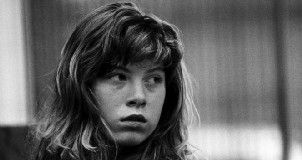
Amy Lee Black
Homicide Christine Falling
Homicide · USA · 1980
Christine Falling (1980-1982) was a 17-year-old babysitter from Perry, Florida.…
5 victims
Christine Falling
Homicide · USA · 1980
Christine Falling (1980-1982) was a 17-year-old babysitter from Perry, Florida.…
5 victims
 Melissa Marvin
Homicide · USA · 1999
Melissa Lynn Marvin was a 29-year-old waitress and amateur surfer at the time o…
4 victims
Melissa Marvin
Homicide · USA · 1999
Melissa Lynn Marvin was a 29-year-old waitress and amateur surfer at the time o…
4 victims
 Roxanne Severcool
Homicide · USA · 1980
Defendant: Roxanne Severcool (juvenile offender) · Co-defendant: Robert Fadden…
3 victims
Roxanne Severcool
Homicide · USA · 1980
Defendant: Roxanne Severcool (juvenile offender) · Co-defendant: Robert Fadden…
3 victims
 Brenda Wiley
Homicide · USA · 1990
Brenda Wiley was convicted in 1992 of fatally stabbing her mother, Bonnie Wiley…
2 victims
Brenda Wiley
Homicide · USA · 1990
Brenda Wiley was convicted in 1992 of fatally stabbing her mother, Bonnie Wiley…
2 victims
 Wayne Kubsch
Murderer · USA · 1998
Wayne Kubsch: husband; defendant · Beth Kubsch: wife; murder victim · Rick Mile…
3 victims
Wayne Kubsch
Murderer · USA · 1998
Wayne Kubsch: husband; defendant · Beth Kubsch: wife; murder victim · Rick Mile…
3 victims
 Antonyo Gipson
Murderer · USA · 2006
Defendant: Antonyo Gipson (23), of the 1100 block of North Kedvale Avenue · All…
3 victims
Antonyo Gipson
Murderer · USA · 2006
Defendant: Antonyo Gipson (23), of the 1100 block of North Kedvale Avenue · All…
3 victims
 Erin Caffey
Homicide · USA · 2008
Erin Caffey (juvenile daughter of Terry Caffey and Penny Caffey; charged in con…
3 victims
Erin Caffey
Homicide · USA · 2008
Erin Caffey (juvenile daughter of Terry Caffey and Penny Caffey; charged in con…
3 victims
 Christine Malèvre
Serial killer · France · 1997
Christine Malèvre Christine Malèvre (born 1970) was a French serial killer. She…
30 victims
Christine Malèvre
Serial killer · France · 1997
Christine Malèvre Christine Malèvre (born 1970) was a French serial killer. She…
30 victims
 Peter Lundin
Murderer · USA / Denmark · 1991
Peter Lundin was born in Solrød Strand, Denmark in 1971. His family migrated to…
4 victims
Peter Lundin
Murderer · USA / Denmark · 1991
Peter Lundin was born in Solrød Strand, Denmark in 1971. His family migrated to…
4 victims
 Kennath Henderson
Murderer · USA · 1997
April 26, 1997 — Kennath Henderson was planning an escape from the Fayette Coun…
1 victim
Kennath Henderson
Murderer · USA · 1997
April 26, 1997 — Kennath Henderson was planning an escape from the Fayette Coun…
1 victim
- Gender
- female
- Country
- USA
- Location
- Muskegon County, Michigan, USA
- Date of birth
- June 11, 1974
- Age at first offence
- 16
- Characteristics
- juvenile (16), robbery
- Victim profile
- David VanBogelen, 34
- Method of murder
- Stabbing with knife
- Date(s) of murder
- December 7, 1990
- Years active
- 1990
- Date of arrest
- 3 days after
- Status
-
Life imprisonment
Sentenced to life in prison without possibility of parole on July 3, 1991; conviction affirmed on appeal in 1994
Case record: Amy Lee Black
Background
Amy Lee Black was 16 years and six months old at the time of the crime. She was a relative newcomer to Muskegon after leaving her mother’s Kalamazoo home. She later lived in the Women’s Huron Valley Correctional Facility near Ypsilanti. She was described as one of only 10 female “juvenile lifers” in Michigan.
Black described her upbringing and mental state in later accounts. She attributed her actions at age 16 to an unhappy home life, including sexual abuse by a succession of men in her mother’s home. She said that for a couple of years before the murder she was in and out of the home, dropped out of school, and rebelled against her mother’s authority. She said that when she did not feel stable and safe in the home, she left. She said she got into drugs and had a 1990 stint in a residential treatment center in Ottawa County that she said got her off cocaine. She said she continued drinking alcohol and smoking marijuana. She said that a few weeks before the murder, after she came to Muskegon where she knew no one, she realized something horrible was going to happen.
Black described her arrival in Muskegon. She said she arrived with a male friend, then left him after meeting Abrahamson in Muskegon. At that stage, she said she called both her parents and asked, “Can you come get me?” She said both refused. She said, “That was the point where I knew something horrible was going to happen,” and that she knew she was too far from home and “too far into something bad.”
Black also described later prison experiences. She said that early on, she was raped by a male corrections officer while she was lodged at the now-closed Robert Scott Correctional Facility in Plymouth Township. She said she was one of many beneficiaries of the state’s 2009 settlement of a class-action civil-rights lawsuit by female inmates who had suffered sexual abuse in the 1990s. She said she would not discuss the settlement in detail but that she “got a lot” and that it was enough to be “independently wealthy” if ever released from prison. She said she did not react well to the move to Huron Valley.
Black acknowledged misconduct in prison. She said she had accumulated many misconduct tickets and stated: “I don’t adjust to change well.” She described this as a possible factor in a failure of her attempt to get a commutation of her sentence from Gov. Jennifer Granholm late in Granholm’s second term.
Black said she has accumulated major-misconduct records including citations against her over the years for infractions including threatening behavior, destruction of property, and substance abuse. The most recent tickets were described as being in 2010 for heroin abuse, disobeying a direct order, and “insolence,” and in 2009 for sexual misconduct.
Black said she would like, if released, to get a regular job and possibly set up an organization to work with young people in trouble. She said the organization would provide “somewhere to turn when faced with a ‘something horrible is going to happen’ moment like hers.” She said she had not been active lately with a prison organization she co-founded in 2008 called Juveniles Against Incarceration for Life, which advocates against no-parole life sentences for juveniles. A website by that organization features profiles of participating inmates, including Black. Black’s profile minimized her role in VanBogelen’s murder, saying nothing about her admitted bludgeoning of the victim. It stated that she “obeyed Jeff’s demand that she aid him in cleaning up afterward.” The profile also said she “confessed to the killing of David, a killing she did not commit,” although her actual confession blamed Abrahamson for the killing.
Black addressed the question of whether she should be released. She paused and answered, “They probably shouldn’t believe that I’m safe to let out, based on what I’m in prison for. But given a chance, I’d prove it.” She added: “I’ve never been a dangerous person. I’ve made bad decisions. It’s like it’s taken a lifetime to learn to make good decisions.”
The offence
In the wee hours of Dec. 7, 1990, teenagers Amy Lee Black and Jeff Abrahamson met a visibly drunk, cash-flashing stranger in a Muskegon Heights restaurant. By dawn of that Pearl Harbor Day, 34-year-old Dave VanBogelen, of Sullivan Township, was found dead on a remote rural two-track. His head was bludgeoned and his body was pierced by multiple stab wounds.
A separate account described that the coroner said the blows to the head may have been the cause of death. Black was described as not being the one who stabbed VanBogelen to death, with her 19-year-old boyfriend described as having confessed to that.
The account of Black’s role included that she admitted striking the victim’s head with a heavy whiskey bottle in the couple’s Muskegon Heights apartment, which medical testimony said could also have led to his death. She accompanied Abrahamson as he helped the disoriented, bleeding victim down stairs and into VanBogelen’s pickup truck. She rode along as Abrahamson drove to the secluded spot near Brooks and Ellis roads where he repeatedly stabbed VanBogelen. Afterward, Black helped clean up the couple’s blood-spattered apartment, and after discarding a sofa and other items, the two fled in the victim’s truck to Black’s uncle’s home in Barry County.
Black and Abrahamson were caught by police three days later while they slept.
Black said she did not expect Abrahamson to kill VanBogelen. She said she later blamed Abrahamson for the events of that night and said she went along because she was afraid of him. She described herself as a passive participant, with her chief fault being a failure to break away and let someone know what was happening, attributing it to youth, dependence on her boyfriend, and failure to understand she had “options.”
Black’s views about her conduct differed between statements. She had given two conflicting accounts of how deep her role was. The first included an early confession that she later recanted in testimony at her May 1991 trial. The jurors and sentencing judge believed her confession rather than her second version, which she maintained to that day.
In the taped statement described in the case record, Black allegedly said that although Abrahamson surprised her by ultimately stabbing the victim, she and her boyfriend had plotted in the restaurant to lure the drunken stranger to their nearby apartment to rob him. The account described repeated bashed of VanBogelen’s head with a square-bottomed bottle when he would not pass out from drinking, taking cash from his jacket pocket, and “held his head down” in the truck as they drove into the country. The account further described that they got about $1,500 cash from VanBogelen and that some of it was spent on new clothes.
The taped confession account included attributed statements about wanting to know “if you could just kill somebody and, and, and the cops not know that it was you. I did. I always wondered that.” It also included: “I always wanted to know if you could just kill somebody and the cops not know that is was you. I did. I always wondered that.” The case record also included a statement attributed to Black: “I never, never thought I’d do it — do nothing like that, though. And, especially, I didn’t kill him, but I helped out my fair share.”
At her trial, Black admitted hitting the victim with a bottle, but said her boyfriend made her do it, after he first broke a bottle over VanBogelen’s head. She maintained she falsely confessed because Abrahamson had repeatedly urged her to do so in the event that they were caught, and she said his idea was to exaggerate her role and minimize his because she was a juvenile. She said: “He had explained to me that, because I was young, I wouldn’t (be charged as an adult), and they couldn’t hold me responsible.” She also said: “When you’re young you believe things, stars and stripes and balloons and birds and puppy dogs. Now I think I can’t believe I was that stupid to believe those things.”
At least one direct quote attributed to Black about her trial role was: “My role basically was that, as Jeff’s girlfriend, I was there with him,” and “And the crimes that he committed, I should have told somebody.” This quote was attributed to “Black,” stated as being from an Oct. 4 interview in Huron Valley’s visiting room. Another direct quote attributed to Black was: “I’ve never been a dangerous person. I’ve made bad decisions.
Investigation
Black’s early confession and later testimony were described as conflicting. A transcript was described as being in her court file. The case record also described that her confession included statements about plotting in the restaurant, taking cash, and holding the victim’s head down in the truck.
Arrest
Black and Abrahamson were described as being arrested three days after the murder while they slept at Black’s uncle’s home in Barry County.
Trial
Black was tried as an adult under Michigan law. Under MCL 764.1f, as described in the court opinion, Black was a juvenile who was tried as an adult pursuant to MCL 764.1f; MSA 28.860(6).
A jury found her guilty of first-degree premeditated murder, MCL 750.316; MSA 28.548, and armed robbery, MCL 750.529; MSA 28.797.
The sentencing hearing included testimony. The judge heard testimony from psychologists, probation officers who had conducted a pre-sentence investigation, social-service workers and others. The sentencing judge made the adult sentence decision after an hours-long sentence hearing.
The sentencing decision and the supporting testimony were described as follows:
- A Spring Lake psychologist who tested, interviewed and evaluated Black testified she had a manipulative “sociopathic personality,” without empathy for others, and “the mental maturity of an adult,” and that she had poor prognosis for rehabilitation and needed decades in a highly structured environment.
- State probation agents and Department of Social Service workers recommended an adult sentence.
- Two Community Mental Health therapists who had repeatedly counseled Black in jail described her as a troubled teen who was remorseful and capable of reform, criticizing the “sociopath” label as inappropriate for one so young.
- The Muskegon County Jail chaplain said Black was remorseful and advocated a juvenile sentence.
The court opinion described that the trial court found that the best interests of the juvenile and the public would be served by sentencing her as an adult, citing MCL 769.1(3); MSA 28.1072(3) and MCR 6.931.
Sentencing
Black was sentenced to prison for life without the possibility of parole. The case record stated that she was sentenced on July 3, 1991.
The court opinion described the sentencing as follows: “Defendant was then sentenced to prison for life without the possibility of parole.”
Appeals
Black appealed as of right. The Michigan Court of Appeals affirmed.
The Court of Appeals case caption was:
- “PEOPLE OF THE STATE OF MICHIGAN, PLAINTIFF-APPELLEE, v. AMY LEE BLACK, DEFENDANT-APPELLANT.”
The judges listed in the opinion were Michael J. Kelly, P.j., and Connor and A. A. Monton,* JJ. The opinion of the court was delivered by Connor.
The Court of Appeals addressed three issues raised by Black:
Automatic waiver law and separation of powers
Black argued that the automatic waiver law and related court rules violated the separation of powers doctrine in Const 1963, art 3, § 2. The Court of Appeals disagreed. It said the waiver statutes and rules did not give prosecutors authority to exercise judicial power, and that the automatic waiver provisions vested circuit courts with jurisdiction to hear certain cases previously within the exclusive jurisdiction of the probate courts, citing People v Veling, 443 Mich 23, 31; 504 NW2d 456 (1993). It stated that while prosecutors had the choice of proceeding in either probate court or circuit court, judicial power continued to be exercised by the judiciary.
Interview with police after requesting a lawyer and remaining silent
Black argued that as a juvenile she should not have been permitted to initiate an interview with police after she previously had demanded a lawyer and exercised her right to remain silent. The Court of Appeals rejected this, reasoning that an adult was free to do so (Edwards v Arizona, 451 U.S. 477; 101 S Ct 1880; 68 L Ed 2d 378 (1981)) and stating it saw no reason why a juvenile later tried as an adult should be treated differently, citing People v Spearman, 195 Mich App 434, 443-445; 491 NW2d 606 (1992).
Sentencing as an adult
Black contended that the trial court erred in sentencing her as an adult.
The Court of Appeals discussed the dilemma for older juveniles guilty of crimes carrying mandatory life sentences without any possibility of parole. It described that trial courts were caught between underpunishing serious juvenile crimes or sentencing teenagers to live out their lives in prison. It stated it was not surprising that perplexed judges sometimes choose poorly and cited People v Haynes, 199 Mich App 593; 502 NW2d 758 (1993) and People v Miller, 199 Mich App 609; 503 NW2d 89 (1993).
In this case, the Court of Appeals said the trial court had before it “a seventeen-year-old girl who had been found guilty of aiding and abetting a premeditated murder.” It said if the trial court determined she should be sentenced as an adult, it had no ability to fashion a sentence that took into account her part and youth; if she was sentenced as a juvenile, it could not impose an appropriate sentence for participating in such a serious crime.
The opinion stated that testimony at the sentencing hearing showed defendant had “a real chance at being rehabilitated” and that she would not be subject to the juvenile justice system long enough to accomplish rehabilitation. The court described two bad alternatives: sentence her as a juvenile and endanger society, or sentence her as an adult and condemn a potentially salvageable child to spend the rest of her life in prison. The Court of Appeals held it could not say the trial court erred under the circumstances and affirmed.
The final disposition was: “Affirmed.”
Outcome
The jury found Black guilty of first-degree premeditated murder and armed robbery, and she was sentenced to life without possibility of parole.
Her conviction was affirmed on appeal in 1994.
Aftermath
Victim impact and family statements
The widow of David VanBogelen, Barb VanBogelen, was described as having followed the case closely, sat through every day of both teens’ trials, and believed Black was the actual leader controlling Abrahamson. The record described Abrahamson being described by friends and associates in 1990 as a “follower.”
The widow supported the life-without-parole sentence for Black regardless of her age at the time of the crime. A quote attributed to Barb VanBogelen was: “She knew what she was doing. ... I don’t think it would be safe for anybody to have Amy out on the street.” The record also included a quote: “This was just plain, cold-blooded killing,” attributed to Barb VanBogelen. Another quote was: “She knew what she was doing. She doesn’t have the mental capacity of a 2- or 3-year-old.”
The victim’s widow was described as not driving past Brooks Road, where the murder site was located, and as only having driven by once in twenty-one years.
The record also described VanBogelen’s children: their 7-year-old daughter, Amanda, and 12-year-old son, David. It included their statements about the father and his memory, including that he worked at a foundry and was a Harley-Davidson enthusiast. It described that about 50 motorcycle riders rode in his funeral procession, and he was described as a road captain for the Fremont Chapter of Harley Owners Group. The record included quotes from Amanda and Barb about David’s role as a father and their memories.
A quote attributed to Amanda was: “I remember going to breakfast with him, to Mr. B's. ... He took me everywhere.” Another quote was: “Especially at 16, you know right from wrong. You can't deny that,” attributed to Amanda.
The record described a further quote from Barb VanBogelen about her plans if Black ever got a parole hearing: “There's not enough years to take back what she did,” she said.
Prison profile and activism
Black was described as co-founding Juveniles Against Incarceration for Life in 2008 and having a jail profile on its website that minimized her admitted role in bludgeoning. The profile statement included that she “confessed to the killing of David, a killing she did not commit,” and that she “obeyed Jeff’s demand that she aid him in cleaning up afterward.”
Commutation attempt and parole considerations
Black’s misconduct tickets were described as important to parole board decisions on whether a prisoner would be safe to release, if eligible for parole consideration. The record described that her misconduct tickets may have been a factor in her attempt to get a commutation from Gov.
Later legal developments
The record included a July 4, 2012 discussion of U.S. Supreme Court action that struck down a Michigan law mandating life without parole for juvenile killers. The record described that the Supreme Court ruled 5-4 to strike down the Michigan law and that Elena Kagan wrote that life without parole should be an option for judges dealing with juvenile killers, but not the rule. It included a quote attributed to Kagan about “immaturity, impetuosity and failure to appreciate risks and consequences,” and stated that the article characterized this as showing more forgiveness due to youth.
The record stated that defense attorneys were preparing to seek resentencing hearings and that parole boards would be required to hold hearings every 10 years for juvenile lifers. It also described an argument that Black and other “juvenile lifers” should still be resentenced to life, even with the chance of parole. The discussion included multiple moral and opinion statements not directly tied to new case facts.
Other details
People and names
- Amy Lee Black.
- Jeff Abrahamson, described as her boyfriend at the time and as the one who confessed to stabbing VanBogelen to death.
- Dave VanBogelen / David John VanBogelen / David VanBogelen, described as 34-year-old victim from Sullivan Township, and as husband of Barb VanBogelen.
- Barb VanBogelen, described as widow.
- Amanda VanBogelen, described as daughter, and quoted about memories of her father.
- David VanBogelen, described as son.
- Gov. Jennifer Granholm.
- Muskegon County 14th Circuit Judge Ronald H. Pannucci.
- Dennis Vennema, described as Muskegon County’s chief probation officer in 1991.
- Muskegon County Prosecutor Tony Tague.
- Steve Gunn, described as author of a legal discussion dated July 4, 2012.
- John S. Hausman, described as author of two articles dated November 9, 2011 and as author of a piece about survivors.
- Michael J. Kelly, P.j., and Connor and A. A. Monton,* JJ, judges in the appellate opinion.
- Connor delivered the opinion.
Places and other identifiers mentioned
- Muskegon Heights restaurant and the Muskegon Heights apartment.
- Sullivan Township.
- Remote rural two-track where the body was found.
- Nearby roads near Brooks and Ellis roads.
- Brooks Road.
- Barry County.
- Robert Scott Correctional Facility in Plymouth Township.
- Huron Valley Correctional Facility near Ypsilanti.
- Muskegon County.
- Ottawa County residential treatment center.
- Kalamazoo home.
- Tean-Mar Avenue home.
- Grand Haven Road plant of Non-Ferrous Cast Alloys Inc.
- Muskegon Heights bar and a downtown Muskegon Heights restaurant.
Timeline-related dated facts
- Dec. 7, 1990: meeting and early hours event.
- Dec. 8, 1990: body described as found, and a referenced time point for when police arrived in a reported family account.
- July 3, 1991: sentencing date stated in the status field and described as July 3, 1991 sentencing.
- May 1991: Black recanted in testimony at her trial.
- Feb. 7, 1994: appellate opinion date included in the court materials.
Spotted an error, or have more information about this case?