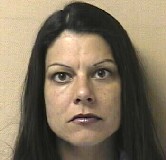
Melissa Marvin
Homicide Andrea Yates
Homicide · USA · 2001
Andrea Pia Yates (born Andrea Pia Kennedy on July 2, 1964) was a former Houston…
5 victims
Andrea Yates
Homicide · USA · 2001
Andrea Pia Yates (born Andrea Pia Kennedy on July 2, 1964) was a former Houston…
5 victims
 Coleen Thompson
Homicide · USA · 2002
Coleen Thompson was a former intensive care nurse at Shady Grove Adventist Hosp…
5 victims
Coleen Thompson
Homicide · USA · 2002
Coleen Thompson was a former intensive care nurse at Shady Grove Adventist Hosp…
5 victims
 Christine Paolilla
Homicide · USA · 2003
Christine Marie Paolilla was an American woman born on Long Island, New York on…
4 victims
Christine Paolilla
Homicide · USA · 2003
Christine Marie Paolilla was an American woman born on Long Island, New York on…
4 victims
 Erin Caffey
Homicide · USA · 2008
Erin Caffey (juvenile daughter of Terry Caffey and Penny Caffey; charged in con…
3 victims
Erin Caffey
Homicide · USA · 2008
Erin Caffey (juvenile daughter of Terry Caffey and Penny Caffey; charged in con…
3 victims
 Lashaun Harris
Homicide · USA · 2005
Oct. 19, 2005 — A jury trial later concerned the drownings of three young sons…
3 victims
Lashaun Harris
Homicide · USA · 2005
Oct. 19, 2005 — A jury trial later concerned the drownings of three young sons…
3 victims
 Attina Cannaday
Homicide · USA · 1982
Attina Marie Cannaday was convicted in Harrison County Circuit Court of the kid…
1 victim
Attina Cannaday
Homicide · USA · 1982
Attina Marie Cannaday was convicted in Harrison County Circuit Court of the kid…
1 victim
 Askari Abdullah Muhammad
Murderer · USA · 1974
Name: Askari Abdullah Muhammad Also known as: Thomas Knight Gender: male Date o…
4 victims
Askari Abdullah Muhammad
Murderer · USA · 1974
Name: Askari Abdullah Muhammad Also known as: Thomas Knight Gender: male Date o…
4 victims
 Patricia Columbo
Murderer · USA · 1976
Patricia Columbo and Frank DeLuca were convicted after a jury trial of three co…
3 victims
Patricia Columbo
Murderer · USA · 1976
Patricia Columbo and Frank DeLuca were convicted after a jury trial of three co…
3 victims
 Richard Lynn Bible
Murderer · USA · 1988
Richard Lynn Bible was the defendant. Jennifer Wilson was the victim. · May 198…
1 victim
Richard Lynn Bible
Murderer · USA · 1988
Richard Lynn Bible was the defendant. Jennifer Wilson was the victim. · May 198…
1 victim
 Jerry Lynn McCracken
Mass murderer · USA · 1990
Jerry Lynn McCracken was an Oklahoma death row inmate executed by lethal inject…
4 victims
Jerry Lynn McCracken
Mass murderer · USA · 1990
Jerry Lynn McCracken was an Oklahoma death row inmate executed by lethal inject…
4 victims
- Gender
- female
- Country
- USA
- Location
- Kill Devil Hills, Dare County, North Carolina, USA
- Date of birth
- June 17, 1969
- Age at first offence
- 30
- Characteristics
- drunken rage, alcohol, history of mental illness, the bodies were never found
- Victim profile
- Megan Blong, Amanda Geiger, Angie McGrady and Shana Lawler ( all were 17)
- Method of murder
- Car collision
- Date(s) of murder
- April 6, 1999
- Years active
- 1999
- Date of arrest
- Same day
- Status
-
Imprisoned
Sentenced to 60 years in prison on January 15, 2000
Background
Melissa Lynn Marvin was a 29-year-old waitress and amateur surfer at the time of a drunk-driving crash in 1999. She was also described as a 30-year-old Kitty Hawk waitress in court coverage.
The offence
At approximately noon on 6 April 1999, Melissa Lynn Marvin went to a bar in Nags Head and consumed two margaritas without eating. At approximately 1:00 p.m., she went to a restaurant, ordered a Rumple Minze, a 100-proof alcoholic beverage served "straight-up" in a shot glass, and consumed three shots, also without eating. A bartender warned her against trying to drive to Williamsburg, where she was going to a concert.
At approximately 2:50 p.m., witnesses saw Marvin’s sport utility vehicle weaving through traffic on Highway 158 North in Kill Devil Hills, traveling between 50–60 mph in a 50 mph zone, with her left foot on the dash. She ran a red light and collided with a car in which five teenagers were traveling. Four of the teens were killed and one was seriously injured. Marvin sustained minor injuries.
Four counts of second-degree murder and one count of assault with a deadly weapon inflicting serious bodily injury were involved in the case. She was charged with four counts of second-degree murder and one count of assault with a deadly weapon inflicting serious injury in the crash that killed four teen-agers.
The victims were:
- Megan Blong
- Angela McGrady
- Amanda Geiger
- Shana Lawler
- Michael Horner (seriously injured; survived)
Megan Blong, Angela McGrady and Amanda Geiger were from Medford, N.J., and were killed immediately. Shana Lawler, of Colington, N.C., died six days later. Michael Horner, also from Medford, was critically injured.
Investigation
Tests 4-1/2 hours after the crash revealed that Marvin had a blood-alcohol concentration of 0.21, making her level an estimated 0.28 when she had hit the teens, nearly four times the legal limit for driving.
In appellate discussion of the trial evidence, a bartender and other witnesses testified about the drinks Marvin consumed before driving. A bartender at the Nags Head bar testified that he bought her a margarita (one of two she consumed at noon without eating) because she was a friend and a regular. The bartender at the next restaurant where she consumed three drinks without eating testified that he warned her against driving.
Witnesses described her driving as erratic, with frequent lane-changing and excessive speed, including testimony that Marvin drove with her left foot up on her sport utility vehicle's dashboard.
Arrest
After the fatal collision, Officer Liverman arrested Marvin following the traffic accident on 6 April 1999. Trooper Shelton Smith of the North Carolina State Highway Patrol testified that he stopped Marvin at 10:15 p.m. on 28 June 1996 after she cut off another vehicle at a high rate of speed; he smelled alcohol on her breath and asked if she had anything to drink. Marvin responded that she had a couple of beers. Trooper Smith placed Marvin under arrest after observing her bloodshot eyes and red face.
Trooper Smith testified that when Marvin realized she was under arrest for DWI, she began crying and voluntarily told Trooper Smith that:
he and her boyfriend had gotten in a fight. She had left the residence. She was headed to, as I understand it, her place of employment which at the time, I believe, was Black Pelican, to have a few drinks because the boyfriend--is what she told me, was upset because she had been surfing all day and had started drinking approximately 2 o'clock that afternoon and she was tired of arguing and fussing so she had to get out of the house.
Witness testimony also addressed Marvin’s prior driving behavior and impaired driving history. The appellate decision described that Marvin had prior convictions for careless and reckless driving connected to DWI charges.
Trial
The trial attracted national media attention, including Court TV. Jurors deliberated slightly over three hours Friday before returning verdicts late Friday.
In the course of the trial, witnesses told the court that Marvin drank two margaritas and three shots of 100-proof schnapps between noon and 2 p.m.—less than an hour before the crash in Kill Devil Hills. Marvin did not testify in her own defense.
A sport utility vehicle driven by Marvin was described as barreling through the opposing red light and colliding with a car carrying five 17-year-olds.
Verdicts were returned of guilty on all counts, including:
- four counts of second-degree murder
- one count of assault with a deadly weapon inflicting serious bodily injury
During her sentencing, Marvin was described as tearful and as having pleaded with the judge for mercy and apologized to the victims’ families. She had not testified during the trial. At the sentencing, she pleaded:
"I'm sorry for everything that happened,"
"I never intended to hurt anyone. There's not a malicious bone in my body."
In later sentencing coverage, Marvin made additional remarks, including:
"I'm so sorry for everything that happened,' she said, sobbing and leaning intently toward the families of the victims.
"What happened was a tragedy, and it was an accident. It was not intentional,' she said, her voice rising and tears streaming down her face.
"It's not OK that they're dead, and it's not OK that Michael was hurt. I just hope that one day you will be OK, and I pray for you."
Sentencing
On January 15, 2000, Superior Court Judge Jerry R. Tillett sentenced Melissa Lynn Marvin to 15 years for each fatality, to be served consecutively, producing a total of 60 years.
Appellate sentencing details described a structured sentencing calculation of 174 to 218 months for each of the four counts of second-degree murder, to be served consecutively, and 24 to 29 months for the assault, for a total minimum term of 60 years. The judge said that under the state’s current sentencing rules, Marvin would not receive parole.
Judge Jerry Tillett said he wanted to recognize the individual value of each of the lost lives. He also stated:
"I don't know how I could have said to one parent your child's life didn't matter,"
In another sentencing coverage, Tillett was quoted as:
Tillett also said it was necessary to consider each charge separately and on its own merit, which was why the sentences had to be served consecutively.
During sentencing, Marvin was described as apologizing and pleading for mercy. Marvin’s attorney was Michael Sanders. Assistant District Attorneys included Robert Trivette (described as one of two assistant district attorneys who prosecuted the case).
Appeals
Marvin appealed her conviction and sentence. The appeal was heard in the Court of Appeals on 17 October 2001, and the case included discussion of evidentiary issues and prosecutorial argument.
The appellate decision described two combined issues:
- whether the defendant was prejudiced by the admission of evidence of defendant's prior convictions and conduct underlying those convictions
- whether the defendant was prejudiced by the prosecutor's arguments based on evidence not in the record or that had been excluded
Prior convictions and conduct
The appellate court addressed admissibility under Rule 404(b) and Rule 403 balancing for evidence of prior impaired-driving-related convictions and underlying conduct. The appellate decision discussed that Marvin was charged with DWI in 1991 and 1996 but convicted both times of careless and reckless driving. It described that the trial court properly allowed evidence of her conduct at the time of each DWI charge and the subsequent convictions of careless and reckless driving to establish malice.
The appellate decision referenced prior cases including State v. Miller and State v. McBride, describing admission of prior convictions and underlying conduct to establish malice in second-degree murder cases.
The appellate decision addressed a jury instruction stating that there was evidence "tending to show that the defendant has previously committed two offenses of driving while subject to an impairing substance prior to these charges, and have been convicted of two charges of reckless driving . . . ." It also quoted the trial court’s limiting instruction:
This evidence is not evidence of the defendant's character nor is it offered to show that . . . the defendant acted in conformity therewith.
Instead, this evidence was received solely for the purpose of showing that there existed in the mind of the defendant a particular mental state, that of malice.
If you believe such evidence, you may consider it but only for the limited purpose for which it was received.
Prosecutor’s closing argument
The appellate decision described Marvin’s claim that the State’s closing argument referred to voir dire testimony of reserve Deputy Sheriff Ted Kearns about Marvin surfing with the "odor of alcohol" about a week before the accident. The trial court had sustained an objection to the proffer as inadmissible character evidence under 404(b).
The appellate decision found no error because the record contained other evidence sufficient to support the State’s argument. The appellate decision quoted the State’s closing argument:
You know, it's one thing to surf drunk at the First Street Beach Access . . . o surf with alcohol in your system if you want to, to rip the waves and curl where no one can get hurt. But [U.S.] 158 is not the Atlantic Ocean and a Montero is not a surfboard. Context, behavior and attitude. That is malice. And that is why she's guilty of murder.
In connection with the record, Trooper Shelton Smith’s testimony about the 28 June 1996 stop and Marvin’s statements after being placed under arrest were described, as well as Officer Liverman’s testimony that he knew Marvin because he had seen her surfing at the First Street beach access. Additional evidence described included:
- the bartender testimony about buying a margarita and about warnings against driving
- the owner of a surf shop who testified he had known Marvin for years and that just before the accident she stopped by to borrow surfing videos for a middle school surf club
The appellate decision stated that the closing argument statements were reasonably inferred from and properly supported by factual evidence before the jury and concluded: "NO ERROR."
Outcome
The appellate court found no error and affirmed the judgment entered 15 January 2000 by Judge Jerry R. Tillett in Dare County Superior Court.
Aftermath
The crash site included four roadside crosses and memorial flowers. A witness statement from Shana’s family described the emotional impact of the deaths and the delay since the crash, including that the Lawlers had moved from New Jersey to the Outer Banks in August 1998 and were visiting when Shana died. Erin Lawler described a continuing sense of immediacy and loss.
Megan Blong, Angela McGrady, Amanda Geiger and Shana Lawler were mourned with memorial crosses at the location of the crash, and Mothers Against Drunk Driving red buttons were distributed with the statement "A drunk driver killed somebody I love." Brenda Lawler, Shana’s mother, said:
"I believe Miss Marvin needs to be kept off the road for a long time,"
Paul Lawler, Shana’s father, said Dare County courts had been too lenient with alcohol-related driving offenses:
"Littering seems to be a more serious penalty. A liberal attitude toward drunken driving does and will affect each one of us."
Joan Forrest, Marvin’s mother, said Marvin expressed regret and sadness:
"She said, `Mom, why couldn't it be me?'" "She has never shown anything but compassion and remorse."
A friend who worked at 1587 Restaurant in Manteo with Marvin said:
"She's a good person,' said Ann Pond. 'She's not a bad person at all. I know she didn't mean for any of this to happen at all."
Other details
Marvin had a dog named Trixie. Witnesses after the wreck said Marvin repeatedly asked about her dog, which survived. Marvin was described as a competitive surfer and as having lived on the Outer Banks for 10 years.
Marvin was initially charged with three counts of felony death by vehicle based on impaired driving and one count each of driving while impaired, running a red light, exceeding a safe speed, and reckless driving. She was indicted on four counts of second-degree murder and one count of assault with a deadly weapon inflicting serious injury.
Marvin raised fifteen assignments of error in the Record on Appeal but argued only seven in her brief; eight additional assignments were deemed abandoned under N.C. R. App. P. 28(a). The appellate decision also stated that Marvin abandoned the second argument in her brief at oral argument, including two assignments of error, which were deemed abandoned.
Spotted an error, or have more information about this case?