
Brenda Wiley
Homicide Christine Falling
Homicide · USA · 1980
Christine Falling (1980-1982) was a 17-year-old babysitter from Perry, Florida.…
5 victims
Christine Falling
Homicide · USA · 1980
Christine Falling (1980-1982) was a 17-year-old babysitter from Perry, Florida.…
5 victims
 Melissa Marvin
Homicide · USA · 1999
Melissa Lynn Marvin was a 29-year-old waitress and amateur surfer at the time o…
4 victims
Melissa Marvin
Homicide · USA · 1999
Melissa Lynn Marvin was a 29-year-old waitress and amateur surfer at the time o…
4 victims
 Roxanne Severcool
Homicide · USA · 1980
Defendant: Roxanne Severcool (juvenile offender) · Co-defendant: Robert Fadden…
3 victims
Roxanne Severcool
Homicide · USA · 1980
Defendant: Roxanne Severcool (juvenile offender) · Co-defendant: Robert Fadden…
3 victims
 Kathleen Hagen
Homicide · USA · 2000
August 2000 — Kathleen Hagen smothered her parents, Idella Hagen (92) and James…
2 victims
Kathleen Hagen
Homicide · USA · 2000
August 2000 — Kathleen Hagen smothered her parents, Idella Hagen (92) and James…
2 victims
 Bernard Middleton
Murderer · USA · 1995
Bernard Middleton was sentenced to 50 years in prison in 2003. He had been char…
1 victim
Bernard Middleton
Murderer · USA · 1995
Bernard Middleton was sentenced to 50 years in prison in 2003. He had been char…
1 victim
 Richard Wade Farley
Mass murderer · USA · 1988
Richard Wade Farley (born 1948) was an American convicted mass murderer. He sta…
7 victims
Richard Wade Farley
Mass murderer · USA · 1988
Richard Wade Farley (born 1948) was an American convicted mass murderer. He sta…
7 victims
 Roderick Abeyta
Murderer · USA · 1989
Roderick Abeyta was executed in Nevada on October 5, 1998 for the murder of his…
1 victim
Roderick Abeyta
Murderer · USA · 1989
Roderick Abeyta was executed in Nevada on October 5, 1998 for the murder of his…
1 victim
 Maurice Boucher
Murderer · Canada · 1997
Maurice "Mom" Boucher (born June 21, 1953) was a convicted murderer, a reputed…
2 victims
Maurice Boucher
Murderer · Canada · 1997
Maurice "Mom" Boucher (born June 21, 1953) was a convicted murderer, a reputed…
2 victims
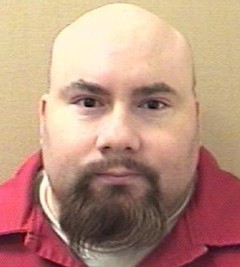 Archie Lee Billings
Murderer · 1995
Archie Lee Billings was convicted in North Carolina for crimes including first-…
1 victim
Archie Lee Billings
Murderer · 1995
Archie Lee Billings was convicted in North Carolina for crimes including first-…
1 victim
- Gender
- female
- Country
- USA
- Location
- Delaware Township, Hunterdon County, New Jersey , USA
- Date of birth
- 1975
- Age at first offence
- 15
- Characteristics
- juvenile (15), parricide
- Victim profile
- Her mother, Bonnie Wiley, 40, and brother, Kevin Wiley, 14
- Method of murder
- Stabbing with knife
- Date(s) of murder
- November 8, 1990
- Years active
- 1990
- Date of arrest
- —
- Status
-
Life imprisonment
Sentenced to concurrent life sentences with a thirty-year period of parole ineligibility in 1992
Overview
Brenda Wiley was convicted in 1992 of fatally stabbing her mother, Bonnie Wiley, and her brother, Kevin Wiley. She was fifteen at the time of the killings, was tried as an adult after a contested waiver hearing, and was sentenced to concurrent life sentences with a thirty-year period of parole ineligibility. Multiple post-conviction and sentence-related challenges were denied, including the most recent denial by the Appellate Division of the Superior Court of New Jersey on February 24, 2012.
Background
Brenda Wiley was fifteen years old in 1990 when she killed her mother, Bonnie Wiley, and her fourteen-year-old brother, Kevin Wiley. After a contested hearing, the Family Part judge waived jurisdiction, and Wiley was tried in the Law Division.
Before the murders, Wiley had been grounded over her relationship with an 18-year-old who testified that he would often sneak into her bedroom to spend the night with her. According to testimony at the trial, her parents asked the boy to stop seeing their daughter.
Wiley described the killings in taped interviews. She said she killed her mother because she “kept ragging on me” and “wouldn’t let me do anything anymore.” She said she killed her brother because he “made fun of me again, as usual.” She had planned to kill her father, but he was at work at the time.
The offence
Brenda Wiley killed her mother, Bonnie Wiley, and her brother, Kevin Wiley.
In taped interviews, Wiley described hitting her brother over the head with a glass soda bottle, then stabbing him in the neck with a kitchen knife. She put his body in a sleeping bag and covered his head with a plastic trash bag.
Wiley said she then prepared to kill her mother, who was outside in a greenhouse at the family’s nursery near Rosemont. Wiley said she got an iron bar from a kitchen closet. When her mother came in the back door, Wiley told the detective she hit her mother on the head then stabbed her repeatedly. Afterward she cleaned up the blood with a towel and showered.
Investigation
Brenda Wiley’s statement to police was challenged at trial and on direct appeal.
In taped interviews, Wiley gave details about the killings, including striking her brother with a glass soda bottle, stabbing him in the neck with a kitchen knife, placing his body in a sleeping bag, and covering his head with a plastic trash bag. She also described preparing to kill her mother and said she used an iron bar and stabbed her repeatedly, then cleaned up blood with a towel and showered.
Trial
Wiley was convicted of the purposeful and knowing murders of her brother and mother. She was sentenced to concurrent life sentences with a thirty-year period of parole ineligibility.
On direct appeal, Wiley argued:
- The Family Part judge erred, procedurally and substantively, in ordering the waiver.
- Her statement to the police should have been excluded.
- The jury instructions regarding diminished capacity were erroneous.
- The proceedings were fundamentally unfair because the State allegedly took a different factual position at the trial than it took at the waiver hearing.
The Appellate Division affirmed by way of an unpublished opinion in 1994, and the Supreme Court denied certification.
Quotes
Wiley said she killed her mother because she “kept ragging on me” and “wouldn’t let me do anything anymore.” Wiley said she killed her brother because he “made fun of me again, as usual.”
Sentencing
Brenda Wiley was sentenced on January 24, 1992.
Her emotional pleas at sentencing had little effect.
She received a thirty-years-to-life sentence / “concurrent life sentences with a thirty-year period of parole ineligibility.” The record described her as serving two concurrent life sentences and not being eligible for parole until at least 2022.
Post-conviction relief and habeas proceedings
First petition for post-conviction relief (1997)
Wiley filed a petition for post-conviction relief in 1997, claiming her attorney was ineffective. The petition was denied, and the appellate court affirmed the denial.
The decision described that at that time Wiley argued that her counsel was ineffective in failing:
- To call an expert witness at the waiver hearing.
- To move to change venue.
- To advise defendant regarding the consequences of testifying at the waiver hearing.
Motion filed by attorneys (January 1997)
In January 1997, attorneys Henry Price and Matthew Boylan filed a motion claiming that Wiley’s legal counsel at trial, public defender Nicholas DiChiara, was “ineffective.”
The motion described ineffective-assistance contentions including that Wiley was questioned by authorities without having an “unbiased adult” present. The record described that her father was there when his daughter was interrogated by police. Price said he was a victim and therefore biased.
The record also described that, according to court papers, Wiley wasn’t informed she could testify at her “waiver” hearing, which determined that she would be tried as an adult. It also stated that Wiley’s attorney didn’t try to have the trial moved to another county due to pre-trial publicity, and that no expert witness testified at her waiver hearing regarding a severe personality disorder.
Appeals after the first PCR
An appeal was filed several months after the conviction; Nicholas DiChiara died in 1995. Before Di Chiara died, Price agreed to a request from Wiley’s father, Mark, to take over the appeal.
In 1994, a three-judge panel denied the appeal.
The Supreme Court denied certification after the denial of Wiley’s first PCR petition.
Second petition for post-conviction relief (2005; denied by order April 4, 2006)
Wiley filed a second PCR petition in 2005, more than thirteen years after the judgment of conviction.
Her second PCR petition argued:
- New evidence regarding her mental condition at the time of the murders warranted a new waiver hearing or a new trial.
- The life sentences imposed constituted a violation of the Eighth Amendment.
- N.J.S.A. 2A:4A-26 unconstitutionally shifted the burden of proof to her at the waiver hearing.
- An evidentiary hearing was required to explore her ineffective assistance of counsel arguments.
Judge Roger F. Mahon denied the second PCR petition by an order entered on April 4, 2006.
On appeal, Wiley argued that: I. The trial court erred by not ordering a sua sponte hearing into her mental illness and not doing so produced an unjust result. II. Imposition of court rule 4:50-1(B) should be applied. III. Because Wiley was provided ineffective assistance of counsel and prejudiced thereby, the appellate court should grant her motion for post-conviction relief. In the alternative, because Wiley had presented a prima facie proof that she had been deprived effective assistance of counsel, the appellate court should grant her an evidentiary hearing.
The appellate decision affirmed substantially for the reasons set forth in Judge Mahon’s written decision, including that the petition was procedurally barred due to the absence of excusable neglect or exceptional circumstances. Judge Mahon also concluded that:
- The medical information presented did not constitute newly discovered evidence or shed additional light on issues previously adjudicated.
- The life sentence was legal and constitutional, relying on State v. King, 372 N.J. Super. 227 (App. Div. 2004), certif. denied, 185 N.J. 266 (2005).
- N.J.S.A. 2A:4A-26 was constitutional, as determined in State in the Interest of A.L., 271 N.J. Super. 192 (App. Div. 1994).
- The current ineffective-assistance claims were the same claims previously adjudicated and had merely been “repackaged.”
The Appellate Division affirmed. The decision in that appeal was decided December 29, 2006, with submission on December 13, 2006.
Appeals and motions
Motion for reconsideration of sentence (January 2011; denied Feb. 17, 2011)
In January 2011, Wiley filed a motion for reconsideration of her sentence. The motion was denied on Feb. 17, 2011.
Wiley appealed the denial.
Latest appeal denied (Feb. 24, 2012)
The latest appeal filed by Wiley was denied by the Appellate Division on February 24, 2012.
In her appeal, Wiley argued that:
- The judge incorrectly denied her motion for reconsideration of her sentence.
- The prosecutor incorrectly declined to join in the motion.
- The motion for reconsideration should have been admissible under various rules.
The appellate judges stated: “We find insufficient merit in these arguments to warrant discussion in a written opinion,” and they affirmed the lower court ruling.
Other details
Prison and custody
Brenda Wiley was serving sentences at Edna Mahon Correctional Facility for Women in Union Township.
Trial proceedings and waiver jurisdiction
The record described that Wiley was fifteen in 1990, and that her waiver hearing led to jurisdiction being waived so she was tried in the Law Division.
Parole eligibility
The record stated that Wiley won’t be eligible for parole until at least 2022.
Case docket and procedural identifiers
- SUPERIOR COURT OF NEW JERSEY APPELLATE DIVISION DOCKET NO. A-4543-05T54543-05T5
- Indictment No. 91-06-0076-I
- Submitted December 13, 2006
- Decided December 29, 2006
- Before Judges Wefing and C.S. Fisher
- Defendant-Appellant: Brenda Wiley (appellant pro se)
- Attorney General: Stuart Rabner, with Carol M. Henderson, Assistant Attorney General (of counsel and on the brief)
- Per Curiam language: “In this appeal, we review the denial of defendant's second petition for post-conviction relief (PCR). After careful consideration of the record in light of the contentions raised, we affirm substantially for the reasons set forth by Judge Roger F. Mahon in his written decision of April 4, 2006.”
Named individuals in proceedings
- Bonnie Wiley (mother; victim)
- Kevin Wiley (brother; victim)
- Mark (Wiley’s father, mentioned in relation to the appeal request)
- Nicholas DiChiara (public defender; Wiley’s trial counsel referenced in post-conviction filings)
- Henry Price (attorney)
- Matthew Boylan (attorney)
- Detective (referenced as the person Wiley told details to during police interview)
- Judge Roger F. Mahon (trial judge referenced for the April 4, 2006 order)
- Judge Mahon (referenced for procedural-bar and legal conclusions)
- Judges Wefing and C.S. Fisher (Appellate Division judges)
- Stuart Rabner (Attorney General referenced in appellate counsel)
- Carol M. Henderson (Assistant Attorney General referenced as of counsel and on the brief)
Statements about motives and planning
Wiley said she had planned to kill her father, but he was at work at the time.


Spotted an error, or have more information about this case?