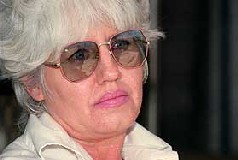
Lynda Block
Murderer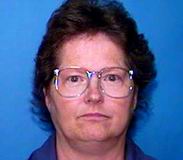 Bobbie Sue Terrell
Murderer · USA · 1984
Bobbie Sue Dudley Terrell was a Pinellas County nurse and worked as the night s…
12 victims
Bobbie Sue Terrell
Murderer · USA · 1984
Bobbie Sue Dudley Terrell was a Pinellas County nurse and worked as the night s…
12 victims
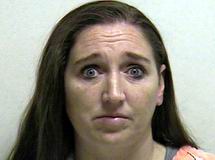 Megan Huntsman
Murderer · USA · 1996
Megan Huntsman was 40 at sentencing. She was a mother of three children who wer…
6 victims
Megan Huntsman
Murderer · USA · 1996
Megan Huntsman was 40 at sentencing. She was a mother of three children who wer…
6 victims
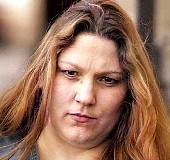 Angela Johnson
Murderer · USA · 1993
Angela Jane Johnson was convicted in federal court of aiding and abetting the m…
5 victims
Angela Johnson
Murderer · USA · 1993
Angela Jane Johnson was convicted in federal court of aiding and abetting the m…
5 victims
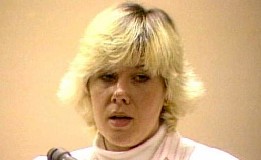 Catherine May Wood
Murderer · USA · 1987
Catherine May Wood was an American caregiver who worked at the Alpine Manor Nur…
5 victims
Catherine May Wood
Murderer · USA · 1987
Catherine May Wood was an American caregiver who worked at the Alpine Manor Nur…
5 victims
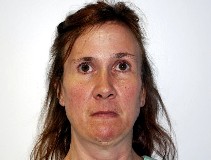 Michele Kalina
Murderer · USA · 1996
Michele Kalina pleaded guilty to murder for one of five infants she initially w…
5 victims
Michele Kalina
Murderer · USA · 1996
Michele Kalina pleaded guilty to murder for one of five infants she initially w…
5 victims
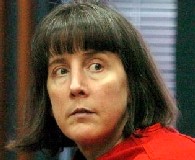 Amy Bishop
Murderer · USA · 1986
Amy Bishop — biology professor and perpetrator · James Anderson — Bishop’s husb…
4 victims
Amy Bishop
Murderer · USA · 1986
Amy Bishop — biology professor and perpetrator · James Anderson — Bishop’s husb…
4 victims
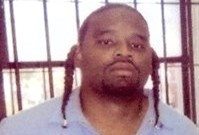 Donald Ray DeBose
Murderer · USA · 1997
Donald Ray DeBose was sentenced to death on July 21, 1999. Debose robbed a woma…
1 victim
Donald Ray DeBose
Murderer · USA · 1997
Donald Ray DeBose was sentenced to death on July 21, 1999. Debose robbed a woma…
1 victim
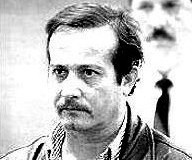 Ricardo Caputo
Serial killer · USA / Mexico · 1971
Ricardo Caputo was known to authorities as "The Lady Killer." He was sentenced…
4 victims
Ricardo Caputo
Serial killer · USA / Mexico · 1971
Ricardo Caputo was known to authorities as "The Lady Killer." He was sentenced…
4 victims
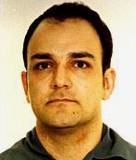 Gerald Stano
Serial killer · USA · 1969
Gerald Eugene Stano (September 12, 1951 – March 23, 1998) was executed by elect…
41 victims
Gerald Stano
Serial killer · USA · 1969
Gerald Eugene Stano (September 12, 1951 – March 23, 1998) was executed by elect…
41 victims
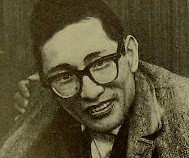 Akira Nishiguchi
Spree killer · Japan · 1963
Akira Nishiguchi (西口 彰, Nishiguchi Akira) was a Japanese serial killer and frau…
5 victims
Akira Nishiguchi
Spree killer · Japan · 1963
Akira Nishiguchi (西口 彰, Nishiguchi Akira) was a Japanese serial killer and frau…
5 victims
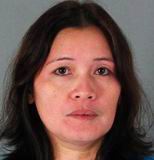 Jesusa Tatad
Murderer · USA · 2011
Jesusa Tatad was 41 years old at the time of her sentencing. She had divorced R…
1 victim
Jesusa Tatad
Murderer · USA · 2011
Jesusa Tatad was 41 years old at the time of her sentencing. She had divorced R…
1 victim
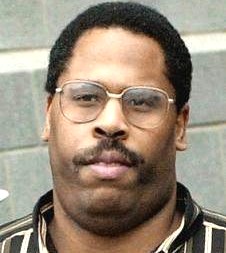 Kendall François
Serial killer · USA · 1996
Kendall François was born July 26, 1971. He lived in Poughkeepsie, New York. He…
8 victims
Kendall François
Serial killer · USA · 1996
Kendall François was born July 26, 1971. He lived in Poughkeepsie, New York. He…
8 victims
- Gender
- female
- Country
- USA
- Location
- Lee County, Alabama, USA
- Date of birth
- February 8, 1948
- Age at first offence
- 45
- Characteristics
- serial rapist, escape
- Victim profile
- Roger Lamar Motley, 39 ( Opelika Police Sergeant )
- Method of murder
- Shooting
- Date(s) of murder
- October 4, 1993
- Years active
- 1993
- Date of arrest
- October 1993
- Status
-
Executed
Executed by electrocution in Alabama on May 10, 2002
Case record: Lynda Block
Background
Lynda Block was convicted for the murder of Opelika Police Sgt. Roger Lamar Motley.
Block’s common-law husband, George Sibley Jr., was executed by lethal injection for the same crime on August 4, 2005.
Block and Sibley lived in Orlando, Florida, and were on the run after failing to appear on a domestic battery charge in Florida. They fled Florida to avoid sentencing after a stabbing incident involving Block’s 79-year-old former husband, and they also faced assault convictions.
Block was held on death row at the Julia Tutwiler Prison for Women in Wetumpka, Alabama. She entered death row on December 21, 1994. Block was listed in prison records as Lynda Block (also described as Lynda Lyon Block).
Block’s common-law husband, George Sibley, also received a death sentence and remained on death row.
During her trial, Block acted as her own attorney. She argued she did not receive a fair trial due to her antigovernment beliefs. She refused to cooperate with her court-appointed attorney after trial, and she refused legal assistance during and after her trial. She also took no part in the many appeal opportunities afforded death-row inmates.
Block declined to accept the validity of Alabama’s judicial system, claiming that Alabama never became a state again after the Civil War. She also claimed that Alabama lacked authority to try her because Alabama did not properly re-admit into the Union after the American Civil War.
The offence
On October 4, 1993, Block and George Sibley were involved in a shooting in a Wal-Mart parking lot in Opelika, Alabama, resulting in the death of Opelika Police Sgt. Roger Lamar Motley.
A passer-by expressed concern to Opelika police Sergeant Roger Motley about Block’s son, who was in a parked car with Block’s common-law husband, George Sibley, and appeared to need help. A woman was worried about the child and feared the family was living in their car, and asked Motley to check on them.
Motley approached the couple’s car after someone reported a car in the parking lot with a little boy inside. Block used a pay telephone in the period immediately surrounding the confrontation.
Sibley had a gun and began firing at Motley after Motley asked for his driver’s license. Motley attempted to get away and ran behind his patrol vehicle for cover, and he returned fire.
Block heard the gunfire and ran toward Motley. She dropped the pay phone and pulled a 9mm Glock pistol from her bag and fired toward Motley.
Motley was mortally wounded in the chest. He was able to radio for help using the code “Double zero,” and he died in a nearby hospital that afternoon.
A statement given to the police following her arrest included that Block admitted firing at the officer three times. The fatal shot went through Motley’s chest from the front at a slight downward angle. The fatal bullet was never recovered, and tests were inconclusive as to which gun fired the fatal shot, though it appears from the physical evidence and testimony that Block most likely fired it.
At the time the incident occurred, the parking lot was crowded with vehicles and people, and numerous witnesses testified at trial as eyewitnesses to the shooting.
Investigation
A tape recording of radio contacts between Motley and the Opelika Police Department was admitted at trial and played for the benefit of the jury.
After the shooting, Block and Sibley sped away from the scene, and a high-speed chase led to them being stopped at a roadblock on Wire Road in Auburn, Alabama. The boy was released during the stop.
After a four-hour standoff, Block and Sibley surrendered to the police.
A search of the automobile of Block uncovered numerous weapons and large quantities of ammunition. Motley had several gunshot wounds.
Arrest
Block and Sibley were apprehended after surrendering following the roadblock on Wire Road in Auburn, Alabama.
Block had a son with her during the incident. She was using a pay telephone when the shooting occurred.
In the letters Block later sent to friends and supporters, she described Motley as a “bad cop” and a wife beater with multiple complaints against him. She claimed she was prohibited from bringing up his record in court. His personnel file made no mention of any misbehavior. Motley’s wife, Juanita Motley, said he was a kind and patient man and also stated she received sympathy from a man who had been a prisoner in the Opelika jail when Motley was in charge.
Trial
Block and Sibley were convicted of capital murder and sentenced to death.
Block was convicted of capital murder under § 13A-5-40(a)(5), Ala. Code 1975. The jury recommended the death penalty by a 10-2 vote, and the trial court imposed the death penalty after a sentencing hearing.
During the trial period, Sibley and Block stated they fired at Motley and his patrol car in self-defense after the officer touched his holster. Witnesses said Sibley fired shots first and Block joined in the shootout after the officer was wounded.
The courts described the forensics evidence as not determining who fired the fatal shots. It was stated that tests were inconclusive as to which gun fired the fatal shot, and the fatal bullet was never recovered.
Block waived her time during sentencing. She told the courtroom that she had presented everything she had at trial, and she declined to beg for her life.
Block declined the offer to make a final statement before execution.
Block also repeatedly refused legal representation during her own case and refused to cooperate with court-appointed counsel during and after her trial.
Sentencing
Block and Sibley both received death sentences. The jury recommended death for Block by a 10-2 vote, and the trial court imposed the death penalty after a sentencing hearing.
Block waived her appeals, was described as having been completely non-cooperative with her court-appointed attorney, and did not participate in appeal opportunities afforded to death-row inmates.
Appeals
Block’s direct appeal included:
- Block v. State, 744 So.2d 404 (Ala. Crim. App. 1996) (Direct Appeal).
On remand:
- Ex Parte Block, 744 So.2d 412 (Ala. Crim. App. 1996) (On Remand).
The Alabama Supreme Court set an execution date and later upheld Block’s death sentence (described as upheld in 1999). Sibley’s death sentence was also upheld (described as upheld in 2000).
Block’s execution date had been postponed once, described as an April 19 execution date being postponed by the Alabama Supreme Court. No reason was given for the postponement.
A judge denied a request by WSFA/Channel 12 to interview Block before her execution; Montgomery County Circuit Judge Charles Price declined to remove the ban on media contact, agreeing it was based on security and control reasons rather than content-related reasons.
Outcome
Block was executed by electrocution in Alabama on May 10, 2002.
Block’s execution took place at Holman Correctional Facility in Alabama (described as Atmore). She was strapped into “Big Yellow Mama,” the electric chair. The current was turned on at 12:01 a.m., and she was pronounced dead at 12:10 a.m.
Block was wearing a white prison outfit with her shaved head covered with a black hood during the execution. She was read the death warrant while strapped to the chair and was asked if she had a final statement; she answered, “No,” and that was that. It was stated that Block declined the offer to make a final statement.
Before the execution, three friends visited Block in her final holding chamber for several hours. A spiritual adviser was also present. Block did not request a last meal.
Witnesses to the execution included members of Roger Motley’s family: Motley’s sister Betty Anne Foshee and his mother, Anne Motley.
Block was described as the first woman executed in Alabama since 1957. She was also described as the 9th female executed in the U.S. since reinstatement of the death penalty in 1976.
During execution-related reports, Commissioner Michael Haley was quoted describing that Block walked willingly to the execution chamber and displayed no emotion to the very end, and John Hamm, Department of Corrections spokesman, was quoted stating that Block died at 12:10 a.m. She was described as having a “very blank, emotionless stare.”
Quotes preserved:
“She had a very blank, emotionless stare,” Haley said.
“The execution was routine. There was never any unexpected incidents.”
“She was read the death warrant (while strapped to the chair) and asked if she had a final statement,” said Brian Corbett, an Alabama Corrections Department spokesman who witnessed the execution. “She said, ‘No,’ and that was that.”
“I can tell you her demeanor was stoic,” said Corbett. “She displayed no emotion. She had very wide eyes with a defiant look on her face. She did make eye contact with our commissioner (Corrections Commissioner Michael Haley) and it looked like she was trying to stare a hole straight through him.”
“I went as far as I could with this,” Juanita Motley told a reporter from the Birmingham News. “I went on in and I saw Lynda but when they pulled the hood over her head, I asked an officer to take me out.”
Aftermath
Block’s common-law husband, George Sibley Jr., was executed on August 4, 2005 by lethal injection for the same crime.
It was stated that Sibley had been transferred from Holman to another facility prior to Block’s execution, and that no execution date had been set for him at the time of Block’s scheduled execution.
Block declined to accept the validity of Alabama’s judicial system and refused to accept court authority because Alabama had not become a state again after the Civil War.
A journalist described Block’s execution as possibly the last person to be executed in the electric chair in Alabama, and also described a planned transition in Alabama’s execution method.
In the run-up to execution, Block’s refusal to accept legal counsel and refusal to pursue legal representation contributed to her described status of “no appeals pending.”
Other details
Block’s age was given as 54 in multiple descriptions and as 54 at the time of execution.
Block declined to accept the offer to make a final statement.
Block’s “Final Meal” was described as “None.”
Execution-related details included voltages and timing described as 2,050 volts applied for 20 seconds and then 250 volts for 100 seconds, with a current turned on at 12:01 a.m. and she pronounced dead at 12:10 a.m.
The electric chair in Alabama was described as “Yellow Mama.”
Spotted an error, or have more information about this case?