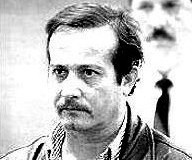
Ricardo Caputo
Serial killer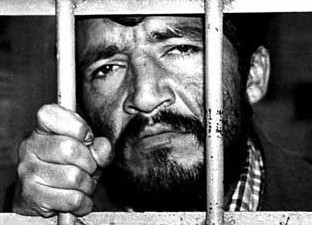 Pedro Alonso Lopez
Serial killer · Peru - Ecuador - Colombia · 1969
Name: Pedro Alonso Lopez · Nationality/Background: Colombian-born · Birth: born…
300 victims
Pedro Alonso Lopez
Serial killer · Peru - Ecuador - Colombia · 1969
Name: Pedro Alonso Lopez · Nationality/Background: Colombian-born · Birth: born…
300 victims
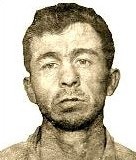 Donald Henry Gaskins
Serial killer · USA · 1969
Donald Henry Gaskins, also known as Donald “Pee Wee” Gaskins, was a serial kill…
200 victims
Donald Henry Gaskins
Serial killer · USA · 1969
Donald Henry Gaskins, also known as Donald “Pee Wee” Gaskins, was a serial kill…
200 victims
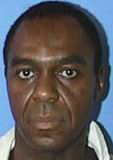 Carl Eugene Watts
Serial killer · USA · 1974
Carl Eugene Watts (born November 7, 1953; died September 21, 2007), also known…
100 victims
Carl Eugene Watts
Serial killer · USA · 1974
Carl Eugene Watts (born November 7, 1953; died September 21, 2007), also known…
100 victims
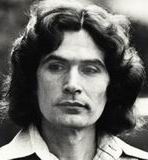 Rodney Alcala
Serial killer · USA · 1977
Rodney James Alcala (born August 23, 1943) was also known as Rodrigo Jacques Al…
100 victims
Rodney Alcala
Serial killer · USA · 1977
Rodney James Alcala (born August 23, 1943) was also known as Rodrigo Jacques Al…
100 victims
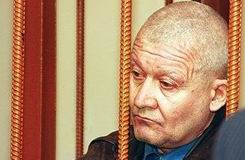 Serhiy Tkach
Serial killer · Ukraine · 1980
Serhiy Tkach (Russian: Серге́й Фёдорович Ткач, born 12 September 1952 in Kisely…
100 victims
Serhiy Tkach
Serial killer · Ukraine · 1980
Serhiy Tkach (Russian: Серге́й Фёдорович Ткач, born 12 September 1952 in Kisely…
100 victims
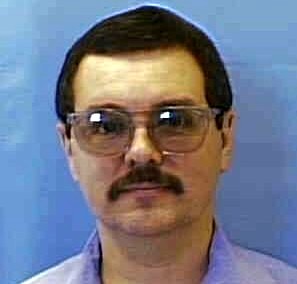 Donald Harvey
Serial killer · USA · 1970
Donald Harvey was known as an American serial killer and a self-professed “Ange…
87 victims
Donald Harvey
Serial killer · USA · 1970
Donald Harvey was known as an American serial killer and a self-professed “Ange…
87 victims
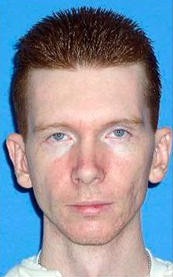 Robert James Neville
Murderer · USA · 1998
Robert James Neville was a white male laborer with red hair, blue eyes, and a h…
1 victim
Robert James Neville
Murderer · USA · 1998
Robert James Neville was a white male laborer with red hair, blue eyes, and a h…
1 victim
 Charlotte Corday
Murderer · France · 1793
Marie-Anne Charlotte Corday d'Armont (July 27, 1768 – July 17, 1793), known by…
1 victim
Charlotte Corday
Murderer · France · 1793
Marie-Anne Charlotte Corday d'Armont (July 27, 1768 – July 17, 1793), known by…
1 victim
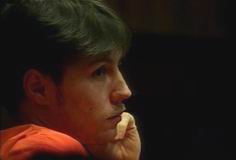 David Housler
Mass murderer? · USA · 1994
Court of Criminal Appeals of Tennessee: State of Tennessee v. David G. Housler…
4 victims
David Housler
Mass murderer? · USA · 1994
Court of Criminal Appeals of Tennessee: State of Tennessee v. David G. Housler…
4 victims
 Charles Franklin Smith
Murderer · USA · 1986
Charles Franklin Smith was the husband of 10 years of the murder victim, 27-yea…
1 victim
Charles Franklin Smith
Murderer · USA · 1986
Charles Franklin Smith was the husband of 10 years of the murder victim, 27-yea…
1 victim
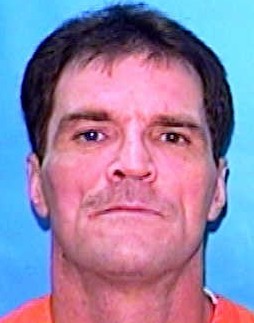 Gary Richard Whitton
Murderer · USA · 1990
Gary Richard Whitton was born on 02/04/59. He was tried in the First Judicial C…
1 victim
Gary Richard Whitton
Murderer · USA · 1990
Gary Richard Whitton was born on 02/04/59. He was tried in the First Judicial C…
1 victim
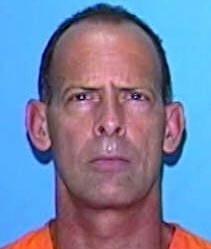 Jerry William Correll
Mass murderer · USA · 1985
Jerry William Correll was convicted and sentenced to death for the murders of h…
4 victims
Jerry William Correll
Mass murderer · USA · 1985
Jerry William Correll was convicted and sentenced to death for the murders of h…
4 victims
- Gender
- male
- Country
- USA / Mexico
- Location
- New York/California, USA / Mexico
- Date of birth
- 1949
- Age at first offence
- 22
- Characteristics
- fugitive
- Victim profile
- Nathalie Brown, 19 / Judith Becker, 26 / Barbara Ann Taylor, 28 / Laura Gomez, 23
- Method of murder
- Strangulation / St abbing with knife
- Date(s) of murder
- 1971 - 1977
- Years active
- 1971–1977
- Date of arrest
- January 18, 1994 (surrenders)
- Status
-
Died in custody
Sentenced to 25 years in prison in New York, 1995; died in prison in October 1997
Case overview
Ricardo Caputo was known to authorities as "The Lady Killer." He was sentenced to 25 years in prison in New York in 1995 and died in prison in October 1997.
He admitted to killing women in Yonkers, Mexico City, and San Francisco in the 1970s and to murdering his fiancee Natalie Brown in 1971. He also was described as having multiple personalities and as having been mentally ill.
Timeline
- 1970 — Ricardo Caputo moved to the United States and settled in New York City.
- May 20, 1949 — Ricardo Silvio Caputo was born in Mendoza, Argentina.
- July 31, 1971 — Natalie Brown was stabbed to death at her home in Flower Hill, L.I.; Caputo called the police and said, "I think I killed my girlfriend," and gave himself up.
- Four months later — Caputo was found incompetent to stand trial for the 1971 murder and was sent to Matteawan State Hospital, part of the state prison at Fishkill, N.Y.
- October 1973 — Caputo was transferred to the Manhattan Psychiatric Center on Wards Island in New York City.
- October 20, 1974 — Judith Becker was found in her apartment, severely beaten and strangled with a stocking.
- October 21, 1974 — Judith Becker, 26, was found in her apartment severely beaten and strangled with a stocking.
- 1975 (winter; about three months after fleeing) — Caputo fled to San Francisco where he killed Barbara Taylor in 1975.
- 1977 (Oct. 3, 1977) — Laura Gomez was found bludgeoned to death in their apartment in Mexico City.
- Aug. 2, 1983 — Jacqueline Bernard was found strangled in her apartment at 552 Riverside Drive.
- 1974 — Caputo escaped from a state hospital for the criminally insane.
- 1981 — Devan Green was a suspected victim in Los Angeles.
- 1983 — Jacqueline Bernard, 64, New York City (1983) was a suspected victim; Caputo was a suspect but was never charged.
- 1991 — Caputo was featured on the Fox television program "America's Most Wanted."
- 1994 (March) — Caputo surrendered to police and confessed to killings.
- 1994 (March 10, 1994) — Caputo turned himself in to the New York State Police and admitted to killing women in Yonkers, Mexico City, and San Francisco in the 1970s.
- 1995 (February 1, 1995) — Caputo pleaded guilty to manslaughter in the death of Natalie Brown.
- 1995 (April 6, 1995) — Caputo was sentenced to 8 1/2 to 25 years in prison.
- 1997 (October) — Caputo died in prison.
Background
Ricardo Caputo was born in Mendoza, Argentina. In 1970, he moved to the United States and settled in New York City.
He had been arrested in 1994 after approximately 20 years as a fugitive. At times, he was #1 on the FBI's 10 most wanted list. He remained a fugitive throughout the 1980s and finally surrendered to police in 1994.
Caputo was described as a smooth-talking con artist who used assumed identities and false papers during his fugitive life, and who traveled and worked under different names. He was said to have adopted 17 aliases and countless personas.
He was described as having three personalities in sessions and writings described by his lawyer and psychiatrist.
The offence
Natalie Brown (1971)
Caputo met Natalie Brown, who was 19 and living with her parents on Long Island. After they began dating and were engaged, on the night of July 31, 1971, Natalie Brown and Caputo were left at her home about 7:30 P.M. Caputo called the police an hour later and gave himself up.
William Coningsby, a retired Nassau County homicide detective, remembered that Caputo called the Sixth Precinct and said:
"I think I killed my girlfriend," and gave himself up
The body was found in the kitchen. Natalie Brown had been stabbed to death. There were indications of "a dispute about their continuing relationship." Caputo confessed and was charged with the murder. A subsequent court finding resulted in him being found incompetent to stand trial.
In court, Caputo pleaded guilty to manslaughter in the death of Natalie Brown. He confessed:
"I stabbed Natalie to death, and I was very emotionally disturbed at the time,"
Judith Becker (1974)
Judith Becker, 26, a psychologist who treated Caputo, was found in her apartment severely beaten and strangled with a stocking. The Yonkers police began looking for Caputo and for Ms. Becker's 1972 Plymouth Duster.
Caputo was said to have killed Becker in her apartment at her home in Yonkers.
Barbara Ann Taylor (1975)
After the beating death of Barbara Ann Taylor in San Francisco, the San Francisco police said their chief suspect was her boyfriend, identified as Ricardo Dunoguier, who disappeared after she died. The police believed Dunoguier was either Argentinian or Uruguayan, and a photo of him circulated by police looked very much like Caputo from 1974.
Caputo’s lawyer said Caputo fled to San Francisco and killed another woman, Barbara Taylor, in 1975.
Laura Gomez (1977)
In Mexico City, Caputo killed Laura Gomez. On Oct. 3, 1977, she was found bludgeoned to death in their apartment.
Jacqueline Bernard (1983) — suspected
Caputo was a suspect in the 1983 murder of Jacqueline Bernard, 64, in New York City. Caputo was never charged in connection with Bernard’s death. Bernard was a writer killed in her New York City apartment at 552 Riverside Drive, and was found strangled on Aug. 2, 1983.
Investigation
Caputo was sought as "The Lady Killer." During the 20-year fugitive period, his case was described as involving multiple escapes and multiple identities.
Capt. Walter Heesch of the state police stated that Caputo was actively wanted in Yonkers and in Nassau County and that both intended to prosecute him.
In relation to Caputo’s surrender and police involvement, Senior Investigator Kevin Cavanagh of the New York State police said:
"That's really not correct." and: "Arrangements were made for him to surrender," "We had no knowledge of the interview. We were waiting for the attorney to tell us where he'd be. As far as 'Prime Time Live' goes, I was just as surprised as anyone"
Joseph Surlak, a recently retired Yonkers police detective, said several law-enforcement officials spent half an hour talking with Caputo after his arrest, and that he understood they were not to interview him about the murders, but were allowed to answer questions about his years in hiding.
Captain Heesch said he had been in contact with the San Francisco police about Caputo being a possible suspect in the Taylor murder.
Arrest and surrender
Caputo flew from Argentina to New York and went to the Manhattan office of his lawyer, Michael Kennedy, then turned himself in to the police.
He was held without bail under medical observation in the Nassau County Jail. It was unclear if he would be tried for murder, and psychiatric tests were to determine whether he was competent to stand trial.
Caputo was described as looking pale and nervous in court, restrained by handcuffs and leg irons.
Trial and mental state proceedings
Incompetent to stand trial (1971 case)
On July 31, 1971, Natalie Brown was murdered and Caputo was arrested. Four months later, he was found incompetent to stand trial and was sent to Matteawan State Hospital, part of the state prison at Fishkill, N.Y.
At Matteawan he was treated for a time by Judith Becker, described as a staff psychologist.
Later, in October 1973, Caputo was transferred to the Manhattan Psychiatric Center on Wards Island. He was described as a model prisoner-patient and as receiving furloughs.
A later court proceeding reversing a 23-year-old decision addressed current competency. The reversal concerned whether Caputo was fit to stand trial.
Fitness to stand trial (1994)
On March 19, 1994, a judge in Nassau County found Ricardo S. Caputo fit to stand trial in the first of four murders he says he committed in the 1970s.
The judge, John Dunne, said a court-ordered psychiatric examination had recommended Caputo was:
"fit to precede to trial."
Under New York State law, the defendant had to pass tests that included understanding the nature of the proceedings and being able to assist in his defense.
Caputo’s lawyer said he might contest the decision and stated that if the case went to trial, Caputo would plead not guilty by reason of insanity.
Sentencing
Manslaughter plea — Natalie Brown (1995)
On February 1, 1995, Caputo pleaded guilty to manslaughter in the death of Natalie Brown.
Judge John P. Dunne scheduled sentencing for April 5. Caputo faced 8 1/2 to 25 years in prison, the maximum sentence for first-degree manslaughter.
A translator, Margarite Halikias, stood beside Caputo and rendered everything the judge said into English. Caputo spoke in English.
Sentence in Nassau County (April 6, 1995)
On April 6, 1995, Judge John P. Dunne sentenced Ricardo S. Caputo to 8 1/2 to 25 years in prison for the first of four murders he had said he committed more than 20 years earlier.
Caputo addressed the judge and said:
"I turned myself in to avoid any more killings and to say to the families of the victims that I am sorry," "I did what I did because I was sick, and I hope I can be cured while I'm incarcerated."
The judge responded by calling him "a brutal and cunning man" and said:
"Having led a life of murder, mayhem and manipulation for the past 25 years, it is obviously your belief that a few words of sympathy and mea culpa will make you a free man," "To the extent this court can, Ricardo Caputo, your home, to the hour of your last breath, shall be of stone and steel. This step, today, should be only the first of two, three or four more jail sentences which, consecutively and together, shall lead to the end of your life and beyond."
Aftermath and later status
Caputo later pleaded guilty to strangling his psychologist in 1974. On June 29, 1995, he pleaded guilty to strangling his psychologist in 1974.
The Westchester County District Attorney Jeanine Pirro said prosecutors had prepared to fight Caputo’s insanity claims at a trial in August and that they had not been negotiating with him:
"There is no real way to know why the defendant pleaded as charged," "We haven't been negotiating with him. We found out when we walked into court this morning."
After sentencing, Caputo was extradited to Westchester County for trial in the murder of Judith Becker. The chronology described that Caputo had been extradited after Nassau County sentencing.
Caputo died in prison in October 1997.
Other details
People and roles named
- Ricardo Caputo — defendant; known as "The Lady Killer."
- Natalie Brown — fiancee; victim; 19; killed in Flower Hill, L.I. in 1971.
- Judith Becker — psychologist; victim; 26; slain in Yonkers in 1974; strangled with a stocking.
- Barbara Ann Taylor — victim; 28; killed in San Francisco in 1975.
- Laura Gomez — victim; killed in Mexico City in 1977.
- Jacqueline Bernard — writer; suspected victim; 64; killed in New York City in 1983; Caputo was a suspect but was never charged.
- Devan Green — suspected victim in Los Angeles (1981).
- Alberto M. Caputo — Caputo’s brother.
- Kim — Alberto Caputo’s wife.
- Michael Kennedy — Caputo’s lawyer.
- Judge John P. Dunne — Nassau County Court judge.
- Judge John Dunn — referenced as ordering a psychiatric examination.
- Denis Dillon — Nassau County District Attorney.
- Jeanine Pirro — Westchester County District Attorney.
- Denise/Elise McCarthy — prosecutor in the case (noted as Elise McCarthy).
- Captain Walter Heesch — state police.
- Joseph Surlak — Yonkers police detective.
- William Coningsby — retired Nassau County homicide detective.
- Robert D. McFadden and John T. McQuiston and James Barron and Nathaniel C. Nash and Bruce Jay Friedman — journalists named in reporting.
- Fernando Linares and Dr. Linares — psychiatrist.
- Dr. Linares (Fernando Linares) — psychiatrist who treated Caputo.
- Margarite Halikias — translator at sentencing hearing.
Suspected victims and relationships
- Caputo’s suspected victim Linda Wolfe was identified as publishing "Love Me to Death" in 1998 and conjectured that Caputo was Bernard's killer; Caputo was described as not confessing to Bernard’s murder.
- Caputo was described as having a wife and children in Argentina, the United States, and South America during his fugitive years, including a second wife identified as Susana (name appearing in relation to a television interview).
Crimes and methods described
- Natalie Brown was stabbed to death.
- Judith Becker was severely beaten and strangled with a stocking.
- Barbara Ann Taylor’s death followed a beating in San Francisco; her boyfriend was the suspect initially identified as Ricardo Dunoguier.
- Laura Gomez was bludgeoned to death.
- Jacqueline Bernard was found strangled.
Claims about mental health and admissions
Caputo was said to have told his lawyer and psychiatrist about hearing voices and seeing hallucinations before and after each murder, and about conflicts among personalities. He wrote about voices demanding his blood, and about hearing voices, shouting, and seeing wide lines.
Caputo also was described as being medically observed in jail and being evaluated for competency and potential insanity defense, with a key question whether he was sane when he killed his victims.
Birth and age details
- Caputo’s birth date was given as May 20, 1949.
- Caputo was described as 44 at surrender and 45 at sentencing proceedings.
- Caputo died in prison in October 1997 at age 48.
- Natalie Brown was 19.
- Judith Becker was 26.
- Barbara Ann Taylor was 28.
- Laura Gomez’s age was not stated in the provided text.
- Jacqueline Bernard was 62 in one account and 64 in another; she was described in New York City in 1983.
Spotted an error, or have more information about this case?