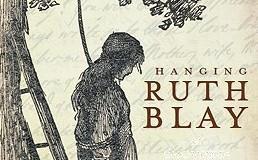
Ruth Blay
Infanticide?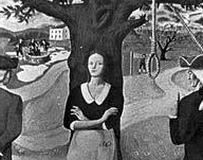 Bathsheba Spooner
Murderer · USA · 1778
Bathsheba Ruggles Spooner (February 15, 1746 – July 2, 1778) was executed by ha…
1 victim
Bathsheba Spooner
Murderer · USA · 1778
Bathsheba Ruggles Spooner (February 15, 1746 – July 2, 1778) was executed by ha…
1 victim
 Diane Spencer
Murderer · USA
Diane Louise Spencer was sentenced to life in prison in Michigan on March 13, 1…
1990 victims
Diane Spencer
Murderer · USA
Diane Louise Spencer was sentenced to life in prison in Michigan on March 13, 1…
1990 victims
 Miranda Barbour
Murderer · USA · 2013
Miranda Barbour, 19, defendant. · Elytte Barbour, 22, defendant and husband of…
100 victims
Miranda Barbour
Murderer · USA · 2013
Miranda Barbour, 19, defendant. · Elytte Barbour, 22, defendant and husband of…
100 victims
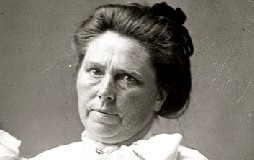 Belle Gunness
Serial killer · USA · 1880
Belle Gunness was Norwegian-born. She was born as Brynhild Paulsdatter Størseth…
42 victims
Belle Gunness
Serial killer · USA · 1880
Belle Gunness was Norwegian-born. She was born as Brynhild Paulsdatter Størseth…
42 victims
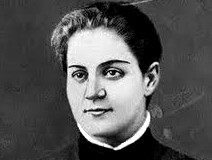 Jane Toppan
Serial killer · USA · 1887
Jane Toppan (1880-1901) was a nurse from Boston, Massachusetts. Another record…
31 victims
Jane Toppan
Serial killer · USA · 1887
Jane Toppan (1880-1901) was a nurse from Boston, Massachusetts. Another record…
31 victims
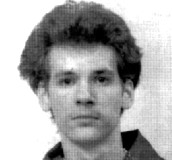 Christopher Stevens
Murderer · USA · 1993
Christopher Stevens was on probation, and his probation was transferred to Clov…
1 victim
Christopher Stevens
Murderer · USA · 1993
Christopher Stevens was on probation, and his probation was transferred to Clov…
1 victim
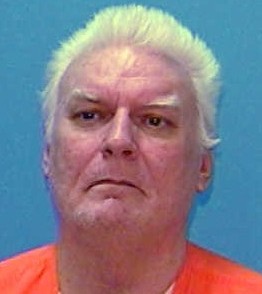 James Delano Winkles
Murderer · USA · 1980
James Delano Winkles also known as Jimmy Delano Hawk was convicted for the murd…
2 victims
James Delano Winkles
Murderer · USA · 1980
James Delano Winkles also known as Jimmy Delano Hawk was convicted for the murd…
2 victims
 Arthur Shawcross
Serial killer · USA · 1972
Arthur Shawcross (born June 6, 1945) was an American serial killer, also known…
13 victims
Arthur Shawcross
Serial killer · USA · 1972
Arthur Shawcross (born June 6, 1945) was an American serial killer, also known…
13 victims
 Jiverly Wong
Mass murderer · USA · 2009
December 8, 1967 — Jiverly Antares Wong was born. · late 1980s — Wong first cam…
13 victims
Jiverly Wong
Mass murderer · USA · 2009
December 8, 1967 — Jiverly Antares Wong was born. · late 1980s — Wong first cam…
13 victims
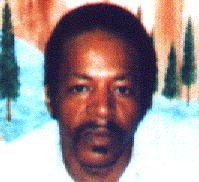 Melvin Turner
Murderer · USA · 1979
Melvin Turner was a parolee who got a job at the airport. Turner and Teague Ham…
2 victims
Melvin Turner
Murderer · USA · 1979
Melvin Turner was a parolee who got a job at the airport. Turner and Teague Ham…
2 victims
- Gender
- female
- Country
- USA
- Location
- Portsmouth, New Hampshire, USA
- Date of birth
- 1737
- Age at first offence
- 31
- Characteristics
- infanticide
- Victim profile
- Her illegitimate child
- Method of murder
- ???
- Date(s) of murder
- August 1768
- Years active
- 1768
- Date of arrest
- —
- Status
-
Executed
Executed by hanging on December 30, 1768
Case details
Ruth Blay died on December 30, 1768. She was executed by hanging.
The offence
Ruth Blay was convicted of concealing the body of her illegitimate child. She concealed the body in the floor of a barn next door to the house in which she was staying in New Hampshire.
The applicable law treated concealment of a bastard child, whether or not it survived birth, as a capital crime punishable by hanging.
Ruth Blay was indicted for concealing the death of an illegitimate child whereby it might not be known whether it was born alive or not, or whether it was murdered or not. She was not accused of killing the baby, but for hiding the premature birth. Her child was later described as stillborn.
Trial
Ruth Blay’s trial took place over the summer of 1768.
She was sentenced to be hung on November 24, 1768, after being condemned by an all-male jury.
Sentencing and reprieves
Ruth Blay was granted three reprieves before the hanging. She received a final reprieve on December 23, which set the hanging date for December 30.
A stay of execution was granted by the state Governor but arrived minutes after Ruth Blay’s hanging. There was no evidence that a pardon was forthcoming.
Ruth Blay spent her last night writing a statement in the presence of three witnesses while she was kept in prison. She stated her innocence until the end.
Execution
On December 30, 1768, at high noon, Ruth Blay was taken from jail on Prison Lane, now Chestnut Street, and driven to the hill, with her wooden casket beside her. She was dressed in silks and satins.
The High Sheriff Thomas Packer slipped the noose around Ruth Blay’s neck and ordered the cart to be driven away, leaving her hanging from the gallows.
A crowd gathered to watch the hanging. Public sympathy was awakened, and her friends were said to have procured from the Governor a reprieve that would have soon resulted in a pardon. The Governor’s reprieve arrived minutes after the hanging.
An old lady said that as Ruth was carried through the streets, her shrieks filled the air. She was dressed in silk and was driven under the gallows in a cart.
A placard was erected under the hanging effigy before the High Sheriff’s house: "Am I to lose my dinner This woman for to hang? Come draw away the cart, my boys- Don't stop to say amen."
Aftermath
Ruth Blay was buried in an unmarked grave about 300 feet north of the pond in Proprietors Burial Ground. Her body was also described as buried a rod or two from the north side of where the pond then was, and she was described as the first one for whom the soil of that Cemetery was broken.
The hanging was described as the last female executed in New Hampshire.
Ruth Blay’s story was later commemorated in a poem:
Ballad of Ruth Blay (Albert Laighton)
Albert Laighton wrote “BALLAD OF RUTH BLAY” in 1859, including the following lines and quotation.
In the drear month of December,
Ninety years ago to-day,
Hundreds of the village people
Saw the hanging of Ruth Blay;--
Saw her clothed in silk and satin,
Borne beneath the gallows-tree,
Dressed as in her wedding garments,
Soon the bride of Death to be;--
Saw her tears of shame and anguish,
Heard her shrieks of wild despair,
Echo thro' the neighboring woodlands,
Thrill the clear and frosty air.
And a voice among them shouted, "Pause before the deed is done:
We have asked reprieve and pardon
For the poor misguided one."
But these words of Sheriff Packer Rang above the swelling noise:
"Must I wait and lose my dinner? Draw away the cart, my boys!"
The poem also included:
"Pause before the deed is done:
and:
"Tis a pardon for Ruth Blay!"
and:
From its high and airy tower,
Slowly with its tongue of iron,
Tolled the bell the fatal hour;--
Other details
Ruth Blay was said to have been 25 years old at the time described for her hanging, and also described as 31 years old on her 31st birthday. She was from South Hampton. She was described as the youngest daughter for five, with a mother who was a tailor. She was described as a schoolteacher and as having taught until February or March of 1768.
The English statute referenced in the indictment prescribed the penalty of death for concealing the death of an illegitimate child, and it was described as not being repealed in the state until 1792 when a milder punishment was substituted for that of death.
The exordium of Attorney General Clagett in the prosecution was remembered for its wording: "He called heaven to witness, that he was discharging a duty that he owed his country, his King and his God."
Thomas Packer was described as the High Sheriff at three executions: in 1739, Sarah Simpson and Penelope Kenney were executed for the murder of a child; in 1755, Eliphaz Dow of Hampton Falls was executed for murder; and in 1768, Ruth Blay was executed.
The effigy of the High Sheriff’s house carried the inscription: "Be the name of Thomas Packer A reproach forevermore!"


Spotted an error, or have more information about this case?