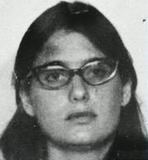
Kathy Boudin
Murderer Bobbie Sue Terrell
Murderer · USA · 1984
Bobbie Sue Dudley Terrell was a Pinellas County nurse and worked as the night s…
12 victims
Bobbie Sue Terrell
Murderer · USA · 1984
Bobbie Sue Dudley Terrell was a Pinellas County nurse and worked as the night s…
12 victims
 Marybeth Tinning
Murderer · USA · 1972
Marybeth Tinning (née Roe, born on September 11, 1942) was an American prisoner…
9 victims
Marybeth Tinning
Murderer · USA · 1972
Marybeth Tinning (née Roe, born on September 11, 1942) was an American prisoner…
9 victims
 Debbie Fornuto
Murderer · USA · 1972
Deborah Fornuto was the mother of six children whose deaths were initially rule…
7 victims
Debbie Fornuto
Murderer · USA · 1972
Deborah Fornuto was the mother of six children whose deaths were initially rule…
7 victims
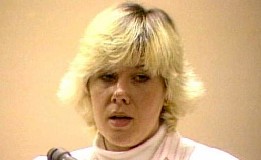 Catherine May Wood
Murderer · USA · 1987
Catherine May Wood was an American caregiver who worked at the Alpine Manor Nur…
5 victims
Catherine May Wood
Murderer · USA · 1987
Catherine May Wood was an American caregiver who worked at the Alpine Manor Nur…
5 victims
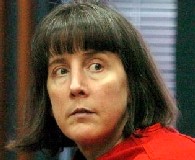 Amy Bishop
Murderer · USA · 1986
Amy Bishop — biology professor and perpetrator · James Anderson — Bishop’s husb…
4 victims
Amy Bishop
Murderer · USA · 1986
Amy Bishop — biology professor and perpetrator · James Anderson — Bishop’s husb…
4 victims
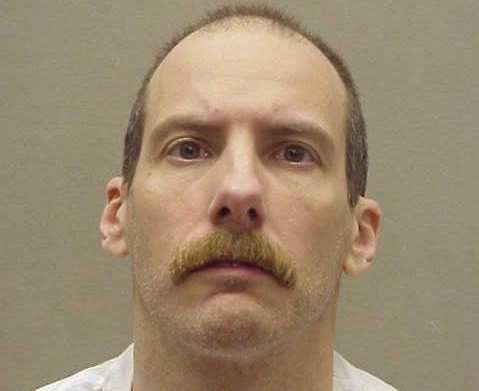 Eric Napoletano
Serial killer · USA · 1984
Eric Napoletano was described as a “sexually sadistic serial killer,” according…
3 victims
Eric Napoletano
Serial killer · USA · 1984
Eric Napoletano was described as a “sexually sadistic serial killer,” according…
3 victims
 Terri-Lynne McClintic
Murderer · Canada · 2009
Victoria Elizabeth Marie Stafford, an eight-year-old Canadian girl, was abducte…
1 victim
Terri-Lynne McClintic
Murderer · Canada · 2009
Victoria Elizabeth Marie Stafford, an eight-year-old Canadian girl, was abducte…
1 victim
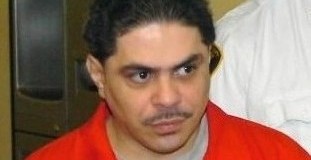 Anthony Santos
Homicide · USA · 2006
Anthony J. Santos was convicted of stabbing another man to death inside a Bethl…
1 victim
Anthony Santos
Homicide · USA · 2006
Anthony J. Santos was convicted of stabbing another man to death inside a Bethl…
1 victim
 Alexander Bychkov
Serial killer · Russia · 2009
March 20, 2013 — Alexander Bychkov was sentenced to life in prison. · March 22,…
11 victims
Alexander Bychkov
Serial killer · Russia · 2009
March 20, 2013 — Alexander Bychkov was sentenced to life in prison. · March 22,…
11 victims
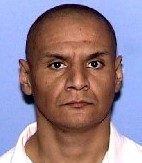 Santos Minjarez
Murderer · USA · 2001
Santos Minjarez was convicted of capital murder and sentenced to death on March…
1 victim
Santos Minjarez
Murderer · USA · 2001
Santos Minjarez was convicted of capital murder and sentenced to death on March…
1 victim
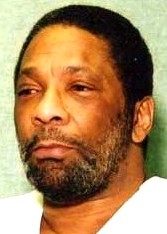 Joseph Lewis Clark
Murderer · USA · 1984
Joseph Lewis Clark was sentenced to death for the aggravated murder of David A.…
2 victims
Joseph Lewis Clark
Murderer · USA · 1984
Joseph Lewis Clark was sentenced to death for the aggravated murder of David A.…
2 victims
- Gender
- female
- Country
- USA
- Location
- Nanuet, New York , USA
- Date of birth
- May 19, 1943
- Age at first offence
- 38
- Characteristics
- anarchist, armed robbery, fugitive, history of mental illness
- Victim profile
- Peter Paige (security guard) / Sgt. Edward O'Grady and Officer Waverly Brown (policemen)
- Method of murder
- Shooting
- Date(s) of murder
- October 20, 1981
- Years active
- 1981
- Date of arrest
- Same day
- Status
-
Released
Released on September 17, 2003 after pleading guilty and being sentenced to 20 years to life in prison
Case record: Kathy Boudin
Status
Kathy Boudin pleaded guilty. She was sentenced to 20 years to life in prison. She was released on September 17, 2003.
Background
Kathy Boudin was born on May 19, 1943. She was an American far left radical who was convicted in 1984 of felony murder for her participation in an armed robbery that resulted in the killing of two police officers and a security guard. She was released from prison in 2003 and became an adjunct professor at Columbia University.
Boudin was raised in Greenwich Village, New York, and was born into a Jewish family with a long left-wing history. Her great-uncle was Louis B. Boudin, a Marxist theorist. Her father, attorney Leonard Boudin, had represented such controversial clients as Judith Coplon, Fidel Castro, and Paul Robeson. Leonard Boudin was a National Lawyers Guild attorney and was the law partner of Victor Rabinowitz, who was counsel to numerous left-wing organizations. Boudin’s older brother, Michael Boudin, was a judge on the United States Court of Appeals for the First Circuit. Boudin was journalist I.F. Stone’s niece.
Boudin attended kindergarten at the Little Red School House and its high school, the Elisabeth Irwin High School in Manhattan. She attended Bryn Mawr College intending to prepare for medical school, but her interests turned to politics. Her last year at Bryn Mawr was spent studying in the Soviet Union in 1965. She was paid 75 rubles a month by the Soviet government and, according to her résumé, taught on a Soviet collective farm. She attended receptions and functions with her parents at the Cuban Mission to the United Nations in New York. She attended Case Western Reserve University School of Law for one year.
Weather Underground and related activity
In the 1960s and 1970s, Boudin became heavily involved with the Weather Underground. The Weathermen bombed the Pentagon, the US Capitol, the New York Police Benevolent Association, the New York Board of Corrections, and the offices of multinational companies.
Boudin, along with Cathy Wilkerson, was a survivor of the 1970 Greenwich Village townhouse explosion, the premature detonation of a nail bomb that had been intended for “a soldiers’ dance at Fort Dix, New Jersey.” Boudin was 27 at the time. Both women were awaiting trial and were out on bond for their alleged actions in Days of Rage in Chicago several months earlier. Wilkerson had been released on a $20,000 bond and Boudin was out on a $40,000 bond.
A declassified FBI report on foreign contacts of the Weather Underground Organization produced by the FBI’s Chicago Field Office reported:
"On February 10, 1976, a source in a position to possess such information advised that Leonard Boudin ... had indicated to a friend that Kathie [sic] was presently in Cuba."
The law firm of Rabinowitz, Boudin, Standard, Krinsky & Lieberman, P.C., provided legal representation for the Cuban government in the United States.
1981 Brinks Robbery (felony murder and robbery)
Robbery setup and immediate events
In 1981, when Kathy Boudin was 38 years old, she and several members of the Weather Underground and the Black Liberation Army robbed a Brinks armored car at the Nanuet Mall in Nanuet, New York.
Boudin dropped her infant son, Chesa, at a baby sitter’s, then took the wheel of the getaway vehicle, a U-Haul truck. She waited in a nearby parking lot while her heavily armed accomplices took another vehicle to a local mall where a Brinks truck was making a delivery. They confronted the guards and gunfire broke out, severely wounding guard Joe Trombino and killing his co-worker, Peter Paige.
The robbers took $1.6 million in cash and rendezvoused with Boudin.
An alert high-school student called the police after spotting the gang abandoning the getaway vehicle and entering the U-Haul. A police officer spotted and pulled over the U-Haul, but the police could see only Boudin in the driver’s seat. Boudin got out of the cab and raised her hands.
Police officers testified that Boudin feigned innocence, pleaded with them to put down their guns, and convinced them to drop their guard. Boudin said she remained silent, and the officers relaxed spontaneously. After the police lowered their weapons, six men in the back of the truck armed with automatic weapons came out of the back of the truck, surprising the four police officers. Officer Waverly Brown was killed instantly. Boudin and David Gilbert, a Weatherman radical and the father of Boudin’s infant son, allegedly acted as decoys as well as getaway drivers.
Officer Edward O’Grady lived long enough to empty his revolver, but as he reloaded, he was shot several times with an M16. Ninety minutes later, he died in hospital. The other two officers escaped with only minor injuries.
The four police officers later became identified as Edward O’Grady, Waverly Brown, Brian Lennon, and Artie Keenan in the description of the stop and second gunfight. During the second gunfight, Keenan was shot in the leg, but managed to duck behind a tree and return fire. Lennon tried to exit from the front passenger door, but O’Grady’s body was wedged up against the door. Lennon watched as the suspects jumped back into the U-Haul and sped directly towards him.
Paige was hit multiple times and killed instantly when he was carrying bags of money out of the mall. Trombino was struck in the shoulder and arm by several rounds, nearly severing his arm from his body. Trombino survived his injuries and continued to work for the Brink’s company for the next 20 years; he was killed at age 68 while making a Brink’s delivery in the September 11 attacks. (This detail appears alongside the robbery account.)
After the robbers grabbed the $1.6 million, they got back into their vehicle and fled. Some robbers scattered after the shootout; some climbed into another getaway car, and others carjacked a nearby motorist while Boudin attempted to flee on foot.
An off-duty corrections officer, Michael J. Koch, apprehended her shortly after the shootout. When Boudin was arrested, she gave her name as Barbara Edson.
Three other Black Liberation Army members failed to escape that day. Weathermen Gilbert, Samuel Brown, and Judith Alice Clark crashed their car while making a sharp turn and were arrested by police. Two days later, Samuel Smith and Nathaniel Burns were spotted in a car in New York; after a gunfight with police left Smith dead, Burns was captured. Three more participants were arrested several months later.
Amount stolen and victims
The robbers stole $1.6 million in cash from a Brink’s armored car at the Nanuet Mall, in Nanuet, New York. Two police officers and a security guard were killed during the robbery and subsequent confrontations. The killed individuals were identified as Edward O’Grady and Waverly Brown (police officers) and Peter Paige (Brink’s guard).
Investigation and arrests
Vehicle swap and police approach
After fleeing the scene, the robbers drove to a parking lot where a yellow Honda and the U-Haul truck manned by members of the May 19 Communist Organization were waiting. They threw the bags of money into the car and truck and sped away. An alert college student spotted them as they switched vehicles and called the police.
Police units converged on the mall where the shootout occurred and attempted to cut off escape routes. Soon police officers Edward O’Grady, Waverly Brown, Brian Lennon, and Artie Keenan spotted and pulled over the U-Haul truck with David Gilbert and Kathy Boudin in the front seats, along with the yellow Honda at an entrance ramp to the New York State Thruway off New York State Route 59. The police were not sure if they had the right truck because it had been reported that the robbers were all black-skinned, while occupants of this vehicle were white-skinned, which was described as part of the original plan by the robbers hoping to fool the police. The officers pulled the U-Haul over because it matched the description of the getaway vehicle.
Other suspects and seized materials
May 19 Communists Chris Dobbs, Samuel Brown, and Judith Alice Clark crashed the Honda while making a sharp turn. South Nyack police chief Alan Colsey was the only officer initially at the scene of the crash; he held them at gun point until backup arrived and then they were arrested. Inside the car, police found $800,000 from the robbery and a 9mm handgun on the floor of the back seat.
Police traced the license plate on one of the getaway vehicles to an apartment in New Jersey. Inside, police found weapons, bomb-making materials, and detailed blueprints of six Manhattan police precincts. Investigations later revealed the apartment was rented by Marilyn Buck, another former Weatherman turned May 19 Communist who had been previously arrested for providing weapons to the BLA. She had been sentenced to 10 years in prison, but in 1977 she was granted furlough and never returned.
While at the apartment, police found papers listing an address in Mt. Vernon, New York, a city in Westchester County about 20 miles from the mall where the robbery occurred. When police raided that apartment, they found bloody clothing, ammunition, more guns, and ski masks. Investigation later revealed the bloody clothing belonged to Buck, who had accidentally shot herself in the leg when she tried to draw her weapon during the shootout with police.
All plates on the vehicles seen near the Mt. Vernon address were entered into the NCIC system.
Two days later, NYPD detectives spotted a 1978 Chrysler with a license plate that had been seen at the Mt. Vernon apartment. The vehicle, driven by Samuel Smith and Sekou Odinga, fled when police tried to pull it over. After the vehicle crashed, the two occupants engaged police in a gunfight that left Smith dead and Odinga captured. Inside Smith’s shirt pocket, police found a crushed .38 caliber slug that police believed was fired from officer O’Grady’s service weapon.
Three more participants were arrested several months later, including Weems (Balagoon). The investigation continued for years. Buck was arrested in 1985, and the last person arrested in connection with the robbery was Williams (Shakur), the alleged ringleader, in 1986.
Trials and sentencing (Boudin and others)
Plea bargain for Boudin
Massive security precautions were undertaken for trials because the BLA was known for attempting to break members out of prison. The job of presiding over a trial expected to be arduous and potentially dangerous was assigned to Judge David S. Ritter.
Boudin hired Leonard Weinglass to defend her. Weinglass arranged for a plea bargain and Boudin pled guilty to one count of felony murder and robbery in exchange for a single twenty-year to life sentence.
Sentencing and eligibility
After other defendants’ trial described in the material, Judge Ritter sentenced each defendant to three consecutive twenty-five year-to-life sentences, making them eligible for parole in the year 2058. In that account, Boudin’s plea resulted in a twenty-year to life sentence rather than those sentences.
The material also stated that Boudin pled guilty and was sentenced to 20 years to life in prison.
Other defendants’ self-representation and verdict
Gilbert, Weems, and Clark were among the first of the Brink’s robbers to go to trial. The material described that they declined assistance from defense lawyers and chose to represent themselves. Their contention was that since they did not recognize the authority of the United States, the government had no right to put them on trial.
Throughout the trial, they disrupted the proceedings by shouting anti-US slogans, proclaiming to be “at war” with the government, and refusing to respect any aspect of the US legal system. They described the robbery as an “expropriation” of funds needed to form a new country in a few select southern states populated only by African Americans.
When it came time for the defendants to present their case, they called only one witness, Nathaniel Burns (Sekou Odinga), who had already been convicted of multiple bank robberies. Burns testified that his organization was “fighting for the liberation and self-determination of black people in this country.” Burns testified that “the killings were suitable because the three victims had interfered with the ‘expropriation.’” Burns testified that the theft of money was morally justified because those funds “were robbed through the slave labor that was forced on them and their ancestors.”
After Burns’ testimony, he was praised by the defendants and led out of the courtroom to serve his 40-year federal prison sentence.
The jury was not convinced. The jury deliberated four hours and returned a verdict convicting all three defendants of armed robbery and three counts of murder. When the verdict was announced, Clark, Gilbert and Weems refused to appear in court and remained in basement holding cells, drinking coffee and railing against what they perceived to be a racist court system.
Judge Ritter said: “I don't think any interest is served by forcing them to be here.” Judge Ritter’s statement was followed by Rockland County D.A. Kenneth Gribetz telling reporters: “Our goal is to see that these people, who have contempt for society and have shown no remorse, will never see the streets of society again!”
Weems later claimed: “As to the seventy five years in prison, I am not really worried, not only because I am in the habit of not completing sentences or waiting on parole or any of that nonsense but also because the State simply isn't going to last seventy five or even fifty years.” Weems died in prison from AIDS in 1986.
Clark was granted a new trial by a judge in a district court on grounds that she had no representation at trial. On January 3, 2008, the United States Court of Appeals for the Second Circuit, in a unanimous decision, reversed the district court’s judgment granting a new trial. The Second Circuit panel noted that Clark chose to represent herself and defaulted any claim by failing to appeal until after the time for appeals had expired.
Other sentencing outcomes mentioned
The material stated that Brown was unable to reach any deal that would spare him a life sentence and he had a trial. At his trial, he claimed he had only had minor participation in the robbery and had not fired a weapon at anyone. The jury was not convinced; the material stated witnesses identified him as a participant in both shootouts and he was sentenced to 75 years to life in prison.
The material stated that Buck was later convicted of multiple charges related to the Brink’s robbery and other crimes and sentenced to 50 years in a federal prison. It also stated she was released from prison in July 2010 and died of cancer in August 2010.
It also stated that Williams (Shakur), the alleged ringleader, received a 60-year prison sentence in 1988 and had a parole release date of 2016.
Parole and release
Boudin was granted parole on August 20, 2003 at her third parole hearing and was released from Bedford Hills Correctional Facility on September 17, 2003.
The material stated she accepted a job in the H.I.V./AIDS Clinic at St. Luke’s-Roosevelt Hospital Center, meeting parole job provisions requiring active job prospects.
A controversy arose as the victim’s family and others disputed whether Boudin was truly contrite for her crime or instead was masking her radical politics to gain her freedom. The supporting allegation described in the material relied on a statement years earlier from William Kunstler, a law partner of Leonard Weinglass. Kunstler explained Boudin’s evolution from political activist to violent revolutionary by saying:
“I went to Bedford Hills penitentiary a few weeks ago and talked to Kathy Boudin. Kathy had reached a point where she thought, along with others, that non-violence was ineffective, and that you have to take the next step, into violence.”
Post-release education, work, and academic appointment
In May 2004, after her parole, Boudin published in the Fellowship of Reconciliation’s publication Fellowship. She later received an Ed. D. from Columbia University Teachers College.
While working at St. Luke’s-Roosevelt, Boudin also worked as a consultant to the Osborne Association in development of a Longtermers Responsibility Project in New York State Correctional Facilities utilizing a restorative practice approach. She consulted for Vermont Corrections and the Women’s Prison Association and supervised social workers.
The material stated that she was presently an adjunct professor at Columbia University School of Social Work and that her appointment was controversial, prompting a 2013 governmental condemnation of the university’s action and a call for her termination as professor.
Prison programs, publications, and writing (during incarceration)
Boudin was incarcerated in the Bedford Hills Correctional Facility for Women in New York, where she worked with AIDS patients and in adult education.
She had a central role in creating five formal programs:
- the Teen Program, supporting teens and pre-teens whose mothers were incarcerated, strengthening the mother-child bond during separation, and helping teens become positive, healthy, young adults
- the Parent Education Program, helping inmate mothers learn to be responsible parents to pre-school, grade school, and teenage children while separated by prison
- the Adult Literacy Program, using an innovative curriculum that Boudin wrote, described as an outgrowth of work she did for her Masters Degree in Adult Education earned while at Bedford Hills
- the AIDS and Women’s Health Program, described as the first peer community health program devoted to AIDS among prisoners
- the College Program, providing courses and degrees to incarcerated women
Boudin helped organize a consortium of private colleges to offer the College Program after New York State cut all public funding for higher education in prisons.
While incarcerated, Boudin published articles in the Harvard Educational Review (“Participatory Literacy Education Behind Bars: AIDS Opens the Door,” Summer 1993, 63 (2)). She also co-authored work in Breaking the Rules: Women in Prison and Feminist Therapy by Judy Harden and Marcia Hill (“Lessons from a Mother's Program in Prison: A Psychosocial Approach Supports Women and Their Children,” published simultaneously in Women and Therapy, 21). She also published in Breaking the Walls of Silence: AIDS and Women in a New York State Maximum-Security Prison.
She co-authored The Foster Care Handbook for Incarcerated Parents published by Bedford Hills in 1993, and she co-edited Parenting from inside/out: Voices of mothers in prison, jointly published by correctional institutions and the Osborne Foundation.
The material also stated that Boudin wrote and published poetry while incarcerated, publishing in books and journals including the PEN Center Prize Anthology Doing Time, Concrete Garden 4, and Aliens at the Border. It stated she won an International PEN prize for her poetry in 1999.
The material also stated she pursued education as a doctoral student at the City University of New York (CUNY), including participation in the CUNY Graduate Center research team that produced the study Changing Minds: The Impact of College in a Maximum-Security Prison.
Boudin and Gilbert’s son Chesa Boudin was adopted by former Weatherman leaders Bill Ayers and Bernardine Dohrn.
Additional remarks and quotations in connection with parole release
On September 17, 2003, protests were described as “bitter” in the account of her release. Brent Newbury, president of the Rockland County Patrolmen’s Benevolent Association, said:
"I'm physically ill right now,"
"I can't believe I just saw Kathy Boudin walk out of prison."
The account also included Newbury saying:
"Kathy Boudin needs to know that when she's sleeping safely tonight, she's being protected by police officers just like the ones that she was involved in murdering."
The account stated Boudin would be under routine parole restrictions including a 10 p.m. curfew and travel restrictions for the rest of her life.
St. Luke’s spokeswoman Kathleen McGovern said Boudin “has not yet accepted the offer.”
Anamarie Scala-Doran, whose police officer father was killed in an attempted robbery in 1975 while guarding St. Luke’s payroll, said:
"It's offensive to my family and me that my father gave his life protecting the people of St. Luke's Hospital, yet they would consider employing a person guilty of murdering police officers,"
and she stated it as part of an opinion piece in Wednesday’s New York Post.
Thomas Grant, spokesman for the state Parole Division, denied that there would be a shakeup.
Legacy and renaming
In 2004, the Nyack post office was officially renamed after the two police officers and the Brink’s guard who were killed in the shootout.
Other details
- In a separate description of the robbery, the material identified the Brink’s robbery participants by name and alias. It listed Jeral Wayne Williams (aka Mutulu Shakur), Donald Weems (aka Kuwasi Balagoon), Samuel Brown (aka Solomon Bouines), Samuel Smith, Nathaniel Burns (aka Sekou Odinga), and Cecilio “Chui” Ferguson, along with several former members of the Weather Underground now belonging to the May 19th Communist Organization, including David Gilbert, Judith Alice Clark, Kathy Boudin, and Marilyn Buck, and an unknown number of accomplices.
- The material described the robbery as beginning at 3:55 pm with guards Peter Paige and Joe Trombino emerging from the mall carrying bags of money.
- In the material’s description of the second gunfight, it stated one robber fired two shotgun blasts into the van’s bulletproof windshield and another opened fire with an M16 rifle.
- The material described the home across the street as housing an alert college student who spotted the robbery participants switching vehicles and called the police.
- The material described the U-Haul as manned by members of the May 19 Communist Organization before the police stop.
- The material described the NCIC entry of all plates on the vehicles seen near the Mt. Vernon address.
- The material described a 1978 Chrysler driven by Samuel Smith and Sekou Odinga.
- The material stated that Boudin was described as a fugitive for the previous decade after she was seen running from an explosion at a New York City townhouse where bombs allegedly were being made.

Spotted an error, or have more information about this case?