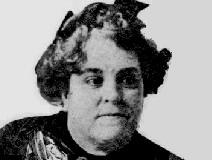
Cordelia Botkin
Murderer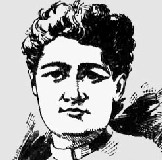 Sarah Whiteling
Murderer · USA · 1888
Sarah Jane Whiteling was a 41 year old white woman from Philadelphia, Pennsylva…
3 victims
Sarah Whiteling
Murderer · USA · 1888
Sarah Jane Whiteling was a 41 year old white woman from Philadelphia, Pennsylva…
3 victims
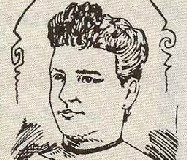 Alice Mitchell
Murderer · USA · 1892
Alice Mitchell was tried for murder and entered a plea of “present insanity,” m…
1 victim
Alice Mitchell
Murderer · USA · 1892
Alice Mitchell was tried for murder and entered a plea of “present insanity,” m…
1 victim
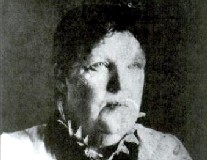 Elizabeth Potts
Murderer · USA · 1888
Elizabeth Potts (née Atherton) was convicted of murder in 1889 and was hanged t…
1 victim
Elizabeth Potts
Murderer · USA · 1888
Elizabeth Potts (née Atherton) was convicted of murder in 1889 and was hanged t…
1 victim
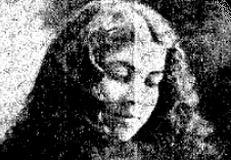 Lulu Prince Kennedy
Murderer · USA · 1901
Lulu Prince Kennedy was 23 years old and lived in Kansas City, Missouri. She li…
1 victim
Lulu Prince Kennedy
Murderer · USA · 1901
Lulu Prince Kennedy was 23 years old and lived in Kansas City, Missouri. She li…
1 victim
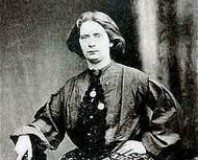 Maria Barbella
Murderer · USA · 1895
Maria Barbella was a seamstress in Manhattan's Little Italy. She lived with her…
1 victim
Maria Barbella
Murderer · USA · 1895
Maria Barbella was a seamstress in Manhattan's Little Italy. She lived with her…
1 victim
 Alex Ramon Maquera
—
Alex Ramón Maquera Atencio, alias “Loco del Martillo”, was convicted and senten…
Alex Ramon Maquera
—
Alex Ramón Maquera Atencio, alias “Loco del Martillo”, was convicted and senten…
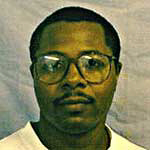 Bruce Kilgore
Murderer · USA · 1986
Bruce Kilgore was executed on June 16, 1999. Bruce Kilgore was convicted of fir…
1 victim
Bruce Kilgore
Murderer · USA · 1986
Bruce Kilgore was executed on June 16, 1999. Bruce Kilgore was convicted of fir…
1 victim
 Jimmie Ray Slaughter
Murderer · USA · 1991
Jimmie Ray Slaughter was executed by lethal injection in Oklahoma on March 15,…
2 victims
Jimmie Ray Slaughter
Murderer · USA · 1991
Jimmie Ray Slaughter was executed by lethal injection in Oklahoma on March 15,…
2 victims
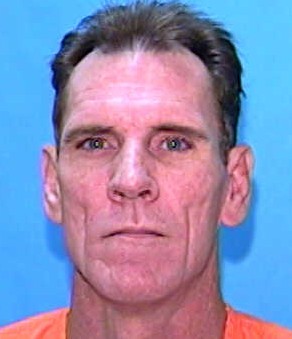 David Wyatt Jones
Murderer · USA · 1987
David Wyatt Jones was tried in the Fourth Judicial Circuit, Duval County, under…
2 victims
David Wyatt Jones
Murderer · USA · 1987
David Wyatt Jones was tried in the Fourth Judicial Circuit, Duval County, under…
2 victims
 Mario Marquez
Homicide · USA · 1984
Mario Marquez was executed by lethal injection in Texas on January 17, 1995. Du…
2 victims
Mario Marquez
Homicide · USA · 1984
Mario Marquez was executed by lethal injection in Texas on January 17, 1995. Du…
2 victims
- Gender
- female
- Country
- USA
- Location
- California/Delaware, USA
- Date of birth
- 1854
- Age at first offence
- 44
- Characteristics
- poisoner
- Victim profile
- Mary Elizabeth Dunning, 35 (her lover's wife) and her older sister, 44-year-old Ida Harriet Deane
- Method of murder
- Poisoning (arsenic)
- Date(s) of murder
- September 9, 1898
- Years active
- 1898
- Date of arrest
- —
- Status
-
Died in custody
Sentenced to life imprisonment on December 31, 1898; died in San Quentin State Prison on March 7, 1910
Background
Cordelia Botkin was a stocky woman of 44 who left her own husband and started a relationship with another man, John Presley Dunning, who was already married. Botkin persuaded Dunning to leave his wife but never felt secure. She wrote anonymous letters to Mrs Dunning warning her against any ideas she may have of rejoining her husband.
Dunning was a journalist. When he was called away to cover the Spanish-American war, Botkin feared that on his return he may go back to his wife. Botkin purchased candy and laced it with arsenic, then sent it to Mrs Dunning with a note.
Cordelia Botkin (1854–March 7, 1910) was an American murderer who sent a poisoned box of candy to her lover's wife.
Botkin was born in Missouri and moved to California with her family, where she married her husband, Welcome Botkin. They were the parents of one son.
Other details
John Presley Dunning was an AP Bureau Chief in San Francisco. Dunning’s wife was Elizabeth Dunning. Elizabeth was a daughter of a former Congressman from Delaware, and she had left Dunning due to his numerous marital indiscretions.
Botkin had taken Dunning’s child and left her husband in Stockton, traveling to the Barbary Coast. The affair lasted for six years. The relationship ended when Dunning decided to be a correspondent during the Spanish-American War in 1898. Botkin then continued sending taunting letters to Elizabeth Dunning regarding Dunning’s affairs.
Dunning had been fired by the Associated Press when it was discovered he had embezzled $4,000 in office funds to pay his gambling debts. He was next let go by newspapers in Salt Lake City and San Francisco because of his habitual drunkenness, and moved into Botkin's hotel.
After Dunning left San Francisco, he reconciled with his wife before leaving for Cuba and helped save survivors of the Spanish battleships sunk at the Battle of Santiago de Cuba on 2 July 1898. Dunning’s own work as a reporter was overshadowed by reports from Cuba sent from Stephen Crane and Richard Harding Davis.
The offence
Botkin sent anonymous letters to Mrs. Dunning detailing Dunning’s affairs.
A note accompanied the candy. The note included the text: “With love to yourself and baby. Mrs. C.” Botkin sent the candy with this note.
On September 9, 1898, Mrs. Dunning opened a box of candies and ate them. Mrs. Joshua P. Deane, who was staying with her, also ate the candy, and both died. Two children who also ate some managed to survive.
On August 9, 1898, Mrs. Dunning opened a box of candies addressed to her and her sister in Dover, Delaware. Dunning’s account said he took at least three pieces himself and shared the rest with others on the porch of her father's home. After two days of agony, Mrs. Dunning, aged 35, and her older sister, Ida Harriet Deane, aged 44, died from arsenic poisoning. Four others who had sampled the chocolates survived.
Four adults and three children gathered on the front porch in Dover. The group included Mrs. Dunning’s sister, Leila Deane, and Mrs. Dunning’s daughter, Mary. Most of the stricken quickly recovered, but Mrs. Dunning and her sister died.
Investigation
A father noted handwriting on the note and saw that it matched the taunting letters he had kept in a drawer. The remaining candy, the paper it was wrapped in, and the handkerchief were sent to San Francisco in the custody of Dover police.
Police traced the candy to a shop in San Francisco, and from there, to Botkin. The candy was traced to a shop in San Francisco, and police traced the handwriting on the note to charge Cordelia with murder.
A clerk recalled selling arsenic to a woman fitting Botkin’s physical description. The price tag on the handkerchief led to the City of Paris department store. A clerk who remembered selling arsenic to a woman who resembled Cordelia was eventually located at the Owl Drug store. The note accompanied the chocolates and the anonymous letters sent to Mary Elizabeth were analyzed by a handwriting expert who matched them to samples of Cordelia’s writings.
In October 1898, Chief Less appeared before the grand jury with confidence about a strong case. A potential problem was that an autopsy had not been performed on the two women, so there was no proof that they had died from arsenic poisoning. The grand jury returned an indictment for two counts of first-degree murder against Mrs. Cordelia Botkin.
Arrest
The San Francisco Police Department chief who led the case found Botkin at her sister’s house in Heraldsburg and placed her under arrest for the murders of Elizabeth Dunning and Leila Deane.
Botkin denied her guilt.
Trial
Botkin was tried before Judge Carroll Cook. Cook ruled on the first case involving a crime committed in two different states, a decision which was never reviewed by the United States Supreme Court.
Botkin denied her guilt, but she was convicted of murder in December 1898. She was convicted again at a retrial in 1904. She was sentenced to life imprisonment.
Judge Carroll Cook sentenced Botkin to life imprisonment on December 31, 1898.
After a few months in prison, Judge Cook spotted Botkin shopping in downtown San Francisco and launched an investigation into evidence that Botkin had exchanged sexual favors for lavish comforts in jail and the freedom to leave the prison grounds.
Sentencing
Botkin was sentenced to life imprisonment on December 31, 1898.
Appeals
Botkin’s lawyer appealed the conviction and was able to have it overturned based on a procedural error. Her second trial commenced in 1904.
On August 2, 1904, she was again sentenced to life in prison.
In 1908, Botkin applied for parole on the basis of bad health. Her application was denied.
Outcome
Botkin remained in prison until her death at San Quentin in 1910. She never once confessed to the crime.
Botkin died in San Quentin State Prison on March 7, 1910. The official cause of death was “softening of the brain due to melancholy.” She was 56 years old.
Timeline
- December 31, 1898 — Botkin was sentenced to life imprisonment.
- March 7, 1910 — Botkin died in San Quentin State Prison.
Aftermath
John Dunning died two years previously in Philadelphia.

Spotted an error, or have more information about this case?