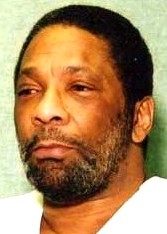
Joseph Lewis Clark
Murderer Brian Kevin Rosenfeld
Murderer · USA · 1985
Brian Kevin Rosenfeld Brian Kevin Rosenfeld was sentenced to three concurrent l…
23 victims
Brian Kevin Rosenfeld
Murderer · USA · 1985
Brian Kevin Rosenfeld Brian Kevin Rosenfeld was sentenced to three concurrent l…
23 victims
 Marvin Gray
Murderer · USA · 1975
Marvin Gray was convicted killer who claimed responsibility for 23 slayings and…
23 victims
Marvin Gray
Murderer · USA · 1975
Marvin Gray was convicted killer who claimed responsibility for 23 slayings and…
23 victims
 Yahweh ben Yahweh
Murderer · USA · 1980
Yahweh ben Yahweh was born and legally named Hulon Mitchell Jr. (October 27, 19…
23 victims
Yahweh ben Yahweh
Murderer · USA · 1980
Yahweh ben Yahweh was born and legally named Hulon Mitchell Jr. (October 27, 19…
23 victims
 Russell Ellwood
Murderer · USA · 1991
Russell Ellwood was a former taxi driver. Authorities suspected him of killing…
20 victims
Russell Ellwood
Murderer · USA · 1991
Russell Ellwood was a former taxi driver. Authorities suspected him of killing…
20 victims
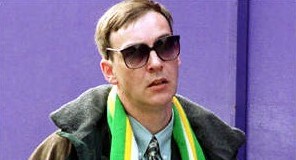 Kevin Cobb
Homicide · 1996
Kevin Cobb, a male nurse, was convicted of manslaughter for the death of nursin…
1 victim
Kevin Cobb
Homicide · 1996
Kevin Cobb, a male nurse, was convicted of manslaughter for the death of nursin…
1 victim
 Sandy Lee Locklear
Murderer · USA · 2012
Sandy Lee Locklear was the wife of Amos Hatfield, 66. Locklear was also connect…
2 victims
Sandy Lee Locklear
Murderer · USA · 2012
Sandy Lee Locklear was the wife of Amos Hatfield, 66. Locklear was also connect…
2 victims
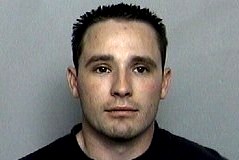 Skylar Deleon
Murderer · USA · 2003
Skylar Deleon — named as the perpetrator in the murders of Thomas Hawks and Jac…
3 victims
Skylar Deleon
Murderer · USA · 2003
Skylar Deleon — named as the perpetrator in the murders of Thomas Hawks and Jac…
3 victims
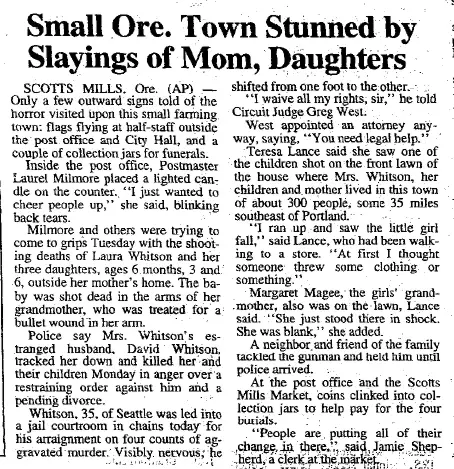 David Whitson
Mass murderer · USA · 1995
David Whitson of Seattle was involved in a tumultuous divorce with his estrange…
4 victims
David Whitson
Mass murderer · USA · 1995
David Whitson of Seattle was involved in a tumultuous divorce with his estrange…
4 victims
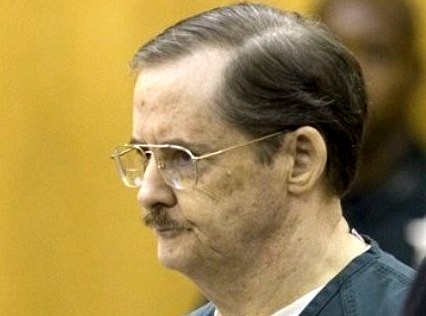 Nelson Serrano
Mass murderer · USA · 1997
Nelson Iván Serrano Sáenz was sentenced to death by lethal injection on June 26…
4 victims
Nelson Serrano
Mass murderer · USA · 1997
Nelson Iván Serrano Sáenz was sentenced to death by lethal injection on June 26…
4 victims
- Gender
- male
- Country
- USA
- Location
- Lucas County, Ohio, USA
- Date of birth
- January 15, 1949
- Age at first offence
- 35
- Characteristics
- robbery
- Victim profile
- Donald Harris (store clerk) / David A. Manning, 23 (gas-station clerk)
- Method of murder
- Shooting ( .32 caliber handgun)
- Date(s) of murder
- January 12/13, 1984
- Years active
- 1984
- Date of arrest
- January 16, 1984
- Status
-
Executed
Executed by lethal injection in Ohio on May 2, 2006
Case details
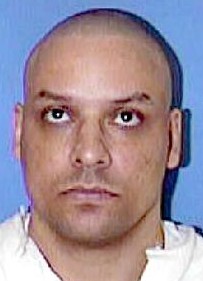
Joseph Lewis Clark was sentenced to death for the aggravated murder of David A. Manning while committing or fleeing immediately after committing aggravated robbery, and he was later executed by lethal injection in Ohio on May 2, 2006.
Timeline
- January 13, 1984 — Joseph Lewis Clark, while armed with a firearm, purposely caused the death of David A. Manning in Lucas County, Ohio while committing or fleeing immediately after committing aggravated robbery.
- January 15, 1984 — Joseph Lewis Clark committed a robbery and shot and wounded Robert Roloff.
- Three days later — Joseph Lewis Clark was arrested on bank robbery charges.
- January 23, 1984 — Joseph Lewis Clark made a statement to a member of the Toledo Police Department; he had appeared in the Toledo Municipal Court for arraignment on charges distinct from the case.
- October 15, 1984 — The case proceeded to trial.
- November 6, 1984 — A jury unanimously returned a verdict finding Joseph Lewis Clark guilty beyond a reasonable doubt of the aggravated murder of David A. Manning while committing or fleeing immediately after committing aggravated robbery.
- November 13, 1984 — A mitigation hearing occurred; the same jury unanimously recommended that Joseph Lewis Clark be sentenced to death, finding that the aggravating circumstances outweighed the mitigating factors beyond a reasonable doubt.
- November 28, 1984 — The trial court sentenced Joseph Lewis Clark to be put to death on February 23, 1985.
- February 23, 1985 — Joseph Lewis Clark was sentenced to death by electrocution in the electric chair; a stay of execution was granted pending appeal.
- March 11, 1997 — The state filed a motion for summary judgment/motion to dismiss.
- March 31, 1997 — The trial court granted the state's motion for summary judgment, finding Joseph Lewis Clark was not entitled to an evidentiary hearing because he failed to demonstrate substantive grounds for postconviction relief.
- October 8, 1984 — Suppression hearing materials were referenced as part of the record.
- May 2, 2006 — Joseph Lewis Clark was executed by lethal injection in Ohio.
The offence
Murder of David A. Manning
Joseph Lewis Clark entered a Clark Gas Station in Lucas County, Ohio armed with a firearm and purposely caused the death of David A. Manning, an attendant at a Clark Gas Station, while committing or fleeing immediately after committing aggravated robbery.
On January 13, 1984, Joseph Lewis Clark entered the station at approximately 9:00 p.m. with his .32 caliber revolver drawn. He asked for money and the attendant, David A. Manning, handed him the money from the cash register. Joseph Lewis Clark advised him that this was not all of the money he had. Manning then proceeded to give him an envelope and it was at that point that Joseph Lewis Clark shot him.
A mitigation-related description stated that Joseph Lewis Clark had demanded money and was then shot Manning in the chest, killing him. The court also described that Manning was in a kneeling position at the safe and was unarmed at the time Joseph Lewis Clark fired a shot into his chest.
String of robberies and related victims
Joseph Lewis Clark committed robberies in a two-week period. In addition to killing David A. Manning, the proceedings described other victims and events:
- Joseph Lewis Clark robbed one victim at gunpoint: Kim Reno, January 8, 1984.
- Joseph Lewis Clark killed two victims: Donald Harris, January 12, 1984, and David A. Manning, January 13, 1984.
- Joseph Lewis Clark seriously wounded a fourth victim: Robert Roloff, January 16, 1984.
Victims
- David A. Manning — 23 years old; attendant at a Clark Gas Station in Lucas County, Ohio; killed by a gunshot in the chest during the aggravated robbery.
- Kim Reno — robbed at gunpoint; January 8, 1984.
- Donald Harris — killed; January 12, 1984.
- Robert Roloff — seriously wounded; January 16, 1984.
Investigation
A .32 caliber handgun was found on Joseph Lewis Clark’s person after he was arrested three days after David A. Manning’s death. Police matched the gun from the robbery to the bullet used to kill David A. Manning.
Confession and related statements
After Joseph Lewis Clark was taken to the Toledo Police Department, detectives explained his Miranda rights to him and had him sign a form indicating that he understood these rights. Joseph Lewis Clark signed another section of the form indicating that he waived his Miranda rights before confessing to the murder of David A. Manning.
Joseph Lewis Clark admitted to the shooting of David A. Manning but claimed that Manning had come at him with a pipe during the robbery. In a March interview at the Youngstown prison, Joseph Lewis Clark stated he did not intend to kill David A. Manning and described the circumstances as “He started coming toward me with something like a metal rod or something in his hand,” followed by “I sort of somehow squeezed the trigger off and shot him.”
Arrest
Joseph Lewis Clark was arrested three days after David A. Manning’s death after he shot and wounded a man withdrawing money from an automated teller machine. The arrest followed bank robbery charges.
Trial
Indictment and plea
Joseph Lewis Clark was indicted by the Lucas County Grand Jury in a six count indictment. Two counts involved aggravated murder charges with aggravating circumstance specifications. Joseph Lewis Clark entered a plea of not guilty and the case proceeded to trial on October 15, 1984.
Guilt-phase verdict
On November 6, 1984, a jury unanimously returned a verdict finding Joseph Lewis Clark guilty beyond a reasonable doubt of the aggravated murder of David A.
The same jury found, beyond a reasonable doubt, the aggravating circumstances as charged in the specification of the indictment and found Joseph Lewis Clark was the principal offender.
Sentencing
Mitigation recommendation and death sentence
A mitigation hearing was held. On November 13, 1984, the same jury unanimously recommended that Joseph Lewis Clark be sentenced to death, having found that the aggravating circumstances outweighed the mitigating factors beyond a reasonable doubt.
The trial court made separate findings of fact. The trial judge concluded beyond a reasonable doubt that the aggravating circumstances as found by the jury outweighed any mitigating factors and concurred with the jury’s recommendation. The trial court adopted the jury recommendation and sentenced Joseph Lewis Clark to death by electrocution in the electric chair on February 23, 1985.
A stay of execution was granted pending the appeal.
Mitigation evidence described
During the mitigation phase, Joseph Lewis Clark presented testimony including his mother, daughter, son, a clinical psychologist, a professor of sociology at the University of Toledo, a member of the clergy committee at the Lucas County Jail, and an unsworn statement by Joseph Lewis Clark.
The testimony described that Joseph Lewis Clark had a traumatic experience in 1963 when he lost his father unexpectedly; he fathered his first child at age fifteen; he was addicted to drugs; his wife prostituted so they could support their drug habits; and his two children testified they were in college. The proceedings also described that at the time of the offence his wife had been incarcerated for thirty days and therefore was unable to prostitute for Joseph Lewis Clark, leading him to commit aggravated robberies to obtain money to purchase drugs. Joseph Lewis Clark expressed remorse and sorrow in killing David A. Manning.
The court’s analysis stated that none of the testimony fell within the first six factors of R.C. 2929.04(B), leaving factor seven (“Any other factors that are relevant * * *”). The court found the killing to be “a totally senseless cold-blooded killing,” reasoning that David A. Manning had turned the money over, that Joseph Lewis Clark insisted there was more money in the safe, and that Manning was unarmed.
Prior sentencing described
Joseph Lewis Clark was also sentenced to life imprisonment for the murder of Donald Harris.
Appeals
Direct appeal (evidentiary and procedural rulings; death-qualification issue)
Joseph Lewis Clark appealed from the Lucas County Common Pleas Court judgment. The appellate decision addressed issues raised during the guilt phase, including:
- denial of a motion to suppress a statement Joseph Lewis Clark made on January 23, 1984 to a member of the Toledo Police Department;
- admission of a firearm that became inoperable prior to Joseph Lewis Clark being able to have an independent expert perform tests upon it;
- refusal to instruct on involuntary manslaughter;
- allowing a taped confession to be replayed during jury deliberations;
- voir dire excusal of jurors regarding their opinions and ability to follow the law as to the death penalty;
- challenges to jury instructions and final argument issues during mitigation.
The court ultimately affirmed the judgment of the Lucas County Court of Common Pleas, concluding that Joseph Lewis Clark was not prejudiced or prevented from having a fair trial.
The record described that eight jurors were excused where jurors could not or would not consider the imposition of the sentence of death under any circumstances, and that the appellate court found Joseph Lewis Clark’s third assignment of error not well-taken.
Regarding jury deliberation replay of a taped confession, the appellate decision stated it would presume the validity and regularity of lower court proceedings when no record had been made of what transpired.
Regarding mitigation-phase final argument, the appellate decision addressed comments about whether Dr. Kisin was a paid defense witness, and found no prejudice and no basis to overturn.
Postconviction relief appeal (summary judgment)
Joseph Lewis Clark appealed the Lucas County Court of Common Pleas granting the state’s motion for summary judgment, denying his petition for postconviction relief.
The procedural history described:
- On November 6, 1984, following a jury trial, Joseph Lewis Clark was found guilty of aggravated murder while committing aggravated robbery, and found guilty of aggravating circumstances as charged.
- On November 13, 1984, following a mitigation hearing, the jury found aggravating circumstances outweighed mitigating factors and recommended the sentence of death.
- On November 28, 1984, the trial court sentenced Joseph Lewis Clark to death on February 23, 1985; the sentence was stayed pending appeal.
- Joseph Lewis Clark’s conviction and sentence were affirmed and review proceeded to the Ohio Supreme Court and United States Supreme Court, with certiorari denied.
Joseph Lewis Clark filed an amended petition for postconviction relief on November 1, 1996 pursuant to R.C. 2953.21. The state filed a motion for summary judgment/motion to dismiss on March 11, 1997. The trial court granted summary judgment on March 31, 1997.
In the postconviction decision, the court addressed multiple assignments of error related to res judicata and ineffective assistance of counsel, including counsel’s alleged failure to obtain expert assistance and mitigation evidence. The appellate court affirmed the trial court’s denial of postconviction relief and found no substantive grounds for relief, and denied his claims without an evidentiary hearing.
Voerbatim quotations about constitutional issues and trial rulings
The direct appeal decision included verbatim quotes discussing constitutional standards:
“ * * * It is reasonably clear under our cases that waivers of counsel must not only be voluntary, but must also constitute a knowing and intelligent relinquishment or abandonment of a known right or privilege, a matter which depends in each case ‘ upon the particular facts and circumstances surrounding that case, including the background, experience, and conduct of the accused.’ Johnson v. Zerbst, 304 U.S. 458, 464 (1938). See Faretta v. California, 422 U.S. 806, 835 (1975); North Carolina v. Butler, 441 U.S. 369, 374-375 (1979); 5iBrewer v. Williams, 430 U.S. 387, 404 (1977) ; Fare v. Michael C., 442, U.S. 707, 724-725 (1979).” (Emphasis added.)
The direct appeal decision also quoted:
“ * * * In Kirby v. Illinois, [406 U.S. 682] a plurality of the Court summarized our prior cases as follows: “ ‘In a line of constitutional cases in this Court stemming back to the Court's landmark opinion in Powell v. Alabama, 287 U.S. 45, it has been firmly established that a person's Sixth and Fourteenth Amendment right to counsel attaches only at or after the time that adversary judicial proceedings have been initiated against him. See Powell v. Alabama, supra; Johnson v. Zerbst, 304 U.S. 458; Hamilton v. Alabama, 368 U.S. 52; Gideon v. Wainwright, 372 U.S. 335; White v. Maryland, 373 U.S. 59; Massiah v. United States, 377 U.S. 201; United States v. Wade, 388 U.S. 218; Gilbert v. California, 388 U.S. 263; Coleman v. Alabama, 399 U.S. 1. “ ‘ * * * [W]hile members of the Court have differed as to the existence of the right to counsel in the contexts of some of the above cases, all of those cases have involved points of time at or after the initiation of adversary judicial criminal proceedings-whether by way of formal charge, preliminary hearing, indictment, information, or arraignment. ’ [Kirby, supra, ] at 688-689 * * *.” (Emphasis added.)”
“ * * * Moreover, law enforcement officials investigating an individual suspected of committing one crime and formally charged with having committed another crime obviously seek to discover evidence useful at a trial of either crime. In seeking evidence pertaining to pending charges, however, the Government's investigative powers are limited by the Sixth Amendment rights of the accused. To allow the admission of evidence obtained from the accused in violation of his Sixth Amendment rights whenever the police assert an alternative, legitimate reason for their surveillance invites abuse by law enforcement personnel in the form of fabricated investigations and risks the evisceration of the Sixth Amendment right recognized in Massiah. On the other hand, to exclude evidence pertaining to charges as to which the Sixth Amendment right to counsel had not attached at the time the evidence was obtained, simply because other charges were pending at that time, would unnecessarily frustrate the public's interest in the investigation of criminal activities. * * * ” Maine v. Moulton, supra, at 498. (Emphasis added, Footnote omitted.)
The direct appeal decision included a verbatim reference to the suppression hearing ruling:
“The Court has carefully examined the testimony of both Dr. Mareska and Dr. Tanay. Although Dr. Mareska would not give a psychiatric opinion, his testimony did illuminate discrepancies in some of the significant items upon which Dr. Tanay based his conclusion. The Court notes further that none of the hospital records relied upon contained any evaluations or progress reports of the defendant's mental or emotional condition. This Court is hesitant to rely solely upon a psychiatric opinion based upon reconstruction of records without any personal examination of the defendant.” (Emphasis added.)
Other details
Final statement and final meal
Joseph Lewis Clark requested a final dinner consisting of jumbo shrimp; a T-bone steak with A-1 steak sauce; fried chicken wings; french fries; dinner rolls; cherry pie; and Pepsi.
In his final statement, Joseph Lewis Clark said:
“I would like to tell them young brothers and sisters also all over the world, do not let drugs ruin your life, ruin your body, and destroy your mind. Today my life is being taken because of drugs. If you live by the sword, you die by the sword.”
After a long speech in which he thanked his family and friends, apologized to his victims’ families, and preached against the dangers of drugs, Joseph Lewis Clark quoted from the Martin Luther King, Jr., “I Have a Dream” speech in declaring himself:
“Free at last. Free at last. Thank God Almighty, I am free at last.”
Joseph Lewis Clark also made a final statement apologizing to his victims’ families and saying:
“I would like to say to family and friends that I didn't get to talk to, ... that was wondering how I felt, I would like them to know that I asked God to forgive me, that I asked the Lord to save me from my sins. And I asked God to forgive those who are participating in this here today.”
Attempted suicide in jail
Shortly after Joseph Lewis Clark was arrested, he tried to hang himself in his jail cell. He was taken to the hospital, where he remained for several days. After his release from the hospital, Joseph Lewis Clark was interrogated.
Miranda waiver and interrogation described at trial
The direct appeal described the trial court’s findings that Joseph Lewis Clark was not under the influence of drugs, had been advised of his Miranda rights in excess of nine times in relation to many crimes under investigation, and had police given his treating physician's authorization to talk with him at that time.
The decision also stated that the trial court determined that Joseph Lewis Clark had voluntarily waived his rights and that there was no evidence of “physical deprivation, mistreatment, threats, or inducement.”
Prior convictions and sentencing history described in mitigation
The mitigation-phase record included a stipulation of Joseph Lewis Clark’s prior record with the following described convictions:
- On July 21, 1967, in Case No. 44586 in Lucas County Common Pleas Court, Joseph Lewis Clark was convicted of robbery and sentenced one to 25 years; he was released on 10-17, 1967.
- On January 19, 1970, Joseph Lewis Clark was convicted of breaking and entering and was sentenced; he was released on November 30 of 1973.
- On September 19 of 1974, Joseph Lewis Clark was convicted of robbery and was released on March 20 of 1979.
- On April 28 of 1980, Joseph Lewis Clark was convicted of grand theft and escape and was sentenced to one and a half to 10 years and released December 23 of 1982.
A further statement by one of Joseph Lewis Clark’s attorneys stated that the escape charge mentioned and the conviction of April of 1980 concerned breaking away upon being transported outside of the County jail, running a couple of blocks, and that he was apprehended within a matter of hours and taken back into custody.
Spotted an error, or have more information about this case?