
Betty Broderick
Murderer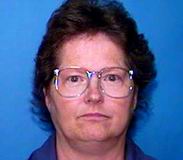 Bobbie Sue Terrell
Murderer · USA · 1984
Bobbie Sue Dudley Terrell was a Pinellas County nurse and worked as the night s…
12 victims
Bobbie Sue Terrell
Murderer · USA · 1984
Bobbie Sue Dudley Terrell was a Pinellas County nurse and worked as the night s…
12 victims
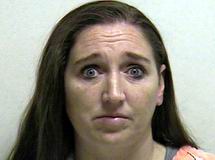 Megan Huntsman
Murderer · USA · 1996
Megan Huntsman was 40 at sentencing. She was a mother of three children who wer…
6 victims
Megan Huntsman
Murderer · USA · 1996
Megan Huntsman was 40 at sentencing. She was a mother of three children who wer…
6 victims
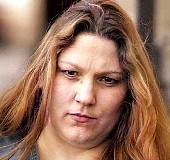 Angela Johnson
Murderer · USA · 1993
Angela Jane Johnson was convicted in federal court of aiding and abetting the m…
5 victims
Angela Johnson
Murderer · USA · 1993
Angela Jane Johnson was convicted in federal court of aiding and abetting the m…
5 victims
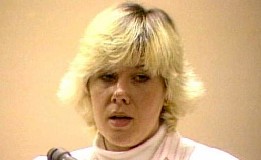 Catherine May Wood
Murderer · USA · 1987
Catherine May Wood was an American caregiver who worked at the Alpine Manor Nur…
5 victims
Catherine May Wood
Murderer · USA · 1987
Catherine May Wood was an American caregiver who worked at the Alpine Manor Nur…
5 victims
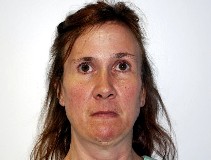 Michele Kalina
Murderer · USA · 1996
Michele Kalina pleaded guilty to murder for one of five infants she initially w…
5 victims
Michele Kalina
Murderer · USA · 1996
Michele Kalina pleaded guilty to murder for one of five infants she initially w…
5 victims
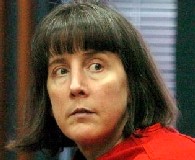 Amy Bishop
Murderer · USA · 1986
Amy Bishop — biology professor and perpetrator · James Anderson — Bishop’s husb…
4 victims
Amy Bishop
Murderer · USA · 1986
Amy Bishop — biology professor and perpetrator · James Anderson — Bishop’s husb…
4 victims
 Michael Worthington
Murderer · USA · 1995
Michael Worthington was convicted after pleading guilty to first-degree murder,…
1 victim
Michael Worthington
Murderer · USA · 1995
Michael Worthington was convicted after pleading guilty to first-degree murder,…
1 victim
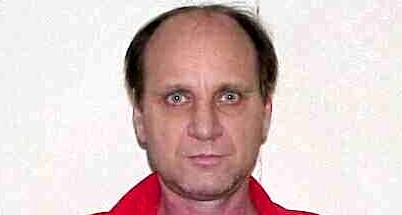 Randy Haight
Murderer · USA · 1985
August 22, 1985 — Randy Haight murdered Patricia Vance and David Omer. · August…
2 victims
Randy Haight
Murderer · USA · 1985
August 22, 1985 — Randy Haight murdered Patricia Vance and David Omer. · August…
2 victims
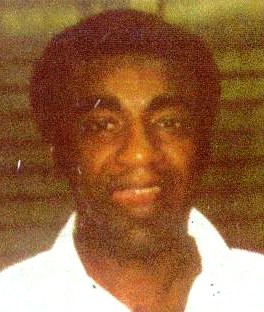 Cornelius Singleton
Murderer · USA · 1977
Cornelius Singleton was executed by electrocution in Alabama on November 20, 19…
1 victim
Cornelius Singleton
Murderer · USA · 1977
Cornelius Singleton was executed by electrocution in Alabama on November 20, 19…
1 victim
 Mark Dixie
Murderer · United Kingdom · 2005
Mark Philip Dixie — defendant Sally Anne Bowman — victim; British model Lewis S…
1 victim
Mark Dixie
Murderer · United Kingdom · 2005
Mark Philip Dixie — defendant Sally Anne Bowman — victim; British model Lewis S…
1 victim
- Gender
- female
- Country
- USA
- Location
- San Diego County, California, USA
- Date of birth
- November 7, 1947
- Age at first offence
- 42
- Characteristics
- domestic violence, abuse, rape
- Victim profile
- H er former husband Daniel T. Broderick III, 44, and his second wife, Linda Kolkena Broderick, 28
- Method of murder
- Shooting ( .38-caliber pistol)
- Date(s) of murder
- November 5, 1989
- Years active
- 1989
- Date of arrest
- Same day (turned herself in to the police)
- Status
-
Life imprisonment
Sentenced to two consecutive terms of 15 years to life, plus two years for illegal use of a firearm on February 7, 1992
Case details
Elisabeth Anne “Betty” Broderick (born November 7, 1947) was a former American suburban housewife convicted of the November 5, 1989 murders of her former husband Daniel T. Broderick III and his second wife, Linda Kolkena.
Betty Broderick hired attorney Jack Earley to defend her. The State of California was represented by prosecutor Kerry Wells.
Betty Broderick was described as driven by Battered Women’s Syndrome, claiming she was driven over the edge by years of psychological, emotional, and mental abuse by her philandering husband, Dan Broderick. Jack Earley portrayed Betty as a woman who sacrificed her entire being to be nothing more than a perfect mother and perfect wife to four children and a successful husband, and argued that Dan coldheartedly traded Betty in for a “younger model” by cheating on her behind her back for three years with Linda Kolkena, ultimately divorcing Betty, getting sole custody of the four children, and then marrying Linda in 1989.
Kerry Wells portrayed Betty as a coldhearted, selfish, narcissistic murderer who planned and schemed to kill her ex-husband for quite some time, using phone messages Betty left on Dan and Linda’s answering machine, evidence that Betty had repeatedly vandalized Dan’s home, and testimony from Betty’s oldest daughter, Kim, about Betty’s anger and lack of remorse after the murders. Kerry Wells was quoted in a magazine saying: “I've had my fill of Elisabeth Broderick. She was not a battered woman. She was getting $16,000 a month in alimony. She had a million-dollar La Jolla house, a car, a boyfriend. I see abused women every day with broken bones and smashed faces. Give me a break.”
Timeline
- April 12, 1969 — Betty Broderick and Daniel T. Broderick III were married at the Immaculate Conception Church in Eastchester.
- January 30, 1989 — Betty’s divorce was final; Judge William Howatt ruled Betty owed Daniel Broderick $750,000 in Epstein credits and cash advances, accrued between the time Daniel moved out and the date of divorce finalization.
- February 1985 — Daniel Broderick and Betty Broderick separated.
- April 22, 1989 — Daniel Broderick and Linda Kolkena were married.
- November 5, 1989 — Betty shot and killed Daniel Broderick and Linda Kolkena at approximately 5:30 am in the couple’s bedroom.
- Fall 1990 — Betty’s first trial ended in a hung jury; a mistrial was declared by Judge Thomas Whelan.
- December 11, 1991 — After a second trial, Betty was convicted of two counts of second-degree murder.
- February 7, 1992 — Betty was sentenced to two consecutive terms of 15 years to life, plus two years for illegal use of a firearm.
- January 2010 — Betty’s first request for parole was denied by the Board of Parole Hearings.
- 2021 — Betty was due to be released and could reapply for parole in 2013.
The offence
One month before Dan Broderick was to marry Linda Kolkena, Betty bought a Smith & Wesson revolver, took shooting lessons, and, according to some accounts, carried the gun most of the time and made threats to shoot Dan.
Eight months after buying the gun and seven months after Dan and Linda were married, Betty shot and killed the couple while they slept. The murder occurred at approximately 5:30 am on the morning of November 5, 1989, two days before Betty’s 42nd birthday.
Betty had gained entry to Dan Broderick’s home in Marston Hills with a key she had taken from the purse of her eldest daughter, Kim Broderick. After Betty shot the couple, she turned herself in to the police, never denying that she pulled the trigger five times.
Allegedly, Dan Broderick’s last words were, “Okay, you shot me. I'm dead.”
At her trials:
- Betty shot all five bullets from her gun.
- Two bullets hit Linda in the head and chest, killing her instantly.
- One bullet hit Dan in the chest as he was apparently reaching for a phone.
- One bullet hit the wall.
- One bullet hit a night stand.
Dan was 44 and Linda was 28.
At the murders, Betty removed from the bedroom a telephone that Dan could have used to call for help, and she turned over the line that prevented Dan from calling for help, according to testimony.
Betty denied she had intended to murder the couple when she broke into the house. When asked why she had brought a handgun into the home that night, she replied: “because I wanted him to listen to me.” She claimed that her intention was to make him listen to her, and if he wouldn’t, she would commit suicide and “splash [her] brains all over his goddamn house.”
When pressed why she did not commit suicide after shooting Dan and Linda, she stated that she didn’t have any bullets left. She claimed she had shot her ex-husband in the heat of passion as soon as she entered the bedroom upon Linda screaming, “Call the police!”.
Betty’s explanation at both trials was that she had never planned to kill Dan and Linda and that the crime was never premeditated.
At her second trial, her account of the murders was quoted:
“The movement that I made into their bedroom woke them up, and they moved and somebody screamed 'Call the police!' and I said 'No!' and I just fired the gun and this big noise went off, and then I grabbed the phone and got the hell out of there. But I wasn't even in that room . . . I mean, it was just an explosion. Just, I moved, they moved, the gun went off, and it was like AHHHH! And it was that fast.”
She alleged she was startled by Linda screaming, “Call the police!” and with no thought process or plan she immediately fired the gun, unaware at that moment in the dark bedroom that any bullets hit the couple.
Investigation and arrest
Betty turned herself in to the police and never denied pulling the trigger five times.
Trial
Charges and first trial
Betty Broderick was charged with two counts of first-degree murder.
Betty hired attorney Jack Earley to defend her, and prosecutor Kerry Wells represented the State of California.
Betty’s first trial ended in a hung jury when two jurors held out for manslaughter, citing lack of intent. A mistrial was declared by Judge Thomas Whelan.
One of the jurors was quoted as saying, “I only wonder what took her so long.”
Second trial
Betty was re-tried a year later with the same defense attorney and prosecutor. The jury returned a verdict of two counts of second-degree murder on December 11, 1991.
In a magazine, Kerry Wells was quoted: “I've had my fill of Elisabeth Broderick. She was not a battered woman. Give me a break.”
The second trial was described as essentially a replay of the first trial, though Jack Earley maintained Judge Thomas Whelan severely restricted Betty’s defense in the second trial while allowing the prosecution’s case to expand.
Betty was ultimately convicted on two counts of second-degree murder.
Evidence and witness testimony in the second trial
Witness testimony included:
- Testimony by Betty herself.
- Testimony from Betty’s oldest daughter, Kim.
- Testimony about Betty’s answering machine messages and her vandalism.
- Testimony that included that Betty had repeatedly vandalized Dan’s home.
- Testimony about custody-related issues and her anger.
Prosecutors introduced evidence of Betty’s phone messages and alleged her break-ins at Dan’s house and threats.
Two of the trials’ described impacts:
- Betty denied premeditation.
- Prosecutors argued the killings were premeditated and focused on Betty’s state of mind.
During one trial, Betty was described as having removed the telephone extension from the wall so Dan could not call for help, according to testimony.
Sentencing
Betty’s sentencing hearing was held on February 7, 1992.
During the hearing, Margaret Kolkena-Seats (Linda’s sister), Terry Broderick (Dan’s brother), and Brian Monahan (a friend of the Broderick family) made impact statements on behalf of the victims.
Betty originally was expected to speak on her own behalf, but ultimately decided to remain silent.
Betty was sentenced to two consecutive terms of 15 years to life, plus two years for illegal use of a firearm, the maximum under the law.
Betty was incarcerated since the day she committed the murders.
Appeals
No appeals were stated in the provided material.
Outcome and aftermath
Betty Broderick was serving her sentence at the California Institution for Women (CIW) in Corona, California.
In January 2010, her first request for parole was denied by the Board of Parole Hearings because she did not show remorse and did not acknowledge wrongdoing.
At her parole hearing:
- Two of her children spoke asking the board to release their mother.
- Betty’s other two children spoke against Betty, imploring the board to keep Betty incarcerated.
Betty was due to be released in 2021 and could reapply for parole in 2013.
The case was dramatized in popular culture, including:
- “A Woman Scorned: The Betty Broderick Story” (Part 1) and “Her Final Fury: Betty Broderick, The Last Chapter (1992)” (Part 2).
- Deadly Women, season 4, episode “Till Death Do us Part”.
- Law & Order, 1991 episode “The Wages of Love”, described as apparently based on the Broderick case.
Betty granted interviews to television shows, reporters, and magazines. She appeared on the Oprah Winfrey Show twice, Hard Copy, 20/20, and Headliners and Legends.
At least three books were written about her story:
- Until the Twelfth of Never: The Deadly Divorce of Dan and Betty Broderick (1993) by Bella Stumbo.
- Forsaking All Others: The Real Betty Broderick Story (1993) by Loretta Schwartz-Nobel.
- Hell Hath No Fury (1992) by Bryna Taubman.
Betty was interviewed by Ladies Home Journal and countless other magazines.
Parole hearing quote and statements
At the January 2010 parole hearing, Broderick told the parole board: “I allowed the voices in my head to completely take over.” “I took the lives of two wonderful people who were loved by many.”
When pressed for details, Broderick repeated: “Linda came at me and the gun went off.”
Richard Sachs, a San Diego prosecutor who handles so-called “lifer hearings,” said: “She was totally not remorseful, didn't even try.”
Asked at Thursday’s hearing why she then didn’t commit suicide, as she had said she planned to, Broderick responded: “I didn't have any bullets.”
Burial detail
Linda and Dan Broderick were listed as buried together at Greenwood Memorial Park in San Diego. Greenwood personnel stated that Dan Broderick’s grave was alone and Linda was buried elsewhere, though named on the memorial marker.
Other details
Defense and prosecutorial roles in early description
District Attorney Edwin L. Miller, Jr. appointed Deputy DA Kerry Wells to head his team, and he announced he would not seek the death penalty.
A friend, Dian Black, recommended attorney Jack Early.
Trial-room judge information
- Judge Thomas Whelan declared a mistrial after the first trial ended in a hung jury.
- Judge Thomas J. Whalen presided when jury selection began on September 27, 1990 (as described in the material).
Interview and statement on gender differences
In an interview, Betty said:
“The law has to take into account the differences between men and women in terms of their respective power. Men have all the power... That's why (Dan) could do to me what he did...This whole case is a story of extremes – extremes of rich to poor, and all the rest. I said I represent the extremes of what can happen to women in divorce courts.”
Prison and parole planning statements
Broderick was prisoner number W42477 and continued to tend to responsibilities at Central California Women’s Facility at Chowchilla.
In an interview with Lexxicon, she said:
“I am kept very busy in here. I am forced to 'program' from 8 a.m. to 4 p.m., then we have meals, showers, laundry, phone calls...I try to tutor ladies in the GED exam (and) am very active in my 'community,' serving on boards and committees – just like home...I am very well liked and respected...I don’t live in fear.”
She added:
“Goddamn shame you can only feel safe and free in prison! Nice society we have!”
Spotted an error, or have more information about this case?