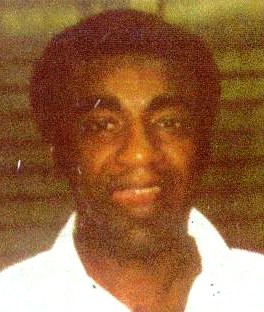
Cornelius Singleton
Murderer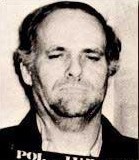 Ervil LeBaron
Murderer · USA · 1972
Ervil Morrell LeBaron (1925 to August 16, 1981) was the leader of a polygamous…
35 victims
Ervil LeBaron
Murderer · USA · 1972
Ervil Morrell LeBaron (1925 to August 16, 1981) was the leader of a polygamous…
35 victims
 Brian Kevin Rosenfeld
Murderer · USA · 1985
Brian Kevin Rosenfeld Brian Kevin Rosenfeld was sentenced to three concurrent l…
23 victims
Brian Kevin Rosenfeld
Murderer · USA · 1985
Brian Kevin Rosenfeld Brian Kevin Rosenfeld was sentenced to three concurrent l…
23 victims
 Marvin Gray
Murderer · USA · 1975
Marvin Gray was convicted killer who claimed responsibility for 23 slayings and…
23 victims
Marvin Gray
Murderer · USA · 1975
Marvin Gray was convicted killer who claimed responsibility for 23 slayings and…
23 victims
 Yahweh ben Yahweh
Murderer · USA · 1980
Yahweh ben Yahweh was born and legally named Hulon Mitchell Jr. (October 27, 19…
23 victims
Yahweh ben Yahweh
Murderer · USA · 1980
Yahweh ben Yahweh was born and legally named Hulon Mitchell Jr. (October 27, 19…
23 victims
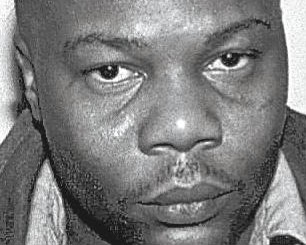 Michael Satcher
Murderer · USA · 1990
Michael Charles Satcher was the petitioner-appellee and petitioner-appellant in…
1 victim
Michael Satcher
Murderer · USA · 1990
Michael Charles Satcher was the petitioner-appellee and petitioner-appellant in…
1 victim
 Philip Markoff
Murderer · USA · 2009
Philip Haynes Markoff (February 12, 1986 – August 15, 2010) was an American med…
1 victim
Philip Markoff
Murderer · USA · 2009
Philip Haynes Markoff (February 12, 1986 – August 15, 2010) was an American med…
1 victim
 Frank James Coppola
Murderer · USA · 1978
Frank James Coppola (1944–August 10, 1982) was a former police officer from Por…
1 victim
Frank James Coppola
Murderer · USA · 1978
Frank James Coppola (1944–August 10, 1982) was a former police officer from Por…
1 victim
- Gender
- male
- Country
- USA
- Location
- Mobile County, Alabama, USA
- Date of birth
- April 14, 1956
- Age at first offence
- 21
- Characteristics
- robbery, drug addict, history of mental illness
- Victim profile
- Sister Ann Hogan ( Roman Catholic nun )
- Method of murder
- Strangulation
- Date(s) of murder
- November 12, 1977
- Years active
- 1977
- Date of arrest
- —
- Status
-
Executed
Executed by electrocution in Alabama on November 20, 1992
Overview
Cornelius Singleton was executed by electrocution in Alabama on November 20, 1992. He was 36 years old at the time of execution. He was born on April 14, 1956. He was Black.
Singleton killed Sister Ann Hogan in a cemetery in Mobile, Alabama.
Timeline
- April 14, 1956 — Cornelius Singleton was born.
- July 1978 — Singleton was sentenced.
- November 12, 1977 — Sister Ann Hogan was killed in a cemetery in Mobile, Alabama.
- November 20, 1992 — Cornelius Singleton was executed by electrocution in Alabama.
- May 27, 1988 — The United States Court of Appeals for the Eleventh Circuit affirmed the district court’s denial of the federal habeas corpus petition.
Background
Cornelius Singleton was illiterate and had an IQ between 55 and 65. In other parts of the record, his IQ was described as between 55 and 67, and his mental age was described as seven.
Singleton was described as having a former record involving criminal activity in 1972. He was sentenced to 3 years for arson and burglary in 1972 and served a full term, being released in 1976.
His lawyers did not meet with him for extended periods while he was on death row and, according to the material provided, for many years while on death row he never had an attorney.
The offence
On November 12, 1977, Sister Ann Hogan was murdered while praying in a cemetery in Mobile, Alabama. Hogan was found buried under stones and logs in a wooded area adjacent to the cemetery. She died from strangulation and asphyxiation.
The state alleged that Singleton also committed robbery during the murder. In the account provided, Singleton took her watch and other articles, beat and strangled her, and then tried to hide the body beneath debris. A watch allegedly stolen from the victim was central to the prosecution’s capital-murder theory.
Eyewitnesses described a suspicious white man with long blonde hair lurking around the cemetery on the day of the murder.
Investigation
The record described a lack of physical evidence placing Singleton at the scene or linking him to the murder. It also described no forensic testing of blood on the victim’s blouse and an outline of a hand on the back of the blouse. It stated that there were no fingerprints of Singleton in a stolen truck or at the crime scene.
The material stated there was no evidence linking Singleton to the crime or the crime scene and no evidence that he knew the victim or had a motive to kill the victim. It also stated that police conducted a thorough search for a watch allegedly stolen from the victim and failed to find it. A second, brief search was later described as producing the watch, allegedly found on the mantel of Singleton’s grandfather’s house.
The material stated that police failed to investigate eyewitness accounts and failed to link the forensic evidence to Singleton.
A neighbor incident was described in connection with Singleton’s interrogation: there was a discussion of a recent incident in which Singleton thought he was buying bed sheets from another resident in his boarding house after her sheets were reported stolen.
Arrest and interrogation
Singleton was arrested for the murder of Sister Ann Hogan approximately one week after the incident and he confessed to the crime while in police custody. The material stated that Singleton confessed after being interrogated for several hours.
The material described that Singleton was read his Miranda rights and signed a waiver form acknowledging that he understood his rights. It also stated that during the interrogation Singleton unknowingly waived his rights to counsel and that his girlfriend was brought to the police station and made to sit on Singleton’s lap while the District Attorney reportedly dictated a confession, which Singleton was made to repeat while another officer recorded it.
The interrogation included confusing and disorienting discussion about bed sheets, and Singleton thought he was being questioned about sheets.
The material stated that Singleton was taken to the cemetery where the murder took place and was questioned about details despite his apparent lack of knowledge of the crime. Singleton stated that the victim’s pager and some papers were on the ground and he was told to pick them up but refused.
Singleton was returned to the police station and was told to sign the confession. He could not read, but he signed the confession after being told that other charges pending against him would be dropped. The material stated that in fact no charges were pending and that his girlfriend witnessed his signature.
The material stated that Singleton signed a dictated confession but did not understand what he was confessing to or the consequences. It also stated he was led to believe he was confessing to stealing bed sheets.
Trial
A jury in the Circuit Court of Mobile County, Alabama found Singleton guilty of first degree murder and robbery and sentenced him to death.
The material stated that Singleton, an African-American man, was convicted by an all-white jury of capital murder based on a coerced confession dictated by the prosecution. It also stated that in order to secure a capital conviction, the state needed evidence of an additional crime and the aggravating circumstance was robbery.
The trial court and the material described that Singleton’s low intelligence and mental limitations were raised in the habeas proceedings in connection with the voluntariness of his confession, but the courts found the confession voluntary.
The material described that trial counsel did not independently investigate and did not challenge the selection of an all-white jury. It stated that Singleton’s lawyers failed to investigate independently, failed to provide an adequate defense, and failed to challenge the selection of an all-white jury. It also stated that Singleton was convicted quickly and sentenced to death despite the lack of clear evidence linking him to the scene or the victim and statements that another man had committed the murder.
Sentencing
The material stated that Singleton was sentenced to death. It described that after his first conviction was reversed and remanded for a new trial, Singleton was convicted again and sentenced to death at a second trial.
On direct appeal, the Alabama Court of Criminal Appeals affirmed the conviction but ordered a new sentencing hearing to determine whether the court erred in finding an aggravating circumstance that the crime was committed while petitioner was under sentence of imprisonment. After the sentencing hearing, Singleton was again sentenced to death.
The material further described that the statutory aggravating factor was theft of the victim’s watch.
Mitigating factors described in the material included IQ, illiteracy, waiving of rights, and the coerced confession, along with evidence of mental illness stated as retardation and or neurological damage, and a prior record.
Appeals
Singleton’s appeals were denied, and part of the death penalty statute was found unconstitutional by the U.S. Supreme Court, resulting in the conviction being overturned. Singleton was retried in 1981 and again convicted and sentenced to death.
The material described that Singleton’s appeals were based on the fact that Singleton’s original attorney failed to use his mental retardation for mitigation purposes at sentencing. It also described ineffective assistance and issues with the coram nobis procedure.
The material included an account of federal habeas corpus proceedings under case number 847 F.2d 668: Cornelius Singleton, Petitioner-Appellant, v. Morris Thigpen, Commissioner, Alabama Department of Corrections, Respondent-Appellee. No. 87-7629. United States Court of Appeals, Eleventh Circuit. May 27, 1988.
In the Eleventh Circuit’s decision, the court addressed claims that:
- Singleton was denied effective assistance of counsel because trial counsel failed to go to Singleton’s neighborhood to search for possible mitigating evidence prior to sentencing.
- The trial court did not consider Singleton’s low level of intelligence when determining that his confession was voluntary.
- The insufficiency of Alabama’s coram nobis procedure for collateral attacks denied him due process.
The decision affirmed the district court’s denial of the writ of habeas corpus.
Outcome
The material also recorded a quote attributed to Singleton shortly before execution:
“Let mama know I still love her. Keep that chin up.”
Other details
Prison and identity details
The material included “Address Holman Prison/Deceased November 20, 1992,” and listed that Singleton’s race was Black.
People named in the provided material
- Sister Ann Hogan — victim.
- Ferrill D. McRae — trial judge.
- Reggie Stephens & Mike Scheuermann (Mobile) — trial attorneys.
- Charles Graddick — prosecutors.
- Al Pennington-Mobile; Blair Brown (Wash., DC) and M. McDonald (Mobile) — appellate counsel.
- Matthew McDonald — one of Singleton’s last lawyers, mentioned in connection with ineffective assistance arguments.
- Dr. Claude Brown — referenced regarding examination of Singleton just prior to the second trial.
- Officer Bell — referenced in connection with police misconduct allegations, including telling Singleton where to walk and what to say at the cemetery.
- Governor Hunt — referenced in clemency efforts; the material described that he agreed to see a group and did not grant clemency.
Clemency efforts
Before Singleton’s execution, a church bus of people from Mobile went to the governor’s office to plead for clemency. The people were told the governor was busy and an aide would talk with them. They refused to leave, and around 7:30 p.m. Governor Hunt agreed to see a group. The material stated he did not grant clemency.


Spotted an error, or have more information about this case?