
Michelle Byrom
Murderer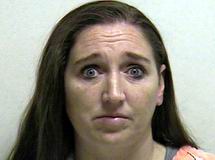 Megan Huntsman
Murderer · USA · 1996
Megan Huntsman was 40 at sentencing. She was a mother of three children who wer…
6 victims
Megan Huntsman
Murderer · USA · 1996
Megan Huntsman was 40 at sentencing. She was a mother of three children who wer…
6 victims
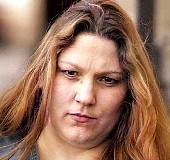 Angela Johnson
Murderer · USA · 1993
Angela Jane Johnson was convicted in federal court of aiding and abetting the m…
5 victims
Angela Johnson
Murderer · USA · 1993
Angela Jane Johnson was convicted in federal court of aiding and abetting the m…
5 victims
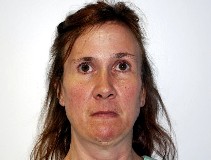 Michele Kalina
Murderer · USA · 1996
Michele Kalina pleaded guilty to murder for one of five infants she initially w…
5 victims
Michele Kalina
Murderer · USA · 1996
Michele Kalina pleaded guilty to murder for one of five infants she initially w…
5 victims
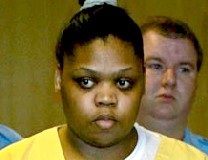 Tiffany Hall
Murderer · USA · 2006
Tiffany Hall was 24 when she was charged in September 2006. She later entered a…
5 victims
Tiffany Hall
Murderer · USA · 2006
Tiffany Hall was 24 when she was charged in September 2006. She later entered a…
5 victims
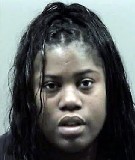 Banita Jacks
Murderer · USA · 2007
Banita Jacks was a Washington, DC resident convicted of murdering her four daug…
4 victims
Banita Jacks
Murderer · USA · 2007
Banita Jacks was a Washington, DC resident convicted of murdering her four daug…
4 victims
 Susan Eubanks
Murderer · USA · 1996
Susan Dianne Eubanks, also referred to as Susan Eubanks, was convicted by a jur…
4 victims
Susan Eubanks
Murderer · USA · 1996
Susan Dianne Eubanks, also referred to as Susan Eubanks, was convicted by a jur…
4 victims
 Arthur Lee Williams
Murderer · USA · 1982
Arthur Lee Williams was sentenced to death on June 5, 1983. The case characteri…
1 victim
Arthur Lee Williams
Murderer · USA · 1982
Arthur Lee Williams was sentenced to death on June 5, 1983. The case characteri…
1 victim
 Vladislav Volkovich
Serial killer · Ukraine · 1991
The Nighttime Killers (Ночной Серийник) were responsible for a string of brutal…
16 victims
Vladislav Volkovich
Serial killer · Ukraine · 1991
The Nighttime Killers (Ночной Серийник) were responsible for a string of brutal…
16 victims
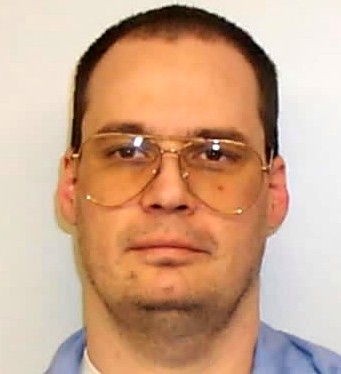 Darrell Edward Payne
Murderer · USA · 2000
Darrell Edward Payne was 36 and of Nampa at the time of the July 2000 murder of…
1 victim
Darrell Edward Payne
Murderer · USA · 2000
Darrell Edward Payne was 36 and of Nampa at the time of the July 2000 murder of…
1 victim
 Tiffany Cole
Murderer · USA · 2005
Tiffany Cole (WF), born 12/3/81, was sentenced to death for her role in the dou…
2 victims
Tiffany Cole
Murderer · USA · 2005
Tiffany Cole (WF), born 12/3/81, was sentenced to death for her role in the dou…
2 victims
- Gender
- female
- Country
- USA
- Location
- Tishomingo County, Mississippi, USA
- Date of birth
- November 3, 1956
- Age at first offence
- 43
- Characteristics
- murder for hire, parricide, torture, alcohol, child abuse
- Victim profile
- Edward Byrom Sr., 56 (her husband)
- Method of murder
- Shooting ( Luger 9-millimeter pistol)
- Date(s) of murder
- June 4, 1999
- Years active
- 1999
- Date of arrest
- —
- Status
-
Sentenced to death
Sentenced to death on November 18, 2000
Case identifiers
- Name: Michelle Byrom
- Offender data (as stated): White; age 43 at crime (DOB 11-3-1956)
Timeline
- June 4, 1999 — Edward Byrom, Sr. was shot to death in Tishomingo County.
- November 18, 2000 — Michelle Byrom was sentenced to death.
- October 4, 2004 — The United States Supreme Court denied Byrom’s petition for writ of certiorari.
- 2004 — Byrom v. Mississippi is cited as 543 U.S. 826 (denial of certiorari).
- October 17, 2003 — An Associated Press report stated Byrom lost an appeal seeking retrial and that the Supreme Court of Mississippi ruled 5-3 to deny relief.
- January 19, 2006 — A Mississippi Supreme Court en banc opinion is dated January 19, 2006.
Background
Michelle Byrom was convicted of capital murder in the shooting death of her husband, Edward Byrom, Sr., described as “white male” and as her husband of 20 years. She was sentenced to death.
The offence
Hiring and killing
In late May and early June 1999, Michelle Byrom began looking for someone to kill her husband. After attempting to hire at least one other person, she contracted with Joey Gillis to kill Edward Byrom, Sr. Byrom and Gillis negotiated a price of $15,000, to be paid from the victim’s life insurance proceeds.
The Byroms’ son, Edward Byrom, Jr. (referred to as “Junior”), assisted his mother in finding a killer and was aware that Gillis had been hired to kill his father. Gillis attempted to kill Byrom, Sr. on two separate occasions prior to the murder.
Events on June 4, 1999
On the morning of June 4, 1999, Byrom visited her physician, Dr. Ben Kitchens, who informed her that she had pneumonia and needed to go to the hospital. Edward Byrom, Sr. took off work and drove Byrom to the hospital and stayed at the hospital with her for awhile, then left promising to return after lunch.
Edward Byrom, Sr. went home, told Junior what room his mother was in, and then went into his private room to watch television. A few hours later, Byrom, Sr. was shot to death with his World War II relic Luger 9-millimeter pistol. There was no allegation or evidence of forced entry.
Statements about the shooter and disposal of evidence
According to Junior’s and Gillis’s statements, after Byrom, Sr. informed Junior about his mother, Junior accompanied Gillis and left his house. Junior dropped Gillis off near a wooded area that led to a field beyond the Byrom home. Gillis was wearing a glove on his right hand and carrying the 9-millimeter pistol. Thirty minutes later, Junior picked Gillis up at the same location.
Junior asked Gillis if his father had been killed, and Gillis said yes. When Junior asked if Gillis was the one who killed his father, Gillis indicated that he did not do it. Junior and Gillis disposed of the glove and shirt that Gillis was wearing and hid the pistol. Junior took Gillis home, then traveled to the hospital and told Byrom that “it was done.”
Byrom told Junior to return home to make sure Byrom, Sr. was dead and to get him help if he was suffering. Junior went home and found his father dead. He called 911 to report the murder.
Sheriff’s suspicion and custody
Upon arriving at the Byrom home, Tishomingo County Sheriff Department personnel became suspicious of Junior. He had cuts on his knuckles, which he claimed to have received after he struck an interior door in anguish upon discovering Byrom, Sr.’s body, and he also had blood on the back of his pants near his belt line and on the leg.
Junior was taken into custody to await questioning. He later confessed, implicating himself, Byrom, and Gillis in the murder. Through Junior’s confession, law enforcement determined that Gillis had been in the company of Junior that day at the Byrom home.
Gillis was located and taken into custody for questioning. He later confessed to his involvement in the murder as well as that of Byrom and Junior. However, Gillis maintained that someone else had actually killed Byrom, Sr.
Investigation
Interviews and suppression issue
Rick Marlar, an investigator with the Criminal Investigation Bureau (CIB) of the Mississippi Highway Patrol (MHP), went to the hospital and conducted the first of five interviews with Byrom. She did not incriminate herself during this interview.
Later that same night, Tishomingo County Sheriff David Smith went to the hospital and interviewed Byrom a second time. After being informed that Junior had “told everything,” Byrom confessed, implicating herself, Junior, and Gillis in the murder.
This confession and a subsequent statement were suppressed because of defective Miranda warnings. Byrom later gave two additional statements during which she revealed substantially the same incriminating information.
Forensic note
A footnote stated that the blood was later determined to be his own from the injury to his knuckles sustained when he punched an interior door after discovering his father’s body.
Arrest and custody
- Junior was taken into custody to await questioning after Tishomingo County Sheriff Department personnel became suspicious of him.
- Junior later confessed and implicated himself, Michelle Byrom, and Joey Gillis.
- Gillis was later located and taken into custody for questioning; he later confessed and also maintained that someone else had actually killed Byrom, Sr.
Trial
Plea agreements and testimony
As part of a plea agreement, Junior pled guilty to:
- conspiracy to commit capital murder
- accessory before the fact to grand larceny
- accessory before the fact to burglary with intent to commit assault
Junior also testified against his mother.
Gillis, described as the alleged “trigger-man” whom Byrom purportedly promised to pay for the murder of her husband, pled guilty to:
- accessory after the fact to capital murder
Jury and sentencing waiver
Michelle Byrom was convicted by a Tishomingo County jury of capital murder in the shooting death of her husband, Edward Byrom, Sr.
After the jury verdict, Byrom waived her right to a sentencing hearing before the same jury and instead chose to allow the trial judge to conduct the sentencing hearing without a jury. At the conclusion of the sentencing phase, the trial judge sentenced Byrom to death.
Prosecutorial comment during guilt-phase closing argument (ineffectiveness claim)
During closing argument at the guilt phase, an assistant district attorney stated:
- “[A]nd as Mr. Ralph Dance testified, Mr. Gillis is in jail awaiting trial. That was his testimony.”
Defense counsel did not object.
Evidence exclusion claims
Byrom argued that exclusion of a home video and some jailhouse letters denied her a fair trial. The direct appeal history discussed the home video and jailhouse letters:
- The trial court excluded the home video.
- The trial court excluded certain letters written by Junior to Byrom while they were in prison because the defense attempted to use the letters to impeach Junior without disclosing their existence to the State.
The direct appeal court affirmed the trial judge’s rulings and considered alternative merits and procedural bar as stated.
Sentencing
Trial judge sentencing
After the sentencing phase, the trial judge sentenced Byrom to death.
Waiver proceeding and sentencing options described in the petition
A “Petition for Sentencing Without a Jury” dated November 18, 2000 was signed by Byrom, her attorneys, and the trial judge, along with a certificate of counsel and a colloquy between Byrom and the trial judge.
The record described that Byrom was informed she had a right to a sentencing hearing and that she could be sentenced to:
- death
- life without parole
- life imprisonment
The State filed a Notice of Aggravating Circumstances on October 24, 2000.
The petition and colloquy also described that the jury would have to unanimously find beyond a reasonable doubt the existence of aggravating circumstances to sentence her to death; mitigating factors did not have to be found unanimously or beyond a reasonable doubt; and the jury would have to find that mitigating circumstances did not outweigh aggravating circumstances before imposing the death penalty.
Byrom was told the trial judge would perform the same analysis as a jury, but that it would be solely within his discretion whether to impose the death sentence. Byrom stated she felt she had the benefit of a complete and adequate discussion with her attorneys concerning her waiver of a jury as to sentencing, and her attorneys stated they explained the maximum and minimum penalties and considered her competent to understand the charges and the effect of her petition to waive sentencing by a jury. Her attorneys also stated they felt she was mentally and physically competent and had no reason to believe Byrom was under the influence of drugs affecting her understanding.
Medical reports presented at sentencing phase
The defense submitted reports from:
- Dr. Ben Kitchens
- Dr. Keith Caruso
The reports stated:
- Dr. Kitchens saw Byrom in 1997, 1998 and 1999.
- The report described physical/medical problems “such as lupus, depression, high blood pressure and alcohol abuse.”
Dr. Caruso, described as a psychiatrist, reported that at the time of the death of Byrom’s husband, Byrom suffered from:
- major depression
- alcohol dependence
- Munchausen’s Syndrome
- physical abuse
- borderline personality disorder
- lupus
- pneumonia
- anemia
- chronic pain
- hypertension
- and other problems
The analysis and background also included that people suffering from Munchausen’s Syndrome:
- “intentionally injure themselves in an attempt to garner sympathy. However, persons suffering from this disorder are different from malingerers in that Munchausen sufferers will be aware of their deceits but unaware of their motivations.”
Byrom was reported to have been using nine different medications at the time of her husband’s murder.
Dr. Caruso’s report provided a “relevant personal history” including:
- physical and sexual abuse by an alcoholic stepfather during her teen years, including that she was used by him as a prostitute
- that she ran away from home at fifteen and worked as a stripper before meeting the victim and marrying him
- that Edward Sr. became increasingly physically abusive, particularly when drinking
- that he was unfaithful to her on numerous occasions
- that he physically and psychologically abused their son
- and that she became increasingly dependent on alcohol and purposely injured herself so she could be admitted to a hospital to escape the abuse for a short time
Dr. Caruso stated that a combination of physical and psychological problems, along with the number of drugs she was taking and her alcohol abuse, led to helplessness which resulted in her believing that violence was a solution to her problems.
Appeals and post-conviction proceedings
Direct appeal history (as stated)
The record stated that Byrom:
- was convicted by a Tishomingo County jury of capital murder
- waived sentencing before the same jury and chose a judge-only sentencing hearing without a jury
- was sentenced to death
On direct appeal, the Mississippi Supreme Court affirmed Byrom’s conviction and sentence, and the rehearing was denied. The United States Supreme Court denied certiorari on October 4, 2004.
The direct appeal is cited as Byrom v. State, 863 So.2d 836 (Miss. 2003), with certiorari denial cited as Byrom v. Mississippi, 543 U.S. 826 (2004).
Issues raised on direct appeal (as enumerated)
Byrom’s direct appeal issues were enumerated as:
- requiring two defense doctors to turn over their psychiatric reports of Byrom to the prosecution
- denial of a request for change of venue
- requiring Byrom to submit to a psychiatric examination by Dr. Cris Lott, who also examined her son and another co-defendant
- requiring Byrom to turn over her medical records to Dr. Lott
- refusal to permit introduction by the defense of certain pornographic videotapes
- failure to grant Byrom’s amended motion to suppress and compel discovery
- refusal to reopen a suppression hearing
- refusal to quash the indictment
- prohibition of impeachment of Edward Byrom, Jr.
- failure to grant a mistrial after admission of testimony that Joey Gillis was charged with capital murder of Edward Byrom, Sr., and the prosecution’s closing argument to the same effect
- refusal of the defendant’s requested jury instruction concerning accessory after the fact
- limiting the cross-examination of Eric Byrom (the victim’s nephew)
- admission of evidence concerning drug dog’s search
- refusing to charge the jury that it had to find Byrom offered something of value to Joey Gillis before it could convict her of capital murder
- erroneous imposition of the death sentence, described as disproportionate
Petition for post-conviction relief (PCR)
After her direct appeal, Byrom filed a Petition for Post-Conviction Relief and a Supplement to Petition for Post-Conviction Relief. The petition was denied.
Claims raised in PCR petition (as enumerated)
Byrom raised:
- ineffective assistance of trial counsel
- denial of federal and state constitutional rights at the sentencing phase
- a fatally defective indictment that did not provide adequate notice of the specific offenses against her
- denial of a fundamentally fair trial due to exclusion of relevant evidence
- the death sentence was disproportionate
- newly discovered evidence which would exonerate her
- cumulative effect of trial errors denied her federal and state constitutional rights
Ineffective assistance of counsel (Strickland framework quoted)
The court quoted:
- “The benchmark for judging any claim of ineffectiveness [of counsel] must be whether counsel's conduct so undermined the proper functioning of the adversarial process that the trial cannot be relied on as having produced a just result.”
- “Unless a
Spotted an error, or have more information about this case?