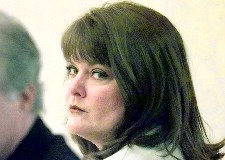
Susan Eubanks
Murderer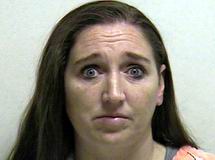 Megan Huntsman
Murderer · USA · 1996
Megan Huntsman was 40 at sentencing. She was a mother of three children who wer…
6 victims
Megan Huntsman
Murderer · USA · 1996
Megan Huntsman was 40 at sentencing. She was a mother of three children who wer…
6 victims
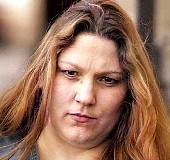 Angela Johnson
Murderer · USA · 1993
Angela Jane Johnson was convicted in federal court of aiding and abetting the m…
5 victims
Angela Johnson
Murderer · USA · 1993
Angela Jane Johnson was convicted in federal court of aiding and abetting the m…
5 victims
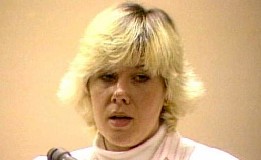 Catherine May Wood
Murderer · USA · 1987
Catherine May Wood was an American caregiver who worked at the Alpine Manor Nur…
5 victims
Catherine May Wood
Murderer · USA · 1987
Catherine May Wood was an American caregiver who worked at the Alpine Manor Nur…
5 victims
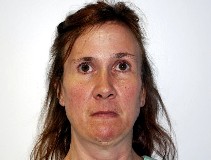 Michele Kalina
Murderer · USA · 1996
Michele Kalina pleaded guilty to murder for one of five infants she initially w…
5 victims
Michele Kalina
Murderer · USA · 1996
Michele Kalina pleaded guilty to murder for one of five infants she initially w…
5 victims
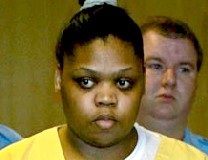 Tiffany Hall
Murderer · USA · 2006
Tiffany Hall was 24 when she was charged in September 2006. She later entered a…
5 victims
Tiffany Hall
Murderer · USA · 2006
Tiffany Hall was 24 when she was charged in September 2006. She later entered a…
5 victims
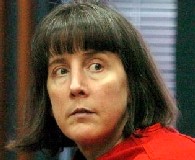 Amy Bishop
Murderer · USA · 1986
Amy Bishop — biology professor and perpetrator · James Anderson — Bishop’s husb…
4 victims
Amy Bishop
Murderer · USA · 1986
Amy Bishop — biology professor and perpetrator · James Anderson — Bishop’s husb…
4 victims
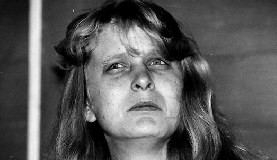 Gunn-Britt Ashfield
Murderer · Australia · 1993
Gunn-Britt Ashfield was the mother of six-year-old John Ashfield. In 2011 she w…
1 victim
Gunn-Britt Ashfield
Murderer · Australia · 1993
Gunn-Britt Ashfield was the mother of six-year-old John Ashfield. In 2011 she w…
1 victim
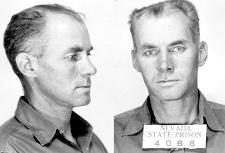 Burton Williamson
Murderer · USA · 1939
Burton Franklin Williamson was executed by asphyxiation-gas in Nevada on Novemb…
1 victim
Burton Williamson
Murderer · USA · 1939
Burton Franklin Williamson was executed by asphyxiation-gas in Nevada on Novemb…
1 victim
 Manuel Pina Babbit
Murderer · USA · 1980
Manuel Pina Babbitt was convicted in Sacramento County of first degree murder w…
1 victim
Manuel Pina Babbit
Murderer · USA · 1980
Manuel Pina Babbitt was convicted in Sacramento County of first degree murder w…
1 victim
 Arthur Shawcross
Serial killer · USA · 1972
Arthur Shawcross (born June 6, 1945) was an American serial killer, also known…
13 victims
Arthur Shawcross
Serial killer · USA · 1972
Arthur Shawcross (born June 6, 1945) was an American serial killer, also known…
13 victims
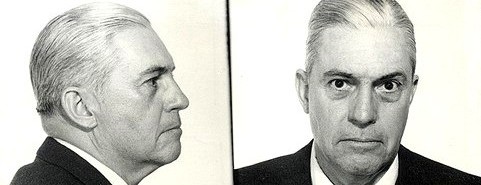 Leonard Ewin Scott
Murderer · USA · 1955
Leonard Ewin Scott was married to Evelyn Throsby Scott (née Mumper). They met a…
1 victim
Leonard Ewin Scott
Murderer · USA · 1955
Leonard Ewin Scott was married to Evelyn Throsby Scott (née Mumper). They met a…
1 victim
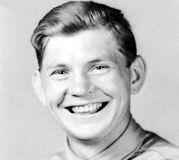 Edward Joseph Leonski
Spree killer · Australia · 1942
Edward Joseph Leonski was a U.S. Army private. He was described as a heavy drin…
3 victims
Edward Joseph Leonski
Spree killer · Australia · 1942
Edward Joseph Leonski was a U.S. Army private. He was described as a heavy drin…
3 victims
- Gender
- female
- Country
- USA
- Location
- San Marcos, San Diego County, California, USA
- Date of birth
- June 26, 1964
- Age at first offence
- 32
- Characteristics
- parricide, domestic violence, drugs, alcohol, torture
- Victim profile
- Her four sons, Brandon, 14; Austin, 7; Brigham, 6; and Matthew, 4
- Method of murder
- Shooting ( .38-caliber revolver)
- Date(s) of murder
- October 27, 1996
- Years active
- 1996
- Date of arrest
- Same day (suicide attempt)
- Status
-
Sentenced to death
Sentenced to death on October 13, 1999; Supreme Court of California affirmed the judgment in People v. Eubanks (53 Cal.4th 110) on December 19, 2011.
Case overview
Susan Dianne Eubanks, also referred to as Susan Eubanks, was convicted by a jury of four counts of first degree murder for shooting and killing her four young children. A jury found true special circumstance allegations that she had committed multiple murders and that she personally used a firearm in the commission of the murders. After a penalty trial, the jury returned a verdict of death. The trial court denied her motion to modify the penalty verdict and imposed a determinate term of four years for each of the gun use enhancements. The Supreme Court of California affirmed the judgment.
Background
Susan Dianne Eubanks was living with her children, her boyfriend Rene Dodson, and her nephew in a small home in San Marcos. Her children were Brandon (age 14), Austin (age 7), Brigham (age 6), and Matthew (age 4). At the time she killed her children on October 26, 1997, she shot and killed them with the same five-shot .38-caliber revolver.
Eubanks had been married previously. She and her first husband, John Armstrong, had one son, Brandon. Following her divorce from Armstrong, she married Eric Eubanks. She was pregnant at that time with Austin, the child of Larry Shoebridge. Eric Eubanks fathered two of her sons, Brigham and Matthew.
After Eubanks’s brother died, she obtained custody of her nephew.
The prosecution presented evidence that the Eubanks marriage had appeared stable until Eubanks experienced job-related injuries that required surgery. She then began to abuse prescription medications and alcohol, lost her job, and had a recurring pattern of separation and reconciliation with Eric Eubanks. The police found more than 50 bottles of prescription medications in Eubanks’s house after the murders.
Eubanks and Rene Dodson had had an intimate relationship on and off since they met in 1994. The Supreme Court described that, in the fall of 1997, the Eubankses were going through a divorce and Eric moved out of their South Twin Oaks home about one month before the murders. Eubanks and Dodson moved into their house while Eric moved out, and Dodson left and Eric moved back in for a period from October 13 to 19. Thereafter Eric moved out and Dodson returned.
The Supreme Court stated that about 10 days before the murders, Eubanks purchased replacement dead bolt locks for her house. The court described that Eubanks told a clerk who knew Dodson that Dodson had broken the lock on her door, and she was buying new ones so Dodson could not enter or get “his F’ing stuff.” The Supreme Court also described Eubanks telling the clerk to warn Dodson that she had just purchased bullets at a nearby store and that one “had his name on it.” Eubanks then asked one of the little boys with her, “Mommy did buy the bullets, didn’t she, didn’t she?”
Deputy Sheriff Daniel Deese picked up Dodson at the gas station. The Supreme Court stated that, as they approached Eubanks’s house, Eubanks was carrying Dodson’s tools away from his vehicle, which had two flat tires and broken headlights. The court stated that when Deese told Eubanks to drop the tools, she became confrontational and claimed Dodson owed her money and had raped her. Eubanks went inside after Deese threatened to arrest her. The Supreme Court described Eubanks coming outside yelling, “I've been screwed by men my whole life. I've been beaten. I've been raped.” The court further described that when Dodson left with Deese, they saw Eric parked nearby, and Kathy Goobs had paged Eric and advised him of calls from Eubanks and Brandon.
The offence
On October 26, 1997, Eubanks shot and killed her four young children. A jury found her guilty of four counts of first degree murder. The Supreme Court stated that, when they died, the children were respectively ages 14 (Brandon), seven (Austin), six (Brigham), and four (Matthew).
The Supreme Court described that each son had been shot in the head by the same five-shot .38-caliber revolver. It stated that Austin and Brigham had 0.02 micrograms of Xanax in their blood, while Brandon and Matthew had none.
The Supreme Court described the sequence and locations of the shootings. It stated that in the living room, Eubanks put the revolver to the temple of Brandon and shot him. The court also stated she shot him in the neck from a few inches away. It further stated she shot her younger sons in their bedroom: with the revolver no more than a foot from Austin’s head, she shot Austin near his left eye; with the gun inches from Brigham’s head, she shot Brigham twice, once above his left ear and once close to his right ear; and with the gun close to the head of Matthew, she shot Matthew in the top of the head, leaving stippling marks on his face. The Supreme Court stated that she fired other bullets in the bedroom that hit a wall and a window.
At some point in the bedroom, the Supreme Court stated that Eubanks opened the revolver’s cylinder, removed the five expended shell casings, put them in a trash can, and reloaded the five-shot revolver. The Supreme Court stated that she then shot herself in the abdomen with that same revolver.
The Supreme Court stated that Eubanks’s six-year-old nephew was home at the time of the shootings. It stated the nephew was found unharmed, in bed with blankets pulled up to his chin.
In addition to the evidence of the crimes, deputies who entered the home shortly after the shootings found five notes on Eubanks’s bedroom floor, all in her handwriting. The Supreme Court described the contents of the notes:
- A note to Eric stated: “You betrayed me. You kept a diary, and you and Rene Dodson conspired against me.” It added: “I've lost everyone I've ever loved. Now it's time for you to do the same.” It stated he could use any money from her worker's disability case to “bury the kids and find your rainbow. Anna May, I'm sure.”
- In a note to Dodson, Eubanks wrote he was “the biggest liar to date that I know. Stay on crystal meth and let your 37-year-old ass move back with Mom and Dad. Get back with Pam and/or Sherri. They're your class.” The note concluded: “See ya . . . Ha, ha.”
- A third letter to Brandon’s father stated: “I know you'll hate me forever, but I can't let [Brandon] live without his brothers, so I did what I did.” It stated she had been “strong for 25 years, and I'm tired of all the fight and hurt.” It complained that Dodson “fucked me all up.”
- The Supreme Court stated Eubanks also wrote to her niece and her sister apologizing for her actions. To the niece, it stated Eubanks explained: “I know what I'm doing is going to hurt you tremendously, but I can't and have no desire to go on.” To her sister, it stated Eubanks wrote she was “tired of being strong,” that “things are way out of hand.” It stated she included Matthew’s birth date and hers and asked her sister to ensure that the two of them would be “in the same casket.”
Investigation and police response
Deputies entered Eubanks’s home shortly after the shooting and found three of the boys dead from gunshot wounds to the head. Matthew was alive initially and was taken by ambulance to a hospital, where he later died. The Supreme Court described the nephew as found unharmed.
The Supreme Court also described that deputies found five notes on Eubanks’s bedroom floor and described that she was shot in the abdomen. It described a communications sequence involving Eubanks’s messages and a voice mail stating “Say goodbye.”
Arrest and charges
The Supreme Court described a jury finding of four counts of first degree murder. It also stated that the jury found true special circumstance allegations of multiple murders and that Eubanks personally used a firearm in the commission of the murders. The Supreme Court stated that after a penalty trial, the jury returned a verdict of death and that the trial court denied her motion to modify the penalty verdict.
At a bedside arraignment, Eubanks pleaded not guilty to charges that she murdered her four sons.
Trial
Guilt phase
A jury found Eubanks guilty of four counts of first degree murder. The jury found true as to each murder the special circumstance allegation that Eubanks had committed multiple murders. The jury also found that she personally used a firearm in the commission of the murders.
The Supreme Court described evidence and events preceding the killings:
- The Supreme Court described that the afternoon of October 26, 1997 involved Brandon staying home to watch his siblings and the nephew while Eubanks and Dodson went to a bar to watch football.
- The court described an argument between Eubanks and Dodson when they left the bar, including Eubanks slapping Dodson a few times while he was driving, and then Eubanks slamming a minivan into its parking gear while traveling 30 miles per hour on a freeway off-ramp.
- It described that after arriving home, the couple continued to argue in their bedroom, that Eubanks slapped Dodson, took his keys, blocked his exit from the room, and ripped out the telephones.
- It described sexual intercourse between the couple after the argument calmed down.
- It described that Dodson ran to a gas station and called the sheriff’s department to request deputies stand by so he could retrieve his belongings and truck.
- It described Brandon calling Kathy Goobs to come pick up the boys because his brothers were scared.
- It described Kathy Goobs agreeing to pick up the boys but never leaving to get them.
- The Supreme Court stated that Deputy Sheriff Daniel Deese picked up Dodson at the gas station, and described Eubanks’s confrontational behavior with Deese and her statements that Dodson owed her money and had raped her.
- It described Eubanks yelling to Deese’s presence, “I've been screwed by men my whole life. I've been beaten. I've been raped.”
- It described Eric being present and agreeing to take Dodson to a bar in Escondido. It described Eubanks telephoning Brandon’s grandfather and calling Armstrong in Texas with requests to tell Brandon to “stick by me on this one, even if it means lying.”
- The Supreme Court described Eric receiving a voice mail message in which Eubanks simply said, “Say goodbye.” It then described that at 6:30 p.m., Eric called the sheriff’s office to speak with Deputy Deese, and at about 7:00 p.m. Deese instructed Eric to request a welfare check of Eubanks’s residence.
The Supreme Court described the defence and prosecution positions on Eubanks’s intoxication and state of mind through experts:
- It described defence expert Dr. Clark Smith, board certified in addiction and forensic psychiatry, presenting evidence that saline and other infusions while Eubanks was in the ambulance would have affected the alcohol content of her blood drawn at the hospital.
- It described Dr. Smith’s testimony that the blood-alcohol content at the time of the murders would have been closer to 0.19 percent and that infusions would similarly have affected the Valium level, and that the alcohol and drug levels would have produced “very significant effect” on her brain affecting emotions, perceptions, judgment, and other “higher brain functions.”
- It described rebuttal expert Dr. Vina Spiehler, a toxicologist, estimating that Eubanks’s blood-alcohol content at the time was 0.09 percent and forming her opinion that intravenous infusions did not affect the concentrations as claimed by Dr. Smith, based on literature and her experience working at a coroner’s office.
Penalty phase
After the guilt phase, the Supreme Court described that the jury returned a verdict of death following a penalty trial and that the trial court denied Eubanks’s motion to modify the penalty verdict.
Prosecution evidence
The Supreme Court stated that crime scene reconstructionist Rod Englert testified for the prosecution at the penalty phase and presented reconstruction of the shooting sequence. It stated Englert testified that Eubanks first shot Brandon twice in the living room, then shot Austin once, then fired twice toward Matthew but missed; then Englert testified Eubanks reloaded her revolver; then she shot Brigham twice, fired a shot between Brigham and Matthew, and then shot Matthew once.
The Supreme Court described additional prosecution evidence in the penalty phase, including testimony from Larry Shoebridge that in 1989 when Eubanks and Shoebridge were romantically involved and living together, Eubanks put a gun to Shoebridge’s head and said he “could do whatever she wanted” and she “could'a killed” him. It stated Shoebridge decided to leave and that after Eubanks discovered where Shoebridge was living, she drove to his house, screamed at him, tried to attack his female friend, and drove off screeching her tires.
The Supreme Court described testimony about the impact of Brandon’s death, including a paternal grandmother describing two incidents where she believed Eubanks had abused Brandon, and teachers and coaches describing impact.
The Supreme Court also described Linda Smith, Eubanks’s sister, testifying about a telephone call from Eubanks in which Eubanks said she had rubbed her nephew’s face in a dirty diaper after she learned the nephew had hidden the diaper behind his bed. It stated that when Smith became angry, Eubanks changed her story and said she only had made the nephew smell the diaper as punishment.
Defence evidence
The Supreme Court stated that the defense presented evidence that Eubanks’s mother and stepfather were alcoholics who fought constantly and had affairs. It stated her mother abused her by slapping her and dragging her by her hair. It stated her mother died in a house fire when Eubanks was eight years old. It described Eubanks being rotated among relatives including an aunt who abused her and a relative who managed a hotel and had Eubanks and her siblings clean its rooms. It stated Eubanks sometimes lived with her stepfather in a trailer, where he would get drunk and urinate on himself.
The Supreme Court stated that relatives and Eubanks’s coworkers testified that Eubanks’s “number one concern” was her children, that she was proud of them and “very caring,” that she was an excellent employee, and that she did well in courses to become a medical office insurance biller after becoming disabled from a job-related back injury.
The Supreme Court stated that relatives and friends testified that Eubanks was “tortured” during her childhood and that she was a loving parent, and asked the jury not to impose the death penalty. It stated the children’s former pediatrician testified that Eubanks regularly brought her sons for checkups and medical problems. It stated Eric testified about his marriage and family life with Eubanks and that he still had some “love feelings” for her. It stated a correctional consultant testified Eubanks would not be a “future danger” if sentenced to life without the possibility of parole.
Sentencing
The penalty phase ended with a verdict of death. The Supreme Court described that the trial court denied Eubanks’s motion to modify the penalty verdict and imposed a determinate term of four years for each of the gun use enhancements.
Eubanks was sentenced to death on October 13, 1999. The judge Joan Weber upheld the jury’s recommendation to execute Eubanks. The judge stated:
“Mrs. Eubanks apparently committed these murders in a vicious, calculated attempt to lash out at the men in her life as evidenced by her angry, vindictive letters found at the scene,” Weber said.
“. . . Mrs. Eubanks committed the single most horrific criminal episode in the history of this county.”
Appeals
Eubanks’s appeal to the Supreme Court of California was automatic. The Supreme Court affirmed the judgment.
The Supreme Court addressed issues including:
- forfeiture of challenges to the jury commissioner’s preliminary jury screening;
- constitutionality and particularity of searches of Eubanks’s residence and seizure of evidence;
- admissibility of rebuttal expert testimony about effects of intravenous infusions on blood analysis;
- admissibility of evidence about mistreating her nephew by smearing feces on his face;
- admissibility of crime scene reconstruction testimony in the penalty phase;
- exclusion of expert testimony concerning conditions of confinement for a life without parole sentence;
- exclusion of proposed mitigating hearsay evidence, and admission of hearsay in aggravation for impeachment of a defense expert’s future dangerousness opinion;
- rejection of cumulative error claims;
- rejection of instructional and constitutional challenges to California’s death penalty law.
The Supreme Court’s disposition was: “We affirm the judgment.”
Outcome
Eubanks’s judgment of conviction and death sentence were affirmed by the Supreme Court of California in People v. Eubanks (53 Cal.4th 110) with the opinion issued on December 19, 2011.
Aftermath
Eubanks remained on death row in the Central California Women’s Facility in Chowchilla.
Other details
Victims
The Supreme Court identified the victims as Brandon (14), Austin (7), Brigham (6), and Matthew (4).
Gun and injury details
The Supreme Court described that all four children were shot in the head by the same five-shot .38-caliber revolver. It described reloading after removal of expended shell casings and that Eubanks shot herself in the abdomen with that same revolver.
Notes and messages
The Supreme Court described five notes found on Eubanks’s bedroom floor and a voice mail message in which she said, “Say goodbye.”
Defence issues and evidentiary matters
The Supreme Court also described:
- the prosecution presented crime scene reconstruction and the defence challenged expert testimony;
- evidentiary disputes about reliability of rebuttal expert testimony;
- evidentiary rulings during the penalty phase, including admission of evidence about the nephew feces incident and exclusion of confinement-condition evidence for life without parole.
Spotted an error, or have more information about this case?