John F. Morgan
Murderer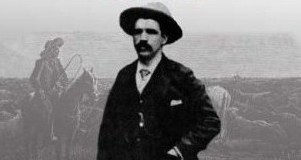 Jackson Lee Davis
Murderer · USA · 1896
Jackson Lee Davis, also known as Diamondfield Jack, was an inmate. · June 4, 18…
2 victims
Jackson Lee Davis
Murderer · USA · 1896
Jackson Lee Davis, also known as Diamondfield Jack, was an inmate. · June 4, 18…
2 victims
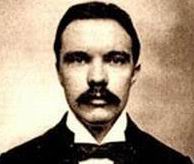 Theodore Durrant
Murderer · USA · 1895
Theodore Henry Durrant was born 1871 in Toronto, Canada. He was the son of Will…
2 victims
Theodore Durrant
Murderer · USA · 1895
Theodore Henry Durrant was born 1871 in Toronto, Canada. He was the son of Will…
2 victims
 William Williams
Murderer · USA · 1905
William Williams was a Cornish immigrant who worked as a miner in Saint Paul, M…
2 victims
William Williams
Murderer · USA · 1905
William Williams was a Cornish immigrant who worked as a miner in Saint Paul, M…
2 victims
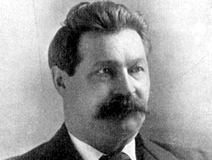 Adolph Luetgert
Murderer · USA · 1897
Adolph Louis Luetgert (also listed as Adolph Louis Luetgert; born December 27,…
1 victim
Adolph Luetgert
Murderer · USA · 1897
Adolph Louis Luetgert (also listed as Adolph Louis Luetgert; born December 27,…
1 victim
 Albert Horsley
Murderer · USA · 1905
Albert Edward Horsley was sentenced to death for the 1905 political assassinati…
1 victim
Albert Horsley
Murderer · USA · 1905
Albert Edward Horsley was sentenced to death for the 1905 political assassinati…
1 victim
 Robert Douglas Smith
Murderer · USA · 1980
Robert Douglas Smith was convicted in Tucson following a joint trial in which h…
1 victim
Robert Douglas Smith
Murderer · USA · 1980
Robert Douglas Smith was convicted in Tucson following a joint trial in which h…
1 victim
 William Smedley
Murderer · United Kingdom · 1947
William Smedley was executed by hanging at Armley Gaol on August 14, 1947. Stev…
1 victim
William Smedley
Murderer · United Kingdom · 1947
William Smedley was executed by hanging at Armley Gaol on August 14, 1947. Stev…
1 victim
 Robert H. White
Murderer · USA · 1928
Robert H. White was born in Texas in 1889 and was 39 at the time of his convict…
1 victim
Robert H. White
Murderer · USA · 1928
Robert H. White was born in Texas in 1889 and was 39 at the time of his convict…
1 victim
 James Lowery
Murderer · USA · 1979
Defendant: James (Jim) Lowery · Age: 54 · Race: white · Status: Executed by let…
2 victims
James Lowery
Murderer · USA · 1979
Defendant: James (Jim) Lowery · Age: 54 · Race: white · Status: Executed by let…
2 victims
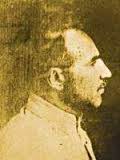 Ali Asghar Borujerdi
Serial killer · Iran · 1908
Ali Asghar Borujerdi (Persian: عَلی اَصغَر بروجردی) was known in Iran as اصغر ق…
33 victims
Ali Asghar Borujerdi
Serial killer · Iran · 1908
Ali Asghar Borujerdi (Persian: عَلی اَصغَر بروجردی) was known in Iran as اصغر ق…
33 victims
- Gender
- male
- Country
- USA
- Location
- Jackson County, West Virginia, USA
- Date of birth
- ???
- Characteristics
- —
- Victim profile
- Mrs. Chloe Greene, her daughter and her son
- Method of murder
- Beating with a hatchet
- Date(s) of murder
- November 3, 1897
- Years active
- 1897
- Date of arrest
- Same day
- Status
-
Executed
Executed by hanging at Ripley on December 16, 1897
Case record: John F. Morgan
Status and outcome
John F. Morgan was executed by hanging at Ripley on December 16, 1897.
Background
John F. Morgan was described as a shiftless sort of character who had been born in the county and was known to everyone. His father was described as a murderer who escaped hanging only because he took refuge in a tree and the only way to get at him was to shoot him.
For five years Morgan had been with a family headed by Mrs. Chloe Greene. Two daughters and a son made up the rest of the family.
The offence
On the night of Nov. 3, last, Morgan, who was known to be in need of money, went to the Greene house and slept that night with the son. In the morning he went with the body to feed the hogs. At the pen he picked up a hatchet and killed the body. He then went in the house holding the hatchet behind him, waited around the kitchen until the youngest daughter's back was turned, and struck her down. Proceeding into the dining room he crept upon the other sister and killed her with a couple of blows from the hatchet. He finally battered in the door of the bedroom where the mother was dressing and struck her dead.
It was stated that the blow he had struck the youngest daughter was not fatal. After she had fallen and while he was killing her mother and sister, the other girl got up, fled from the house to a neighbor, and gave the alarm.
Morgan escaped but was captured about 3 o'clock that afternoon and was taken to the jail in Ripley.
Morgan was convicted of the murder of the three members of the Pfost-Greene family.
Investigation and indictments
Morgan was indicted the following day.
Trial
Morgan was tried and convicted the day after that.
His defense was insanity. He alleged that he had been driven to the deed by an irresistible impulse, and his wife and other people told of his queer actions for years past.
His defense did not avail him.
Sentencing
After his conviction Morgan was sentenced to be hanged on Thursday of last week, described as being a little more than a month from the day he committed his crime.
Confessions and events before execution
Further and very great interest was aroused in his case all over the state of West Virginia by continued sensational developments. Within a month, he confessed no fewer than seven times. Each confession was different from every other one in so far as the motives were concerned, but each save the last admitted the killing. The last one, named last Sunday, named an accomplice in the person of one Anderson. Morgan said the accomplice had been induced to kill the family by the younger daughter, who was in love with him (Morgan) and wanted to get the property so that she might live with him without working the rest of her life.
It was also stated that Morgan fixed up a dummy in his cell a couple of weeks ago and walked out of the county jail. He way away only two days, however, and when he was captured he said his was on his way back.
He also made repeated oaths that he would never hang, and particularly that he would not hang on the day that Judge Blizzsard has declared he should hang.
Sheriff Shinn of Jackson county swore with the same positiveness and as repeatedly that Morgan should pay the penalty of his crime in the presence of the biggest crowd that had ever gathered to witness a public hanging in the state of West Virginia.
Execution arrangements and public attendance
And to make his word good and in order that everybody who came to see the whole affair, the Sheriff accepted the use of a ten-acre lot on the side of a hill a mile from the village. The lot was a natural theatre. In the centre of it was an Indian mound that rose perhaps 25 or 30 feet above the surrounding land. On the very top of this land the Sheriff built himself a gallows and invited the populace to gather.
The day after his conviction Morgan was sentenced to be hanged on Thursday of last week.
Wednesday afternoon the people began coming in. West Virginia roads were described as rough and muddy at this season, with the only way to travel over them on horseback. Every road that led into the town of Ripley by 6 o'clock on Wednesday evening was full of horsemen and horsewomen. There were also farm wagons loaded with families.
It was stated that the little train on the Mill Creek and Ripley Railroad which arrived at 7 o'clock that night brought with it the greatest load of passengers it had ever carried. Passengers were described as packed in box cars, on coal cars, on the engine, and the single passenger car as jammed to the point of suffocation.
It was described that in West Virginia all hangings were public and not infrequent, but that Jackson County had been a pretty law-abiding county and up to Thursday had had but one hanging in the whole history of the county, 47 years ago.
Ripley was described as a temperance town where it was against the law to sell liquor, but it was stated that there wasn't any law against drinking it. At every spot in Ripley where a crowd was gathered together there was a five gallon jug.
People, crowd, and surrounding events on the day of execution
A theatrical troupe consisting of two men and a woman had come to town and hired the only hall to give a theatrical performance. The performance was described as having been aimed so that it would be a sort of forerunner of the great event to come the next day, and that they would wind up by hanging a man on the stage.
The narrative described various entertainments and vendors, including a Punch and Judy show run by a Negro, and fakirs selling printed materials described as “Last and only true confession of John F. Morgan.” It also described other attractions, including a Hebrew with corn salve and another Hebrew with knick-knacks.
The Prosecuting Attorney denounced some of the sellers. The Prosecuting Attorney said: " Oh, I know you people. You come around her a swindling us citizens. You're nothing but a buzzard preying upon the carcass of the public. I say you are a buzzard preying upon the carcass of the public. You have got not license."
The Negro replied: "Ain't I?"
The Negro then danced and held the paper in his face and danced a jig: "Johnnie, get you gun, get your gun get you gun, There's a nigger up the tree and he won't come down. Oh, Eliza Jane, what makes you look so plain?"
Morgan’s singing and prayer were described as audible at intervals from the jail, including: "My father looks up to Thee Thou lamb of Calvary, Savior divine. Now hear me while I pray, Take all my sins away Oh, let me from this day Be wholly Thine."
A banjo voice then said: "All coons look alike to me."
Morgan was also described as singing: Nearer, my God to Thee Nearer to Thee E'en through life a cross that raiseth me Still all my song shall be Nearer, my God to Thee Nearer to Thee.
The narrative described an event at around 8 o'clock when a rumor got around that the Governor had decided to respite Morgan.
Sheriff statements and crowd management
The Sheriff said: "Boys, he'll hang. Now, don't you fear, when Owen Shinn gives his word, he'll hang."
In a statement to the Sun reporter, Sheriff Shinn said: "Now, I tell you, I was goin' to hold this thing off until the afternoon train got here. You can see there's a train gets here at 12:40 and therean't any question but that it will bring a lot of people that wants to see this hanging. Now, I'd hold her off all right to accommodate them people if it weren't for the fact that I heard tell this morning that some of this feller's friends got out of town this morning on an early train and they're goin' to try to get the Governor to interfere. Now you know we ain't got no telegraph, and our telegraph dispatches they come by train, and if there's any telegraph dispatches comin' they might come on that 12:40 train. So I am going to have this thing over before noon. I won't stand any interference. A Hanging A Certainty"
A deputy sheriffs’ explanation was given as: "Now, I'll tell ye. This 'ere crowd came to see a hanging. Some of 'em started as much as sixty hours ago, and they traveled as much as a hundred miles to see a hanging. Do you see? And they ain't goin' to have their fun spoiled, and - and - and - well, I'll tell ye, there's going to be a hanging anyway, and the Sheriff he'd ruther have it done regular than to wait and take chances. Well, as I say, there's going to be a hanging anyway - you understand?"
Before the procession, the Sheriff addressed the crowd: " Ladies and gentlemen, this hanging is about to come off. We'll start from this jail in a very few minutes and if you want to get a good place to see you better go right out there now. Don't wait, cause those that get there first will get the best places, and I'll tell you now there's about two thousand out there. You better hurry if you want to see."
Later the Sheriff said: "You see these people around here? Well, it would never do to bring that fellow out of jail while they are here, I've got to get rid of this crowd."
He then said: " Ladies and gentlemen, we are going to leave here in ten minutes. Now, if you want to have a chance to see this thing you'd better get right out there, for we are goin' fast."
Gallows and perimeter
The ten-acre lot was described as being at the junction of the Ripley and Charleston turnpikes. The gallows was off an Indian mound. A heavy barbed-wire fence had been built ten feet distant from it. Within this fence the jurors and newspaper reporters were to be admitted. The crowd was to be kept without.
At 11 o'clock it was stated that there were not fewer than 4,000 persons gathered around the fence, pushing, shouting, and raising Cain generally.
The trees in the neighborhood were described as filled with men and boys. The crowd stretched from the barbed wire fence down the mound into a gulley and up again on all sides.
The narrative stated that the scene included approximately two-thirds men and one-third women, with families present. It described saddle horses tied along the fence, rigs of various descriptions, and horses hobbled or horses and riders scattered across surrounding hills.
The Sheriff said: "I tell you, my boy, when you see that place you'll just say it's made for a hanging. It was intended for a hanging from the first. Why, it's a regular amphitheatre. That's what you call it, ain't it?"
Journey from jail to gallows
The procession was described as leaving the jail with the Sheriff still practicing. It was described as involving wagons, a coffin, clergymen, a sheriff’s jury, and other persons with permission to keep inside the barbed wire fence.
Morgan was described as a little fellow, perhaps five feet four, cleaning shaved, dressed in black from head to foot, wearing a standing collar and a black necktie. His suit was described as new, as were his shoes. Morgan’s hands were handcuffed in front.
The narrative described a series of prayers and hymns, including Morgan joining in singing: The Savior comes and walks with me, And sweet communion here have we.
Morgan also sang: Oh, Jesus save me! And later: Traveling to the better land, O'er the desert's scoring sand; Father, let me grasp they hand, Lead me on! Lead me on!
As the gallows became visible about one-quarter of a mile away, Morgan sang: Oh, think of the home over there By the side of the river of life. Where the saints all immortal and fair, Are robed in their garments of white.
Morgan then followed with the jail song: The mistakes of my life have been many, The sins of my heart have been more, And I scarce can see for weeping, But I'll knock at the open door.
Morgan’s final speech and last moments
As Morgan stepped beside the rope with the noose dangling on the floor of the gallows, it was described that he bowed to all sides and one minister opened the Bible and read from it for twelve minutes. The minister’s reading was punctured by shouts, including: "hot roasted peanuts, 5 cent a bag!"
A second minister prayed and recited the crime of Morgan and included the line: "O, Lord, in another minute this poor sinner will be launched into eternity."
The second minister also said: "This, O Lord," he would say, "is a sad and mournful occasion Thou are about to take one from our midst." This man, convicted of a crime, is standing on the line of time and eternity. His immortal soul is about to enter the unseen world, where the years are as the sands of the sea, as the leaves on the tree.
The Sheriff asked Morgan if he wanted to make a speech: "John, do you want to make a speech? I will give you ten minutes if you want to do it."
Morgan said: "Id like to say a lot, but I can't."
The narrative then recorded Morgan’s farewell: "I - bid - farewell - I bid you all (choke) goodby."
Morgan then raised his handcuffed hands and said: "This ought "God help and forbid any young men."
After a pause, Morgan continued: "God help and forbid any young man going and acting as I have done. Goodby, goodby."
After his farewell, Morgan went around the gallows shaking hands with everyman. The narrative stated that one person yelled: "Good-by, John. That's from your sister Ida."
After the straps adjustment, it was stated that the crowd grew silent as the lever was about to spring and that Morgan’s neck was broken by the fall. The crowd then shouted: "I reckon you done well, Sheriff" and "The world is shet of him, Sheriff, and you done it, I reckon."
Queries were asked about whether he was dead: "Is he kicking? Is he dead?"
The Sheriff shouted to the crowd: "You boys stand back, there, Give everybody a show."
Aftermath at the scaffold and return to Ripley
At the end of four or five minutes, friends of the dead man yelled: "Say, you've let him hang there long enough. Take him down."
Another voice yelled: "Yes, take him down, boys."
Another voice yelled to the doctors: "Hey doc, when he gets dead tell us, will you?"
The doctor turned around and said: "He's dead all right enough."
A voice then said: "He ought to have died five years ago," bawled back a voice. "Yes, anybody that would kill a woman," supplemented another.
The narrative described the body being left hanging for half an hour, after which the Sheriff climbed up and untied the rope from the beam. The body was taken down and placed into a coffin. Teams were whipped up to leave first. The narrative described that Morgan’s body was put into a coffin, lifted into the wagon, and taken back to Ripley, where it was locked in a cell due to reports it might be stolen and because it was too far from his wife’s house to deliver it before dark.
Notes about accompanying publication
Editor Henry W. Deem said the Jackson Herald story was "an extremely extravagant exaggeration of weird wonders but left out none of the details." The Herald published a story that week written by the special representative of the New York Sun who was there to cover the story for his newspaper. The last public execution in West Virginia was described as that of John Morgan at Ripley on December 16, 1897, and the piece described it as the last public hanging in West Virginia.
Spotted an error, or have more information about this case?