
Stacey Castor
Murderer Miranda Barbour
Murderer · USA · 2013
Miranda Barbour, 19, defendant. · Elytte Barbour, 22, defendant and husband of…
100 victims
Miranda Barbour
Murderer · USA · 2013
Miranda Barbour, 19, defendant. · Elytte Barbour, 22, defendant and husband of…
100 victims
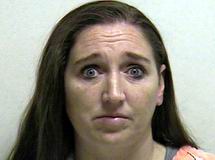 Megan Huntsman
Murderer · USA · 1996
Megan Huntsman was 40 at sentencing. She was a mother of three children who wer…
6 victims
Megan Huntsman
Murderer · USA · 1996
Megan Huntsman was 40 at sentencing. She was a mother of three children who wer…
6 victims
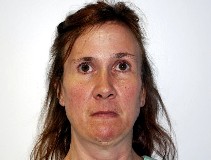 Michele Kalina
Murderer · USA · 1996
Michele Kalina pleaded guilty to murder for one of five infants she initially w…
5 victims
Michele Kalina
Murderer · USA · 1996
Michele Kalina pleaded guilty to murder for one of five infants she initially w…
5 victims
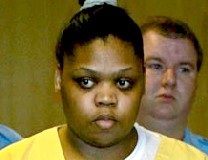 Tiffany Hall
Murderer · USA · 2006
Tiffany Hall was 24 when she was charged in September 2006. She later entered a…
5 victims
Tiffany Hall
Murderer · USA · 2006
Tiffany Hall was 24 when she was charged in September 2006. She later entered a…
5 victims
 Banita Jacks
Murderer · USA · 2007
Banita Jacks was a Washington, DC resident convicted of murdering her four daug…
4 victims
Banita Jacks
Murderer · USA · 2007
Banita Jacks was a Washington, DC resident convicted of murdering her four daug…
4 victims
 Holly Grigsby
Murderer · USA · 2011
Holly Grigsby was sentenced to life in prison without parole on July 15, 2014.…
4 victims
Holly Grigsby
Murderer · USA · 2011
Holly Grigsby was sentenced to life in prison without parole on July 15, 2014.…
4 victims
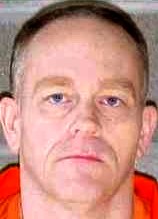 Steven Craig James
Murderer · USA · 1981
Steven Craig James was sentenced to death on November 23, 1982. Juan Maya picke…
1 victim
Steven Craig James
Murderer · USA · 1981
Steven Craig James was sentenced to death on November 23, 1982. Juan Maya picke…
1 victim
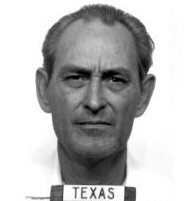 Doyle Skillern
Murderer · USA · 1974
Doyle Edward Skillern was a Texas state prisoner who was executed by lethal inj…
1 victim
Doyle Skillern
Murderer · USA · 1974
Doyle Edward Skillern was a Texas state prisoner who was executed by lethal inj…
1 victim
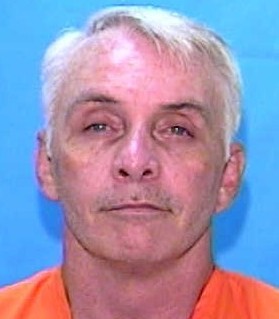 William Duane Elledge
Murderer · USA · 1974
William Duane Elledge was convicted of rape and first-degree murder and was lat…
3 victims
William Duane Elledge
Murderer · USA · 1974
William Duane Elledge was convicted of rape and first-degree murder and was lat…
3 victims
 Campo Elías Delgado Morales
Spree killer · Colombia · 1986
Campo Elías Delgado Morales was a Colombian Vietnam War veteran. He lived with…
30 victims
Campo Elías Delgado Morales
Spree killer · Colombia · 1986
Campo Elías Delgado Morales was a Colombian Vietnam War veteran. He lived with…
30 victims
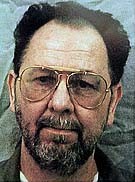 Darrell Mease
Murderer · USA · 1988
Darrell Mease was prosecuted in the case of State of Missouri v. Darrell Mease,…
3 victims
Darrell Mease
Murderer · USA · 1988
Darrell Mease was prosecuted in the case of State of Missouri v. Darrell Mease,…
3 victims
 Geneviève Lhermitte
Mass murderer · Belgium · 2007
Geneviève Lhermitte was a Belgian woman convicted for killing her five children…
5 victims
Geneviève Lhermitte
Mass murderer · Belgium · 2007
Geneviève Lhermitte was a Belgian woman convicted for killing her five children…
5 victims
- Gender
- female
- Country
- USA
- Location
- Onondaga County, New York, USA
- Date of birth
- July 24, 1967
- Age at first offence
- 38
- Characteristics
- poisoner, attempt to collect insurance money
- Victim profile
- David W. Castor Sr. (her second husband)
- Method of murder
- Poisoning (antifreeze)
- Date(s) of murder
- August 20, 2005
- Years active
- 2005
- Date of arrest
- September 14, 2007
- Status
-
Life imprisonment
Sentenced to 51 years to life in prison on March 5, 2009
Overview
Stacey Castor (born July 24, 1967) was a resident of Clay, New York. She was convicted of intentionally poisoning her husband David Castor with antifreeze and of attempting to murder her daughter Ashley Wallace with a toxic cocktail consisting of crushed pills mixed in with vodka, orange juice, and Sprite. She was also convicted in relation to forging David Castor’s will. She was suspected of having murdered her first husband, Michael Wallace, whose grave lay next to David Castor’s.
Castor was named “The Black Widow” by media outlets. ABC aired a two-hour 20/20 special about the Castor case on April 24, 2009.
Timeline
- Late 1999 — Michael Wallace began feeling intermittently ill.
- Early 2000 — Michael Wallace died before he could get medical care.
- 1985 — Stacey Castor met Michael Wallace when she was 17.
- 1987 — Ashley Wallace was born.
- 1988 — Stacey Castor and Michael Wallace married and had their first daughter, Ashley.
- 1991 — Stacey Castor and Michael Wallace had a second daughter, Bree.
- 2000 — Michael Wallace died at age 38 and was initially reported as a heart attack.
- 2002 — A case was investigated involving the circumstances surrounding the death of Jerry Daniels on February 27, 2002.
- 2003 — Stacey Castor married David Castor, whose last name she bore.
- August 2005 — David Castor died after police later treated the death as a homicide involving ethylene glycol/antifreeze.
- 2005 — A ruling and investigative focus developed around evidence involving antifreeze poisoning; prosecutors later tied the case to Castor’s motive involving estates and insurance.
- February 5, 2009 — Stacey Castor was found guilty of second degree murder in the poisoning death of David Castor and of attempted second degree murder for overdosing her daughter Ashley Wallace with drugs and vodka.
- March 5, 2009 — Stacey Castor was sentenced by Judge Joseph Fahey to the maximum consecutive terms, with an additional prison term for forging David Castor’s will.
- April 24, 2009 — ABC aired a two-hour 20/20 special about the Castor case.
- August 16, 2010 — A judge rejected a defense request to set aside the conviction and conduct a new trial.
- January (year referenced in text) — State Supreme Court Judge Anthony Paris issued a decision dated December 14 awarding damages related to the Castor estate.
- December 14 (year referenced in text) — Judge Anthony Paris issued a decision in the civil matter awarding damages to David Junior and his mother.
- February 1, 2010 — A report discussed an investigation into whether Stacey Castor murdered her father in addition to her two husbands.
- April 21, 2009 — A report described the antifreeze murder of David Castor and the attempted murder of Ashley Wallace and the charge context for the trial.
- April 23, 2009 — A report discussed exhumation of Michael Wallace’s body and that both husbands had died of anti-freeze poisoning.
Background
Stacey Castor met Michael Wallace in 1985 when she was 17. She said their bond was immediate and she felt Wallace was her true love. Castor and Wallace married and had their first daughter, Ashley, in 1988. In 1991, they had a second daughter, Bree.
Castor was employed by an ambulance dispatch company. Wallace worked nights as a mechanic. The family had little money.
Castor described Wallace as being close to Bree and said favoritism that she made up by becoming “best friends” with elder daughter Ashley.
Castor said that although the couple had closeness with their children, they grew apart, and it was rumored that each was having affairs.
The offence
Death of David Castor (antifreeze poisoning)
In 2005, Stacey Castor called her local sheriff’s office at 2:00 p.m. on an afternoon to report that her husband, David Castor, had locked himself in their bedroom for a day following an argument and was not responding to his cell phone. She said he was depressed. When David did not appear at their shared workplace, Sergeant Robert Willoughby of the Onondaga County Sheriff’s Department kicked in the door of the bedroom and found David Castor lying dead.
Among the items near his body were a container of antifreeze and a half-full glass of bright green liquid. Willoughby said he remembered Castor screaming:
“He's not dead, he's not dead.”
The coroner reported that David Castor had committed suicide through a self-administered lethal dose of antifreeze.
Police later found that Stacey Castor’s fingerprints were on the antifreeze glass and they located a turkey baster with David Castor’s DNA on the tip, leading investigators to suspect that Castor engineered her husband’s death. Detectives reasoned they could observe Castor’s behavior by using cameras overlooking her house and her husbands’ gravesites, where her husbands were buried side by side at Castor’s request. Investigators sought to prove responsibility for both homicides by exhuming Wallace’s body.
A toxicology screening ruled that Wallace had also been killed through antifreeze poisoning.
Attempted murder of Ashley Wallace (drug overdose and framing)
In September 2007, investigators believed Castor planned to set up her daughter Ashley for the murders. On Ashley’s first day of college, investigators questioned her and informed her that her father had been poisoned rather than having died of a heart attack. Ashley called Castor. Soon after, Castor invited Ashley to go home and drink together.
The following day, Castor invited Ashley to drink together at home again. Castor offered Ashley a “nasty-tasting” drink that Ashley initially refused but eventually drank because she trusted Castor.
Seventeen hours later, Ashley was found comatose on her bed by her younger sister. Castor made the 911 call. After Ashley’s sister left for a moment, the sister returned and found a suicide note beside Ashley. The note appeared to be Ashley’s “murder confession,” in which she “admits” to having killed her father and stepfather. Castor quickly took the note from the sister and later gave it to the paramedics.
Tests revealed that potentially fatal painkillers had been found in Ashley’s system, and that she most likely would have died if brought to the hospital just a few minutes later. When Ashley awakened and was questioned by police about the murders and the suicide note, she said the last thing she remembered was her mother making her an alcoholic drink that she had never done before. Ashley told officers she did not write the note and was confused about the questions and accusations.
Investigation
Investigators collected evidence against Castor for the deaths of her husbands over the prior two years.
Investigators ordered wiretappings on Castor’s house and listened in on phone calls for unusual conversations. They also set up cameras overlooking Castor’s house and her husbands’ gravesites.
Forensic evidence about David Castor’s death included that Stacey’s fingerprints were on the glass half full of bright green liquid and that a turkey baster was found with David Castor’s DNA on the tip.
Prosecutors said antifreeze poisoning could be identified from the growth of calcium oxalate crystals in the kidneys, and that this was seen with examination of Wallace and David’s bodies.
Prosecutors argued that Castor had attempted to make David’s death look like a suicide and said they concluded she fed her husband antifreeze through the baster for four days before trying to make it look like a suicide, based on evidence of the evolution of David Castor’s illness.
Prosecutors also presented evidence that Castor had watched a news report about Lynn Turner, described as a woman who murdered past lovers by using the poison, and that Castor said her husband got the idea to kill himself with antifreeze while they both watched the report.
Prosecutors said they searched Castor’s computer and found several drafts of the suicide note that Ashley was accused of writing. They argued that Ashley’s “suicide attempt” was actually a planned-out murder attempt by Castor.
Prosecutors argued that money was a main reason for the murders, stating that Castor murdered her husbands partly to collect on their life insurance and estates and that she changed David’s will to exclude his son by a previous marriage from the money left to him by David.
Cayuga County Sheriff Dave Gould said:
“In 2005, people started to put it together. If Mr. Wallace had been cremated, or if Mr. Castor had not died, we would never have known we had a homicide.”
In a separate context discussed during trial, prosecutors brought up “damaging evidence” that they had heard “typing sounds” while Castor was on the phone. They said that typing sounds could be heard while Castor talked to a friend, that Castor denied memory of using the computer that day, and that they argued the typing sounds were those of drafts of the suicide note.
It was also said that the word antifreeze had been written as “anti-free” in multiple places within the note and that Castor had also said “anti-free” during an interview. Castor said she cut herself off while saying “antifreeze” because she intended to say something else.
A pharmaceutical expert was presented to cast doubt on Castor having drugged Ashley, and it was said that Professor Francis Gengo testified:
“...after analyzing the traces of drugs and alcohol found in blood drawn from Ashley at the hospital, Ashley would have had to ingest the alcohol, Ritalin, and several other drugs just several hours before she was hospitalized.”
Arrest and trial
Charges and arrest
In 2007, Castor was charged with second degree murder, second degree attempted murder, and offering a false instrument in the first degree.
She was arrested for second degree murder in David’s death and for attempting to murder Ashley and frame her for the murders of David and Wallace.
Ashley Wallace was 11 at the time of her father Wallace’s death.
Prosecutors and defense arguments
Prosecutors included District Attorney William Fitzpatrick and Chief Assistant District Attorney Christine Garvey. They argued that a computer-generated note where Ashley “confesses” to killing Wallace and David was written by Castor.
For David Castor’s “suicide” theory, prosecutors argued it “had never made sense” given the lack of his fingerprints on the glass and the presence of ethylene glycol, described as a toxic substance found in antifreeze. Prosecutors also said that a turkey baster found in the kitchen garbage bore both ethylene glycol and David’s DNA.
They concluded Castor had for four days fed her husband antifreeze through the baster before trying to make it look like a suicide.
Prosecutors also argued about the reasons for murder: money, including life insurance and estates, and changes to David’s will.
The defense team consisted of attorneys Charles Keller and Todd Smith. They sought to create reasonable doubt by challenging the prosecution’s account and by arguing Castor’s lack of capability to commit the murders at age 11. The defense cited Ashley’s possible jealousy and favoritism dynamics, and they cited tumultuous relationships including that Ashley and her stepfather did not get along.
Castor took the stand. She maintained her innocence and said she did not murder either her father or her stepfather, and that she did not write the suicide note. She also implied that her daughter might be mentally ill but would not speculate on motives beyond that implication.
During cross-examination, Fitzpatrick pointed out flaws in Castor’s version. Castor’s defense attorney Charles Keller frequently objected and even requested a mistrial.
It was said that Fitzpatrick asserted Castor’s behavior during David Castor’s and Ashley’s illnesses made no sense, given that she had worked for a paramedics company. Fitzpatrick questioned why Castor did not seek care for Ashley for 17 hours and asked about David Castor’s apparent condition, and he questioned how a woman who had lost two husbands to poisoning would not seek help for her daughter.
Fitzpatrick frequently shouted at Castor, inspiring Keller to object and to request a mistrial.
Verdict
On February 5, 2009, Castor was found guilty of second degree murder in the poisoning death of David and of attempted second degree murder for overdosing Ashley with drugs and vodka.
It was stated that “jam-packed” courtroom attention focused on Castor, and that she had her eyes closed as verdicts were read.
Sentencing
On March 5, 2009, at sentencing, Chief Assistant District Attorney Christine Garvey asked Judge Fahey to impose maximum consecutive sentences because of the brutality of David’s death. She criticized how Castor had “partied in her backyard with friends like nothing was happening” as Ashley was comatose in her room.
Garvey said:
“She is cold, calculating and without any emotion for what she has done,”
“Human life is sacred. Stacey Castor places no value on human life, not even her own flesh and blood. To Stacey Castor, human beings are disposable.”
David’s son, whom Castor had cheated out of his will, pled with Judge Fahey for severe punishment. He said:
“Your honor, [Castor] is a monster and a threat to society,”
“She has created so much pain and death with this, creating multiples of pain and death, in the families of those she has hurt.”
Judge Joseph Fahey told Castor he had never seen a parent attempt to murder their child in order to set their child up for a crime the parent themselves committed, and he declared Castor “in a class all by [her]self”.
Judge Fahey sentenced Castor to the maximum of 25 years to life for the murder of David Castor and to another 25 years for the attempt to kill Ashley.
For forging David’s will, the judge ordered an additional 1 1/3 to four years in prison.
The trial was described as lasting for four weeks.
Statements by Ashley Wallace at sentencing
Ashley Wallace told the judge she hated her mother “for ruining so many people's lives” but still loved her for the bond she originally had with her. Ashley said:
“I never knew what hate was until now. Even though I do hate her, I still love her at the same time. That bothers me, it is so confusing. How can you hate someone and love them at the same time? I just wish that she would say sorry for everything she did, including all the lies. As horrible as it makes me feel, this is goodbye mom. As hard as you tried, I survived and I will survive because now I'm surrounded by people that love me. I'm going to do good things in this world despite making me in every sense of the word an orphan.”
District Attorney William Fitzpatrick said Castor would “have to serve at least 51 years behind bars before she is eligible for parole” and that, given her age, it was “very likely she will die in prison”.
Appeals and post-conviction
A judge rejected a defense request to set aside the conviction and conduct a new trial.
The decision discussed the September 7, 2007 interview by Sheriff’s Detective Dominick Spinelli and a claim that the interview violated Castor’s right to counsel. The defense argued suppression should have occurred because authorities knew Castor was represented by lawyer Norman Chirco since detectives had talked to Chirco as Castor’s lawyer in 2005 in arranging to get fingerprints from Castor during the investigation of her husband’s death.
Judge Joseph Fahey concluded rejection was required because there was sufficient evidence on the case record for appellate review. The judge also said the request would be rejected even if he considered the merits. He noted Chirco was representing Castor in 2005 due to a dispute with her dead husband’s son over the estate and that Castor never told authorities she had a lawyer representing her regarding the investigation into her husband’s death. Fahey said Chirco’s advice to cooperate fully for the fingerprint request was inconsistent with that of a lawyer representing a defendant in a criminal investigation.
The judge also rejected a contention of ineffective assistance of counsel, stating that trial lawyer Charles Keller failed to move to suppress the Spinelli interview. Fahey said:
“Our constitution guarantees the accused a fair trial, not necessarily a perfect one and counsel’s effort should not be second-guessed with the clarity of hindsight,”
and concluded Keller’s failure did not amount to ineffective assistance because a motion would have had “little or no chance of success."
Other proceedings: civil estate litigation
State Supreme Court Judge Anthony Paris ruled in a civil suit involving the remainder of the Castor estate. The son of David Castor and his first wife, Janice Poissant, won a decision over the remainder of the estate along with punitive damages.
The decision was dated December 14. It awarded David Junior and his mother $127,118.65 in compensatory damages and $250 thousand in punitive damages.
Judge Paris wrote:
“it is obvious that Defendants Pulaski were not innocent pawns. They knew what they were doing was wrong and bore false witness to both the Will and Attestation Clause without any hesitancy or reservation.”
He added:
“Defendants Pulaski only 'came clean' when the District Attorney's investigators came knocking on their door and they were given immunity in return for their cooperation and testimony in the criminal prosecution of Stacey Castor.”
He also wrote:
“Stacey Castor's criminal conviction and sentence addressed her criminal conduct. However Defendants PULASKI skated away from their criminal responsibility through the receipt of immunity, They will not skate away from their civic responsibility...”
Janice Poissant told Jim Kenyon that the decision was “awesome” and said:
“it's been a really long haul. The one thing I love best is the comment about Pulaski's apology, he said it perfectly.”
Poissant referred to Lynn Pulaski’s statement during the January trial in which Lynn Pulaski apologized to David Castor Junior and called Stacey Castor a “monster.” Judge Paris called that a “poor me” apology and wrote:
“the only feel evoked was a feeling of nausea and an urge to vomit.”
It was stated that Paul and Lynn Pulaski had not returned calls for comment.
Suspected additional homicide: Michael Wallace and Jerry Daniels
Castor was implicated in the anti-freeze murder of her first husband, Michael Wallace in 2000, but it was stated that she had not yet been prosecuted for that crime.
A separate investigation discussed whether Castor murdered her father Jerry Daniels. Onondaga County District Attorney Bill Fitzpatrick confirmed that his office was investigating the circumstances surrounding the death of Jerry Daniels on February 27, 2002. Relatives of Michael Wallace said they brought the case to investigators. Wallace’s brother-in-law John Corbett told reporter Jim Kenyon that Daniels was hospitalized at St. Joseph’s hospital for a lung ailment and that Daniels was “getting better” and due to be released. Corbett said Daniels died the day after a visit from his daughter Stacey. Corbett said that during the visit, Castor brought in an open can of soda for her father to drink. After his death, Corbett said Stacey Castor had her father’s remains cremated and became executrix of his estate.
Fitzpatrick said:
“you know not the depths of depravity this woman is capable of.”
and that Castor had:
“financial motives regarding the death of her father.”
Fitzpatrick said Daniels’ autopsy report showed he died of “natural causes” and that:
“We'll follow the evidence where it leads.”
Fitzpatrick also said he was “not optimistic we're going to get proof beyond a reasonable doubt.” The report stated that cremation made the death difficult to investigate.
It was also said that Michael Wallace’s relatives believed it was no coincidence that Wallace, David Castor, and Jerry Daniels were buried next to each other in a plot purchased by Castor. Corbett called it “Stacey's monument to murder.”
Aftermath
Castor was serving her sentence at Bedford Hills Correctional Facility for Women in Westchester County, New York.
During the on-air 20/20 special and unaired parts, Castor professed shock at the guilty verdict and maintained her innocence of the deaths of her husbands and the attempted murder of Ashley.
Castor said Ashley “brought this on” and insisted that she and Ashley knew what really happened. She expressed sympathy for Bree, called Bree an innocent victim, and said she lost Bree along with freedom and her husbands. She indicated that her mother, stepfather, and some other relatives still supported her. Bree and Ashley had not spoken to Castor since the trial.
Bree said:
“I was happy that they said she was guilty, because we all know that she's guilty.”
Ashley said:
“I would have done anything for her. But she tried to kill me instead.”
Both daughters expressed concern that their mother had not yet apologized to them.
ABC brought on Dr. James Knoll, a forensic psychiatrist, for a psychological perspective. Knoll said that while most suicide notes focus on themes of remorse and the person not being able to go on with life, the note Ashley was accused of writing was repeatedly focused on taking the blame off Castor. He said the theme was repeated fourteen times within the note and he believed Castor would never admit to guilt of the murders. He said the code of murderers such as these was:
“deny, deny, deny”
He said interpreting body language and behavior could be affected by events during a trial such as “side effects of medications, anxiety, fatigue and attorney instructions to the defendant on how to behave.”
Knoll described Castor as not being the typical serial killer, and described a “black widow” type as a woman who kills husbands or lovers for material gain. He said “psychopathic traits and histories of childhood abuse have been consistently reported in these women” and suggested that if Castor was guilty of the crimes for which she was convicted and accused, she would be demonstrating psychopathic traits, including regarding even her own child as an object to be used for convenience.
It was also stated that similar antifreeze murder cases had been reported in 2008, and that in 2002 a man had been convicted of murdering his wife by antifreeze in 1998. It was said that a letter she had written previous to her death incriminated him if she were to die eventually led to his prosecution.


Spotted an error, or have more information about this case?