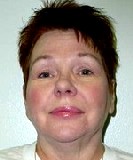
Virginia Caudill
Murderer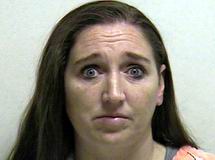 Megan Huntsman
Murderer · USA · 1996
Megan Huntsman was 40 at sentencing. She was a mother of three children who wer…
6 victims
Megan Huntsman
Murderer · USA · 1996
Megan Huntsman was 40 at sentencing. She was a mother of three children who wer…
6 victims
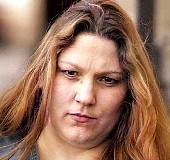 Angela Johnson
Murderer · USA · 1993
Angela Jane Johnson was convicted in federal court of aiding and abetting the m…
5 victims
Angela Johnson
Murderer · USA · 1993
Angela Jane Johnson was convicted in federal court of aiding and abetting the m…
5 victims
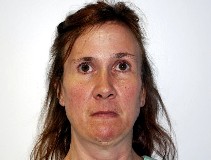 Michele Kalina
Murderer · USA · 1996
Michele Kalina pleaded guilty to murder for one of five infants she initially w…
5 victims
Michele Kalina
Murderer · USA · 1996
Michele Kalina pleaded guilty to murder for one of five infants she initially w…
5 victims
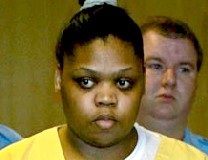 Tiffany Hall
Murderer · USA · 2006
Tiffany Hall was 24 when she was charged in September 2006. She later entered a…
5 victims
Tiffany Hall
Murderer · USA · 2006
Tiffany Hall was 24 when she was charged in September 2006. She later entered a…
5 victims
 Banita Jacks
Murderer · USA · 2007
Banita Jacks was a Washington, DC resident convicted of murdering her four daug…
4 victims
Banita Jacks
Murderer · USA · 2007
Banita Jacks was a Washington, DC resident convicted of murdering her four daug…
4 victims
 Susan Eubanks
Murderer · USA · 1996
Susan Dianne Eubanks, also referred to as Susan Eubanks, was convicted by a jur…
4 victims
Susan Eubanks
Murderer · USA · 1996
Susan Dianne Eubanks, also referred to as Susan Eubanks, was convicted by a jur…
4 victims
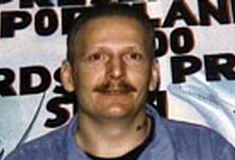 Robert Silveira
Serial killer · USA · 1981
Robert Joseph Silveria Jr. (also known as “Sidetrack” and “Side Track”): descri…
14 victims
Robert Silveira
Serial killer · USA · 1981
Robert Joseph Silveria Jr. (also known as “Sidetrack” and “Side Track”): descri…
14 victims
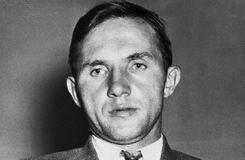 Bruno Hauptmann
Murderer? · USA · 1932
Bruno Hauptmann was a German carpenter and former criminal. He was sentenced to…
1 victim
Bruno Hauptmann
Murderer? · USA · 1932
Bruno Hauptmann was a German carpenter and former criminal. He was sentenced to…
1 victim
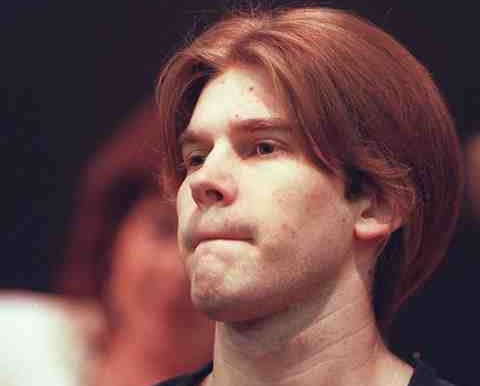 Jeremy Strohmeyer
Murderer · USA · 1997
Jeremy Strohmeyer (born October 11, 1978) was a Long Beach, California man who…
1 victim
Jeremy Strohmeyer
Murderer · USA · 1997
Jeremy Strohmeyer (born October 11, 1978) was a Long Beach, California man who…
1 victim
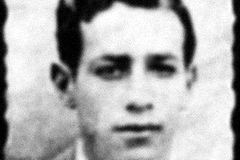 Juan Roa Sierra
Murderer · Colombia · 1948
Juan Roa Sierra was a Colombian who assassinated Liberal leader and presidentia…
1 victim
Juan Roa Sierra
Murderer · Colombia · 1948
Juan Roa Sierra was a Colombian who assassinated Liberal leader and presidentia…
1 victim
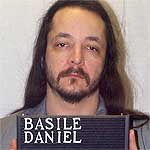 Daniel Anthony Basile
Murderer · USA · 1992
Daniel Anthony Basile was convicted of first degree murder and sentenced to dea…
1 victim
Daniel Anthony Basile
Murderer · USA · 1992
Daniel Anthony Basile was convicted of first degree murder and sentenced to dea…
1 victim
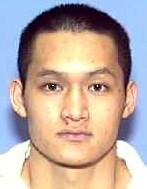 Chuong Duong Tong
Murderer · USA · 1997
Name: Chuong Duong Tong · TDCJ Number: 999260 · Date of Birth: 10/21/76 · Date…
1 victim
Chuong Duong Tong
Murderer · USA · 1997
Name: Chuong Duong Tong · TDCJ Number: 999260 · Date of Birth: 10/21/76 · Date…
1 victim
- Gender
- female
- Country
- USA
- Location
- Fayette County, Kentucky, USA
- Date of birth
- September 10, 1960
- Age at first offence
- 38
- Characteristics
- robbery, arson, drug addict, drugs, motive unknown
- Victim profile
- Lonetta White, 73
- Method of murder
- Beating with a hammer
- Date(s) of murder
- March 15, 1998
- Years active
- 1998
- Date of arrest
- 8 months later
- Status
-
Sentenced to death
Sentenced to death on March 24, 2000
Background
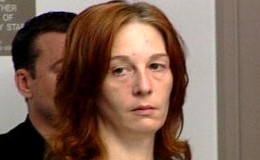
Virginia S. Caudill (DOB 9-10-60) was sentenced to death on March 24, 2000 in Fayette County for murder, robbery I, burglary I, arson II, and tampering with physical evidence.
Caudill had been living with the victim’s son, Steve White, but had moved out of his house on either March 13 or 14 following an argument concerning Caudill’s drug use. Caudill went to a nearby “crack house,” a residence where drug users gathered to buy, sell, and ingest controlled substances, especially crack cocaine. There she encountered Johnathan Wayne Goforth, a casual acquaintance whom she had not seen for about fifteen years.
The offence
Lonetta White was bludgeoned to death in her home in Lexington, Kentucky, during the early morning hours of March 15, 1998. Her body was found in the trunk of her burning automobile in a field several miles away. Her home was ransacked, and numerous items of personal property, including two guns, jewelry, and a mink coat, were stolen.
Caudill and Goforth admitted they were present at the commission of all of these crimes. Each, however, accused the other of murdering and robbing the victim and of setting fire to the automobile.
Victim and location details
Lonetta White was 73 years old. She was in her home in Lexington, Kentucky, during the early morning hours of March 15, 1998. Her body was found in the trunk of her burning automobile in a field several miles away in Fayette County, and the vehicle was set on fire at a rural area in Fayette County.
Motive and relationship context
The victim was the mother of Caudill’s estranged boyfriend. Caudill and Goforth had gone to her home to ask her for money, supposedly to buy crack cocaine.
Events leading up to the attack
Caudill testified that, on the afternoon of March 14, Goforth gave her a ride to Mrs. White’s residence and that Caudill induced White to give her twenty or thirty dollars on the pretext that she needed the money to rent a room for the night. Instead, she returned to the crack house and used the money to purchase crack cocaine.
At about 3:00 a.m. on March 15, 1998, Caudill and Goforth returned to Mrs. White’s residence. According to Caudill, she went to the door and told Mrs. White that she needed more money for the room rental. Goforth remained out of sight near the garage.
Killing and burglary
When Mrs. White turned away to retrieve the money, Goforth burst through the door and attacked her without warning. Caudill did not identify the weapon used by Goforth but remembered that, during the course of the attack, Mrs. White pleaded with her to “please help me, Virginia.”
Goforth then took Caudill to a bedroom and bound her hands together. After killing White, Goforth ransacked the residence, loaded the jewelry, guns, and mink coat into his pickup truck, and wrapped the body in a carpet. He then prevailed upon Caudill to help him carry the body to the garage and load it into the trunk of Mrs. White’s automobile.
Arson
The two then drove both vehicles to a vacant field where Goforth doused Mrs. White’s vehicle with gasoline and set it afire. The victim was burned so badly that she could not be recognized.
Investigation and pre-trial statements
Because of her known relationship with the victim’s son, Caudill was questioned by police about the murder on the evening of March 15, 1998. She denied any involvement in the crimes and told the police that she had been with Goforth when the crimes were committed.
The police unsuccessfully attempted to contact Goforth at his residence and left a message there for Goforth to contact them. Instead, Goforth and Caudill fled Fayette County. They spent several days at a cabin near Herrington Lake in Mercer County, then moved to Ocala, Florida, then to Gulfport, Mississippi. Caudill left Goforth in Gulfport and moved to New Orleans, Louisiana, where she was subsequently arrested on November 11, 1998.
At her arrest on November 11, 1998, Caudill gave another statement admitting her presence at the scene of the crimes but naming Goforth as the perpetrator. Goforth was arrested and questioned in Gulfport, Mississippi, on December 8, 1998. He claimed Caudill killed Mrs. White with the hammer and also claimed that an unidentified African-American male had assisted Caudill in the commission of the crimes; at trial he admitted this was a fabrication.
After her extradition to Kentucky, Caudill gave a third statement to police on December 9, 1998, which was substantially the same as her second statement.
Arrest
Caudill was arrested on November 11, 1998 in New Orleans, Louisiana.
Trial
Charges and convictions
Following a trial by jury in the Fayette Circuit Court, Appellants Virginia Susan Caudill and Johnathon Wayne Goforth were each convicted of murder, robbery in the first degree, burglary in the first degree, arson in the second degree, and tampering with physical evidence. Each was sentenced to death for the murder conviction and to the maximum authorized penalties for the other four convictions.
The joint indictment included:
- Count 1: “On or about the 15th day of March, 1998, in Fayette County, Kentucky, the above named Defendants committed the offense of Capital Murder by causing the death of Lonetta White while in the course of committing a First Degree Robbery and a First Degree Burglary.”
- Count 4: “On or about the 15th day of March, 1998, in Fayette County, Kentucky, the above named Defendants committed the offense of Second Degree Arson by setting fire to an automobile belonging to Lonetta White.”
Jury selection issues and voir dire
During individual voir dire, the trial judge “death qualified” the jury panel by inquiring of each prospective juror:
“This is a capital murder case. If you find the defendant guilty of murder, there are five ranges of penalty you'll be instructed to consider-not less than twenty nor more than fifty years, life, life without the possibility of parole for twenty-five years, life without the possibility of parole, and death. If you determine under the facts of this case, and the instructions of the Court, beyond a reasonable doubt, that the defendant is guilty of murder, can you consider the entire range of penalties provided by the statutes of the Commonwealth of Kentucky as I have just outlined them to you?” [Emphasis added.]
The victim, Lonetta White, was an African-American woman. Appellants were both Caucasians. The Commonwealth exercised eight of its nine peremptory strikes against Caucasian men, and Caudill and Goforth responded with a Batson challenge.
Evidence described at trial
Statements and jailhouse informants
Cynthia Ellis, a jailhouse informant, testified that Caudill told her that she had gone to White’s residence to obtain money to buy drugs. When White refused her request for money, Caudill struck White twice in the head with a clock that she pulled off the wall.
Julia Davis, another jailhouse informant, testified that Caudill told her that she broke into the victim’s home intending to steal money to buy drugs, but when the victim discovered her presence, she killed her, stole her guns and jewelry, and set fire to her car. Davis also testified that Caudill said White had pleaded with her to “help me, why are you doing this to me?”
After her arrest, Caudill accompanied the police on a walk-through of the crime scene, explaining how Goforth killed Mrs. White. A videotape of her “walk-through” was not introduced.
Forensic evidence and skull reconstruction
The Commonwealth’s forensic anthropologist partially reconstructed the victim’s skull from bones found on or inside her body to assist in estimating the number and nature of the blows inflicted upon her. The Commonwealth did not introduce the skull itself but used three photographs to explain the testimony.
Victim character evidence
The victim’s sister, Alma Gross, testified that the victim had advised her: “Be sure to lock your doors; don't open your door after dark; don't let nobody in.” Gross later explained that her sister “didn't like the part of town that I lived in and that was why she always stressed to me to be cautious.” Gross’s testimony also included the prosecutor’s question and response that “Every time she would talk to me she would say, “Be sure to lock your doors; don't open your door after dark; don't let nobody in.” She was very cautious.”
Motion and testimony disputes (as described in the appellate opinion)
Caudill and Goforth asserted ineffective assistance of counsel as part of their appeals. Caudill claimed an expert witness should have been called to rebut testimony of a Kentucky State Police forensic examiner who studied blood spatter on her shoes.
The appellate opinion also described evidence issues including:
- Caudill’s racial slur recorded in her March 15, 1998 statement, recited verbatim: “You were talking to the junkies down the street, the crackheads, who were telling you something you wanted to hear, maybe for something that they had done, laying it on me. I know who you talked to out on the street. I know who you talked to. Jeanette and that other chick and and I know you talked to that n [racial slur] up the street. They're all sagers [phonetic], I know that.”
- Julia Davis’s testimony that Caudill told her that Lonetta White said: “Help me, why are you doing this to me?” and that Caudill was laughing and using a mocking tone of voice.
Guilt phase jury instructions
The murder instructions permitted findings of:
- murder under Instruction No. 2,
- complicity to murder under Instruction No. 3, and
- “murder-principal or accomplice” under Instruction No. 4.
The final instruction read:
“MURDER-PRINCIPAL OR ACCOMPLICE If you believe from the evidence beyond a reasonable doubt that the defendant is guilty of either murder under Instruction No. 2 or complicity to murder under Instruction No. 3, but are unable to determine from the evidence whether the defendant committed this crime as principal under Instruction No. 2 or accomplice under Instruction No. 3, then you will find the defendant guilty of murder, principal or accomplice, under this Instruction and so state in your verdict.”
Both appellants were convicted under Instruction No. 4.
Sentencing
After conviction, the jury sentenced both Caudill and Goforth to death for the murder conviction and imposed maximum authorized penalties for the other convictions. The trial court’s proportionality review under KRS 532.075(3) determined that the sentence of death was not imposed under the influence of passion, prejudice, or any other arbitrary factor.
The sentence for Caudill was upheld on appeal.
Appeals
Kentucky Supreme Court decision
The Kentucky Supreme Court affirmed the convictions and sentences after appeals as a matter of right under Ky. Const. § 110(2)(b) and KRS 532.075(1).
The opinion described that after a trial by jury in Fayette Circuit Court, the convictions were affirmed and judgments were affirmed.
The appellate proceedings included challenges to:
- indictment sufficiency (Counts 1 and 4 not invalid),
- arraignment by closed circuit television and equal protection,
- joinder and denial of a separate trial,
- absence from pre-trial hearings,
- jury selection issues (including death qualification and Batson challenge),
- redacted statements and Bruton-related issues,
- admission of photographs of reconstructed skull,
- admission of character evidence about the victim being cautious,
- hearsay-related issues,
- guilt phase instructions for principal/accomplice liability and other requested lesser-included instructions,
- penalty phase issues including severance and mitigation instructions.
Grounds involving mitigation instructions and psychological evidence
Caudill’s penalty phase mitigation instruction included consideration of the mitigating circumstance described in KRS 532.025(2)(b)(5) (accomplice participation relatively minor) and other mitigators as addressed in the opinion.
The appellate opinion discussed psychological/psychiatric examinations and reports:
- A discovery order was entered requiring the Commonwealth to furnish results or reports of mental and physical examinations including psychological/psychiatric tests of Johnathon Wayne Goforth or Virginia Caudill.
- Dr. Peter Schilling, a psychologist, testified for Caudill’s mitigation.
- Dr. Andrew Cooley, a psychiatrist, testified for the Commonwealth as rebuttal and examined and tested Caudill during the Friday and Saturday before trial.
- The appellate opinion described that Dr. Cooley’s examination occurred and that Dr. Cooley appeared not to have prepared a final report.
Outcome
The Kentucky Supreme Court upheld the convictions and sentences, affirming judgments of conviction and sentences imposed by the Fayette Circuit Court.
The appellate opinion concluded that, upon proportionality review, the death sentences were neither excessive nor disproportionate.

Spotted an error, or have more information about this case?