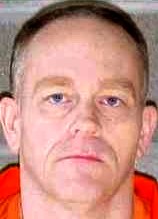
Steven Craig James
Murderer Ervil LeBaron
Murderer · USA · 1972
Ervil Morrell LeBaron (1925 to August 16, 1981) was the leader of a polygamous…
35 victims
Ervil LeBaron
Murderer · USA · 1972
Ervil Morrell LeBaron (1925 to August 16, 1981) was the leader of a polygamous…
35 victims
 Brian Kevin Rosenfeld
Murderer · USA · 1985
Brian Kevin Rosenfeld Brian Kevin Rosenfeld was sentenced to three concurrent l…
23 victims
Brian Kevin Rosenfeld
Murderer · USA · 1985
Brian Kevin Rosenfeld Brian Kevin Rosenfeld was sentenced to three concurrent l…
23 victims
 Marvin Gray
Murderer · USA · 1975
Marvin Gray was convicted killer who claimed responsibility for 23 slayings and…
23 victims
Marvin Gray
Murderer · USA · 1975
Marvin Gray was convicted killer who claimed responsibility for 23 slayings and…
23 victims
 Yahweh ben Yahweh
Murderer · USA · 1980
Yahweh ben Yahweh was born and legally named Hulon Mitchell Jr. (October 27, 19…
23 victims
Yahweh ben Yahweh
Murderer · USA · 1980
Yahweh ben Yahweh was born and legally named Hulon Mitchell Jr. (October 27, 19…
23 victims
 Russell Ellwood
Murderer · USA · 1991
Russell Ellwood was a former taxi driver. Authorities suspected him of killing…
20 victims
Russell Ellwood
Murderer · USA · 1991
Russell Ellwood was a former taxi driver. Authorities suspected him of killing…
20 victims
 Vladislav Chelakh
Mass murderer · Kazakhstan · 2012
May 27–28 (night) — Communication with Arkankergen border post was lost; the ba…
15 victims
Vladislav Chelakh
Mass murderer · Kazakhstan · 2012
May 27–28 (night) — Communication with Arkankergen border post was lost; the ba…
15 victims
 Judy Kirby
Mass murderer · USA · 2000
Judy Kirby was found guilty of murder for intentionally causing a head-on crash…
7 victims
Judy Kirby
Mass murderer · USA · 2000
Judy Kirby was found guilty of murder for intentionally causing a head-on crash…
7 victims
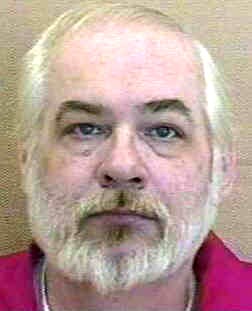 John Thomas Noland
Murderer · USA · 1982
John Thomas Noland was executed in North Carolina by lethal injection on Novemb…
2 victims
John Thomas Noland
Murderer · USA · 1982
John Thomas Noland was executed in North Carolina by lethal injection on Novemb…
2 victims
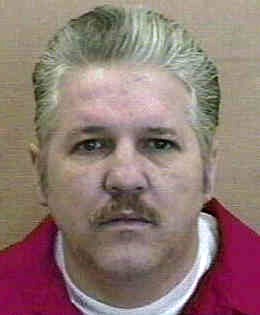 Ricky Lee Sanderson
Murderer · USA · 1985
March 14, 1985 — Hugh Holliman's sixteen-year-old daughter disappeared. · March…
1 victim
Ricky Lee Sanderson
Murderer · USA · 1985
March 14, 1985 — Hugh Holliman's sixteen-year-old daughter disappeared. · March…
1 victim
- Gender
- male
- Country
- USA
- Location
- Maricopa County, Arizona, USA
- Date of birth
- May 24, 1958
- Age at first offence
- 23
- Characteristics
- hate crime
- Victim profile
- Juan Maya (gay man)
- Method of murder
- Shooting
- Date(s) of murder
- November 16, 1981
- Years active
- 1981
- Date of arrest
- 3 days after
- Status
-
Sentenced to death
Sentenced to death on November 23, 1982
Case record
Steven Craig James was sentenced to death on November 23, 1982.
Background
Juan Maya picked up 14-year-old Marty Norton on November 16, 1981. Juan Maya made homosexual advances towards Norton. Norton rebuffed Maya, but suggested that he might find a more hospitable reception in a trailer belonging to James. When Maya followed Norton into the trailer, James, Lawrence Libberton, and Norton took turns beating him.
The offence
The three forced Maya into the back seat of his own car and drove toward Salome. James’ parents owned some property with an abandoned mine shaft on it.
En route, a police officer stopped them, but Libberton threatened to kill Maya if the officer attempted to draw attention. After arriving at the Salome property around dawn, James ordered Maya to step up to the mine shaft.
As Maya pleaded for his life, James fired directly at him from a distance of less than 5 feet. Maya charged James and tried to get the gun. Libberton and Norton then began striking Maya with large rocks and a board. After Maya fell to the ground, they fired point blank at him three more times. Nothing came out of the pistol because the barrel was fouled with debris.
James, Libberton, and Norton then dragged Maya to the mine shaft and threw him in. They dropped rocks and railroad ties on top of him.
Investigation
Norton pled to several charges as a juvenile and testified against Libberton and James.
At trial for capital murder, James sought to suppress the incriminating statements, but the trial court held the statements admissible.
Trial
Myrna Parker acted as prosecutor. James J. Moeller was presiding judge.
The trial began on September 16, 1982. The verdict was reached on October 4, 1982.
The trial resulted in a conviction and James was sentenced to death.
Sentencing
Sentencing took place on November 23, 1982.
Aggravating circumstances included pecuniary gain (noted as “struck on appeal”). The especially heinous/cruel/depraved circumstance was listed. Mitigating circumstances were listed as none.
Appeals
The published opinions included: State v. James, 141 Ariz. 141, 685 P.2d 1293 (1984).
Outcome
Steven Craig James v. Arizona reached the U.S. Supreme Court. The case name was: “Steven Craig JAMES v. ARIZONA No. 84-5191 Supreme Court of the United States November 5, 1984.”
The petition for a writ of certiorari was denied.
Justice BRENNAN, with whom Justice MARSHALL joined, dissented.
U.S. Supreme Court dissent (verbatim)
Justice BRENNAN dissented:
“Adhering to my view that the death penalty is in all circumstances cruel and unusual punishment prohibited by the Eighth and Fourteenth Amendments, Gregg v. Georgia, 428 U.S. 153, 227, 2950, 49 L. Ed.2d 859 (1976), I would grant certiorari and vacate the death sentence in this case. Even if I felt otherwise, however, I would grant certiorari in this case because the underlying conviction raises grave constitutional issues.”
“I At stake in this case are the limits the Fifth Amendment places on official custodial interrogation of an accused who has invoked the right to assistance of counsel. See Solem v. Stumes, 465 U.S. 638 (1984); Oregon v. Bradshaw, 462 U.S. 1039 (1983); Edwards v. Arizona, 451 U.S. 477 (1981). Admitting certain incriminating evidence against petitioner James in this case, the Page 469 U.S. 990 , 991 Arizona trial court ignored the principles of Edwards and its progeny. To affirm the trial court, the Arizona Supreme Court applied Edwards and Bradshaw in a way that departs substantially from our intendment in those cases and merits plenary review. Because Arizona plans to execute James if this constitutionally infirm conviction stands, our responsibility to undertake review is clear.”
“II On November 19, 1981, Phoenix police officers arrested James for the murder of Juan Maya. Shortly after the arrest, Officer Davis of the Phoenix force escorted James to a small, windowless room and began an interrogation. Officer Davis read James his Miranda rights and then informed him that he would be charged with first-degree murder. Tr. 5-7 ( Aug. 27, 1982). About 19 minutes into the interrogation, James asked Davis what would happen with respect to the murder charge. Davis responded that if James was found guilty the result would be up to the court. James appears to have perceived this statement as an intimation that capital punishment was possible, because at this point he made his first request for an attorney. Id., at 9-10 (Sept. 3, 1982). Instead of terminating the interrogation, the officer continued to press James to make some kind of a statement; Davis told James he was "only trying to get the facts of the case and giving [James] the opportunity to tell his side of it too." Id., at 8-10. According to the subsequent testimony of Officer Davis, James' response was hesitant and uncertain. He first suggested he might be willing to proceed without an attorney but then reversed himself and requested an attorney once again. Ibid. This second request for an attorney prompted Officer Davis to pick up his papers, stand and open the door. As he opened the door he encountered Sergeant Midkiff, the officer supervising this investigation, who was standing just outside. Id., at 10-11. As soon as he saw Officer Davis, Midkiff asked " is he going to show us where the body is?" Id., at 44 (Aug. 27, 1982). Midkiff later testified that he stood close to James when asking this question. Midkiff also testified that James "might have assumed" the question was intended for him. Id., at 52-53. Officer Davis and James responded to Midkiff's inquiry simultaneously. As Davis told Midkiff that James had invoked his right to counsel, James said "I'll show you where the body is." Id., at 44-45. Midkiff immediately asked James where the body was and James Page 469 U.S. 990 , 992 responded that it was approximately 100 miles from Phoenix. Id., at 44-47 . Neither officer made any effort to remind James of his right to counsel and neither sought an express oral or written waiver of that right. Instead of providing James with an attorney, the officers readied a police car for a trip to the site of Juan Maya's body. Sergeant Midkiff instructed all officers to refrain from questioning James while the car was being readied. Id., at 57. Midkiff also phoned a prosecutor for advice on whether, in light of James' request for an attorney, the officers should proceed with the proposed journey. The prosecutor told Midkiff to proceed. Davis then escorted James to the patrol car and requested directions to the site of the body. Id., at 55-56. James obliged and led Davis to an abandoned mine shaft about 100 miles from Phoenix. At the base of the shaft the officers found the body of Juan Maya. Id., at 53-55. At his trial for capital murder James sought to suppress the incriminating statements but the trial court held the statements admissible. 141 Ariz. 141, 685 P.2d 1293 (1984). James was convicted and sentenced to death. The Arizona Supreme Court affirmed the conviction and sentence.”
“James then petitioned this Court for certiorari. While the petition was under consideration, the State of Arizona set James' execution date for October 3, 1984. The Arizona Supreme Court denied a stay of execution pending this Court's disposition of the petition for certiorari. Justice REHNQUIST granted a stay of execution to permit consideration of the petition.”
“III When an accused in custody requests the assistance of counsel the Fifth Amendment requires that all "interrogation must cease until an attorney is present." Miranda v. Arizona, 384 U.S. 436, 474, 1628 (1966). To ensure that officials scrupulously honor this right, we have established in Edwards v. Arizona, supra, and Oregon v. Bradshaw, supra, the stringent rule that an accused who has invoked his Fifth Amendment right to assistance of counsel cannot be subject to official custodial interrogation unless and until the accused ( 1) "initiates" further discussions relating to the investigation, and (2) makes a knowing and intelligent waiver of the right to counsel under the standard of Johnson v. Zerbst, 304 U.S. 458, 464, 1023 (1938), and its progeny. See Solem v. Stumes, 465 Page 469 U.S. 990 , 993 U.S. 638 (1984). Under this approach, an accused's initiating statement is admissible if it is voluntary and not made in response to interrogation, Edwards, 451 U.S., at 485-486, 101 S.Ct ., at 1885, but the accused's subsequent responses to interrogation are admissible only if the accused has, after the initiation, made a knowing and intelligent waiver of the right to counsel.”
“In this case James twice invoked his right to counsel during the course of interrogation; James "expressed his own view" that he was "not competent to deal with the authorities without legal advice." Michigan v. Mosley, 423 U.S. 96, 110, n. 2, 329, n. 2 ( 1975) (WHITE, J., concurring). The statement he made only a few seconds after requesting counsel for the second time-"I'll show you where the body is"-was therefore properly admitted into evidence only if it was a voluntary initiation of new discussions.”
“The follow up colloquy that led to discovery of the body was properly admitted into evidence only if that statement was an initiation and if, prior to further official questions and James' responses to those questions, James knowingly and intelligently waived his previously invoked right to counsel.”
“1. "Initiation." Under the strict rule of Edwards and Bradshaw once an accused has invoked the right to counsel no further interrogation is permitted until the accused initiates a new dialogue with the authorities. Solem v. Stumes, supra, 465 U.S., at 646.”
“Sergeant Midkiff's query "[i]s he going to show us where the body is," though directed at Officer Davis, indisputably triggered James' statement "I'll show you where the body is."”
“2. "Waiver." Even if one accepts arguendo, that James initiated the conversation about the location of the body, such a conclusion permits introduction at trial of only the initiating statement. Edwards, 451 U.S., at 485-486.”
“Immediately after James made the first incriminating statement, Midkiff directly asked James where the body was. Whatever the status of Midkiff's first question to Davis, this question to James and the follow-up questions as to the exact location of the body are interrogation under any definition. ”
“The state trial court failed to apply the proper legal standard in evaluating whether the incriminating statements should be admitted. The court merely found that James " 'knowingly, willingly, and voluntarily made' the statement," 141 Ariz., at 145, 685 P.2d, at 1297 (quoting unpublished trial court minute order) (emphasis added), and did not find that James knowingly and intentionally relinquished his right to counsel.”
“IV Perhaps the Court is disinclined to review this case on the mistaken view that the case involves only the application of settled constitutional principle to the instant facts.”
“Footnotes [ Footnote * ] Midkiff and Davis certainly did not perceive James as having waived his rights under the circumstances. Midkiff instructed all officers not to question James, and Davis testified that he deliberately avoided interrogating James because he thought he had a legal obligation to refrain. Tr. 50-51 (Aug. 27, 1982).”
Other details
A hate crime characteristic was listed for Steven Craig James.
The defendant was listed as Caucasian. The victim was listed as Hispanic.
The legal record stated that pecuniary gain was struck on appeal.
Spotted an error, or have more information about this case?