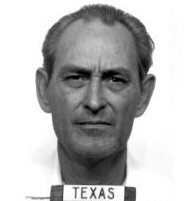
Doyle Skillern
Murderer Ervil LeBaron
Murderer · USA · 1972
Ervil Morrell LeBaron (1925 to August 16, 1981) was the leader of a polygamous…
35 victims
Ervil LeBaron
Murderer · USA · 1972
Ervil Morrell LeBaron (1925 to August 16, 1981) was the leader of a polygamous…
35 victims
 Marvin Gray
Murderer · USA · 1975
Marvin Gray was convicted killer who claimed responsibility for 23 slayings and…
23 victims
Marvin Gray
Murderer · USA · 1975
Marvin Gray was convicted killer who claimed responsibility for 23 slayings and…
23 victims
 Yahweh ben Yahweh
Murderer · USA · 1980
Yahweh ben Yahweh was born and legally named Hulon Mitchell Jr. (October 27, 19…
23 victims
Yahweh ben Yahweh
Murderer · USA · 1980
Yahweh ben Yahweh was born and legally named Hulon Mitchell Jr. (October 27, 19…
23 victims
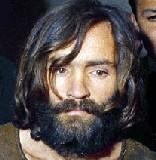 Charles Manson
Murderer · USA · 1969
Charles Milles Manson (born November 12, 1934) was an American criminal and mus…
9 victims
Charles Manson
Murderer · USA · 1969
Charles Milles Manson (born November 12, 1934) was an American criminal and mus…
9 victims
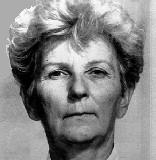 Marianne Nölle
Serial killer · Germany · 1984
Marianne Nölle was born in 1938. She was a German serial killer from Cologne. M…
7 victims
Marianne Nölle
Serial killer · Germany · 1984
Marianne Nölle was born in 1938. She was a German serial killer from Cologne. M…
7 victims
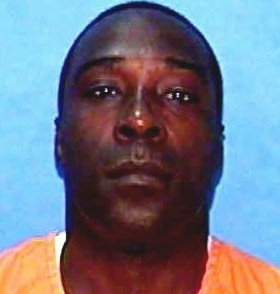 Raymond Morrison
Murderer · USA · 1997
Raymond Morrison was sentenced to death on 12/18/98 for the murder of 82-year-o…
1 victim
Raymond Morrison
Murderer · USA · 1997
Raymond Morrison was sentenced to death on 12/18/98 for the murder of 82-year-o…
1 victim
 Alfredo Galán
Serial killer · Spain · 2003
Alfredo Galán Sotillo (born April 5, 1978) was a Spanish serial killer. · Janua…
6 victims
Alfredo Galán
Serial killer · Spain · 2003
Alfredo Galán Sotillo (born April 5, 1978) was a Spanish serial killer. · Janua…
6 victims
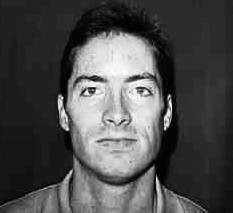 Richard Daniel Starrett
Murderer · USA · 1988
Richard Daniel Starrett was 29 when he was sentenced. He worked at Savannah Riv…
1 victim
Richard Daniel Starrett
Murderer · USA · 1988
Richard Daniel Starrett was 29 when he was sentenced. He worked at Savannah Riv…
1 victim
 Melissa Memmer
Murderer · USA · 2003
Melissa Memmer — defendant; former Shelby Township caregiver; she admitted disc…
1 victim
Melissa Memmer
Murderer · USA · 2003
Melissa Memmer — defendant; former Shelby Township caregiver; she admitted disc…
1 victim
 Joseph Albert Guay
Mass murderer · In the Air - Canada · 1949
Joseph Albert Guay (born 1917) was a resident of Quebec City who was responsibl…
23 victims
Joseph Albert Guay
Mass murderer · In the Air - Canada · 1949
Joseph Albert Guay (born 1917) was a resident of Quebec City who was responsibl…
23 victims
- Gender
- male
- Country
- USA
- Location
- Lubbock County, Texas, USA
- Date of birth
- April 8, 1936
- Age at first offence
- 38
- Characteristics
- drugs, robbery
- Victim profile
- Patrick Randel (state narcotics agent)
- Method of murder
- Shooting
- Date(s) of murder
- October 23, 1974
- Years active
- 1974
- Date of arrest
- —
- Status
-
Executed
Executed by lethal injection in Texas on January 16, 1985
Case overview
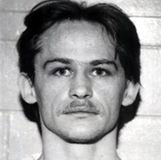
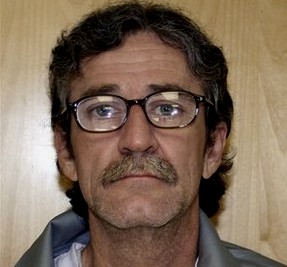
Doyle Edward Skillern was a Texas state prisoner who was executed by lethal injection in Texas on January 16, 1985.
Skillern and a codefendant, Charles Victor Sanne, were convicted of murdering Patrick Allen Randel, a state narcotics agent. The victim Randel and the codefendant Sanne had been sitting in Randel's car at a roadside park when Skillern drove up. Immediately following this, Sanne shot and killed Randel.
Skillern was indicted for intentionally causing the death of Randel in the course of committing and attempting to commit a robbery, a capital offense. At a second trial, Sanne took the stand and confessed to firing the gun that killed Randel. The jury again found both defendants guilty. In the sentencing phase, the jury assessed the death penalty against Skillern.
Timeline
- February 11, 1978 — A Texas state trial judge ordered a change of venue to another county and set the retrial for March 13, 1978.
- February 20 — Attorney Connery was appointed to represent Skillern in his trial for capital murder.
- March 8 — The trial court denied the motion for a continuance after an evidentiary hearing.
- March 13 — Jury selection commenced.
- March 21 — Trial in chief commenced and proceeded daily thereafter.
- March 30 — Skillern and his codefendant were found guilty of capital murder.
- March 31 — The sentencing hearing was held; both defendants were sentenced to death.
- Dec. 5, 1983 — The United States Court of Appeals for the Fifth Circuit decided the appeal in Doyle Edward Skillern, Petitioner-appellant, v. W.J. Estelle, Jr., Director, Texas Department Of Corrections, Respondent-appellee.
- Jan. 14, 1985 — The United States Court of Appeals for the Fifth Circuit decided the appeal in Doyle Edward Skillern, Petitioner-appellant, v. Raymond Procunier, Director, Texas Department Of Corrections, et al., Respondents-appellees.
- January 16, 1985 — Skillern was executed by lethal injection in Texas.
Background
Randel had been working undercover to set up a purchase of illegal drugs from Skillern and Sanne. The day before the killing, Skillern and Sanne became concerned that Randel might be a state informant.
The three had met in Randel's motel room, where other narcotics agents eavesdropped on the conversation from an adjoining room. Sanne and Skillern showed the officer a sample of the drugs they intended to sell. The officer asked how they wanted to handle the deal, and one of the defendants replied: "Let's go some place where we can talk business."
Leaving the State money that was to be used for the transaction in the motel room, Randel drove off in his car with Sanne as passenger, while Skillern followed in another automobile. Approximately an hour later, Skillern and Sanne returned, and Sanne was seen entering Randel's motel room. They then drove off.
A few hours later Randel was found shot to death in his locked car at a roadside park twenty to twenty-five miles distant from the motel.
About four hours later, Skillern and Sanne were arrested. Skillern had the State purchase money and Randel's gun in his possession, while Sanne was in possession of Randel's credit cards and other effects.
The offence
Skillern and Sanne were indicted for intentionally causing the death of Randel in the course of committing and attempting to commit a robbery, a capital offense.
Skillern was convicted of capital murder as having intentionally caused the death of Randel in the course of committing and attempting to commit a robbery.
Capital murder was defined as a capital felony. A capital felony was punishable either by confinement for life or by death.
Investigation and arrest
Randel was murdered in his locked car at a roadside park twenty to twenty-five miles distant from the motel. Skillern had the State purchase money and Randel's gun. Sanne had Randel's credit cards and other effects.
Trial
First trial and reversal
At an initial trial, neither Skillern nor Sanne testified. Both were found guilty.
In the sentencing hearing at the first trial, the jury assessed a life sentence for Sanne and a death sentence for Skillern. The convictions were reversed because of a failure to sequester the jury.
Second trial and confession
The present conviction resulted from a retrial. Sanne took the stand and confessed to firing the gun that killed Randel.
According to Sanne, Randel struck him on the face and unexpectedly pulled a gun on him. Sanne shot Randel six times in the chest and abdomen. Under this version of the crime, Skillern asserted that his own personal participation was at most limited to a planned robbery and did not encompass the unexpected killing.
In the second trial, the jury again found both defendants guilty. In the sentencing phase, the death penalty was assessed against both defendants.
Guilt-stage jury instructions (verbatim excerpts)
The jury was instructed:
Our law provides that a person commits capital murder when such person intentionally kills or causes the death of another while such person is in the course of committing or attempting to commit the offense of robbery.
A person commits murder when he intentionally or knowingly kills or causes the death of another.
A person acts intentionally, or with intent, with respect to the nature of his conduct or to a result of his conduct when it is his conscious objective or desire to engage in the conduct or cause the result.
A person acts knowingly, or with knowledge, with respect to the nature of his conduct or to circumstances surrounding his conduct when he is aware of the nature of his conduct or that the circumstances exist.
A person acts knowingly, or with knowledge with respect to a result of his conduct when he is aware that his conduct is reasonably certain to cause the result.
This is a case depending for conviction on circumstantial evidence.
In order to warrant a conviction of a crime on circumstantial evidence, each fact necessary to the conclusion sought to be established must be proved by competent evidence beyond a reasonable doubt, all the facts (that is, the facts necessary to the conclusion) must be consistent with each other and with the main fact sought to be proved, and the circumstances, taken together, must be of a conclusive nature leading, on the whole to a satisfactory conclusion and producing, in effect, a reasonable and moral certainty that the accused, Doyle Edward Skillern , either alone or acting with Charles Victor Sanne, and no other person committed the offense charged.
But in such cases it is not sufficient that the circumstances coincide with, account for, and therefore render probable the guilt of the defendant, Skillern . They must exclude, to a moral certainty, every other reasonable hypothesis raised by the evidence except the defendant, Skillern 's guilt, and unless they do so beyond a reasonable doubt, you will find the defendant not guilty.
A person is criminally responsible as a party to an offense if the offense is committed by his own conduct, by the conduct of another for which he is criminally responsible, or by both.
A person is criminally responsible for an offense committed by the conduct of another, if, acting with intent to promote or assist in the commission of the offense, he solicits, encourages, directs, aids, or attempts to aid the other person to commit the offense.
Each such party to the offense, whether jointly indicted or not, may be legally prosecuted and convicted as such, provided the evidence against each establishes that he acted as a party to the offense, regardless of the particular part played by each.
Mere presence alone will not constitute one a Party.
If, in the attempt to carry out a conspiracy to commit one felony, another felony is committed by one of the conspirators, all conspirators are guilty of and parties to the felony actually committed, though having no intent to commit it, if the offense was committed in furtherance of the unlawful purpose and was one that should have been anticipated as a result of the carrying out of the conspiracy.
Now therefore if you find from the evidence beyond a reasonable doubt that on or about the 23rd of October, 1974, in the County of Live Oak and the State of Texas that the defendant Doyle Edward Skillern was acting as a party within the meaning of the word "party" as the same is defined in Paragraph 6 of this charge, and that while so acting, if he was, that the defendant, Charles Victor Sanne did then and there intentionally cause the death of Patrick Allen Randel by shooting him with a gun, if he did, and that the said Charles Victor Sanne did then and there intentionally cause the death of the said Patrick Allen Randel, if he did, in the course of committing or attempting to commit robbery as that term has heretofore been defined to you, then you will find defendant, Doyle Edward Skillern guilty of the offense of capital murder as charged in the indictment, and so say by your verdict.
You are further instructed that the law of self-defense, as hereinafter defined, does not apply to this paragraph.
Sentencing hearing special issues and instructions
After conviction, Skillern’s sentencing hearing was held before the trial jury. The jury was asked to decide three special issues whose answers would determine whether Skillern would be sentenced to death or to life imprisonment.
A unanimous jury answered Special Issue No. 1 in the affirmative:
- Special Issue No. 1: Was the conduct of the Defendant, Doyle Edward Skillern that caused the death of the deceased, Patrick Allen Randel, committed deliberately and with the reasonable expectation that the death of the deceased or another would result?
Sentencing
After the sentencing hearing held on March 31 (as described in the appellate opinion), both Skillern and his codefendant were sentenced to death at the second trial. The United States Court of Appeals described that later, on direct appeal, Skillern’s death sentence was affirmed, while Sanne’s death sentence was reformed to life imprisonment on the basis of double jeopardy. The appellate opinion cited:
- Sanne v. State, 609 S.W.2d 762 (Tex.Cr.App.1980), cert. denied, Skillern v. Texas, 452 U.S. 931.
Appeals and federal habeas proceedings
Federal habeas appeal affirmed without an evidentiary hearing
Skillern appealed from the denial without an evidentiary hearing of his application for federal habeas relief. The case was decided by the United States Court of Appeals for the Fifth Circuit and affirmed the district court’s judgment dismissing his petition without an evidentiary hearing (Skillern v. Estelle, 720 F.2d 839).
The appeal presented three groups of contentions:
- The death penalty was unconstitutionally imposed under Enmund v. Florida due to alleged insufficient evidence of Skillern’s own personal culpability for the codefendant’s allegedly unexpected act of shooting the victim, and alleged jury instructions that permitted imputation of the triggerman’s intent.
- The district court improperly denied an evidentiary hearing on allegations of denial of due process and effective assistance of counsel because a continuance was denied and newly-appointed defense counsel had to go to trial on the capital charge three weeks after appointment.
- The admission into evidence of an allegedly expert forensic pathologist opinion that there was a probability Skillern would commit future acts of violence and would constitute a continuing threat to society allegedly rendered the sentencing hearing fundamentally unfair. It also alleged similar due process infection by admitting an indictment for murder with malice in an earlier offense when Skillern had previously been convicted of the lesser offense of murder without malice.
The Fifth Circuit found no error and affirmed dismissal of the federal habeas petition without an evidentiary hearing.
Grounds addressed in the appellate decision (quotes and content)
The appellate decision described the trial evidence and stated that, assuming proper instructions, a rational jury could find beyond a reasonable doubt that Skillern agreed in advance not only to rob Randel, but also to kill Randel after luring him away from his motel room to the roadside park.
It also recounted prosecutor and defense argument at the sentencing phase and included verbatim lines:
The prosecutor summarized the state’s theory regarding Special Issue No. 1, stating:
- "You found that they, acting together, intended to kill him. What could be more deliberate and what could bring a more reasonably expected result?"
Defense counsel delineated the different issue before the jury in sentencing, including:
- "Obviously, I don't think that you will bind Mr. Skillern with what went on in Mr. Sanne's mind at the time of the shooting. I think the law tells you, and I am sure Mr. Butts will tell you again, that when "parties" were defined to you and you find that one was criminally responsible for the conduct of another, that is necessarily the framework in which you found Mr. Skillern guilty in this case. That may be true but, when we get to the issue of punishment, why, it seems to me that so far as meting out what the punishment should be in a case like this, that you have got to assume, in your own minds, what may have been anticipated by Mr. Skillern with respect to what another would do under circumstances that possibly no one could foresee, at that roadside park."
At sentencing, later, it was stated that the defendants:
- "were acting together as a party within the meaning of the word 'party', as defined in paragraph six of the first charge," noting "that charge is just as much the law of the land at this phase of the trial."
The opinion included the thrust of the prosecutor’s argument:
- "practically everything you have heard has been done in concert, in one way or another. Maybe one was playing the drum and the other blowing the bugle, but in concert."
In asking for the jury’s affirmative answer to Special Issue No. 1, the prosecutor quoted the requirement that the conduct be:
- "committed deliberately in reasonable expectation that the death of the deceased would result,"
Continuance and effective assistance contentions
The appellate decision addressed the denial of a continuance. It described appointment and trial preparation timing and noted that an evidentiary hearing was held in state court on the pretrial motion for continuance and that the denial was rejected there and also after a motion for new trial.
The appellate decision described counsel’s requested delay and what the trial judge allowed. It further concluded that Skillern was not deprived of effective assistance of counsel as alleged.
Sentencing evidentiary rulings
The appellate decision described the admission, over objection, of the testimony of a forensic pathologist, based on a hypothetical question, concerning a probability Skillern would commit criminal acts of violence constituting a continuing threat to society.
It stated that on direct appeal, the Texas Court of Criminal Appeals found the admission of the doctor’s answer was error because he was incompetent to testify as an expert and lacked firsthand familiarity with Skillern’s personality, but that it was harmless error due to other evidence of Skillern’s violent propensities. It also referenced that a dissenting opinion gave reasons the testimony was prejudicial.
The Fifth Circuit applied a due process materiality standard and concluded it could not find prejudice of constitutional magnitude under those standards.
The appellate decision also addressed admission of an indictment for murder with malice relating to an earlier offense and concluded it possessed no merit as a basis for federal habeas relief, noting that the jury was immediately informed Skillern was convicted of murder without malice, and that an authenticating witness explained the legal difference between murder with malice and murder without malice.
Summary disposition
The Fifth Circuit concluded:
- The judgment of the district court dismissing without an evidentiary hearing Skillern’s petition for federal habeas relief was affirmed.
Motion for stay of execution denied
On January 14, 1985, the Fifth Circuit denied a request for a stay of execution and affirmed the denial of injunctive relief. It also denied a motion for a stay.
The appellate decision stated:
- Skillern was convicted of murder and his execution was set for January 16, 1985.
- The sole ground for the stay was that his execution should be stayed until the United States Supreme Court decided Heckler v. Chaney, in which death row inmates challenged the FDA’s failure to certify executing drugs for use.
- The Fifth Circuit affirmed the denial of the request for a stay of execution and injunctive relief and denied the present motion for a stay, adopting the district court’s reasons.
The appellate decision included the district court’s reasoning from its order of January 11, 1985:
- "This court denies Skillern 's request for injunctive relief and stay of execution pending decision of the Supreme Court because Plaintiff has failed to convince the Court that he has presented a substantial case on the merits."
- It noted that the Fifth Circuit had rejected the holding of the D.C. Circuit in Chaney v. Heckler.
- It stated that the Supreme Court stayed the mandate in the Chaney case and refused to stay execution of another prisoner pending resolution.
- It also stated that Skillern failed to convince the court that success in the Chaney case would give the remedy he sought to avoid execution by drugs because Texas was not a party to the Chaney litigation and it was not shown how the decision would prevent Texas from executing him using that drug.
The Fifth Circuit ended with:
- "MOTION FOR STAY OF EXECUTION DENIED."
Outcome
Skillern’s death sentence was affirmed on direct appeal. The Fifth Circuit affirmed denial of federal habeas relief without an evidentiary hearing. The Fifth Circuit also denied a motion for a stay of execution and injunctive relief.
Skillern was executed by lethal injection in Texas on January 16, 1985.
Last statement
Skillern’s last statement was: "I pray that my family will rejoice and will forgive, thank you."
Spotted an error, or have more information about this case?