
Lisa Jo Chamberlin
Murderer Miranda Barbour
Murderer · USA · 2013
Miranda Barbour, 19, defendant. · Elytte Barbour, 22, defendant and husband of…
100 victims
Miranda Barbour
Murderer · USA · 2013
Miranda Barbour, 19, defendant. · Elytte Barbour, 22, defendant and husband of…
100 victims
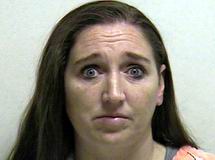 Megan Huntsman
Murderer · USA · 1996
Megan Huntsman was 40 at sentencing. She was a mother of three children who wer…
6 victims
Megan Huntsman
Murderer · USA · 1996
Megan Huntsman was 40 at sentencing. She was a mother of three children who wer…
6 victims
 Michele Kalina
Murderer · USA · 1996
Michele Kalina pleaded guilty to murder for one of five infants she initially w…
5 victims
Michele Kalina
Murderer · USA · 1996
Michele Kalina pleaded guilty to murder for one of five infants she initially w…
5 victims
 Tiffany Hall
Murderer · USA · 2006
Tiffany Hall was 24 when she was charged in September 2006. She later entered a…
5 victims
Tiffany Hall
Murderer · USA · 2006
Tiffany Hall was 24 when she was charged in September 2006. She later entered a…
5 victims
 Banita Jacks
Murderer · USA · 2007
Banita Jacks was a Washington, DC resident convicted of murdering her four daug…
4 victims
Banita Jacks
Murderer · USA · 2007
Banita Jacks was a Washington, DC resident convicted of murdering her four daug…
4 victims
 Holly Grigsby
Murderer · USA · 2011
Holly Grigsby was sentenced to life in prison without parole on July 15, 2014.…
4 victims
Holly Grigsby
Murderer · USA · 2011
Holly Grigsby was sentenced to life in prison without parole on July 15, 2014.…
4 victims
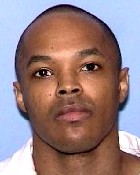 Terry Darnell Edwards
Murderer · USA · 2002
Name: Terry Darnell Edwards TDCJ Number: 999463 Date of birth: 08/10/1973 Gende…
2 victims
Terry Darnell Edwards
Murderer · USA · 2002
Name: Terry Darnell Edwards TDCJ Number: 999463 Date of birth: 08/10/1973 Gende…
2 victims
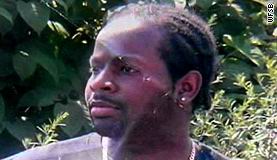 Omar Thornton
Mass murderer · USA · 2010
Omar S. Thornton was 34 years old at the time of the Hartford Distributors shoo…
8 victims
Omar Thornton
Mass murderer · USA · 2010
Omar S. Thornton was 34 years old at the time of the Hartford Distributors shoo…
8 victims
 Tausha Morton
Murderer · USA · 2004
Defendant: Tausha Morton (also referred to as Tausha Fields in court) · Place:…
1 victim
Tausha Morton
Murderer · USA · 2004
Defendant: Tausha Morton (also referred to as Tausha Fields in court) · Place:…
1 victim
 Henry Sireci
Murderer · USA · 1975
Henry Sireci (W/M) was prosecuted in the Ninth Judicial Circuit, Orange County,…
1 victim
Henry Sireci
Murderer · USA · 1975
Henry Sireci (W/M) was prosecuted in the Ninth Judicial Circuit, Orange County,…
1 victim
 Sidney Porterfield
Murderer · USA · 1985
Sidney Porterfield was convicted in 1986 and sentenced to death for the killing…
1 victim
Sidney Porterfield
Murderer · USA · 1985
Sidney Porterfield was convicted in 1986 and sentenced to death for the killing…
1 victim
 David Allen Castillo
Murderer · USA · 1983
David Allen Castillo was executed by lethal injection in Texas on September 23,…
1 victim
David Allen Castillo
Murderer · USA · 1983
David Allen Castillo was executed by lethal injection in Texas on September 23,…
1 victim
- Gender
- female
- Country
- USA
- Location
- Forrest County, Mississippi, USA
- Date of birth
- September 30, 1972
- Age at first offence
- 32
- Characteristics
- robbery, rape, dismemberment, torture
- Victim profile
- Linda Heintzelman and her boyfriend, Vernon Hulett
- Method of murder
- Beating with a hammer - Suffocation
- Date(s) of murder
- March 20, 2004
- Years active
- 2004
- Date of arrest
- March 29, 2004
- Status
-
Sentenced to death
Sentenced to death in 2006; U.S. Supreme Court declined to hear the appeal; Mississippi Supreme Court upheld the conviction and death sentence
Case record: Lisa Jo Chamberlin
Background
Lisa Jo Chamberlin was convicted and sentenced to die by lethal injection for the capital murders of Linda Heintzelman and Vernon Hullett during the commission of a robbery. Chamberlin appealed her convictions and sentence.
Chamberlin had been one of two people charged in the deaths of Linda Heintzelman and Heintzelman's boyfriend, Vernon Hullett. Their bodies were found inside a freezer at an abandoned farm in Russell County, Kansas.
The offence
Chamberlin was convicted of capital murder on two counts in the deaths of Heintzelman and Hullett. The Mississippi Supreme Court described the killings as occurring during the commission of a robbery, and it found the murders were especially heinous, atrocious, or cruel.
Prosecutors said Gillett and Chamberlin fled Mississippi to cover their tracks and hide the crime.
Investigation
The investigation began when Kansas authorities received a report that Lisa Jo Chamberlin and her boyfriend and co-defendant, Roger Gillett, were in possession of a stolen vehicle and were manufacturing methamphetamine at the Gillett farm in Russell County, Kansas.
KBI Officer Matthew Lyon obtained two search warrants: one authorizing the search of 606 North Ash, where Gillett and Chamberlin were staying, and a second authorizing the search of the Gillett farm.
When officers opened the freezer found at the farm, they discovered a dismembered body, later identified as Vernon Hullett, and a black plastic trash bag containing severed body parts. Armed with a third search warrant, officers returned to the farm, pulled the male body out of the freezer, and discovered another body frozen in liquid in the bottom of the freezer. The second body was later identified as Linda Heintzelman. The search at the farm was completed the next day, March 30, at 5:22 p.m.
During the investigation, Chamberlin explained her relationship with Gillett and her participation in the robbery and murders of Hullett and Heintzelman. She stated that she met Gillett in Oregon, where she was born and raised, and that they lived together for a brief time in Oregon before they moved to Russell, Kansas, where they lived with some of Gillett's relatives. Chamberlin and Gillett drove from Russell County, Kansas, to Hattiesburg, Mississippi, where they stayed with Gillett's cousin Vernon Hullett and his live-in girlfriend, Linda Heintzelman.
Chamberlin described a wreck on Highway 49 after they arrived in Hattiesburg, and she described Heintzelman promising to report the accident as a claim against her insurance and divide the insurance proceeds. Chamberlin said Heintzelman never submitted the accident report to her insurance company.
Chamberlin also described arguing with Gillett about moving, and later events at Hullett's residence including Gillett becoming violent with Heintzelman, instructing Chamberlin to get his gun from under the mattress, and cutting telephone wires so Hullett and Heintzelman could not call the police. Chamberlin stated that Gillett fired one round inside the house to scare Hullett and Heintzelman.
Chamberlin described an effort to get the combination to Hullett's safe, and she said she left to get more beer after noticing that all the beer in the house had been consumed. When Chamberlin returned, she described Heintzelman being bent over the safe and not wearing pants, and Chamberlin asked whether Gillett had raped Heintzelman. Chamberlin said Gillett explained he wanted to “break her,” made her take her clothes off, and used a beer bottle to rape her. Chamberlin stated that after failing to open the safe, she told Gillett “let's just kill them and get out of here.”
Chamberlin stated that Gillett bashed Hullett in the head with a hammer and slashed Hullett's throat. She said she went out and came back in a number of times over several hours while Heintzelman was injured but “still breathing.” Chamberlin said she eventually suggested smothering Heintzelman, and she described binding Heintzelman's hands behind her back so that she could not struggle. Chamberlin described that Gillett lifted Heintzelman's head and Chamberlin placed a bag over it.
Chamberlin told KBI officers she was unable to complete the asphyxiation of Heintzelman and went outside; she said Heintzelman was still breathing when she went outside and when she returned Heintzelman was dead.
Chamberlin stated she assisted in cleaning up the murder scene. She described helping move the bodies to the bathroom, where Gillett cut off Hullett's head and arms, and she held garbage bags open while Gillett placed Hullett's arms inside the bags. Chamberlin described helping load Heintzelman's body and then Hullett's body, along with the black trash bag, into the freezer and taping the freezer shut while Gillett stood on top of the freezer to hold it closed. Chamberlin described transporting the freezer on the back of Hullett's pickup truck from Hullett's house to Kansas, unloading it, and plugging it in at the Gillett farm. She said they disposed of items transported from Hullett's house at the Russell dump.
Chamberlin also agreed to cook methamphetamine for five hundred dollars because they needed money. She described discarding trash from making methamphetamine at a public swimming pool and described that she and Gillett were arrested the next day.
Arrest
Officers arrested Gillett and Chamberlin on March 29, 2004, at the Kansas home at 606 North Ash. Chamberlin was detained at the Russell County Jail.
At approximately 5:13 p.m. on March 29, KBI Officer Matthew Lyon attempted to interview Chamberlin. After Lyon read Chamberlin her Miranda rights, Chamberlin told Lyon that she did not want to answer any questions, and the interview ended at approximately 5:20 p.m.
Trial
Procedural history
Chamberlin and Gillett were jointly indicted on two counts of capital murder in the deaths of Heintzelman and Hullett. The court granted Chamberlin's motion for severance from Gillett.
Chamberlin filed a motion to suppress the evidence recovered from the Russell landfill as well as a motion to suppress her statements. At the suppression hearing, three KBI officers—Lyon, Hawel, and Kelly Ralston—testified that they interviewed Chamberlin a total of five times and that in those interviews Chamberlin admitted her participation in the murders. Rusty Keyes and Terrell Carson of the Hattiesburg Police Department testified that Chamberlin refused to make a statement upon arrival in Hattiesburg and requested a lawyer. Martha Petrofsky and Marilyn Coleman, both jailmates of Chamberlin's at the Forrest County Jail, testified that Chamberlin admitted to participating in the murders of Hullett and Heintzelman. The trial court denied Chamberlin's motion to suppress statements.
During trial, Chamberlin did not put on any evidence.
After the three-day trial, the jury found Chamberlin guilty on two counts of capital murder.
Confession and interrogations
Lyon began an interview with Chamberlin on March 29, 2004, at approximately 5:13 p.m. After spelling her last name, Chamberlin made an unintelligible statement regarding an attorney. The State contended Chamberlin asked: “Is this where I'm supposed to ask for a lawyer,” and later “Don't you think I need a lawyer?” The videotape of the interrogation showed that Chamberlin made an unintelligible statement. The interview concluded at approximately 5:20 p.m.
According to the court, Chamberlin successfully invoked her right to silence but not her right to counsel at the end of the first interrogation. The trial court found that Chamberlin's questions concerning an attorney were ambiguous as a matter of law and that investigators took all appropriate precautions to determine the nature and extent of the ambiguity, and that the defendant voluntarily and without coercion agreed to proceed and further answer questions.
After finding unidentified bodies at the Gillett farm, Hawel, along with Lyon, interrogated Chamberlin on the morning of March 30, 2004. This interview began at approximately 9:43 a.m. It ended at approximately 10:39 a.m. There was no evidence that Chamberlin invoked her Miranda rights during this interview. Chamberlin described the dead bodies, injuries to Hullett's neck, her assistance in cleaning the house and loading the bodies in the freezer, and the arrangement of bodies in the freezer.
A third interview began at about 1:24 p.m. on March 30 and was videotaped. The interview ended at 1:39 p.m. The court found that Chamberlin did not provide details of the murders during this interview, but that she became very emotional, intermittently crying and apologizing to Roger.
A fourth interview began at approximately 2:46 p.m. that afternoon and was memorialized in a report. Ralston testified that Chamberlin acknowledged that she understood her Miranda rights and said that she wanted to speak with him. The report indicated that Chamberlin described the details of the murders from start to finish, including Gillett bashing Hullett in the head with a hammer, dismemberment of Hullett, and placement of the bodies in the freezer. The report indicated she described how she helped tape Heintzelman's hands behind her back so she could not struggle and that Gillett completed suffocating Heintzelman with a plastic bag. The report indicated the interview concluded with Chamberlin's statement that she would show Hawel where the trash was dumped inside the Russell landfill.
On March 31, Chamberlin initiated a fifth interview after requesting to speak to a KBI agent. The fifth interview began at approximately 9:43 a.m. and was videotaped. The trial court found that Chamberlin initiated the final interview by sending a message through the jailer that she wished to speak to the authorities again, and that it was the result of her request. The court found Chamberlin's Miranda rights were not in question when she initiated communication.
Evidence seized from the landfill
Chamberlin agreed to show KBI Officer Delbert Hawel the location where she and Gillett had dumped evidence at the landfill in Russell. At approximately 8:00 p.m., KBI Officer Max Barrett, Hawel, and Chamberlin rode to the Russell County dump and Chamberlin indicated where physical evidence from the murders had been deposited. The landfill was secured until it could be searched.
On March 31, officers returned to the dump and recovered seven plastic trash bags containing, among other things, one of Hullett's work shirts, pants with Hullett's name on them, a pillow heavily stained with blood, a camera, a purse containing identification apparently belonging to Heintzelman, a wallet and identification belonging to Hullett, a Hattiesburg, Mississippi, phone book, and the cardboard center of a roll of duct tape.
Barrett packaged the evidence and transferred it to Hattiesburg Police Officer Rusty Keyes.
Chamberlin argued the evidence was recovered as a result of information obtained from her statements and should have been excluded after she invoked Miranda rights on March 30. The court held there was no Fifth-Amendment self-incrimination violation and that the “fruit of the poisonous tree” doctrine was inapplicable to the evidence found in the dump. The court affirmed admission.
Batson challenge
During jury selection, Chamberlin objected to the State's use of seven of its twelve peremptory challenges to strike black individuals from the jury panel. The Mississippi Supreme Court found that Chamberlin's Batson challenge was without merit. The court described the State's race-neutral reasons for strikes of jurors numbered five, thirty-eight, eighty-one, ninety-two, 104, 106, and 117, and it described that Chamberlin offered no rebuttal to the first four jurors' reasons and failed to rebut the specific reasons offered for the remaining three challenged jurors.
Sentencing
During sentencing, Chamberlin called two former jail mates as character witnesses and called a psychologist appointed by the court to investigate mitigating factors in relation to her mental state. The psychologist testified as to information she obtained from interviewing Chamberlin and people who knew her, including Chamberlin's mother, Twila Speer; Chamberlin's aunt, Loma Wagner; and a long-time friend from childhood, Veronica.
In accordance with the recommendation of the jury, the court ordered Chamberlin to be put to death by lethal injection.
Judge Bob Helfrich set Chamberlin's execution by chemical injection for Sept. 29, while noting that the sentence likely would be delayed by an automatic appeal to the Mississippi Supreme Court. The trial court stayed Chamberlin's execution pending resolution of her motion for judgment notwithstanding the verdict, or in the alternative, a motion for a new trial, and her appeal to this Court. The trial court denied her post-trial motions.
Appeals
The Mississippi Supreme Court reviewed multiple claims, including that the trial court erred in admitting statements made during custodial interrogations, erred in admitting evidence seized from the landfill, erred in denying Chamberlin's Batson challenge, erred in allowing the introduction of gruesome photographs, erred in denying sentencing instructions D-3 and D-10, erred in denying her petition for payment of travel and related expenses for mitigation witnesses, and that the death sentence was disproportionate.
The Mississippi Supreme Court held that Chamberlin's arguments regarding suppression of statements after Miranda issues lacked merit, including its analysis of the first through fifth interrogations.
The court upheld the conviction and death sentence, concluding that Chamberlin's death sentence was not imposed under the influence of passion, prejudice, or any other arbitrary factor, that the evidence supported the jury's finding of statutory aggravating circumstances, and that the sentence was not excessive or disproportionate compared with similar cases.
The Mississippi Supreme Court upheld Chamberlin's conviction in 2008.
Chamberlin sought U.S. Supreme Court review of her petition seeking a new trial after being sentenced to death. The U.S. Supreme Court declined to hear the appeal without comment.
Other details
Chamberlin was convicted and sentenced to death in 2006.
The other defendant, Roger Lee Gillett, was convicted and sentenced to death in 2007.
During the trial, the last witness to testify was a former Forrest County Jail inmate who said Chamberlin showed no remorse about the killings. Martha Petrofsky testified, and Chamberlin expressed sorrow that she was caught and said she was not scared of the killings. The testimony also included that Chamberlin said the victims should have had their bodies disposed of better, “like feeding them to the hogs.”
The Kansas forensic pathologist Donald Pojman testified that Vernon Hullett died of a blunt force injury to the left side of his head. Pojman testified that Heintzelman's official cause of death was listed as multiple injuries that included stab and cut wounds, blunt force trauma and asphyxiation.
Outcome
The Mississippi Supreme Court affirmed the final judgments and sentences of the Circuit Court of Forrest County as to Chamberlin for the murders of Hullett and Heintzelman. The convictions of capital murder and sentence of death by lethal injection were affirmed.
The U.S. Supreme Court declined to hear an appeal in the death penalty case from Mississippi.
Timeline
- March 2004 — Authorities learned Chamberlin and Gillett had a stolen vehicle and were making methamphetamine at the Kansas farm.
- March 6 — Chamberlin and Gillett wrecked their car while following Hullett and Heintzelman in Heintzelman's pickup truck on Highway 49.
- March 29, 2004 — KBI Officer Matthew Lyon obtained two search warrants; KBI searched 606 North Ash and arrested Gillett and Chamberlin; Lyon attempted to interview Chamberlin at approximately 5:13 p.m.
- March 29, 2004 — Officers searched the Gillett farm and discovered a freezer taped shut with duct tape and plugged in inside a wooden granary; opening the freezer revealed a dismembered body later identified as Vernon Hullett and severed body parts in a black plastic trash bag.
- March 30, 2004 — Chamberlin was interrogated at approximately 9:43 a.m. and again beginning about 1:24 p.m.; her fourth interview began at approximately 2:46 p.m.; the search at the farm was completed the next day, March 30, at 5:22 p.m.
- March 31, 2004 — Officers recovered seven plastic trash bags from the Russell County dump containing evidence including work clothing, personal items, identification, and the cardboard center of a roll of duct tape; interviews were conducted and evidence was transferred to Hattiesburg Police Officer Rusty Keyes.
- 2006 — Chamberlin was convicted and sentenced to die.
- July 17, 2008 — The Mississippi Supreme Court issued its opinion in Chamberlin v. State (No. 2006-DP-01489-SCT).
- 2008 — The Mississippi Supreme Court upheld Chamberlin's conviction.
- October 31, 2011 — The U.S. Supreme Court declined to hear an appeal of Chamberlin's death sentence case.
Aggravating circumstances found
The jury unanimously found the aggravating circumstances for the murders of both Hullett and Heintzelman:
- “[t]he capital offense was committed while the defendant was engaged [in] or was an accomplice in the commission of or an attempt of flight after committing a robbery” (Miss. Code Ann. § 99-19-101(5)(d))
- “the capital offense was committed for the purpose of avoiding or preventing a lawful arrest” (Miss. Code Ann. § 99-19-101(5)(e))
- “the capital offense was especially heinous, atrocious, or cruel” (Miss. Code Ann. § 99-19-101(5)(h))

Spotted an error, or have more information about this case?