
Linda Charbonneau
Murderer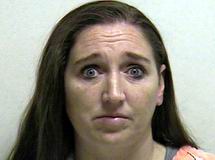 Megan Huntsman
Murderer · USA · 1996
Megan Huntsman was 40 at sentencing. She was a mother of three children who wer…
6 victims
Megan Huntsman
Murderer · USA · 1996
Megan Huntsman was 40 at sentencing. She was a mother of three children who wer…
6 victims
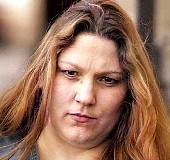 Angela Johnson
Murderer · USA · 1993
Angela Jane Johnson was convicted in federal court of aiding and abetting the m…
5 victims
Angela Johnson
Murderer · USA · 1993
Angela Jane Johnson was convicted in federal court of aiding and abetting the m…
5 victims
 Michele Kalina
Murderer · USA · 1996
Michele Kalina pleaded guilty to murder for one of five infants she initially w…
5 victims
Michele Kalina
Murderer · USA · 1996
Michele Kalina pleaded guilty to murder for one of five infants she initially w…
5 victims
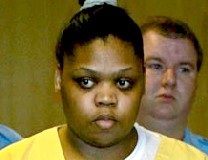 Tiffany Hall
Murderer · USA · 2006
Tiffany Hall was 24 when she was charged in September 2006. She later entered a…
5 victims
Tiffany Hall
Murderer · USA · 2006
Tiffany Hall was 24 when she was charged in September 2006. She later entered a…
5 victims
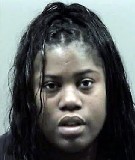 Banita Jacks
Murderer · USA · 2007
Banita Jacks was a Washington, DC resident convicted of murdering her four daug…
4 victims
Banita Jacks
Murderer · USA · 2007
Banita Jacks was a Washington, DC resident convicted of murdering her four daug…
4 victims
 Holly Grigsby
Murderer · USA · 2011
Holly Grigsby was sentenced to life in prison without parole on July 15, 2014.…
4 victims
Holly Grigsby
Murderer · USA · 2011
Holly Grigsby was sentenced to life in prison without parole on July 15, 2014.…
4 victims
 Carl Williams
Murderer · Australia · 2003
Carl Antony Williams (b. October 13, 1970) was an Australian convicted hitman a…
4 victims
Carl Williams
Murderer · Australia · 2003
Carl Antony Williams (b. October 13, 1970) was an Australian convicted hitman a…
4 victims
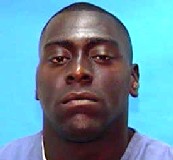 Benjamin Tony Atkins
Serial killer · USA · 1991
Benjamin Tony Atkins, also known as the Woodward Corridor Killer, was an Americ…
11 victims
Benjamin Tony Atkins
Serial killer · USA · 1991
Benjamin Tony Atkins, also known as the Woodward Corridor Killer, was an Americ…
11 victims
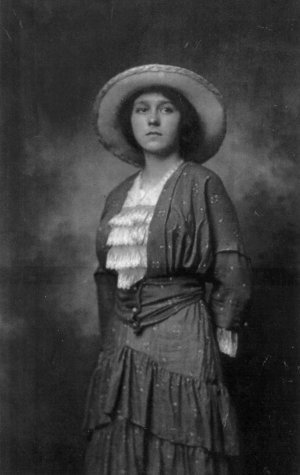 Inez Palmer
Murderer · USA · 1926
Inez Palmer — defendant; lived at the Stout farmhouse and pleaded guilty to a f…
2 victims
Inez Palmer
Murderer · USA · 1926
Inez Palmer — defendant; lived at the Stout farmhouse and pleaded guilty to a f…
2 victims
 Alvin Andrew Kelly
Murderer · USA · 1984
Alvin Andrew Kelly was convicted of capital murder for the killing of Devin Mor…
4 victims
Alvin Andrew Kelly
Murderer · USA · 1984
Alvin Andrew Kelly was convicted of capital murder for the killing of Devin Mor…
4 victims
 Matthew Thompson
Murderer · USA · 1994
Matthew Thompson was convicted of aggravated murder, murder, felony murder, and…
2 victims
Matthew Thompson
Murderer · USA · 1994
Matthew Thompson was convicted of aggravated murder, murder, felony murder, and…
2 victims
 Kathleen Hagen
Homicide · USA · 2000
August 2000 — Kathleen Hagen smothered her parents, Idella Hagen (92) and James…
2 victims
Kathleen Hagen
Homicide · USA · 2000
August 2000 — Kathleen Hagen smothered her parents, Idella Hagen (92) and James…
2 victims
- Gender
- female
- Country
- USA
- Location
- Sussex County, Delaware, USA
- Date of birth
- February 9, 1948
- Age at first offence
- 53
- Characteristics
- parricide, financial gain
- Victim profile
- John Charbonneau, 62 (her former husband) / William Sproates III, 45 (her husband)
- Method of murder
- Blunt force injury causing a fractured skull / M ultiple stab wounds, blunt force trauma, and asphyxiation
- Date(s) of murder
- September 23/October 17, 2001
- Years active
- 2001
- Date of arrest
- November 30, 2001
- Status
-
Sentenced to death
Sentenced to death on June 4, 2004; conviction reversed and remanded for a new trial on appeal in 2006
Case record: Linda Lou Charbonneau
Background
Linda Lou Charbonneau was 53 at the time of the crimes and later was 56 at sentencing. She was white.
She led a hard life. Her first husband was killed in a car accident, leaving her with two children to raise. She moved in with John Charbonneau and had another child. She and John spent two decades living together and raising her children.
By 1997, Linda had had enough of John and left him to marry his nephew, Billy Sproates. Within a few years, she was back with John, though still married to Billy. Then John disappeared, and a few weeks later Billy disappeared. Delaware state police later found Billy buried behind the house John had shared with Linda.
The investigation also focused on Linda’s youngest daughter, Mellisa Rucinski, and Mellisa’s boyfriend, Willie Brown.
John Rucinski was divorced from Mellisa Rucinski in January of 2001.
The offence
Linda Charbonneau was charged with capital murders connected to the disappearances of John Charbonneau and William Sproates.
Her former husband, John Charbonneau, a white male aged 62, was murdered near Millsboro (Sussex County) on or about September 23, 2001.
Her husband, William Sproates, a white male aged 45, was murdered near Bridgeville (Sussex County) on or about October 17, 2001.
Each incident carried a conspiracy count. The Sproates charges further alleged possession of a deadly weapon.
Alleged role and method described at sentencing
After hearing Charbonneau plead for her life, a jury voted 10-2 to recommend death in the John Charbonneau killing and 9-3 in the Sproates case. Sussex County Superior Court Judge Richard F. Stokes sentenced Linda Charbonneau to death by lethal injection for the murders of John and Sproates.
Stokes rejected an argument that she should be treated the same as her two co-defendants, neither of whom faced the death penalty.
Stokes described Linda’s conduct as “engineered these killings” and rejected an argument that she should be treated the same as her two co-defendants.
Stokes stated that Linda physically and mentally abused John and took advantage of his violent temper and dislike of John Charbonneau. Stokes stated that Linda led John Charbonneau to his death by telling him someone was breaking into their home in Bridgeville. Stokes stated that Willie Brown “viciously struck him in the face” and that John “cried out to Linda Charbonneau not to let this happen,” but Linda did nothing. Stokes stated that Brown loaded John Charbonneau into Linda Charbonneau’s van and, with Rucinski at the wheel, took him to a prepared shallow grave near Angola, where Brown beat him to death.
Stokes stated that the three defendants cleaned out John Charbonneau’s home, and Linda made plans to move in with her husband, Sproates, at his home in Magnolia. Stokes stated that when Sproates discovered a blood-spattered box, he asked questions and mentioned suspicions to a Delaware State Police trooper. Stokes stated:
“She told Brown and Rucinski that something had to be done about Sproates. Her words became his death warrant.”
Stokes described the beating death of Sproates as “a horrific encounter” in which Linda lured Sproates into his home as Brown waited inside. Stokes stated:
“Brown is the one who killed them. But she was the dominant force behind these crimes.”
Investigation
The case involved the murders and subsequent concealment of the victims’ bodies.
Sproates contacted the Delaware State Police and expressed fear of Linda Charbonneau, Rucinski and Brown to police and friends, advising that they were involved in John Charbonneau’s death. Sproates also showed a bloody box to individuals that the defendants had moved, along with other furnishings, from Bridgeville to Magnolia after John Charbonneau’s disappearance.
Sproates disappeared around October 17, 2001, and his relatives notified Delaware State Police in November, 2001.
At about the same time, most of the contents of the Bridgeville residence were removed, including kitchen cabinets and carpets, and taken to Magnolia.
By the middle of October, defendants (other than Brown) and Rucinski’s children were living in the Sproates residence. John Charbonneau’s mail was being forwarded from Bridgeville to a post office box in Felton, Delaware, and Rucinski had completed paperwork to forward the mail.
On November 30, 2001, police officers visited the Bridgeville residence at the request of John Charbonneau’s relatives and found the home bare. At the back of the property, police found a shallow grave. After examination, Sproates’ body was found and identification was established through fingerprint testing. A wallet in the pocket of the victim contained identification belonging to him.
An autopsy was performed. Sproates’ death was caused by multiple stab wounds, blunt force trauma, and asphyxiation.
As part of the Sproates homicide investigation, police searched the Magnolia residence, a Dodge van, and a Chevrolet Lumina. The Dodge van was registered to Linda Charbonneau. Brown owned the Lumina in the fall of 2001 but later sold it to Linda Charbonneau. John Charbonneau’s blood was found in the van. ATM receipts for money withdrawn from John Charbonneau’s PNC account were found in the Lumina. Rucinski was observed on video withdrawing these funds at a Wawa convenience store during the time of John Charbonneau’s disappearance after September 23, 2001.
John Charbonneau’s drivers license and social security card were found in a diaper bag in the kitchen in the Magnolia residence.
In November and December of 2001, Linda Charbonneau, Rucinski, and Brown were questioned about the body in the backyard of the Bridgeville residence and about the status of John Charbonneau and Sproates; they denied knowing anything about the corpse or the victims.
In December 2001, John Rucinski advised that Melissa and Linda Charbonneau asked him to help them “get rid of” John Charbonneau in the fall of 2000. The plan was to kill him and conceal the body by burial in the backyard or hiding it in a camper.
In July 2002, Brown admitted that John Charbonneau had been murdered and led police to a site near Millsboro where the body was buried. An autopsy and DNA testing confirmed identity. The cause of death was attributed to blunt force injury causing a fractured skull. Brown implicated himself, Linda Charbonneau, and Rucinski in the murders and in the burial of the bodies.
Brown implicated Rucinski in a later statement. Brown connected Rucinski with Sproates’ murder after he provided further information on May 1, 2003.
Brown said that Sproates was murdered because he was talking to defendants and others about his suspicions regarding his uncle, John Charbonneau’s disappearance. Sproates was buried behind the residence of John Charbonneau at Linda Charbonneau’s direction. The alleged motive was that Linda felt that if Sproates’ body was found there, authorities would think John Charbonneau was responsible for Sproates’ death.
Rucinski attempted to show where John Charbonneau was buried after an interview, but the attempt was unsuccessful; she passed within several feet of the location.
Rucinski admitted being present at the Bridgeville residence when John Charbonneau was killed, participating in transporting and disposing of his body, and using John Charbonneau’s ATM card to withdraw money after his death. Linda gave her John Charbonneau’s ATM card and PIN information to permit these withdrawals. Rucinski admitted having John Charbonneau’s driver’s license and social security card in Magnolia.
Rucinski also admitted participating in the transporting and disposing of John Charbonneau’s body and using the ATM card.
Arrest
Eight months after the discovery of the body behind the house John had shared with Linda, the trio was arrested: Linda Charbonneau, her daughter Mellisa Rucinski, and Mellisa’s boyfriend Willie Brown. At that time, Willie Brown led police to the body of missing John Charbonneau.
Trial
Severance and joinder
The defendants were tried separately. A joint trial was not appropriate because Brown and Rucinski had implicated themselves and Linda in pretrial statements.
The defendants filed motions to sever the charges arising from the two murders, and the motions were denied.
In motions addressing joinder and severance, the court stated that Superior Court Criminal Rule 8 permitted joinder where offenses were based on the same act or transaction, connected together, or constituted a common scheme or plan.
The court found joinder appropriate. It found that the charged offenses involved only five counts and two incidents, occurred within a relatively brief span, and involved the same type and impact, were similar, and were connected. It found cross-admissibility and intertwined relationships reduced risk of prejudice and that the claim of prejudice was speculative.
Witnesses, pleas, and exclusion of evidence
The State indicted Linda Charbonneau, her daughter, Mellisa Rucinski, and Willie Tony Brown for criminal offenses arising out of the murders of John Charbonneau and William Sproates. The State entered plea agreements with Mellisa and Brown contingent on providing truthful proffers and truthful testimony at Linda’s trial.
Twelve days before opening statements at Linda’s trial, prosecutors produced a potential witness list for voir dire that included both Brown and Mellisa. Prosecutors had known about inconsistencies in Mellisa’s and Brown’s proffered versions of critical events at least six months before Linda’s trial.
Prosecutors waited until four days into jury selection and four days before scheduled opening statements to notify the trial judge and defense that Brown would not be called because the prosecution believed Mellisa’s proffered version of the facts, but not Brown’s.
Defense counsel had prepared for months assuming Brown would be called to testify. Defense counsel sought two forms of relief: (i) a “missing witness” instruction, and (ii) an in limine order admitting Brown’s plea and proffer into evidence for impeaching Mellisa and creating reasonable doubt.
The trial judge denied the missing witness instruction, ruling that it was “not natural” for the State to call Brown so long as the State “believed” Brown was lying.
The trial judge ruled that facts of Brown’s guilty plea to first degree murder and the facts stated in Brown’s proffer used as the basis of the plea bargain were inadmissible at Linda’s trial because they were irrelevant and because any probative value was substantially outweighed by the danger of unfair prejudice, misleading the jury, or misleading considerations regarding waste of time.
Linda was convicted of two counts of First Degree Murder, two counts of Conspiracy in the First Degree, and Possession of a Deadly Weapon During the Commission of a Felony.
Trial evidence described in appeal opinion
The appeal opinion recounted that Linda was married to John and later to Sproates, and she remained romantically involved with both men at varying degrees, moving between their residences.
In the fall of 2001, John and Sproates were reported missing. Sproates’ body was eventually found in John’s backyard, and a murder investigation ensued. Linda became a primary suspect. The investigation suggested that Linda, Mellisa, and Brown participated in John’s and Sproates’ murders.
John and Sproates lived in Bridgeville, Delaware and Magnolia, Delaware, respectively.
The State began plea discussions with Brown in April 2003. On April 10, 2003, the State sent a letter to Brown discussing terms for Brown to plead guilty. The State offered Brown a plea of guilty to two counts of First Degree Murder. Brown would be required to provide a truthful written proffer, a truthful formal videotaped statement, and truthful testimony at Linda’s and Mellisa’s trials. In return, the State promised to recommend life in prison at Brown’s sentencing.
Brown accepted the offer and sent a written proffer on April 22, 2003 outlining his version of how the murders took place. Brown’s proffer implicated himself, Linda, and Mellisa.
Brown’s proffer suggested the motive to kill John resulted from pornographic pictures of Mellisa’s oldest daughter found on John’s computer.
Brown further proffered that Mellisa had actively participated in Sproates’ murder: Mellisa stabbed Sproates while Brown beat him with a homemade weapon.
The State and Brown agreed and Brown pleaded guilty to two counts of Murder in the First Degree on April 24, 2003. Under the agreement, sentencing was deferred until codefendants’ cases were resolved.
On October 8, 2003, the State began plea discussions with Mellisa. Using Brown’s proffer, the State offered Mellisa a plea to Second Degree Murder for John’s death and to Conspiracy in the First Degree for Sproates’ murder.
Mellisa accepted the offer and sent a proffer outlining her version of the murders. Mellisa’s account differed substantially from Brown’s proffer, including:
- Brown suggested Mellisa was actively involved in Sproates’ murder; Mellisa proffered she was miles away when the murder occurred and that Brown committed the murder alone at Linda’s request.
- Brown suggested the motive for killing John originated from pornographic pictures on John’s computer; Mellisa proffered motive stemmed from constant battles between Linda and John over material possessions.
- Brown proffered Linda killed John and Brown only buried the body; Mellisa proffered she witnessed Brown beating John and then she drove Brown and John to a secluded area where Brown killed John with a blunt object and buried him.
Despite these inconsistencies, the State permitted Mellisa to plead guilty to Second-Degree Murder and First Degree Conspiracy. Mellisa’s plea was entered with sentencing deferred until codefendants’ trials were completed.
Linda and the State never reached a plea agreement, and the Superior Court set her trial for March 8, 2004.
On February 26, 2004, approximately a week before trial, the State provided a “two and one-half inches thick” notebook of documents with “both exculpatory and potential inculpatory information.” The notebook contained a handwritten statement by Mellisa taking issue with Brown’s “truthful” proffer. Defense counsel sought a continuance due to this development. The trial judge granted the request and set a new trial date of March 22, 2004.
The case began with jury selection on March 22, 2004. Four days into jury selection and four days before scheduled opening statements, prosecutors disclosed the “ethical dilemma” and disclosed they would not call Brown.
The prosecutors asserted they believed Brown was lying about Sproates’ murder and that they credited Mellisa’s statement that she was miles away when the murder occurred.
The State ultimately decided not to call Brown, despite having listed him as a potential witness twelve days before opening statements and despite waiting until four days before scheduled opening statements to disclose the “ethical dilemma.”
At sentencing, the judge also found that Linda took advantage of John’s violent temper and dislike of John Charbonneau, and that she led John to his death.
Motion for judgment of acquittal and evidence sufficiency
On appeal, Linda challenged the denial of her Motion for Judgment of Acquittal, arguing that evidence supported only a “rage killing” by Brown and that the State violated due process rights by advancing different theories.
The appellate court held there was sufficient evidence to support the State’s theory that Linda, Mellisa, and Brown conspired and developed a plan to kill John and Sproates and that the conspiracy existed beyond a reasonable doubt.
The appellate court recounted evidence of motive and planning:
- Disputes involving grandchildren, money, and material items.
- John Rucinski’s testimony that Mellisa approached him to request help in a plan to kill John.
- Mellisa told John Rucinski her mother had spoken with her about inducing John to have a heart attack.
- John Rucinski asked Linda and Linda confirmed inducing a heart attack was “one of the scenarios.”
The court noted evidence including arguments, allegations of abuse of a granddaughter, Division of Family Services visit, and an argument over a lawn ornament just before John’s death.
It stated evidence including:
- Mellisa testified Brown followed her to John’s Bridgeville residence.
- Mellisa testified that she heard Linda say “someone is breaking in the house.”
- Mellisa witnessed Brown beating John, placing John in a van, and later driving Brown and John to a secluded area where Brown killed John and buried him.
- Brown called Linda to report everything was done.
- Linda cleaned the residence.
- The participants developed a cover story that John was away on vacation or on jury duty.
- Linda had her son dispose of John’s car and stripped John’s residence “to the bone,” taking kitchen cabinets, floors, and outdoor fences.
- Evidence that at the time Linda was moving property to Sproates’s Magnolia residence, Sproates became suspicious because John had disappeared.
- Sproates discovered a bloody box among items moved; he showed it to others.
- Linda told Mellisa and Brown something had to be done about Sproates, and the court stated this was what happened.
- Mellisa testified Linda lured Sproates to his Magnolia residence where Brown was lying in wait, Brown killed Sproates, and drove Sproates’s body to the Bridgeville residence; Brown buried Sproates in the backyard while Linda and Mellisa were present.
- The three developed a cover story that Sproates had run off with a younger woman.
The appellate court held a reasonable jury could find Linda guilty as an accomplice and guilty of Possession of a Deadly Weapon During the Commission of a Felony and Conspiracy.
The appellate court addressed Linda’s argument about due process based on inconsistent theories and held the State did not use inconsistent theories merely because Brown and Mellisa gave different accounts of who inflicted fatal blows.
Evidence about conversations and hearsay rulings
Linda also challenged evidentiary rulings regarding testimony of John Rucinski and statements about Sproates made before his death.
The appellate court held that the trial judge did not abuse discretion in admitting testimony of John Rucinski about conversations he had with Mellisa about Linda’s plan to kill John and a later conversation with Linda about the same subject.
The court held Delaware Rule of Evidence 801(d)(2)(E) applied based on a finding of a conspiracy between Linda and Mellisa. Collins testified regarding a property dispute and that he witnessed Linda and Mellisa leave John’s house in a van filled with possessions.
John Rucinski testified about conversations with Mellisa and later about discussions with Linda in open testimony and those excerpts were included in the appellate opinion.
The appellate court also held the trial judge did not abuse discretion in admitting Sproates’ statements to relatives under D.R.E. 803(3) and D.R.E. 804(b)(6). Among the included statements were that:
- Linda had brought a blood-stained box from John’s Bridgeville residence and Sproates was scared and concerned about John’s disappearance.
- Linda told Sproates, “if he had said anything of what happened, that she would no longer talk to him and the same thing would happen to him as it did Uncle John;”
- Linda called and Sproates was going to let her in his Magnolia residence.
The appellate court stated these admissions were relevant to Linda’s motive and also were admissible under D.R.E. 804(b)(6) based on wrongdoing intended to procure unavailability.
The appellate court held access to juror criminal history records did not violate Linda’s due process rights on the theory she raised and found she articulated no prejudice.
Sentencing
After conviction, a penalty hearing occurred and Judge Richard F.
The judge also sentenced her to additional prison terms including 10 years in prison for two conspiracy charges and 20 years for possessing a deadly weapon during a felony.
During sentencing, Stokes referenced her grandchildren and her mother and she wiped away tears with a tissue.
A statement at sentencing included the following remark attributed to Stokes:
“They were her agents. She has more, not less, responsibility for their murders.”
The judge also included remarks quoted as:
“engineered these killings”
and:
“cold-blooded, horrible”
Appeals
Linda Charbonneau appealed asserting six claims of error.
The appellate court reversed the conviction on the ground that the trial judge abused discretion in denying Linda’s motion in limine. The appellate court held the exclusion of evidence relevant to the credibility of one of the State’s two primary fact witnesses removed from the jury the opportunity to consider which of the two State’s witnesses was more credible. The appellate court stated that resulted in significant prejudice undermining confidence in the fairness of the trial.
The appellate court upheld other rulings challenged on appeal.
The appellate court remanded for a new trial consistent with the opinion. The case was styled: Charbonneau v. State, with Delaware Supreme Court panel deciding on March 1, 2006, before Steele, Chief Justice, Holland, Berger, Jacobs and Ridgely, Justices, constituting the court en banc.
The appellate court’s disposition stated the judgment was reversed and remanded for a new trial.
Outcome
Linda Charbonneau was sentenced to death by lethal injection for the murders of John Charbonneau and William Sproates on June 4, 2004.
On appeal, the appellate court reversed the conviction and remanded for a new trial in March 2006.
Other details
The appellate opinion described that Brown was expected to be sentenced to two consecutive life sentences without possibility of probation or parole for carrying out the murders of Sproates and John Charbonneau after he pleaded guilty to two charges of first-degree murder.
The appellate opinion included that Mellisa pleaded guilty to one count of second-degree murder and one count of conspiracy in John Charbonneau’s death.
The appellate opinion stated that the State indicted Linda Charbonneau, Mellisa Rucinski, and Willie Tony Brown for criminal offenses arising out of the murders of John Charbonneau and William Sproates and that each incident carried a conspiracy count, with the Sproates charges alleging possession of a deadly weapon.
The appellate opinion included the statement that women accounted for less than 2 percent of the national death row population, that ten women had been executed in the United States since 1976 with the last in October 2002 in Florida, and that Delaware had executed three women in its history.
The appellate opinion also included that there were 15 men in Delaware prisons sentenced to death and that two other men awaited sentencing after jury recommendations for the death penalty, and referenced a last death penalty recommendation in Sussex County in March 1986 when a jury unanimously called for Kenneth W. DeShields to be sentenced to death, executed in 1993.

Spotted an error, or have more information about this case?