
Joyce Cohen
Murderer Bobbie Sue Terrell
Murderer · USA · 1984
Bobbie Sue Dudley Terrell was a Pinellas County nurse and worked as the night s…
12 victims
Bobbie Sue Terrell
Murderer · USA · 1984
Bobbie Sue Dudley Terrell was a Pinellas County nurse and worked as the night s…
12 victims
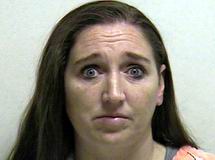 Megan Huntsman
Murderer · USA · 1996
Megan Huntsman was 40 at sentencing. She was a mother of three children who wer…
6 victims
Megan Huntsman
Murderer · USA · 1996
Megan Huntsman was 40 at sentencing. She was a mother of three children who wer…
6 victims
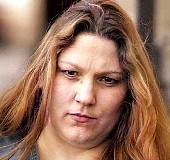 Angela Johnson
Murderer · USA · 1993
Angela Jane Johnson was convicted in federal court of aiding and abetting the m…
5 victims
Angela Johnson
Murderer · USA · 1993
Angela Jane Johnson was convicted in federal court of aiding and abetting the m…
5 victims
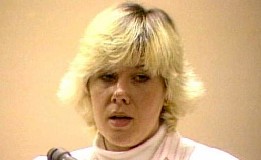 Catherine May Wood
Murderer · USA · 1987
Catherine May Wood was an American caregiver who worked at the Alpine Manor Nur…
5 victims
Catherine May Wood
Murderer · USA · 1987
Catherine May Wood was an American caregiver who worked at the Alpine Manor Nur…
5 victims
 Michele Kalina
Murderer · USA · 1996
Michele Kalina pleaded guilty to murder for one of five infants she initially w…
5 victims
Michele Kalina
Murderer · USA · 1996
Michele Kalina pleaded guilty to murder for one of five infants she initially w…
5 victims
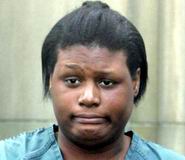 Leatrice Brewer
Homicide · USA · 2008
Leatrice Brewer killed her three children, Jewell Ward, Michael Demesyeux, and…
3 victims
Leatrice Brewer
Homicide · USA · 2008
Leatrice Brewer killed her three children, Jewell Ward, Michael Demesyeux, and…
3 victims
 Robert McConnell
Murderer · USA · 2002
Robert Lee McConnell was 33 at the time he pleaded guilty and was sentenced to…
1 victim
Robert McConnell
Murderer · USA · 2002
Robert Lee McConnell was 33 at the time he pleaded guilty and was sentenced to…
1 victim
 Eli Stutzman
Serial killer · USA · 1977
Eli Stutzman — accused; offender; later committed suicide on January 31, 2007.…
5 victims
Eli Stutzman
Serial killer · USA · 1977
Eli Stutzman — accused; offender; later committed suicide on January 31, 2007.…
5 victims
- Gender
- female
- Country
- USA
- Location
- Miami, Florida, USA
- Date of birth
- July 18, 1950
- Age at first offence
- 36
- Characteristics
- murder for hire, parricide, convicted rapist
- Victim profile
- Stanley Alan Cohen, 52 (her millionaire husband)
- Method of murder
- Shooting
- Date(s) of murder
- March 7, 1986
- Years active
- 1986
- Date of arrest
- November 2, 1988
- Status
-
Life imprisonment
Sentenced to 25 years to life in prison on November 21, 1989
Case information
Joyce Cohen was indicted for the first degree murder of her husband, Stanley Alan Cohen.
STATUS and sentence
On November 21, 1989, Joyce Cohen was sentenced to 25 years to life in prison. She would be eligible for parole in 2014.
Timeline
- October 10, 1989 — Joyce Cohen’s murder trial began in the Circuit Court for the Eleventh Judicial Circuit, in and for Dade County, Florida.
- October 12, 1989 — The United States Court of Appeals, Eleventh Circuit decided the appeal in The STATE OF FLORIDA, Plaintiff, v. Joyce COHEN, Defendant-Appellant.
- December 12, 1989 — The appellate decision was amended.
- November 21, 1989 — Joyce Cohen was sentenced to life behind bars (as stated in the case materials) and also received a sentence of 25 years to life in prison (as stated in the provided status field).
Background
Joyce Cohen was 24-year-old when she married Miami construction millionaire Stan Cohen in 1981. The couple lived in an exclusive Coconut Grove mansion, went skiing at their Steamboat Springs ranch, and partied at Stan’s Miami nightclub.
Stanley Cohen was described as a wealthy builder with businesses including a construction company, SAC construction, and as a host for local powerbrokers at Buccione’s. Joyce Cohen was described as 16 years younger than Stanley Cohen.
During their marriage, the couple had a lifestyle associated with drugs and parties, including cocaine use. Joyce Cohen attended interior design school and furnished the couple’s Coconut Grove mansion.
The offence
On March 7, 1986, Joyce Cohen telephoned 911 and claimed that Stan had been murdered by three intruders who had broken into their mansion.
When paramedics arrived, Stanley Cohen was found dead in their Coconut Grove home with gunshot wounds to the head. Joyce Cohen told police that she was upstairs while the shooting occurred in the downstairs area, and she described seeing two shadowy figures bolt from the house. She also stated that a facial tissue contained both gunpowder residue and mucus.
Joyce Cohen’s account included claims about the alarm system being shut off and the pet Doberman being locked in a back room. She also alleged that the incident was some sort of robbery, while investigators said nothing was overturned or missing.
The prosecution alleged that Joyce plotted Stanley Cohen’s murder with three men she had met on the Miami club scene and had them kill him after he had threatened divorce.
Investigation
Investigators initially treated the case as plausible because Miami had home invasion robberies at the time.
A home-invasion offender named Frank Zuccarello came forward after being arrested for a series of home-invasion robberies in 1986. Zuccarello described Joyce Cohen as having hired him and two other men to murder Stanley Cohen. Zuccarello said she provided a layout of the house and assurance that the alarm and guard dog would be neutralized during the “invasion.”
The materials also state that Zuccarello’s credibility was later challenged through hearings and statements alleging coaching or fabrication.
The murder weapon was described as a .38-caliber revolver and as Stanley’s own Smith & Wesson revolver found in the bushes near the house; it was described as clean of fingerprints and connected to gunpowder residue and tissue material recovered from the household.
Police later questioned multiple witnesses, including friends and acquaintances. Tanya Tucker provided a sworn statement in which she described Joyce Cohen as “miserable” in her marriage and unhappy, including that Joyce complained about a girlfriend being pregnant. The materials quote Tucker as saying:
"Bottom line," Tucker told police, "she was extremely unhappy. Not just sad--it didn't seem like it was something that was going to go away."
Arrest and pre-trial
After the information from Zuccarello, police arrested Joyce Cohen in connection with Stanley Cohen’s murder.
Joyce Cohen was described as living in a Chesapeake, Va. trailer park at the time of arrest and as being represented by famed Miami defense attorney Alan Ross.
In the materials, Joyce Cohen was described as having been arrested and charged on Nov. 2, 1988, two and a half years after the murder.
The materials also state that Thomas Joslin and Anthony Caracciolo were charged and, after their own proceedings, each pleaded no contest to second-degree murder charges.
A separate dispute involving federal discovery was litigated in federal court while the state trial was ongoing.
Federal discovery dispute (appeal)
Joyce Cohen’s appeal concerned discovery issues in federal court related to a confidential informant and the whereabouts of a fugitive named Frank Diaz.
The appeal was titled: The STATE OF FLORIDA, Plaintiff, v. Joyce COHEN, Defendant-Appellant, United States of America ex rel., Dexter W. Lehtinen, United States Attorney and Jeanne M. Mullenhoff, Assistant United States Attorney, Non-party-Appellees. No. 89-5952.
The appellate decision states that the case presented a discovery dispute involving balancing Joyce Cohen’s right to access information relevant to her defense against the confidentiality of an informant.
The appellate decision concluded that:
- the federal officers’ removal was appropriate because state court contempt proceedings were initiated, and
- a remand was necessary due to new facts that might shift the balance.
The appellate decision ended with: REMANDED.
Trial
The materials state that the trial began in October 1989 and lasted three and a half weeks.
During trial, prosecutors argued that Joyce Cohen was a gold-digging murderess and that she had planned the murder after threatened divorce.
The prosecution presented the jury with testimony including that of Frank Zuccarello, who testified about meeting Joyce Cohen, planning, entering the house with Joslin and Caracciolo, and watching Caracciolo shoot Stanley Cohen.
David Waksman delivered a closing statement quoted in the record materials as:
"She's a killer," prosecutor John Kastrenakes told jurors at the close of a 3 1/2-week trial. "Do not feel sorry for her because she's a woman. She's a cold, calculating murderess who put on a good show for everyone."
Defense counsel Alan S. Ross cross-examined Zuccarello and argued about physical evidence and motive.
The materials also include a quoted statement attributed to Ross:
"Brand her with a scarlet A," said Ross, "but don't convict her of murder because she had a moment of infidelity."
The jury found Joyce Cohen guilty of first-degree murder. One portion of the materials says she received life in prison with no execution recommended. The provided status field states that she was sentenced to 25 years to life in prison on November 21, 1989.
The materials state that the jury deadlocked at sentencing; with the jury deadlocked, a judge sentenced her to 25 years to life.
Sentencing
Joyce Cohen was sentenced after conviction on November 21, 1989.
The materials contain a judge’s statement that she committed the crime for financial gain and in a cold, calculating manner.
In one narrative portion, Joyce Cohen received life in prison plus 15 years for conspiracy; in the status field, she was sentenced to 25 years to life.
Appeals and later proceedings
The materials describe ongoing litigation and a federal appellate decision remanding the discovery dispute.
The appellate materials state that the federal government offered testimony and that it conceded the identity of the informant was already known to Frank Diaz, which could weaken the government’s interest in nondisclosure.
Outcome
Joyce Cohen remained imprisoned in Florida’s women’s prison system.
The materials state that she was still incarcerated and described her as continuing to serve her sentence after conviction.
Eligibility for parole was stated as 2014.
Other details
Other named individuals and relationships
- Stanley Alan Cohen — victim; Joyce Cohen’s husband.
- Joyce Lemay (also referenced as Joyce Lemay McDillon Cohen and Joyce Lemay Cohen) — Joyce Cohen.
- Frank Zuccarello — described as a jailhouse informant/home-invasion offender who testified about hiring.
- Anthony Caracciolo — described as an alleged accomplice; pleaded no contest to second-degree murder in the Cohen case.
- Thomas Joslin — described as an alleged accomplice; pleaded no contest to second-degree murder in the Cohen case.
- Alan Ross — defense attorney for Joyce Cohen.
- Jon Spear — lead detective referenced in later reporting.
- Gail Bright — a reporter referenced in statements about alleged information disclosure.
- Rhonda Anderson — attorney referenced in later proceedings concerning credibility and hearings.
- Lawrence Schwartz — Miami-Dade Circuit Judge referenced in later proceedings.
- Abe Laeser and Paul Mendelson — referenced as state attorneys in hearings.
- Frank Diaz — fugitive discussed in the federal discovery dispute.
Additional quotations and allegations included in the materials
The materials include quoted statements from the reporter Gail Bright recalling a conversation with Detective Jon Spear, including:
"And he said, 'We believed all along that Joyce killed her husband . . . but we didn't have the evidence to back that up.' "
and:
"And I said, 'Well, are you telling me that those three guys were not there? Is that what you're telling me?' "
and:
"And he said, 'That's right. They weren't there.' "
A quoted statement from Rhonda Anderson appears in the materials:
''A manifest injustice has been done, because an innocent man is behind bars,'' said Rhonda Anderson, attorney for Caracciolo, speaking in a hearing before Miami-Dade Circuit Judge Lawrence Schwartz.
A quoted statement attributed to Joe Caracciolo appears in the materials:
''I believe he's innocent,'' the elder Caracciolo said. "I know he's innocent.''
Federal appellate case particulars
The appellate decision describes procedural history including:
- Joyce Cohen being indicted for first degree murder of her husband in state court,
- state court discovery requests and federal government motions to quash and protective order,
- state court contempt proceedings after noncompliance,
- removal to federal court by the federal government under 28 U.S.C.A. Sec. 1442(a)(1),
- and the appellate ruling requiring remand due to new facts affecting the discovery balance.
The appellate decision references discovery in connection with Frank Diaz, a fugitive described as having two federal grand jury indictments in the Southern District of Florida concerning laundering approximately $600,000, and being a fugitive since 1985. It also states that Diaz visited Stanley Cohen’s home about a week before the murder, accompanied by an unidentified young woman, and that the visit was witnessed by Joyce Cohen and her son. The appellate decision also references a Drug Enforcement Agent testimony that Cohen’s airplane had been on a watch list since August 1985 as suspected of smuggling currency out of the United States into Panama.
Jurisdiction excerpt
The appellate decision includes the text of 28 U.S.C.A. Sec. 1442(a)(1) as follows:
A civil or criminal prosecution commenced in a State court against any of the following persons may be removed by them to the district court of the United States for the district and division wherein it is pending: (1) Any officer of the United States or any agency thereof, or person acting under him, for any act under color of such office or on account of any right, title or authority claimed under any Act of Congress for the apprehension or punishment of criminals or the collection of the revenue.
The decision also quotes the Supreme Court in discussing broad reading of the removal statute and cites other cases, including Willingham v. Morgan and Loftin v. Rush.

Spotted an error, or have more information about this case?