
Jill Coit
Murderer Bobbie Sue Terrell
Murderer · USA · 1984
Bobbie Sue Dudley Terrell was a Pinellas County nurse and worked as the night s…
12 victims
Bobbie Sue Terrell
Murderer · USA · 1984
Bobbie Sue Dudley Terrell was a Pinellas County nurse and worked as the night s…
12 victims
 Megan Huntsman
Murderer · USA · 1996
Megan Huntsman was 40 at sentencing. She was a mother of three children who wer…
6 victims
Megan Huntsman
Murderer · USA · 1996
Megan Huntsman was 40 at sentencing. She was a mother of three children who wer…
6 victims
 Angela Johnson
Murderer · USA · 1993
Angela Jane Johnson was convicted in federal court of aiding and abetting the m…
5 victims
Angela Johnson
Murderer · USA · 1993
Angela Jane Johnson was convicted in federal court of aiding and abetting the m…
5 victims
 Catherine May Wood
Murderer · USA · 1987
Catherine May Wood was an American caregiver who worked at the Alpine Manor Nur…
5 victims
Catherine May Wood
Murderer · USA · 1987
Catherine May Wood was an American caregiver who worked at the Alpine Manor Nur…
5 victims
 Michele Kalina
Murderer · USA · 1996
Michele Kalina pleaded guilty to murder for one of five infants she initially w…
5 victims
Michele Kalina
Murderer · USA · 1996
Michele Kalina pleaded guilty to murder for one of five infants she initially w…
5 victims
 Amy Bishop
Murderer · USA · 1986
Amy Bishop — biology professor and perpetrator · James Anderson — Bishop’s husb…
4 victims
Amy Bishop
Murderer · USA · 1986
Amy Bishop — biology professor and perpetrator · James Anderson — Bishop’s husb…
4 victims
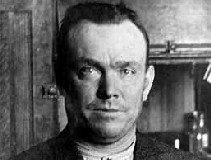 Albert Horsley
Murderer · USA · 1905
Albert Edward Horsley was sentenced to death for the 1905 political assassinati…
1 victim
Albert Horsley
Murderer · USA · 1905
Albert Edward Horsley was sentenced to death for the 1905 political assassinati…
1 victim
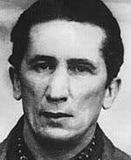 Zdislaw Marchwicki
Serial killer · Poland · 1964
Zdislaw Marchwicki, called the "Zagłębie vampire", was a Polish serial killer.…
14 victims
Zdislaw Marchwicki
Serial killer · Poland · 1964
Zdislaw Marchwicki, called the "Zagłębie vampire", was a Polish serial killer.…
14 victims
 Lawrence Reynolds
Murderer · USA · 1994
Lawrence Reynolds Jr. was an alcoholic who was out of work and needed money for…
1 victim
Lawrence Reynolds
Murderer · USA · 1994
Lawrence Reynolds Jr. was an alcoholic who was out of work and needed money for…
1 victim
 Henrietta Radbourne
Murderer · United Kingdom · 1787
Henrietta Radbourne, also known as Henrietta Gibbons, was indicted for the murd…
1 victim
Henrietta Radbourne
Murderer · United Kingdom · 1787
Henrietta Radbourne, also known as Henrietta Gibbons, was indicted for the murd…
1 victim
 Jordan Linn Graham
Murderer · USA · 2013
Jordan Linn Graham was 22 years old and married to Cody Johnson, who was 25. Gr…
1 victim
Jordan Linn Graham
Murderer · USA · 2013
Jordan Linn Graham was 22 years old and married to Cody Johnson, who was 25. Gr…
1 victim
- Gender
- female
- Country
- USA
- Location
- Steamboat Springs, Colorado, USA
- Date of birth
- June 11, 1943
- Age at first offence
- 50
- Characteristics
- parricide
- Victim profile
- Gerald Boggs, 52 (her ex-husband)
- Method of murder
- Shooting ( .22 caliber pistol)
- Date(s) of murder
- October 22, 1993
- Years active
- 1993
- Date of arrest
- December 23, 1993
- Status
-
Life imprisonment
Sentenced to life in prison on May 24, 1995
Case record: Jill Coit
Background
Jill Coit appealed the judgment of conviction entered upon jury verdicts finding her guilty of first degree murder and conspiracy to commit first degree murder.
Jill Coit was embroiled in a bitter civil suit against her ex-husband, who was the victim in this case. The lawsuit arose over the victim's claimed interest in a bed and breakfast in Steamboat Springs, Colorado, which Jill Coit owned with a son by a previous marriage. Jill Coit had apparently given the victim a fraudulent deed of trust encumbering the property to avoid execution of a judgment obtained in a divorce proceeding by one of her former husbands. After Jill Coit filed the civil action against the victim seeking a release of the deed of trust, the victim counterclaimed for intentional infliction of emotional distress and outrageous conduct, alleging, among other things, that Jill Coit falsely asserted she had given birth to a child fathered by the victim.
Jill Coit's murder occurred in Steamboat Springs one week before the civil trial was to begin. Approximately one month later, Jill Coit was arrested and charged with first degree murder and conspiracy to commit murder along with a co-defendant with whom she had a personal relationship. The two cases were joined, and following the filing of both defendants' motions for change of venue, the place of trial was changed from Routt County to Grand County. A six-week trial resulted in the convictions.
Jill Coit was also described as having a history of multiple marriages and alleged prior circumstances involving other deceased husbands in the case narrative, including an annulment related to her marriage to the victim.
The offence
Jill Coit was convicted by jury verdicts finding her guilty of first degree murder and conspiracy to commit first degree murder.
In relation to the murder, prosecutors said the victim had been beaten and shocked with a stun gun and shot with a .22-caliber pistol. Prosecutors also said Jill Coit manipulated the victim, including saying she was pregnant when she was not. Prosecutors said she killed him when he threatened to expose her in a lawsuit accusing her of fraud and emotional distress. Defense lawyers argued that no physical evidence linked either suspect to the scene of the crime.
Investigation
The victim was murdered at his home in Steamboat Springs, Colorado in October 1993.
Jill Coit claimed she had an alibi. The alibi was corroborated by a boyfriend in the case narrative.
In the case narrative, investigators became suspicious of the couples' story that the victim was murdered while they were camping in Kelly Flats in the Poudre Canyon, just west of Fort Collins, Colorado. The narrative states that Jill Coit told detectives the victim was a closeted homosexual and they should check into a mysterious gay lover. The narrative also states that before police could arrest her, Jill Coit skipped out of the country to Mexico City; from there, with the help of the United States Vice Consulate, she signed over Power of Attorney to her son Seth.
The narrative includes allegations quoted as coming from witnesses and an arrest warrant: it states that Troy Giffon, who worked with the co-defendant, said the co-defendant offered him $7,500 to kill the victim. It further states that, after the victim's death, Giffon reminded him of his offer and the co-defendant said, "I was hoping you would forget that," and "This is the only thing that could hang me," the arrest warrant says. The narrative states that Giffon said the co-defendant put his hand on his shoulder and said, "Vietnam buddies don't rat off their buddies." The narrative further states that the warrant says Jill Coit traveled with the co-defendant to Iowa when he was assigned to repair telephone lines damaged by last summer's floods. The narrative includes a quote, attributed to an Iowa woman, that Jill Coit tried to persuade her to kill the victim, claiming he was a rapist and sexual deviant.
The narrative states that several witnesses were quoted as saying they saw the defendants wearing disguises near the victim's home the day he was killed and passing by his funeral. The narrative states that Jill Coit was said to be wearing a fake black mustache and driving a red sports car.
The narrative alleges that Jill Coit fled to Mexico after the murder and wrote her son telling him to sell everything. It states she was arrested when she returned to Greeley, where the co-defendant worked.
Arrest
On December 23, 1993, Jill Coit and Backus were arrested and held on a $5 million bond.
The narrative also describes an earlier sequence in which police continued working on the case after Jill Coit left the country, and the case narrative states that the authorities learned additional details while Jill Coit was away.
Trial
Jill Coit and the co-defendant were convicted by a jury of first degree murder and conspiracy to commit first degree murder.
A six-week trial occurred in Grand County.
During closing arguments, the prosecution argued Jill Coit manipulated the victim, including stating she was pregnant when she was not, and killed him when he threatened to expose her in a lawsuit accusing her of fraud and emotional distress. Defense lawyers argued there was no physical evidence linking either suspect to the scene of the crime.
In the case narrative, Jill Coit and the co-defendant said they were camping when the victim was killed.
During the trial, evidence regarding Jill Coit's civil lawsuit with the victim was introduced to show motive and malice. The conviction appeal record states that the prosecution maintained this evidence would have been proffered in the civil trial between Jill Coit and the victim, but for the victim's death the week before that trial was to begin. The evidence concerned matters such as Jill Coit's allegedly bigamous marriage, her false claims of pregnancies, and other false and fraudulent activities, portraying Jill Coit as an evil, conniving, and manipulative person, and supporting the prosecution theory that Jill Coit murdered the victim to prevent exposure of this evidence in the civil trial.
The conviction appeal record states that each time such evidence was introduced, the trial court gave a limiting instruction advising the jury the evidence was to be used only to show malice and motive and for no other purpose.
The conviction appeal record also describes disputes raised by Jill Coit on appeal.
Appeals issues raised during trial (as presented in the appellate opinion)
Jill Coit first contended the trial court erred in only partially granting her motion for a change of venue and moving the trial to Grand County rather than to a different judicial district. The appellate court concluded it was not persuaded and found no clear abuse of discretion.
Jill Coit presented an expert witness who testified about a public opinion survey taken in the Fourteenth Judicial District. The appellate opinion states that unfavorable responses in excess of 40% signified that a fair and impartial jury could not be seated within the judicial district, with over 40% believing Jill Coit was either guilty or probably guilty of murder. The survey did not distinguish among the individual counties comprising the judicial district but was weighted by population, sampling more respondents from Routt County, the most populous county in the district and the county in which the murder had occurred. The trial court granted the motion in part by transferring the trial from Routt County to Grand County. Jill Coit filed a motion for re-hearing with an affidavit from her expert containing survey results specific to Grand County, and the responses unfavorable to Jill Coit were less than 40%. The appellate court concluded there was no abuse of discretion in the trial court's determination that she could receive a fair trial in Grand County.
Jill Coit also contended the trial court erred in denying her motion to suppress evidence seized at Lowry Air Force Base (Lowry). The appellate court concluded it was not persuaded.
The appellate court record states that one of Jill Coit's ex-husbands had been in the military, so she was allowed to use civilian living quarters located at Lowry. A state court judge issued a search warrant for these premises and for a vehicle also located on-base. Jill Coit argued execution of the state court's warrant was invalid because Lowry was then a military reservation under the exclusive jurisdiction of the United States. The appellate opinion states that the state warrant was presented to Lowry's base commander, who then issued a military authorization to search the same premises. It states that military and civilian law enforcement personnel conducted the search and seized items admitted in the criminal trial. It also states that Jill Coit did not allege that probable cause was lacking for the state warrant or for the base commander's authorization. The appellate opinion describes that a military base commander is competent to issue authorizations to search and seize for persons and property in places under the commander's control, and that the trial court did not err in denying suppression.
Jill Coit additionally contended suppression was required based on the Posse Comitatus Act. The appellate court stated that even if it assumed the search and seizure violated the Posse Comitatus Act, suppression of evidence was not required, and concluded the trial court did not err in denying her motion to suppress.
Jill Coit contended the trial court erred in not suppressing her post-arrest, in-custody statement to law enforcement officers, arguing it was made without proper advisement or waiver of her rights under Miranda v. Arizona. The appellate opinion states that waiver must be knowingly, intelligently, and voluntarily made, and unless and until such warnings and waiver are demonstrated, any statement made by the suspect is inadmissible at trial. The appellate opinion states that after an evidentiary hearing where one of the interviewing detectives testified and the taped interview was played, the trial court found: Jill Coit had invited the interview; there was no evidence of coercion by the officers; although she interrupted the officers numerous times during the Miranda advisement, she was nevertheless fully advised and understood her rights; and she talked willingly to the officers. The appellate court concluded the statement was voluntary and admissible.
Jill Coit contended the trial court abused its discretion in admitting evidence regarding her civil lawsuit with the victim and admitting other facts surrounding their relationship as evidence of motive and malice. The appellate court concluded it was not persuaded and found no abuse of discretion, including describing limiting instructions given each time evidence was introduced.
Jill Coit asserted cumulative effect of evidentiary errors precluded a fair trial. The appellate court concluded that because it found no errors in evidentiary rulings, there could be no cumulative error.
Jill Coit asserted her advisement under People v. Curtis was insufficient because: (1) the trial court did not adequately advise her about the scope of the prosecution's possible cross-examination; and (2) the court failed to find waiver of her right to testify was voluntary. The appellate court concluded it was not persuaded, stating Curtis requires waiver be made intelligently and competently, and describing the standard and application to the case.
Jill Coit argued denial of a mistrial based on two aspects of the prosecution's closing argument. The appellate court described: (A) comments regarding her failure to produce alibi witnesses were proper comments on evidence and a remark in rebuttal reminded the jury of a taped interview in which she mentioned nine alibi witnesses; (B) a request to return verdicts of guilty did not rise to the level of patriotic zealotry or impermissible oratorical excess. It also described a review of the closing argument as a whole for plain error and rejected the contention.
Jill Coit also argued the trial court erred in denying the jury's request to review certain parts of trial testimony. The appellate opinion states that during deliberations, the jury requested transcripts of testimony of four witnesses; transcripts were unavailable; and it would take about 13 and one-half hours to read back testimony. It describes that the trial court instructed the jury to rely on collective memory and that denial was discretionary. The appellate court concluded the trial court did not abuse its discretion.
The appellate court affirmed the judgment. The opinion was authored by Judge Rothenberg, and Criswell and Davidson concurred.
Verbatim quote included in the appellate opinion, attributed to the trial court:
Based on your request, the Court's view is that you should rely upon your collective memories of the testimony that was given. And if you have further requests, the Court would consider that, but that is the procedure that would be followed. Thank you. Please return to your deliberations.
Sentencing
Jill Coit was sentenced to life in prison on May 24, 1995.
The case narrative includes additional sentencing detail: it describes that on March 17, 1995, Jill Coit and Backus were convicted of first degree murder and conspiracy to commit murder of the victim and were sentenced to life in prison without chance for parole, and a $1 million fine was levied against each defendant so they may never profit from crimes with book or movie deals.

Spotted an error, or have more information about this case?