David Frooms
 Michael Zabawa
Murderer
Michael Zabawa was a Minnesota man who lived in Matawan, and he worked at a hog…
2007 victims
Michael Zabawa
Murderer
Michael Zabawa was a Minnesota man who lived in Matawan, and he worked at a hog…
2007 victims
 Clinton Lee Young
Murderer · USA
Clinton Lee Young (born July 19, 1983) was convicted of murdering two men in No…
2001 victims
Clinton Lee Young
Murderer · USA
Clinton Lee Young (born July 19, 1983) was convicted of murdering two men in No…
2001 victims
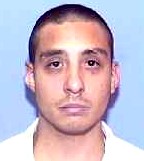 Ivan Abner Cantu
Murderer · USA
Name: Ivan Abner Cantu · TDCJ number: 999399 · Date of birth: 06/14/1973 · Age…
2000 victims
Ivan Abner Cantu
Murderer · USA
Name: Ivan Abner Cantu · TDCJ number: 999399 · Date of birth: 06/14/1973 · Age…
2000 victims
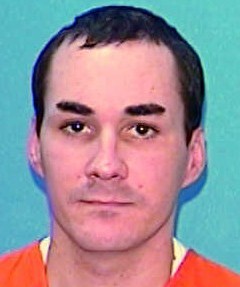 John Chamberlain
Murderer
John Chamberlain was sentenced in Florida in connection with a triple murder at…
1998 victims
John Chamberlain
Murderer
John Chamberlain was sentenced in Florida in connection with a triple murder at…
1998 victims
 Michael John Yowell
Murderer · USA
Name: Michael John Yowell · TDCJ number: 999334 · Date of birth: 01/25/1970 · P…
1998 victims
Michael John Yowell
Murderer · USA
Name: Michael John Yowell · TDCJ number: 999334 · Date of birth: 01/25/1970 · P…
1998 victims
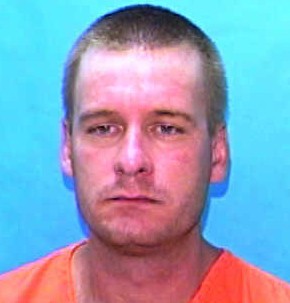 Michael Duane Zack
Murderer · USA
Michael Duane Zack was convicted and sentenced to death for the 06/13/96 murder…
1996 victims
Michael Duane Zack
Murderer · USA
Michael Duane Zack was convicted and sentenced to death for the 06/13/96 murder…
1996 victims
 Evan Nakahara
Murderer · USA · 1989
Evan Teek Nakahara was convicted in Los Angeles County of his girlfriend Beatri…
1 victim
Evan Nakahara
Murderer · USA · 1989
Evan Teek Nakahara was convicted in Los Angeles County of his girlfriend Beatri…
1 victim
 Douglas Feldman
Murderer · USA · 1998
Douglas Alan Feldman was convicted of capital murder in Texas and was sentenced…
2 victims
Douglas Feldman
Murderer · USA · 1998
Douglas Alan Feldman was convicted of capital murder in Texas and was sentenced…
2 victims
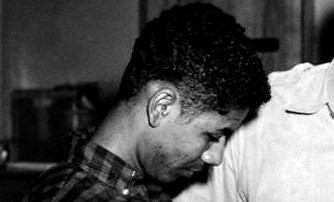 Wilbert Rideau
Murderer · USA · 1961
Wilbert Rideau (born February 13, 1942) was described by Life magazine in March…
1 victim
Wilbert Rideau
Murderer · USA · 1961
Wilbert Rideau (born February 13, 1942) was described by Life magazine in March…
1 victim
 Kim Dae-Han
Mass murderer · South Korea · 2003
Name: Kim Dae-Han · Age: 56 · Occupation/background: He was an unemployed forme…
198 victims
Kim Dae-Han
Mass murderer · South Korea · 2003
Name: Kim Dae-Han · Age: 56 · Occupation/background: He was an unemployed forme…
198 victims
- Gender
- male
- Country
- —
- Location
- —
- Date of birth
- —
- Characteristics
- rape, sexual abuse
- Victim profile
- —
- Method of murder
- —
- Date(s) of murder
- —
- Years active
- —
- Date of arrest
- —
- Status
-
Sentenciado a cadena perpetua
Case record (David Frooms)
Background
David Frooms was 25 years old at the time of Sarah Gibson’s death. He had no occupation and no fixed domicile. Little was known about his background, and he apparently had no family and few friends. He had previously been imprisoned on several occasions for minor thefts, later for robbery with violence, and once for an indecent assault on a 13-year-old girl. He had been released by his last sentence just six months before the murder of Sarah Gibson.
The offence
Sarah Gibson was 19 years old when she decided she wanted something more than the quiet, undemanding life of county society. She lived with her father, Colonel John Gibson, her mother, Mrs Mary Gibson, and two brothers, Martin and Simon, in Lambourn, Berkshire, a town of training stables.
Sarah left home to work at the Norfolk Hotel in the West End, which had later been demolished. In the early part of 1971, she changed jobs and was employed as an assistant housekeeper at the Royal Automobile Club on Pall Mall. She earned a decent salary and, like all the workers (260), lived in the same club. A little later that year, the Gibson family moved from Lambourn to a restored Georgian-style farm in Ham, near Cheltenham, Gloucestershire. Sarah visited regularly every two weeks. She told her family she was very happy with her job and delighted by the busy life in London.
On Sunday 2 July 1972, Sarah did not work but was seen in the club several times during the day. She had dinner in the staff dining room at 7:00 pm, and at about 7:30 pm walked toward a bingo hall on Coventry Street, about a few hundred metres from the club. She was seen leaving the bingo hall at about 9:30 pm, alone. No one saw her return to her room.
In the early morning the next day, a maid looked into Sarah’s room, 519 on the fifth floor, and found Sarah naked on her bed. Her hands and feet were bound with stockings and a cord. A pink and black dressing gown was tied around her neck, and a handkerchief and a towel were stuffed in her mouth. She had died several hours earlier.
The investigation concluded that the killing involved a sexual assault. Sarah had been raped either just before she died or immediately after she died.
Investigation
Detectives initially formed the theory that Sarah had encountered her killer in the bingo hall or on her way back to the club. Because there were few signs of a struggle in the room, it was believed she may have known the man and had been attacked without warning.
Sarah was described by a colleague as having “a beautiful face and large blue eyes”. She had no known friends. Her father said he did not know of any possible romantic association and was sure she did not have a fixed boyfriend. Another club staff member considered that she was “a carefree and happy girl who loved to have fun”.
When the belongings in Sarah’s room were listed, investigators found several jewels missing. Among the items taken were a silver locket containing a photograph of her parents, a gold bracelet with a heart-shaped clasp, a silver watch, gold earrings with very small diamonds, a Churchill crown, a mother-of-pearl lighter, and a small travel watch.
Investigators later learned that the Churchill crown had been cashed at the Westminster Bank in Waterloo Place on 4 July. Three days later, the mother-of-pearl lighter and the gold bracelet were sold in a Soho shop.
Detective Superintendent Chief James Neville, in charge of the investigation, considered two possibilities: that the person who had killed Sarah was a sexual murderer who stole the trinkets to mislead the police, or that he was a thief who raped and killed when he found a girl in a room.
The case had other uncertainties. Club staff strongly asserted that Sarah always slept with her door open because she did not like feeling confined in a closed space. Colonel Gibson was also sure that she did not feel frightened in small rooms and that she did not feel afraid in the dark. He also said that at home she always closed her bedroom door. He said: “— Era una chica sensible que nunca parecía asustada por nada”.
A further problem was determining how the killer had entered the club: through the main entrance guarded by a doorman, through the staff entrance about fifty metres away, or through the luggage lift leading to an area of the basement. No one saw a stranger in the club that night, but no one saw Sarah either.
Of the club’s eighty rooms for men, only seventeen were occupied on the night of the murder. The authorities decided to verify not only fingerprints of the occupants of those seventeen rooms, but the fingerprints of everyone who had stayed at the Royal Automobile Club since Sarah joined the staff. Their fingerprints would be compared with those found in Sarah’s room.
On 7 July, Neville received an anonymous letter through the mail. It said:
“Pensé que podría servirles una ayuda en el caso, en vista de que lo están enfocando desde el ángulo equivocado. No me gustó la idea de la ida de Sarah, pero no había nada que hacer. Lo que se puede hacer es impedir que suceda nuevamente. Tuve una sensación muy extraña de poder al quitarle la vida a un cuerpo, si bien Sarah fue un error... Soy una persona solitaria y creo que posiblemente estoy enfermo. En la noche en que murió Sarah no sentí ningún remordimiento, así que apúrense a atraparme. Yo no me voy a entregar para que me encarcelen. Eso me destruirá y yo soy alguien que ama demasiado la vida”.
The letter also included an offer that the correspondent would “hacer un trato” with the police. He said that if they provided him with “una lista de traficantes de drogas en Inglaterra” he would deal with them by “deshacerse de ellos”.
At the time the letter arrived, Scotland Yard officers compared fingerprints found in Sarah’s room with those in the department’s files. They found a match to a man named David Charles Richard Frooms, age 25. The fingerprints in the letter were also compared with Scotland Yard records, and the writing match supported that Frooms had written the letter.
A porter who had worked with Sarah at the Norfolk Hotel stated that Sarah had had a boyfriend for two years. He had seen them together in two instances at the Royal Automobile Club and provided the name and description of the man to police. Because it was believed he had links to Northern Ireland, the Ulster police were alerted. Neville flew to Belfast on 7 July and questioned a suspect, but the suspect was quickly eliminated.
Arrest
After the fingerprints and correspondence were linked to him, David Frooms was located and arrested. When he was being held in the police station at Cannon Row, he was asked to write some words. Handwriting experts compared his handwriting with the style of the writing in the letter sent to Neville and found that the letter and his handwriting matched. When Frooms was confronted with the evidence, he exclaimed: “Me alegra de que me hayan detenido - Yo la maté. La estrangulé con algo que llevaba y con una cuerda azul... La tapé con una manta y colgué afuera de la puerta un letrero que decía "favor no molestar".”
Trial
David Frooms was tried for murder at the Old Bailey, in the Crown Court, in December 1972.
He pleaded not guilty. He stated that he did not remember the murder itself, though he remembered climbing through an open window and reaching the fifth floor while searching for something to steal. He said he saw a door to a room was ajar with the light on and he entered quietly. He said Sarah was sleeping on the bed and he took items he thought were valuable. He described that when the young woman moved, he put something in her mouth and tied her hands and feet with her underwear. He said he remembered having his hands around her throat, but nothing more. He also said he did not remember having sexual relations with her. He denied remembering writing the incriminating letter.
He testified that he had been trying to sleep in St James’s Park on the night of 2 July but left when police appeared. He said he got into the Royal Automobile Club through an open window and went to search for food. He said that when he entered the room he took a wallet and silver coins placed in different pockets so they would not make noise. He said he closed the door in case someone was in the corridor. He said he took stockings and put them over the victim’s mouth to prevent her from shouting. He said he threatened her with a knife and asked her to stay silent. He said he then put a handkerchief in her mouth.
He said: “Le dije que se acostara bocabajo y le amarré las manos con las medias. Luego la ladeé porque me dio miedo de que se asfixiara. Mascullaba algo que parecía ser la palabra "medias" y entonces yo pensé que podían estar demasiado apretadas, así que se las quité y la amarré con una cuerda azul que estaba sobre el tocador. También le amarré los tobillos con la misma cuerda porque pensé que de otra manera podría saltar de la cama.”
He stated that he started searching for money and found something valuable in jewellery. The next thing he remembered was being astride the girl on the bed with his hands on her neck. He was asked what he was doing. He responded: “No recuerdo qué estaba haciendo - Supongo que debo haberla estado estrangulando.” When asked if he remembered pressing his hands around the victim’s neck, he responded: “No”. He added that he did not remember having sexual intercourse with her. He said: “Viéndo para atrás - dijo -, únicamente tengo la visión de mis manos alrededor de su cuello. Y esto es algo que descubrí posteriormente.”
He was asked about sex with Sarah Gibson. Frooms said: “Cuando ella ya estaba muerta... ¡muerta, muerta, muerta, muerta!”
The prosecutor, Mr John Mathew, said the accused had behaved “como el diablo mismo” when killing Sarah Gibson. He stated that no suggestion was made that Sarah had been killed accidentally, or that the accused had diminished responsibility, or that he had been drunk or drugged.
Mr Cyril Salmon made a question in court: “¿Qué estaba usted haciendo?” and Frooms replied: “No recuerdo qué estaba haciendo”. Mr Salmon asked for a verdict of culpable homicide not amounting to murder.
Mr Salmon said it was not in doubt that Frooms had entered the club as an intruder and had stolen articles from Sarah Gibson’s room. To convict of murder, the prosecution would have to prove intent either to kill or to cause serious bodily harm. Frooms suffered from a personality disorder that did not amount to diminished responsibility.
Judge Forbes addressed the jury and told them the verdict for culpable homicide not amounting to murder depended on them. Judge Forbes said: “Unicamente un monstruo pudo haber hecho esto - agregó -: estrangular a esta chica antes o después de agredirla sexualmente.” He told them that even if Frooms could be considered a monster, that did not mean he was insane. The jury returned a guilty verdict of murder in less than half an hour.
Sentencing
David Frooms was sentenced to life imprisonment. The sentencing included the statement: “Como el mismo demonio” referring to the prosecution’s characterization of his behaviour.
Outcome
Frooms was convicted and sentenced to life imprisonment.
Other details
Sarah Gibson was 19 years old when she decided to pursue a career of her own in the hotel business, leaving the life in Lambourn. Her father, Colonel John Gibson, had been a famous trainer and breeder of racehorses and had been an amateur jockey. Her brother was a skilled jockey. The family lived in Lambourn, Berkshire, in connection with training stables before moving to Ham near Cheltenham in 1971.
Sarah dined in the staff dining room and later went to a bingo hall, then left the bingo hall at about 9:30 pm. No one saw her return. Her body was found in room 519 on the fifth floor in the early morning after her last sighting.
The missing property included specific items: a silver locket with a photograph of her parents, a gold bracelet with a heart-shaped clasp, a silver watch, gold earrings with very small diamonds, a Churchill crown, a mother-of-pearl lighter, and a small travel watch. The Churchill crown was cashed at the Westminster Bank in Waterloo Place on 4 July. The mother-of-pearl lighter and the gold bracelet were sold in Soho three days later.
Detectives compared fingerprints found in Sarah’s room and the handwriting in the anonymous letter. The handwriting experts linked Frooms to the letter. Frooms also denied intent to kill and denied remembering writing the letter while pleading not guilty.
Frooms said he strangled Sarah with something she was wearing and with a blue cord, covered her with a blanket, and hung a sign outside the door that said “favor no molestar.”
Explore related records

Spotted an error, or have more information about this case?