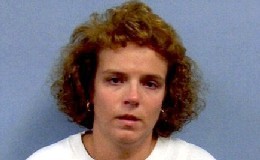
Jane Dorotik
Murderer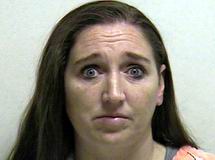 Megan Huntsman
Murderer · USA · 1996
Megan Huntsman was 40 at sentencing. She was a mother of three children who wer…
6 victims
Megan Huntsman
Murderer · USA · 1996
Megan Huntsman was 40 at sentencing. She was a mother of three children who wer…
6 victims
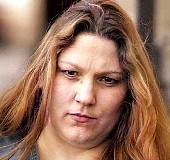 Angela Johnson
Murderer · USA · 1993
Angela Jane Johnson was convicted in federal court of aiding and abetting the m…
5 victims
Angela Johnson
Murderer · USA · 1993
Angela Jane Johnson was convicted in federal court of aiding and abetting the m…
5 victims
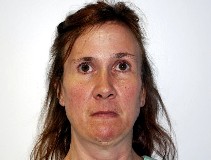 Michele Kalina
Murderer · USA · 1996
Michele Kalina pleaded guilty to murder for one of five infants she initially w…
5 victims
Michele Kalina
Murderer · USA · 1996
Michele Kalina pleaded guilty to murder for one of five infants she initially w…
5 victims
 Tiffany Hall
Murderer · USA · 2006
Tiffany Hall was 24 when she was charged in September 2006. She later entered a…
5 victims
Tiffany Hall
Murderer · USA · 2006
Tiffany Hall was 24 when she was charged in September 2006. She later entered a…
5 victims
 Banita Jacks
Murderer · USA · 2007
Banita Jacks was a Washington, DC resident convicted of murdering her four daug…
4 victims
Banita Jacks
Murderer · USA · 2007
Banita Jacks was a Washington, DC resident convicted of murdering her four daug…
4 victims
 Susan Eubanks
Murderer · USA · 1996
Susan Dianne Eubanks, also referred to as Susan Eubanks, was convicted by a jur…
4 victims
Susan Eubanks
Murderer · USA · 1996
Susan Dianne Eubanks, also referred to as Susan Eubanks, was convicted by a jur…
4 victims
 Shawnfatee Bridges
Murderer · USA · 1996
Shawnfatee M. Bridges was sentenced to death on February 23, 1998. On Saturday,…
2 victims
Shawnfatee Bridges
Murderer · USA · 1996
Shawnfatee M. Bridges was sentenced to death on February 23, 1998. On Saturday,…
2 victims
 Mark Anthony Guglielmo
Murderer · USA · 1994
December 12, 1968 — Mark Anthony Alexander Guglielmo was born in Westchester Co…
1 victim
Mark Anthony Guglielmo
Murderer · USA · 1994
December 12, 1968 — Mark Anthony Alexander Guglielmo was born in Westchester Co…
1 victim
 Socorro Caro
Murderer · USA · 1999
Socorro “Cora” Caro was sentenced to death for the murders of three of her sons…
3 victims
Socorro Caro
Murderer · USA · 1999
Socorro “Cora” Caro was sentenced to death for the murders of three of her sons…
3 victims
 James Belknap
Mass murderer · USA · 2012
James Roy Belknap was a Nicholas County man who killed four people. He pleaded…
4 victims
James Belknap
Mass murderer · USA · 2012
James Roy Belknap was a Nicholas County man who killed four people. He pleaded…
4 victims
 Shonda Johnson
Murderer · USA · 1997
Shonda Johnson was also known as Shonda Nicole Richards. She was White. She was…
1 victim
Shonda Johnson
Murderer · USA · 1997
Shonda Johnson was also known as Shonda Nicole Richards. She was White. She was…
1 victim
 Christopher Porco
Murderer · USA · 2004
Christopher Porco (born July 9, 1983) was convicted of killing his father and a…
1 victim
Christopher Porco
Murderer · USA · 2004
Christopher Porco (born July 9, 1983) was convicted of killing his father and a…
1 victim
- Gender
- female
- Country
- USA
- Location
- San Diego County, California, USA
- Date of birth
- 1947
- Age at first offence
- 53
- Characteristics
- parricide
- Victim profile
- Robert Dorotik, 55 (her husband)
- Method of murder
- Beating to death
- Date(s) of murder
- February 13, 2000
- Years active
- 2000
- Date of arrest
- 3 days after
- Status
-
Life imprisonment
Sentenced to 25 years to life in prison on August 1, 2001
Case record: Jane Dorotik (also Jane Marguerite Dorotik)
Status
Jane Marguerite Dorotik was sentenced to serve 25 years to life in prison on August 1, 2001.
The offence
Jane Dorotik was convicted of first-degree murder for the February 2000 murder of her husband, Bob Dorotik (also referred to as Robert Dorotik). The jury found her guilty of first-degree murder after a trial in which the prosecution argued that Bob Dorotik was killed in the couple’s house and then dumped on a road.
The injuries to Bob Dorotik included blunt force injuries to the head, with ligature strangulation as a contributing factor. He suffered at least three blows to the head, and there were multiple lacerations at the right side and back of the head with skull fractures underneath, including a depressed skull fracture on the right side and a displaced bone with a hole in the skull at the back of the head. The medical findings also included abrasions on his face and a ligature mark on his neck, as well as abrasions and contusions on his hands that appeared to be defensive wounds. An expert concluded that the damage to the head was consistent with hammer strikes. The evidence described him as alive when strangled.
Background
Jane Dorotik and Bob Dorotik had been married for 30 years at the time of Bob Dorotik’s death. The couple had three adult children, including a daughter named Claire and sons named Alex and another son referenced in trial coverage.
At the time of Bob Dorotik’s murder, they were living on a ranch they rented in a rural area near Escondido, with the ranch described in trial coverage as near a horse ranch they rented and in news coverage as a Valley Center, California ranch purchase. Jane Dorotik was described as a successful businesswoman and health care executive, and she was described elsewhere as earning a six-figure salary as a senior regional director of operations for psychiatric hospitals in Southern California.
The couple’s relationship had marital difficulties leading up to Bob Dorotik’s death. They frequently argued about money, and Jane Dorotik and their daughter Claire were horse enthusiasts. Bob Dorotik disapproved of the money spent by Jane Dorotik to support their horse interest.
In 1997 Jane Dorotik and Robert Dorotik separated. Bob Dorotik filed for divorce and sought spousal support from Jane Dorotik. Their divorce would have required Jane Dorotik to pay Bob Dorotik 40 percent of her salary in alimony, described as almost $50,000 per year in one account and described in another as $118,000 a year salary with loss of 40 percent if they divorced. The couple briefly separated but later reconciled and moved into a new home. They reconciled in 1998 and resided together at the ranch, agreeing to keep their finances separate.
The couple had taken out life insurance policies on each other, with Jane Dorotik telling investigators they each had a $250,000 life insurance policy with the other as beneficiary.
Investigation
On the afternoon of February 13, 2000, Jane Dorotik reported Bob Dorotik missing and told police that he had gone for a jog several hours earlier and had not returned. In one account, she told officers that about 1:00 p.m. Bob Dorotik told her he was going to jog, that she went to the barn and did not see him leave, and that when she returned to the house at 4:00 p.m. Bob Dorotik was not there; when he had not returned by 5:00 p.m. she went out looking but could not find him, and she then called the police.
A search was undertaken. A sweatshirt, which Jane Dorotik stated Bob Dorotik was wearing on his run, was found on a road about two miles from her home. Shortly thereafter, Bob Dorotik’s body was found in brush next to a road about a half mile from where the sweatshirt was located.
The body was found beaten to death several miles away on a roadside. In news coverage it was stated that Bob Dorotik’s body was found on Feb. 14, 2000, one day after Jane Dorotik reported him missing.
Evidence described included three different tire tracks at the scene of the body, matched back to Jane Dorotik’s Ford F-250. In the couple’s bedroom, police found massive amounts of blood and blood that someone had attempted to clean up. Additional details from trial included bloodstains in several areas in the master bedroom, some patterning consistent with a beating occurring in the room, and a large-volume bloodstain near the headboard when the mattress was turned over. A folded bloodstained towel was found between the mattress and box springs. Officers also found a syringe containing a horse tranquilizer in a bag in the master bedroom, and a bloody fingerprint was found on one of the syringes, identified as Jane Dorotik’s. A bed sheet was found in a hamper with transfer, drip, and impact blood spatters. Cleaning supplies including a steam shampooer and cleaning supplies were found in a living room closet. Blood was found on the handle, cap, and nozzle of one of the bottles. Bloodstains were also found in the bed of a truck used at the ranch. DNA testing indicated many of these bloodstains were consistent with Bob Dorotik’s blood. An expert in bloodstain patterning opined that events started on the bed in the master bedroom and that Bob Dorotik was struck at least twice and perhaps a third time on the bed. The expert also testified that Robert remained on the bed for a time after the assault and that at some point while still alive Bob Dorotik was moved or moved again within the bedroom and struck again.
The expert examined clothes from Bob Dorotik’s body and testified that there were transfer but no spatter stains on his T-shirt, that there was no blood on his sweatpants, that there were two bloodstains and a large amount of feces on his boxer shorts, and that there was no blood on his shoes.
In trial coverage, investigators said they found spatters of Bob Dorotik’s blood on the comforter, walls, and ceiling of the couple’s bedroom. A larger stain of his blood was described as found on a mattress that had been flipped over and under a portion of the bedroom carpet, and his blood was described as having seeped into a room below the upstairs suite.
Jane Dorotik did not testify at trial, and she offered evidence suggesting that someone else killed Bob Dorotik.
Arrest and pre-trial proceedings
Police arrested Jane Dorotik for murder three days after Bob Dorotik disappeared. She claimed she was completely innocent and said she loved her husband. In one account, she was charged with first-degree murder before blood evidence results were returned, and she was placed in the San Diego County Jail but later made bail.
Jane Dorotik’s murder trial began in May 2001. She had already pled not guilty and publicly appealed proclaiming her innocence.
Trial
At a pre-trial stage, Jane Dorotik’s daughter Claire had been incriminated in the crime. Jane Dorotik’s defense attorneys pointed to Claire as the killer. At a pre-trial hearing, Claire decided to plead the fifth and did not testify at Jane Dorotik’s murder trial, asserting her right against self-incrimination.
Jane Dorotik’s sister Bonnie Long and a ranch hand named Leonel Morales also invoked their Fifth Amendment rights.
Evidence and prosecution theory
The prosecution claimed that Bob Dorotik was killed in the couple’s house and then dumped on the road. The prosecution argued motive included preventing Bob Dorotik from receiving 40 percent of Jane Dorotik’s income if the couple divorced, which would have been almost $50,000 per year in alimony, and that this would put a crimp in plans to expand Jane Dorotik’s business raising and grooming horses. Another trial account stated prosecutors argued the murder was committed to prevent losing 40 percent of her $118,000 a year salary if they divorced, and that Bob Dorotik’s business was not going well.
Jurors heard testimony about blood evidence and additional physical evidence tying Jane Dorotik to the scene, including a syringe with Dorotik’s fingerprint in Bob Dorotik’s blood.
Defense theory and disputes about evidence
The defense pointed to Claire as the true murderer. In trial coverage, the defense argued that Claire had a rocky relationship with Robert Dorotik and was afraid he would take away her horses, a passion she shared with her mother. The defense also argued that investigators failed to confirm Claire Dorotik’s alibi and follow other leads once they focused on Jane Dorotik.
The defense also raised issues regarding lesser-included instructions. Jane Dorotik argued the trial court erred in refusing to instruct concerning the lesser included offense of voluntary manslaughter. At the instructions conference, Jane Dorotik stated the evidence would reasonably allow the conclusion that the killing was the result of a “sudden eruption of emotions, emotions that clouded one’s ability to form the necessary mental state required for murder,” and argued instructions should be given on voluntary manslaughter. The trial court stated the only conceivable form of voluntary manslaughter applicable was that based on heat of passion and denied the requested instruction, finding no evidence supported that theory.
Jane Dorotik’s attorneys also sought a new trial based on information from a witness who came forward last week. A man called a homicide detective Wednesday to say he visited a Valley Center store the day Bob Dorotik’s body was found and was told by a third person about two men who said that the day before, they saw two Latino men with a white man slumped in between them parked in a black truck near where the body was recovered. A defense witness, Lisa Marie Singh, told jurors about a nearly identical sighting at the end of the trial.
Prosecutors argued that even if the two men could be found, their testimony was irrelevant because blood evidence tied Jane Dorotik to the murder scene in the house and a witness saw her driving the truck that matched tire prints found where the body was dumped. The judge agreed, called the search for the two men a “fishing expedition,” and denied Steigerwalt’s request to have more time to check out the story.
The judge also dismissed the testimony of Sheri Newton, who said she saw the victim jogging near the area where his body was found the next day and only moments before she was nearly hit by a black truck. The defense had based a motion for a new trial on Newton’s testimony, saying it backed up Singh’s testimony. Newton came forward after jurors were already in deliberation and the judge refused to reopen the case.
Verdict
The jury deliberated for more than four days. On June 13, 2001, the jury announced that Jane Dorotik was guilty of first-degree murder. In news coverage, it was stated that sentencing was set for July 11.
Sentencing
A Superior Court judge sentenced Jane Dorotik to 25 years to life in prison after denying a last-ditch effort by her attorney to secure a new trial. In news coverage, Judge Joan Weber was identified as the sentencing judge. The sentencing was stated as occurring on August 1, 2001.
Judge Joan Weber said testimony given last week by a new defense witness was fatally flawed, and even if a jury believed the witness, it was not enough to overcome extensive evidence presented at trial. Weber also denied a defense request to delay her ruling while attorneys pursued a new lead. Weber stated that witnesses the defense was seeking could only point to other people having a role in the murder, not contradict evidence against Dorotik.
Weber said: “We will probably never know all the parties who had a role in aiding and abetting before and after the fact of the murder,” and “The fact remains there is substantial circumstantial evidence tying the defendant to this crime beyond a reasonable doubt.” She asked: “How could she get her own husband’s blood on her hands if she was not involved in the homicide?”
Before sentencing, Jane Dorotik maintained her innocence and asked the prosecution to have investigators continue to search for the true killer. She said: “I loved my husband.” and “I still love my husband. This has not been justice that's served here.”
Appeals
California Court of Appeal
The California Court of Appeal, Fourth Appellate District, Division One issued an unpublished opinion in 2003. The parties were “THE PEOPLE, Plaintiff and Respondent, v. JANE MARGURITE DOROTIK, Defendant and Appellant.” The disposition was “Affirmed.” The opinion was by Benke, J., with McConnell, P. J., and O’Rourke, J. concurring. The opinion date was November 18, 2003.
Jane Margurite Dorotik appealed, arguing:
- the trial court erred in refusing to instruct concerning the lesser included offense of voluntary manslaughter, and
- the evidence was insufficient to support a finding of malice aforethought or premeditation and deliberation.
The Court of Appeal concluded:
- the trial court properly denied the request for instructions on voluntary manslaughter because there was no substantial evidence requiring an instruction based on provocation and heat of passion; and
- a rational trier of fact could find the elements of premeditated murder beyond a reasonable doubt; therefore, the judgment was affirmed.
Federal habeas proceedings
United States District Court, Southern District of California addressed habeas corpus proceedings in a matter styled “Dorotik v. Davidson.” The petition was filed by Jane M. Dorotik and named Dawn Davidson, Warden, as respondent. The date on the order was June 12, 2009.
The order included:
- denying the petitioner’s application for a certificate of appealability, and
- granting petitioner’s motion for leave to appeal in forma pauperis.
The court stated that Jane Dorotik, appearing pro se, filed a Petition for Writ of Habeas Corpus pursuant to 28 U.S.C. § 2254. The court described that the Honorable Louisa S. Porter, United States Magistrate Judge, submitted a report and recommendation recommending denial of the petition. The court described that Jane Dorotik timely filed objections, that the court overruled objections, adopted the report, and denied the petition. The court stated petitioner sought a certificate of appealability and moved for leave to appeal in forma pauperis.
The order described the legal standard for issuing a certificate of appealability under 28 U.S.C. § 2253(c)(1)(A) and (c)(2), including that the applicant must make a substantial showing of the denial of a constitutional right. The order cited Strickland v. Washington in discussing ineffective assistance of counsel and referenced several issues raised in the application.
The order listed three application issues:
- whether the state court’s resolution of ineffective assistance claims, including failure to investigate, was the product of an unreasonable application or contrary to U.S. Supreme Court precedent;
- whether the state court acted with an unreasonable application or contrary to U.S. Supreme Court authority by denying claims about denial of the right to present a defense by not allowing a key witness to provide information to the jury and by denying DNA testing; and
- Supreme Court authority by denying the right to overcome procedural default based on delayed discovery and actual innocence.
The order denied the certificate of appealability on all claims. It included analysis of ineffective assistance of counsel allegations and found no substantial showing of the denial of a constitutional right. It also addressed claims related to Brady violations, DNA testing, and witness Newton, concluding the petitioner failed to make a substantial showing and did not certify those claims for appeal. It further addressed procedural default and concluded the petitioner failed to satisfy the two-prong test from Slack v. McDaniel.
The order also granted a motion to proceed in forma pauperis, described that petitioner had filed a notice of appeal and an affidavit showing $0.00, and allowed petitioner to prosecute the appeal without prepaying fees or posting security.
Outcome
- Jane Dorotik was convicted of first-degree murder.
- Her conviction was affirmed on appeal in the California Court of Appeal, Fourth Appellate District, Division One.
- Her application for a certificate of appealability in federal court was denied.
- Her motion for leave to appeal in forma pauperis was granted.
Other details
People and family members referenced
- Jane Dorotik was the defendant and later described as a state prisoner serving the sentence.
- Bob Dorotik (also referred to as Robert Dorotik) was the victim and was described as 55 and a marathon runner.
- Claire Dorotik was Jane Dorotik’s daughter and was described as 24 at the time of the murder in one account, with another account referencing her as adult and not testifying.
- Bonnie Long was referenced as Jane Dorotik’s sister and as having invoked the Fifth Amendment right.
- Leonel Morales was referenced as a ranch hand who invoked the Fifth Amendment right.
- Alex Dorotik was referenced as an oldest son who testified for the prosecution and then left immediately after the verdict was read.
- Ron Massingill was referenced as a childhood friend who grew up with Robert Dorotik in El Campo, Texas, and made comments about Robert Dorotik.
- Lisa Marie Singh was referenced as a defense witness.
- Sheri Newton was referenced as the witness whose testimony the judge dismissed in connection with a motion to reopen.
- Kerry Steigerwalt was referenced as defense counsel.
- Cole Casey was referenced as defense counsel.
- Prosecutor Bonnie Howard-Regan was referenced in sentencing and trial coverage.
Quotes recorded in the case narrative
Bonnie Howard-Regan said: “We’ve already found the truth. We have no doubts about that,” and also: “They want some closure,” and “They will always know their mother killed their father. I'm just glad it's over.”
Kerry Steigerwalt said: “We will probably never know all the parties who had a role in aiding and abetting before and after the fact of the murder,” and “The fact remains there is substantial circumstantial evidence tying the defendant to this crime beyond a reasonable doubt.” and “How could she get her own husband's blood on her hands if she was not involved in the homicide?”
Jane Dorotik said: “I loved my husband,” and “I still love my husband.
Ron Massingill said: “Whenever I saw Robert, he was always the same gentle and intelligent person who came from a wholesome small-town environment,” and “It is incredulous to see his life end in such a tragic and inhumane manner. He will be missed by his family and numerous friends.”
Jane Dorotik was said to have mouthed “No” when the verdict was read.
Prison and later descriptions
Jane Dorotik was described in one account as serving a 25 year-to-life sentence at the California Institution for Women in Corona, California for the February 2000 murder of her husband, Bob. Claire Dorotik was described as a psychotherapist specializing in equine therapy and as living in Denver, Colorado, and writing to her mother in prison. Jane Dorotik was described as making several attempts to appeal her murder conviction on the bases of ineffective assistance of counsel and failure to do DNA testing, with all appeals denied and barring a successful appeal, incarceration until at least the year 2025.

Spotted an error, or have more information about this case?