
Shonda Johnson
Murderer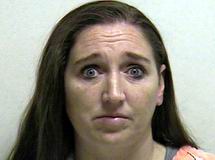 Megan Huntsman
Murderer · USA · 1996
Megan Huntsman was 40 at sentencing. She was a mother of three children who wer…
6 victims
Megan Huntsman
Murderer · USA · 1996
Megan Huntsman was 40 at sentencing. She was a mother of three children who wer…
6 victims
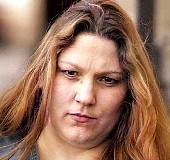 Angela Johnson
Murderer · USA · 1993
Angela Jane Johnson was convicted in federal court of aiding and abetting the m…
5 victims
Angela Johnson
Murderer · USA · 1993
Angela Jane Johnson was convicted in federal court of aiding and abetting the m…
5 victims
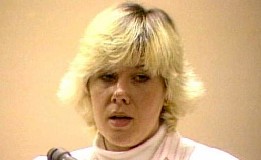 Catherine May Wood
Murderer · USA · 1987
Catherine May Wood was an American caregiver who worked at the Alpine Manor Nur…
5 victims
Catherine May Wood
Murderer · USA · 1987
Catherine May Wood was an American caregiver who worked at the Alpine Manor Nur…
5 victims
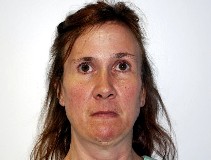 Michele Kalina
Murderer · USA · 1996
Michele Kalina pleaded guilty to murder for one of five infants she initially w…
5 victims
Michele Kalina
Murderer · USA · 1996
Michele Kalina pleaded guilty to murder for one of five infants she initially w…
5 victims
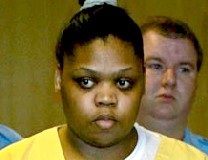 Tiffany Hall
Murderer · USA · 2006
Tiffany Hall was 24 when she was charged in September 2006. She later entered a…
5 victims
Tiffany Hall
Murderer · USA · 2006
Tiffany Hall was 24 when she was charged in September 2006. She later entered a…
5 victims
 Banita Jacks
Murderer · USA · 2007
Banita Jacks was a Washington, DC resident convicted of murdering her four daug…
4 victims
Banita Jacks
Murderer · USA · 2007
Banita Jacks was a Washington, DC resident convicted of murdering her four daug…
4 victims
 Terri Rachals
Angel of Death? · USA · 1985
Terri Rachals was a nurse in the Surgical Intensive Care Unit of the Phoebe Put…
0 victims
Terri Rachals
Angel of Death? · USA · 1985
Terri Rachals was a nurse in the Surgical Intensive Care Unit of the Phoebe Put…
0 victims
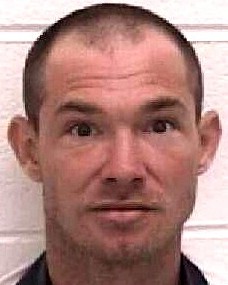 Timothy Don Carr
Murderer · USA · 1992
Timothy Don Carr, a white male, was executed by lethal injection in Georgia on…
1 victim
Timothy Don Carr
Murderer · USA · 1992
Timothy Don Carr, a white male, was executed by lethal injection in Georgia on…
1 victim
 Jessica Blackwell
Murderer · USA · 2011
Jessica Francis Blackwell was a Roanoke woman accused of stabbing a Roanoke man…
1 victim
Jessica Blackwell
Murderer · USA · 2011
Jessica Francis Blackwell was a Roanoke woman accused of stabbing a Roanoke man…
1 victim
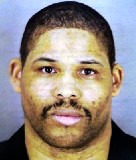 Bartholomew Granger
Murderer · USA · 2012
Name: Bartholomew Granger · Gender: Male · Race: Black · Age: 42 (age at time o…
1 victim
Bartholomew Granger
Murderer · USA · 2012
Name: Bartholomew Granger · Gender: Male · Race: Black · Age: 42 (age at time o…
1 victim
 Ronald Watkins
Murderer · USA · 1988
Ronald Watkins was convicted of capital murder and robbery for the killing of W…
1 victim
Ronald Watkins
Murderer · USA · 1988
Ronald Watkins was convicted of capital murder and robbery for the killing of W…
1 victim
- Gender
- female
- Country
- USA
- Location
- Jasper, Walker County, Alabama, USA
- Date of birth
- September 30, 1969
- Age at first offence
- 28
- Characteristics
- rape, kidnapping
- Victim profile
- Her husband, Randy McCullar
- Method of murder
- Shooting
- Date(s) of murder
- November 30, 1997
- Years active
- 1997
- Date of arrest
- —
- Status
-
Sentenced to death
Sentenced to death on October 22, 1999
Case record: Shonda Johnson
Background
Shonda Johnson was also known as Shonda Nicole Richards. She was White. She was age 28 at the time of the crime and age 33 later (DOB 9-30-1969).
Shonda Johnson married Randy McCullar on June 24, 1995, during a small ceremony at a white church within a couple of hundred yards of his parents' home. She also married William Howard McIntyre Jr. on September 29, 1995, while still legally married to McCullar. She later married Tim Richards (also identified as Timothy Richards) on May 10, 1997, insisting they go to Gatlinburg, Tennessee, to be married.
McCullar had filed a bigamy complaint against Johnson and obtained an arrest warrant. McCullar was listed as a witness on the arrest warrant against Johnson and testified before the grand jury during its proceedings.
McCullar filed for divorce and, as part of the divorce complaint, sought custody of their child, Chad McIntyre, and requested a DNA paternity test.
Johnson and Richards had a prior relationship history involving Ronnie Webb and David Prescott. Prior to her “marriage” to Tim Richards, Johnson had a live-in relationship with Ronnie Webb that started in September 1996. After about a month into that relationship, Randy McCullar took a warrant charging Johnson with bigamy. During this relationship, Johnson constantly wanted “somebody to do away with Randy McCullar or have something done with him” according to Webb. Johnson talked about killing McCullar and even suggested that Webb get some dynamite and do it right then.
During the same period, Johnson attempted to enlist the help of Ronnie Webb and David Prescott to hurt or kill McCullar.
The offence
Shonda Johnson was convicted of capital murder for the killing of Randy McCullar.
The murder became capital because it arose out of or was related to McCullar's role as a witness for the State of Alabama before a grand jury in a bigamy prosecution against Johnson. The relevant provision was described as See § 13A-5-40(a)(14), Ala. Code 1975.
The killing took place in Jasper, Alabama. The victim was shot outside a church. A witness described the discovery in the early morning hours of November 30, 1997, when David O'Mary, a vice president of First National Bank of Jasper, noticed what appeared to be a man lying next to a parked car in the church parking lot. O'Mary investigated and notified authorities after seeing that the man had been shot and was dead.
A trial court summary quoted in the appellate opinion described events around the days leading to the murder. It stated that “Two nights prior to this discovery” Johnson and her codefendant/husband, Tim Richards, were having Thanksgiving dinner at Audrey Gray’s home, sister of Richards. After the meal, as they were about to leave, Shonda Johnson stated that she and her husband were going “headhunting” and stated that they had a gun in the back of the car.
The same trial-court summary stated that “The Saturday after Thanksgiving, 1997, the defendant and Timothy Richards hired a babysitter and went to the Kooler, a restaurant in Jasper, Alabama. They asked for a menu, but were told that the kitchen was closed. They went back to their apartment in Jasper. After a while they both decided to go to the BC Lounge, a Jasper night spot.”
It further described that Johnson told Richards that Randy McCullar would leave the lounge at 12:00 to 12:30 A.M. and that it would be a good time to get rid of him. After they arrived at the BC Lounge and spotted McCullar's car, “Timothy Richards got out of his car and sliced the tire of McCullar's car.” The summary described McCullar driving away, the couple losing McCullar, and later finding him at the Omelet Shoppe in Jasper and following him traveling north on Alabama Highway 195 toward Double Springs in Winston County.
When Johnson saw that McCullar had pulled into a church parking lot, “They turned around, went to the parking lot of the church, and pulled up to McCullar.” The summary described words exchanged between Johnson and McCullar and that Johnson had put shells in the rifle when they were en route following McCullar. It stated that “As they pulled up to the scene, she ‘bolted the shells into the chamber.’ She then ‘shoved’ the weapon into the hands of Richards. She said, ‘[D]o it, do it, get it over it.’ Richards then point[ed] the gun at the head of McCullar and fire[d] the gun.” The summary stated that while backing out, Johnson was laughing and smiling.
It described that Johnson and Richards returned to their apartment in Jasper and then drove to Littleton's bridge near Good Springs, Alabama, where Richards threw the rifle into the river, and that they later did the same with the gun case at Baker's Creek in the same area of the county. It also stated that Johnson wanted to have sex but Richards could not handle it, that Richards stayed up all night, Johnson went to sleep, and that Richards stayed the rest of the night.
The appellate record also described threats, prodding, and alleged rape-related context in relation to the murder. During the conversation at Audrey Gray’s home, there was some mention of Johnson being raped by Mr. McCullar, and when Gray realized they were serious, she told her brother “not to be stupid.”
Investigation
During Johnson's capital-murder trial, the trial court admitted evidence of Johnson's bigamy conviction and her prior bad acts. This included evidence indicating that Johnson had adulterous relationships in which she had attempted to solicit partners to assault or to murder McCullar, evidence indicating that she attempted to enlist partners’ help by claiming McCullar had raped and beaten her, and evidence indicating that she had taken or led partners by McCullar's home on numerous occasions hoping to prompt an altercation.
The evidence also indicated that Johnson manipulated Richards, hoping to prompt an altercation between Richards and David Prescott, with whom Johnson had previously had an affair.
Johnson did not request a limiting instruction relating to this evidence.
In the procedural history, the Court of Criminal Appeals reversed Johnson’s conviction and remanded for a new trial because no limiting instruction had been given on the use by the jury of evidence of Johnson’s prior bad acts.
Trial
Shonda Nicole Johnson (Richards) was convicted in 1999 of the shooting death of Randy McCullar in a church parking lot in rural Walker County on Nov. 30, 1997.
The jury recommended that Johnson be sentenced to death by a vote of 11-1. The trial court followed the recommendation and sentenced Johnson to death.
The appellate opinion included detailed trial court findings and described the jury’s and appellate courts’ handling of evidence of prior bad acts and the need for limiting instructions. It noted that the trial court gave no limiting instructions concerning the use by the jury of evidence of Johnson’s prior bad acts. The Court of Criminal Appeals concluded that the jury could have used information about “sexual relationships and manipulations” to determine Johnson was of bad character and poor morality, and it reversed and remanded for a new trial.
Sentencing
Shonda Johnson was sentenced to death. The sentencing recommendation by the jury was 11-1.
The sentencing date was described as October 22, 1999.
Appeals
The Court of Criminal Appeals reversed Johnson’s conviction and remanded for a new trial on the basis that no limiting instruction had been given on the use by the jury of evidence of Johnson’s prior bad acts. The Court of Criminal Appeals’ decision was described as “Johnson v. State, [Ms. CR-99-1349, March 11, 2005] --- So.2d ---- (Ala. Crim. App. 2005).”
The Alabama Supreme Court granted the State’s petition for a writ of certiorari, reversed the judgment of the Court of Criminal Appeals, and remanded the case for further proceedings consistent with the opinion.
The Alabama Supreme Court’s opinion stated “REVERSED AND REMANDED.”
Outcome
The Alabama Supreme Court reversed the Court of Criminal Appeals’ judgment and remanded the case for further proceedings.
Timeline
- June 24, 1995 — Johnson and Randy McCullar participated in a wedding ceremony; the appellate opinion described later steps leading to legal marriage.
- July 11, 1995 — A marriage certificate for McCullar and Johnson was filed in the Winston County Probate Court Clerk's office.
- September 29, 1995 — Johnson married William Hayward McIntyre, Jr. while still legally married to McCullar.
- September 29, 1995 — McCullar filed a bigamy complaint and obtained an arrest warrant against Johnson (described in procedural findings).
- November 30, 1997 — David O'Mary discovered a man shot and dead in the Harmony Missionary Baptist Church parking lot, identified as Randy McCullar.
- October 22, 1999 — Johnson was sentenced to death.
- March 11, 2005 — The Court of Criminal Appeals reversed and remanded the case for a new trial (as described in the procedural history citation).
- October 06, 2006 — The Alabama Supreme Court opinion was issued in the described matter (as shown in the Alabama Supreme Court case header).
- 2006 — The Alabama Supreme Court reinstated Johnson’s death sentence (as described in the narrative about appellate history).
Other details
The trial court’s written findings included quotations. The findings stated Johnson and Richards were having “Thanksgiving dinner at the home of Audrey Gray, the sister of Mr. Richards.”
The findings included these quoted statements:
- Johnson stated they were going “headhunting” and stated that they had a gun in the back of the car.
- Johnson said, “[D]o it, do it, get it over it.”
- The summary quoted Johnson’s earlier relationship history, including that Johnson wanted “somebody to do away with Randy McCullar or have something done with him” according to Webb.
- Webb quoted: “I found out she was pregnant, and I went over and patted her on the stomach and said, 'We're all going to have to take care of this,' ” appeared as a quoted statement from Richards in a narrative portion.
- Richards said in the narrative: “She just kept saying, `Do it! Do it!,' ” and “The last thing I remember seeing was him falling.”
- In the narrative portion, Richards said: “My lawyer told me we needed to stick with the story ... to get her,” and also: “I have evidence to prove my innocence.”
- In the narrative portion, attorney Ronald Sandlin said: “I can assure you he wasn't coerced by me to confess to it,” and also: “That happened in 2000, and Mr. Richards signed a plea agreement stating that he was the shooter.”
- In the narrative portion, Sandlin said: “He is eligible for parole one day and his wife got the death penalty. That's all I want to say about it,” and in the narrative: “I don't think Tim would have ever spent a day in jail if he hadn't met Shonda,” was attributed to Walker County sheriff's detective Joey Vick.
The trial-court findings included discussion of custody and child-related facts. The summary stated that Johnson and Richards discussed that Randy McCullar was taking Johnson back to court to get custody of their son, Chad. It also described that Johnson and Richards hired a babysitter and went to the Kooler, and then decided to go to the BC Lounge.
The appellate opinion’s findings included the bigamy prosecution’s procedure:
- On June 24, 1995, Johnson and McCullar participated in a wedding ceremony conducted by a preacher from McCullar's church, described as “practice” because Johnson’s divorce was not final.
- On July 11, 1995, a marriage certificate was filed in Winston County Probate Court Clerk’s office.
- McCullar obtained an arrest warrant, Johnson was arrested, and Johnson was indicted for bigamy by the Winston County grand jury.
- McCullar was listed as a witness on the arrest warrant and testified before the grand jury.
The appellate opinion’s procedural history referenced specific counsel and parties in the Alabama Supreme Court matter:
- Troy King, atty. gen.; Kevin C. Newsom, deputy atty. gen.; and Corey L. Maze, asst. atty. gen., for petitioner.
- Edward S. Stoffregen III of Newman, Miller, Leo & O'Neal, Birmingham; and Stephen H. Jones, Bessemer, for respondent.
The appellate opinion’s quoted discussion referenced the Court’s and parties’ positions on limiting instructions, plain error, and related standards under Alabama rules of evidence and procedure, including Rule 105, Ala. R. Evid., and Rule 39(a)(2)(D) and Rule 45A, Ala. R. App. P., as quoted and discussed in the opinion.

Spotted an error, or have more information about this case?