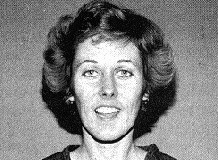
Diane Downs
Murderer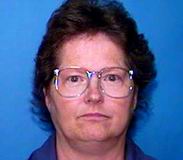 Bobbie Sue Terrell
Murderer · USA · 1984
Bobbie Sue Dudley Terrell was a Pinellas County nurse and worked as the night s…
12 victims
Bobbie Sue Terrell
Murderer · USA · 1984
Bobbie Sue Dudley Terrell was a Pinellas County nurse and worked as the night s…
12 victims
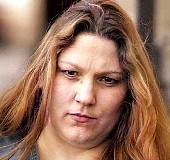 Angela Johnson
Murderer · USA · 1993
Angela Jane Johnson was convicted in federal court of aiding and abetting the m…
5 victims
Angela Johnson
Murderer · USA · 1993
Angela Jane Johnson was convicted in federal court of aiding and abetting the m…
5 victims
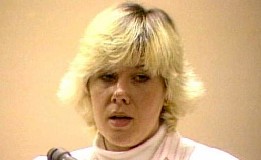 Catherine May Wood
Murderer · USA · 1987
Catherine May Wood was an American caregiver who worked at the Alpine Manor Nur…
5 victims
Catherine May Wood
Murderer · USA · 1987
Catherine May Wood was an American caregiver who worked at the Alpine Manor Nur…
5 victims
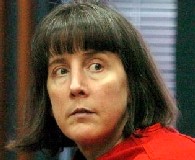 Amy Bishop
Murderer · USA · 1986
Amy Bishop — biology professor and perpetrator · James Anderson — Bishop’s husb…
4 victims
Amy Bishop
Murderer · USA · 1986
Amy Bishop — biology professor and perpetrator · James Anderson — Bishop’s husb…
4 victims
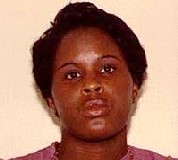 Debra Sue Tuggle
Murderer · USA · 1974
Debra Sue Tuggle was an African American woman born in Arkansas. She had a hist…
4 victims
Debra Sue Tuggle
Murderer · USA · 1974
Debra Sue Tuggle was an African American woman born in Arkansas. She had a hist…
4 victims
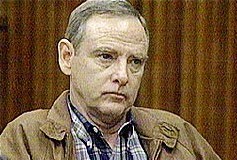 Charles Mayhew
Murderer? · USA · 1998
Charles “Chuck” Mayhew Jr. (age 49; son of Charles “Charlie” Mayhew Sr.) · Char…
1 victim
Charles Mayhew
Murderer? · USA · 1998
Charles “Chuck” Mayhew Jr. (age 49; son of Charles “Charlie” Mayhew Sr.) · Char…
1 victim
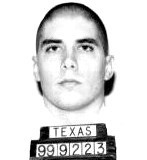 Daniel Reneau
Murderer · USA · 1996
Daniel Earl Reneau was convicted of capital murder in connection with a robbery…
1 victim
Daniel Reneau
Murderer · USA · 1996
Daniel Earl Reneau was convicted of capital murder in connection with a robbery…
1 victim
 Christopher Lee Simmons
Homicide · USA · 1993
Christopher Lee Simmons was 17 years old at the time of his arrest for the Sept…
1 victim
Christopher Lee Simmons
Homicide · USA · 1993
Christopher Lee Simmons was 17 years old at the time of his arrest for the Sept…
1 victim
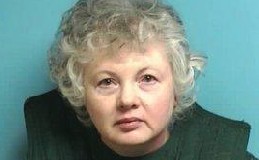 Terry Borgia
Murderer · USA · 2010
Terry Borgia was a grandmother in a case involving the death of her grandson, D…
1 victim
Terry Borgia
Murderer · USA · 2010
Terry Borgia was a grandmother in a case involving the death of her grandson, D…
1 victim
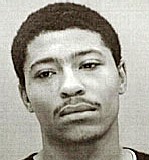 Darrell Brooks
Mass Murderer · USA · 2002
Darrell Brooks was charged and convicted in federal court for an arson that res…
7 victims
Darrell Brooks
Mass Murderer · USA · 2002
Darrell Brooks was charged and convicted in federal court for an arson that res…
7 victims
- Gender
- female
- Country
- USA
- Location
- Lane County, Oregon, USA
- Date of birth
- August 7, 1955
- Age at first offence
- 28
- Characteristics
- parricide, child abuse
- Victim profile
- Her daughter Cheryl Lynn, 7
- Method of murder
- Shooting (.22 caliber Rugger semiautomatic pistol)
- Date(s) of murder
- May 19, 1983
- Years active
- 1983
- Date of arrest
- February 28, 1984
- Status
-
Imprisoned
Sentenced to life in prison plus fifty years in 1984; escape from Oregon Women’s Correctional Center on July 11, 1987; recaptured on July 21
Case record: Diane Downs
Background
Elizabeth Diane Frederickson Downs (born August 7, 1955) was an American convicted murderer.
She was born in Phoenix, Arizona, to Wes Frederickson and Willadene Frederickson. She graduated from Moon Valley High School in Phoenix, where she met her future husband, Steve Downs. After high school, she enrolled at Pacific Coast Baptist Bible College in Orange, California, but after a year was expelled for promiscuity and returned to her parents’ home.
Downs married Steve Downs on November 13, 1973. They divorced in 1980. She gave birth to Stephen “Danny” Downs in about 1979–1980, and later became pregnant again before the 1984 trial and gave birth a month after her 1984 trial to a girl she named Amy.
Downs alleged that her father molested her when she was a child.
Downs was employed by the United States Postal Service, assigned to mail routes in the city of Cottage Grove, Oregon, before her 1983 arrest and trial. She had previously worked as a letter carrier in Chandler, Arizona. Her work history included relocation to Oregon to be near her parents, the Fredericksons.
By accounts of friends, acquaintances, neighbors, and eventually the surviving daughter Christie, Downs was described as an unfit parent who put everything before her children and was especially cruel to Cheryl. Cheryl told a neighbor of her grandparents shortly before her death that she was afraid of her mother.
The offence
On May 19, 1983, Downs shot her three children:
- Stephen Daniel Downs (born 1979)
- Cheryl Lynn Downs (born 1976)
- Christie Ann Downs (born 1974)
Downs drove the children in a blood-spattered car to McKenzie-Willamette Hospital. There was blood spatter on the inside of the car, but none on Diane. On arrival at the hospital, Cheryl was already dead. Downs was shot in the left forearm.
Downs told authorities that she had been carjacked on a rural road near Springfield, Oregon by a strange man who shot her and her three children. Investigators later concluded that forensic evidence did not match Downs’ story, including findings that there was no blood on the driver’s side of the car and no gunpowder residue on the driver’s panel.
Forensic evidence also included findings of .22 caliber U-shell copper casings, and no bullet penetrations of the car body consistent with the accounts of where shots were fired. Investigators concluded that the bullets hit their live marks and that there was no blood at all on the driver’s side, with no smears on the steering wheel. There were also powder particles detected on the right panel and in a sweep along the back seat, with none on the driver’s panel.
Witnesses reported that Downs’ car had been driven very slowly toward the hospital at an estimated speed of five to seven mph, contradicting Downs’ claim that she drove at a high speed after the shooting.
Psychiatrists diagnosed Downs with narcissistic, histrionic and antisocial personality disorders. The source stated that most of her sentence was to be served consecutively, and that the judge made it clear that he did not wish Downs to ever regain her freedom.
Investigation
Investigators became suspicious of Downs’ story because they decided her manner was too calm for a traumatic event.
Investigators also found that immediately upon arriving at the hospital, Downs had called Robert Knickerbocker, a married man and former colleague in Arizona with whom she had been having an affair. Knickerbocker reported to police that Downs had stalked him and seemed willing to kill his wife if it meant she could have him to herself. Knickerbocker stated he was relieved that Downs left for Oregon and he was able to reconcile with his wife.
Downs did not tell police she owned a .22 caliber handgun, but both Steve Downs (her ex-husband) and Knickerbocker said she did own one. Investigators later discovered she bought the handgun in Arizona. The source stated that although investigators were unable to find the actual weapon, they found unfired casings in her home with extractor markings from the same gun that shot the children.
The investigation included testimony and evidence relating to Downs’ call history and interactions at the hospital, including that Christie was unable to speak after suffering a stroke, with Christie's eyes glazed over with apparent fear and heart rate changes when Downs came to visit.
A forensic scientist, James O. Pex of the Oregon State Police Department, examined the interior of Downs’ automobile and reported that there were .22 caliber U-shell copper casings and no bullet penetrations through the body of the car. Pex also reported “No blood at all on the driver’s side, no smears on the steering wheel,” and that no powder particles were detected on the driver’s panel though they were detected on other areas of the car.
A diary and letters were confiscated from Downs’ home, which were described as reflecting longing for the Arizona man.
The source recorded a diary entry read verbatim in the case narrative:
“ What happened? I'm so confused. What could she have said or done to make you act this way? I spoke to you this morning for the last time. It broke my heart to hear you say 'don't call or write'. ...I still think of you as my best friend and my only lover, and you keep telling me to go away and find somebody else. You have got to be kidding.. .”
The source also included a quotation from Downs’ letters in which masturbation was referenced and a rhymed passage appeared:
“ I love you more/than could your wife/Yet it's brought sorrow/to my life/I just keep hoping/and hanging on/How much longer/can I be strong? ”
Downs’ diaries and letters were described as leading prosecutors and investigators to focus on a motive involving obsession with a married man, with the source stating that her story about a stranger did not fit the evidence.
Arrest
Downs was arrested nine months after the shootings on February 28, 1984, as she was entering the Cottage Grove post office where she worked as a part-time letter carder.
The charges described were:
- one count of murder
- two counts of attempted murder
- two counts of criminal assault
Trial
A grand jury indicted Downs on one count of murder, two counts of attempted murder, and two counts of first-degree assault.
Downs’ trial was described as a 31-day jury trial in Lane County Circuit Court in Eugene. The presiding judge was Circuit Judge Gregory G. Foote. The jury consisted of nine women and three men.
The source stated that on June 14, 1984, Judge Foote read aloud the jury’s unanimous verdict. It also recorded the jury’s deliberation period as 36 hours and described a guilty verdict on all charges.
The verdicts included:
- Guilty of attempted murder in the first degree (including a second account of attempted murder in the first degree)
- Guilty of first-degree assault (described as one count and another count of first-degree assault)
- Guilty of murder
On May 14, the source recorded that court proceedings paused so jurors could experience the physical scene of the crime at Old Mohawk Road and view the red Nissan death car at the county auto pound.
The prosecution motive and method were described as involving Downs’ fixation on a married man and the use of a .22 caliber Ruger pistol that she bought in Arizona and denied having owned in Oregon.
The source included verbatim trial quotations attributed to:
- Christie Downs, who testified: “I watched her .....My mom did it.”
- Christie Downs, who testified: “Do you remember when you got shot?” followed by “Yeah,” and “Who shot you?” followed by “My mom.”
- Christie's narration at the funeral and investigation passages included dialogue in other places, including a therapist exchange where Christie stated: “dead.”
It also recorded that prosecutors relied heavily on Christie’s testimony once she recovered her ability to speak, including that Christie described the shooting sequence and that Christie was eight years old at the time of the murder and nine years old at the time of the trial.
The defense counsel named in the source was James C. Jagger, with Melvin Belli also mentioned in relation to attempted representation. The source also stated that Downs sought ineffective assistance of counsel later, and that the defense had challenged gaps in the prosecution’s evidence.
Sentencing
Downs was sentenced to life in prison plus fifty years in 1984. The source stated that the judge hoped Downs would never again be free and that he had come as close to that as possible.
The sentencing stated that most of her sentence was to be served consecutively.
Appeals
The source described that a Marion County Circuit Judge, Duane R. Erstgaard, denied Downs’ request for a new trial in September 1991, writing in a letter that she was adequately represented by lawyers in her trial and appeal.
The source also stated that the Oregon Court of Appeals upheld her convictions in February 1987.
Outcome
Downs escaped from the Oregon Women’s Correctional Center on July 11, 1987, and was recaptured in Salem, Oregon on July 21.
The source stated that she received a five-year sentence for the escape.
After the escape, she was housed in the New Jersey Department of Corrections Clinton Correctional Institution. In 1994, after serving ten years, Downs was transferred to the California Department of Corrections and Rehabilitation.
Aftermath
The source stated that the surviving children eventually went to live with one of the prosecutors of the case, Fred Hugi. He and his wife Joanne adopted the children in 1984.
Prior to her arrest and trial, Downs became pregnant with a fourth child and gave birth a month after her 1984 trial to a girl she named Amy. Ten days before her sentencing, the baby was seized by the State of Oregon and adopted soon after. The source stated that she was renamed Rebecca “Becky” Babcock.
While in prison, Downs earned an associate’s college degree in general studies. The source stated that as of 2010 she was located in the Valley State Prison for Women.
The source also stated that Ann Rule wrote the book Small Sacrifices in 1987, detailing the life of Downs, and a made-for-TV movie called Small Sacrifices starring Farrah Fawcett as Downs was released in 1989.
The source stated that Downs’ last child, born shortly after her trial concluded, appeared on The Oprah Winfrey Show on October 22, 2010, and on “20/20” on July 1, 2011.
Parole
Parole eligibility in the source included that Downs’ sentence made her eligible for parole consideration after serving 25 years, and under Oregon law, as a dangerous offender she would be eligible for parole consideration hearings every two years until released or dies in prison.
Her first parole hearing was on December 9, 2008. The source stated that she reaffirmed her innocence and quoted Downs:
“Over the years,” she said, “I have told you and the rest of the world that a man shot me and my children. I have never changed my story.”
The Lane County District Attorney Douglas Harcleroad wrote to the parole board:
“Downs continues to fail to demonstrate any honest insight into her criminal behavior...even after her convictions, she continues to fabricate new versions of events under which the crimes occurred.”
Downs’ first parole hearing ended in denial after participation from Valley State Prison for Women in Chowchilla, California, with questions answered but the source stating she was not permitted a statement.
Her second parole hearing was on December 10, 2010. The source stated that she was denied parole and, under a new law, would not be eligible for parole for another ten years, requiring her to wait until 2020, when she would be 65 years old.
Downs had been denied parole in December 2008 and again in December 2010.
Spotted an error, or have more information about this case?