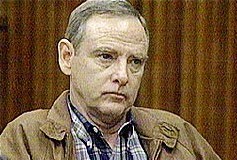
Charles Mayhew
Murderer? Richard Allen Williams
Murderer? · USA · 1992
Boone County Prosecutor Kevin Crane dismissed the charges in August 2003 after…
10 victims
Richard Allen Williams
Murderer? · USA · 1992
Boone County Prosecutor Kevin Crane dismissed the charges in August 2003 after…
10 victims
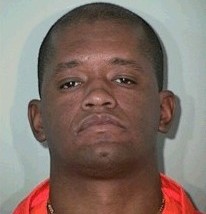 Andre Minnitt
Murderer? · USA · 1992
Andre Minnitt was convicted of crimes connected to the El Grande Market slaying…
3 victims
Andre Minnitt
Murderer? · USA · 1992
Andre Minnitt was convicted of crimes connected to the El Grande Market slaying…
3 victims
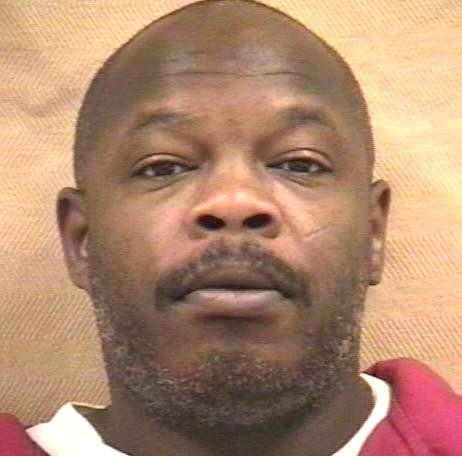 Glen Edward Chapman
Murderer? · USA · 1992
Defendant: Glen Edward Chapman Legal case references: In the Supreme Court of N…
2 victims
Glen Edward Chapman
Murderer? · USA · 1992
Defendant: Glen Edward Chapman Legal case references: In the Supreme Court of N…
2 victims
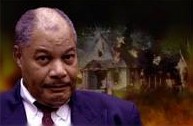 James Campbell
Murderer? · USA · 1997
September 1997 — James Campbell’s first trial ended with a hung jury. · January…
2 victims
James Campbell
Murderer? · USA · 1997
September 1997 — James Campbell’s first trial ended with a hung jury. · January…
2 victims
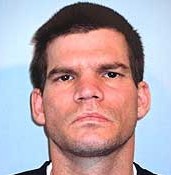 Jerry Hobbs
Murderer? · USA · 2005
Jerry Hobbs III was the father of Laura Hobbs, an 8-year-old girl. He was also…
2 victims
Jerry Hobbs
Murderer? · USA · 2005
Jerry Hobbs III was the father of Laura Hobbs, an 8-year-old girl. He was also…
2 victims
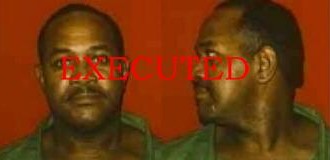 J. D. Gleaton
Murderer · USA · 1977
J. D. Gleaton was executed by lethal injection in South Carolina on December 4,…
1 victim
J. D. Gleaton
Murderer · USA · 1977
J. D. Gleaton was executed by lethal injection in South Carolina on December 4,…
1 victim
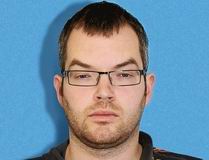 Vincent Tabak
Murderer · United Kingdom · 2010
Vincent Tabak was a Dutch engineer who lived and worked in the United Kingdom s…
1 victim
Vincent Tabak
Murderer · United Kingdom · 2010
Vincent Tabak was a Dutch engineer who lived and worked in the United Kingdom s…
1 victim
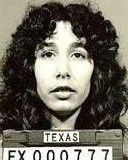 Karla Tucker
Murderer · USA · 1983
Karla Tucker was convicted in Texas of capital murder during the commission of…
2 victims
Karla Tucker
Murderer · USA · 1983
Karla Tucker was convicted in Texas of capital murder during the commission of…
2 victims
 Ambrosio Analco Ramirez
Mass murderer · USA · 2007
Ambrosio Analco Ramirez was 23 years old at the time of the killings. The killi…
5 victims
Ambrosio Analco Ramirez
Mass murderer · USA · 2007
Ambrosio Analco Ramirez was 23 years old at the time of the killings. The killi…
5 victims
- Gender
- male
- Country
- USA
- Location
- Dallas, Texas, USA
- Date of birth
- 1952
- Age at first offence
- 46
- Characteristics
- alcohol, history of mental illness, parricide
- Victim profile
- His father , Charles "Charlie" Mayhew, 81
- Method of murder
- Shooting ( 12-gauge shotgun)
- Date(s) of murder
- February 28, 1998
- Years active
- 1998
- Date of arrest
- J uly 15, 2002
- Status
-
Dallas County grand jury declined to indict Charles “Chuck” Mayhew Jr. on September 20, 2002, after a Dallas civil court jury found him liable for the murder of his millionaire father and awarded his sister $26 million in damages on April 18, 2002
Case record: Charles Mayhew Jr.
Parties and identities
- Charles “Chuck” Mayhew Jr. (age 49; son of Charles “Charlie” Mayhew Sr.)
- Charles “Charlie” Mayhew Sr. (age 81; victim; former Sunnyvale Mayor)
- Amanda Mayhew Dealey (age 51; sister of Charles “Chuck” Mayhew Jr.; plaintiff in the wrongful death suit)
- Christopher Dealey (grandson of Charles “Charlie” Mayhew Sr.; caller who discovered the body and called Chuck Mayhew)
- Lloyd Whitehead (family friend; described Charles Mayhew Sr.’s character)
- Gene Brown (witness/supporter; spoke about threats and fear)
- Mike Magee (Volunteer Fire Chief)
- Howard Sparks (lead detective who testified about not referring the case to a grand jury after a senior-level prosecutor advised in 1998 that there was not enough evidence to get a conviction)
- Don Peritz (spokesman for the Dallas County Sheriff’s Office)
- Bill Hill (District Attorney)
- Jim Schutz (jury foreman)
- Ursula Bourgeois (juror)
- Rebecca Hamilton (co-counsel for Amanda Mayhew Dealey)
- Steve Sumner (lead attorney for Amanda Mayhew Dealey)
- Bill Hommel (attorney for Charles “Chuck” Mayhew Jr.)
- Larry Speck (dean of the University of Texas School of Architecture; spouse of Amanda Mayhew Dealey)
- Joe Dealey Jr. (former husband of Amanda Mayhew Dealey; described as son of the late former publisher of The Dallas Morning News)
- Joe M. Dealey Sr. (late former Dallas Morning News president and publisher; described as Joe Dealey Jr.’s father)
- Pat Stiager (neighbor; testified about seeing Charles Mayhew Jr. driving to his father’s house direction opposite before midnight; also admitted smoking marijuana)
- Larry White (neighbor who testified he saw a car Charles Mayhew Jr. used near the dead man’s home on Feb. 28, 1998)
- Linda White (neighbor; lived next door to Mayhew’s father and worked as his assistant; uncovered audiotapes)
- Larry (Linda White’s husband; referenced as a potential killer in discussions reported)
- Christopher Dealey (grandson who called Chuck)
Timeline
- March 1, 1998 — Charles “Charlie” Mayhew Sr. was discovered dead in his bed at around 1 p.m. by Christopher, his grandson, and a .12-gauge shotgun was identified as the type of weapon involved.
- March 1, 1998 — The medical examiner ruled the death resulted from a single blast to the neck fired at close range from a .12-gauge shotgun.
- 1995 — Charles Mayhew Jr. acknowledged his chronic alcohol problem and a bipolar diagnosis in the civil case; Amanda Mayhew Dealey’s attorneys described events after Charlie Mayhew accepted Chuck’s resignation from their partnership.
- April 18, 2002 — A Dallas civil court jury found Charles “Chuck” Mayhew Jr. liable and awarded his sister Amanda Mayhew Dealey $26 million in damages.
- July 15, 2002 — Charles Mayhew Jr. was arrested in connection with Charles “Charlie” Mayhew Sr.’s death.
- September 20, 2002 — A Dallas County grand jury declined to indict Charles “Chuck” Mayhew Jr.
Background
Charles “Charlie” Mayhew Sr. amassed a multimillion-dollar fortune in the oil-drilling business and was described in Sunnyvale as a “Texas Gentleman.” He and Charles “Chuck” Mayhew Jr. were described as having been inseparable earlier, traveling and hunting together, and playing together as children on the family’s Sunnyvale ranch. As adults, they were described as becoming different from each other, with Amanda Mayhew Dealey becoming prominent in Austin social circles and Chuck being known as a hard-living, hard-drinking hell-raiser with a “dark side.” Charles “Charlie” Mayhew Sr. was feared in his later relationship with his son; acquaintances testified that it was routine for Charles “Chuck” Mayhew Jr. to angrily berate and insult his father. Charles “Chuck” Mayhew Jr. was described as a chronic alcoholic with mental problems in one characterization provided in the case material.
The offence
Charles “Charlie” Mayhew Sr. was found dead in bed in his rural Sunnyvale home. The investigation and civil trial described the death as a shotgun killing. The medical examiner ruled the death resulted from a single blast to the neck fired at close range from a .12-gauge shotgun. Investigators ruled out robbery as a motive because there was no forced entry into the house and no property was taken. Investigators found little physical evidence to help identify the killer, and a 12-gauge shotgun was found in the Mayhew home that appeared to have been fired recently and belonged to Charles “Chuck” Mayhew Jr., but deputies were unable to identify it as the weapon that killed Charles “Charlie” Mayhew Sr. A witness described Charles “Chuck” Mayhew Jr. as very good with a gun, and Charles “Chuck” Mayhew Jr. was described as having threatened his father repeatedly in civil testimony.
Investigation
Charles “Charlie” Mayhew Sr. was discovered dead around 1 p.m. on March 1, 1998, by Christopher, his grandson, who called Chuck right away after believing his grandfather suffered some sort of hemorrhage in bed. Volunteer Fire Chief Mike Magee was the first medical personnel on the scene and noticed covers had been tucked around the sides of the body, which he said was virtually impossible with arms underneath the covers. Magee testified that Charles “Chuck” Mayhew Jr. said that as he drove up to the ranch he could not believe somebody had murdered his dad, which Magee found jarring because Charles “Chuck” Mayhew Jr. could not have known his father was murdered until he arrived. Magee said Charles “Chuck” Mayhew Jr. told him he had thought to himself as he drove up to the ranch that he just couldn’t believe somebody had murdered his dad. Magee also said Charles “Chuck” Mayhew Jr. told him that he had not made any such statement to Magee. According to police reports, nothing appeared to have been stolen from the house. There was no sign of forced entry. The shotgun used to kill Charles “Charlie” Mayhew Sr. appeared to have been one from the house. Charles “Chuck” Mayhew Jr. was questioned at least three times by investigators, and he and his wife were advised of their rights when investigators considered someone a suspect. A lead detective, Howard Sparks, testified that his office did not refer the case to the grand jury after a senior-level prosecutor advised him in 1998 that there was not enough evidence to get a conviction. Sgt. Don Peritz said investigators have “suspicions” about who committed the crime but declined to elaborate. Sgt. Don Peritz said the case was still open but investigators had not been able to accumulate enough evidence to present to a grand jury. Charles “Chuck” Mayhew Jr. criticized local authorities’ handling of the investigation, stating they never checked his hands for gunshot residue and never searched his home for evidence that might tie him to the crime. He said, “It’s a new technique. It’s called don’t investigate the murder.” Charles “Chuck” Mayhew Jr. said he thought the killer knew his father and was familiar with his house. Charles “Chuck” Mayhew Jr. said he was at a local bar on the night of the murder and then at home with his wife. He later passed a polygraph test in which he was asked whether he had shot his father. In one report, Charles “Chuck” Mayhew Jr. thought the killer might be Linda White’s husband, Larry.
Arrest
Charles “Chuck” Mayhew Jr. was arrested in connection with his father’s death. He was taken in by police on July 15 (reported in connection with the arrest), nearly three months after a civil jury found him responsible for the death. After the grand jury declined to indict him, he was described as released from a Dallas jail. Charles “Chuck” Mayhew Jr. said: “How do I feel? How do you think I feel?” He also said: “I’ve been rotting in jail for two and a half months for a crime I didn’t commit.” He added: “I am happy to be free,” and “They got the wrong man.”
Trial (civil wrongful death)
Claims and defences
Amanda Mayhew Dealey filed a wrongful death suit seeking damages without pursuing criminal charges first. The wrongful death suit accused Charles “Chuck” Mayhew Jr. of causing the wrongful death of their father by murdering him. Amanda Mayhew Dealey alleged Charles “Chuck” Mayhew Jr. killed their father because he worried about being cut from a large inheritance. Charles “Chuck” Mayhew Jr. denied involvement in his father’s death and maintained his innocence throughout civil proceedings. His attorney, Bill Hommel, argued the case was rooted in his sister’s lifelong envy and described the case against him as “a house of cards” rooted in her envy. Hommel told jurors, “It doesn’t make sense that Chuck Mayhew would be the one to take his father’s life.” Hommel also asserted that the wrongful death case had no evidence other than “circumstantial speculation.” Hommel accused Amanda Mayhew Dealey of blaming him to strip him of a large inheritance. Hommel also argued that Amanda Mayhew Dealey lacked proof and was trying to smear Charles “Chuck” Mayhew Jr. with unsavory behavior. After the verdict, Hommel agreed the jury had been swayed by the depiction of his client as a vile, hateful son and said: “I think that had a lot to do with it.” Hommel suggested to jurors that a neighbor of the elder Mayhew had killed him due to a dispute over the ownership of a deer stand and a gooseneck trailer. Dealey’s lead attorney Steve Sumner ridiculed this position, saying: “It’s an ABC defense, Anybody But Chuck.” Sumner and co-counsel Rebecca Hamilton urged jurors to use their verdict to send a message urging District Attorney Bill Hill to prosecute Charles “Chuck” Mayhew Jr. The civil burden was described as proving accusations by a “preponderance of the evidence” rather than “beyond a reasonable doubt.”
Evidence and witness testimony
In civil proceedings, witnesses described Charles “Chuck” Mayhew Jr. as drinking heavily at the time of the killing and berating his father with profane threats for money. It was described that shortly before his murder, Charles “Charlie” Mayhew Sr. started to change his life insurance policy to exclude his son, and was letting his daughter take over the family business. Perhaps the most damaging testimony described audiotapes surreptitiously recorded by Charles “Charlie” Mayhew Sr. three years before his murder. On the tapes, Charles “Chuck” Mayhew Jr. was described as angrily berating his father and making threats and demands against him. The tapes included the statement: “I’ll cut out your … eyeballs out with a butter knife and stick ’em down your throat.” Another tape statement attributed to Charles “Chuck” Mayhew Jr. was: “I can’t hate anybody any more than I hate you.” In civil testimony, Charles “Chuck” Mayhew Jr. admitted he had been verbally abusive toward his father and said he had been drinking. He said that although the tapes were bad, they did not show that he pulled the trigger, and he said: “They never did come up with anything that, any hardcore evidence, to attach or associate to me in the murder death of my father.” According to civil testimony, Linda White uncovered several audiotapes in boxes at Mayhew’s office. Gene Brown testified for the defense side supportive of Charles “Chuck” Mayhew Jr., saying Linda White had threatened Charles “Charlie” Mayhew Sr. several times and that the elder Mayhew was terrified of White. White denied this and said: “Maybe it was because we lived so close to him, you know, that they picked us.” When Larry White learned Charles “Chuck” Mayhew Jr. told police that whoever killed his father knew what they were doing because they shot him in the jugular vein, he saw another string tying Charles “Chuck” Mayhew Jr. to the murder. Larry White recalled Charles “Chuck” Mayhew Jr. always told him to shoot deer in the neck because it killed them quicker. Charles “Chuck” Mayhew Jr. rebuffed the suggestion that the method of his father’s slaying matched his style of hunting.
Motive arguments
Amanda Mayhew Dealey’s attorneys contended Charles “Chuck” Mayhew Jr.’s fear of losing access to the father’s wealth drove him to kill Charles “Charlie” Mayhew Sr. In closing, Rebecca Hamilton told jurors money was largely irrelevant and argued symbolic justice. Hamilton said: “It’s a relief to have it over.” She also said: “And I think it will give the closure we all needed.” Hamilton argued the jury’s verdict would send a message to Charles “Chuck” Mayhew Jr. and to the local district attorney to continue pursuing a criminal case.
Verdict and damages (Outcome of civil trial)
A Dallas civil court jury found Charles “Chuck” Mayhew Jr. responsible for the 1998 shotgun slaying of his father. After a three-week trial, jurors deliberated five hours before finding Charles “Chuck” Mayhew Jr. responsible for the 1998 shotgun slaying of his 81-year-old father. The jury awarded Amanda Mayhew Dealey $26 million in damages on April 18, 2002. The civil verdict meant Charles “Chuck” Mayhew Jr. would be barred from his share of an estimated $8 million inheritance, though Dealey and her lawyers cast doubt on the value and said they did not expect to collect a cent. A jury structured the verdict amount to send a message about the damage inflicted on Amanda Mayhew Dealey and her father. The jury foreman Jim Schutz said: “I think the panel structured the amount of their verdict to send a message about the damage inflicted on Ms. Dealey and her father.” Jim Schutz said he had no opinion on a criminal prosecution. Another juror, Ursula Bourgeois, said: “I think it would be a difficult case to prove given the evidence.”
Appeals
No appeals were described.
Outcome (post-civil)
Criminal grand jury decision
A Dallas County grand jury declined to indict Charles “Chuck” Mayhew Jr. on September 20, 2002. It was described that the grand jury declined to indict the son of a slain millionaire for the 1998 death of his father. After the grand jury decision, Charles “Chuck” Mayhew Jr. was released from a Dallas jail.
Aftermath and related details
Statements by attorneys and reported positions
Don Peritz said detectives would review the evidence they collected along with that in the civil case and decide whether to submit a case to a grand jury. Peritz said: “It appears the jury in the civil case has spoken and justice has been served in that venue.” Peritz also said no one, including Charles “Chuck” Mayhew Jr., had been ruled out as a suspect in the elder Mayhew’s death. Amanda Mayhew Dealey described the civil verdict as an emphatic statement about feelings of guilt and said she took it as a “a very emphatic statement.” Dealey said: “I honestly don’t know how I would feel about Chuck being tried and found innocent, based on lack of evidence.” She also said: “On the other hand, I certainly don’t want him to receive a death penalty.” Dealey was described as having ambivalence about her brother’s fate.
Family and relationships
Amanda Mayhew Dealey was married in the 1970s to Joe Dealey Jr., described as the son of a former publisher of The Dallas Morning News. She later lived in Austin and was described as married to Larry Speck, dean of the University of Texas School of Architecture. Amanda Mayhew Dealey accused Charles “Chuck” Mayhew Jr. of killing their father because he feared being cut from a large inheritance, and the litigation also included claims about shifting control of business affairs and life insurance beneficiaries.
Business context described in the civil trial materials
The father and son were described as partners in a company that sought to develop 5,000 homes on 1,200 acres in Sunnyvale. The project was blocked by a Sunnyvale town ordinance requiring lot sizes to be an acre or larger. In 1987, the Mayhews sued to overturn the ordinance, claiming it discriminated against middle-class homeowners. They won their case and an $8.5 million judgment against Sunnyvale in 1992, but the decision was overturned on appeal. They were awaiting a ruling by the Texas Supreme Court when Charles “Charlie” Mayhew Sr. died. Court-related descriptions stated the legal battle cost Charles “Charlie” Mayhew his multimillion-dollar fortune and increased friction between father and son. In March 1995, Charles “Charlie” Mayhew accepted his son’s resignation from the partnership.
Conduct and deposition details mentioned
Amanda Mayhew Dealey’s suit described Charles “Chuck” Mayhew Jr. as having a chronic alcohol problem and being diagnosed as being bi-polar. It was stated that he admitted in depositions he had lied about having “killed people in Africa.” In a deposition described in civil proceedings, Charles “Chuck” Mayhew Jr. said he threatened to kill his father “at least a thousand times” without intending to do so. It was also reported he admitted their last argument was the day before Charles “Charlie” Mayhew Sr.’s death.
Discovery and medical findings
Christopher found Charles “Charlie” Mayhew Sr. in his bed with the covers pulled around his head. When Christopher touched Charles “Charlie” Mayhew Sr.’s neck, he discovered a gunshot wound below the left ear. The medical examiner ruled that paper wadding from the fired shell was embedded in the wound. Deputies found a 12-gauge shotgun in the Mayhew home that appeared to have been fired recently, but could not identify it as the weapon that killed Charles “Charlie” Mayhew Sr. Investigators found no evidence of forced entry and no signs of a struggle or a burglary.
Alibi and conflicting whereabouts described
Charles “Chuck” Mayhew Jr. said he did not go to his father’s home the night of the slaying. He said he visited a bar in Sunnyvale and then went to his wife’s home in Forney. He said he did not know his father was dead until Christopher Dealey called him about 1 p.m. on March 1, 1998. A neighbor, Pat Stiager, said she saw Charles “Chuck” Mayhew Jr. driving on the road to his father’s house in the opposite direction before midnight, and she admitted she had been smoking marijuana. A neighbor, Larry White, testified he saw a car Charles “Chuck” Mayhew Jr. 28, 1998, while Charles “Chuck” Mayhew Jr. claimed he was never there. Hamilton said: “Chuck has two and a half hours of unaccounted time.”
Spotted an error, or have more information about this case?